
CO-NELEMixing & Granulation
Eight production-ready models from the CO-NELE factory portfolio, covering planetary mixing, twin shaft mixing, granulation, pelletising and laboratory-scale material validation. Every product URL below is retained exactly as supplied by the manufacturer.
Buyers who use this query are usually trying to reduce scale-up risk, not simply compare catalogue prices. They need a factory that can reproduce production mixing kinematics in a 5–75 litre laboratory vessel, document powder homogeneity, granule sphericity and bulk density, and then translate the validated recipe into a 500–3,000 litre production mixer without changing rheology or yield.
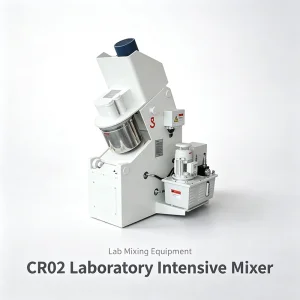
Laboratory dry powder mixers are judged by whether the recipe still works at production volume. Our laboratory operates lab-scale intensive mixers and granulators from 5 to 75 litres and returns test reports covering granule sphericity, bulk density, mixing time and the recommended production model.
Rotor speed, arm geometry, wear material and discharge method are matched to the material’s bulk density, abrasiveness and moisture window. This is verified in the laboratory before drawings are released for production.
Machines are built to 220V/380V/415V/440V, 50 or 60 Hz supply, with CE-compliant electrical design on request, foundation and wiring drawings, English operation manuals and a 12-month warranty on the drive unit.
For SEO, the intent behind this phrase combines manufacturer verification, laboratory capability, dry powder mixing performance, factory audit confidence and long-term spare-part continuity. CO-NELE answers those intent clusters with in-house reducer design, machining, welding, assembly, material testing and global service — not with a trading-company catalogue.
Global procurement teams are under pressure to shorten formula development cycles while proving compliance, repeatability and total cost of ownership. The strongest enquiries now arrive with a material sample, target particle size, moisture window, capacity requirement and a request for a documented trial report.
Europe and North America prioritise documentation, CE-compliant electrical design, repeatable batch records and low-dust handling. The Middle East and Southeast Asia focus on fast commissioning, high ambient-temperature reliability and local spare-part availability. Africa and South America increasingly request modular plants that can be relocated between contracts.
Buyers compare mixing coefficient of variation, granule sphericity, bulk density, binder consumption, cycle time, energy per tonne, wear-part life, spare-part lead time and the quality of English documentation. A low purchase price without those metrics is now treated as a risk, not a bargain.
Export buyers ask who answers the technical enquiry, whether the answer comes from a process engineer or a reseller, how video commissioning works, what spares should be stocked and whether interchangeable parts remain available for machines built years earlier. CO-NELE keeps interchangeable spares for every model produced since 2004.
The laboratory mixer is no longer an isolated R&D instrument. It is becoming the first node in a digital recipe chain that connects material characterisation, binder selection, mixing energy, granule morphology, production scale-up and quality documentation.
PLC recipe management, batch records and test-report traceability are moving from “nice to have” to procurement requirements. Buyers want the laboratory trial data to map directly to production parameters.
Small batches are valuable only when the laboratory mixer reproduces the shear profile, tool geometry and discharge behaviour of the production machine. Scale-up factors must be documented, not assumed.
Fine powders, abrasive diamond/CBN grit, battery precursors and refractory fines require sealed charging, dust extraction, easy-clean vessels and minimal cross-contamination between recipes.
Wet granulation must justify every kilowatt and every binder kilogram. Inclined intensive mixers with high-speed rotors combine mixing, wetting and granulation in one vessel to reduce handling steps and energy load compared with multi-stage routes.
Foundationless batching plants, container-shipped compact plants and mobile mixing stations allow contractors to relocate production as infrastructure projects move. The same modular thinking is entering laboratory and pilot lines.
UHPC, refractory castables, ceramic powders, abrasives, powder metallurgy, adsorbents, battery materials and chemical fertilisers each create new mixing windows. One “universal” laboratory mixer rarely satisfies all of them.
CO-NELE has engineered forced-action mixers since 2004. Every machine below is produced in our own Qingdao workshops — from the planetary gearbox to the wear liner — so mixing homogeneity, discharge speed and spare-part availability are controlled by one manufacturer.
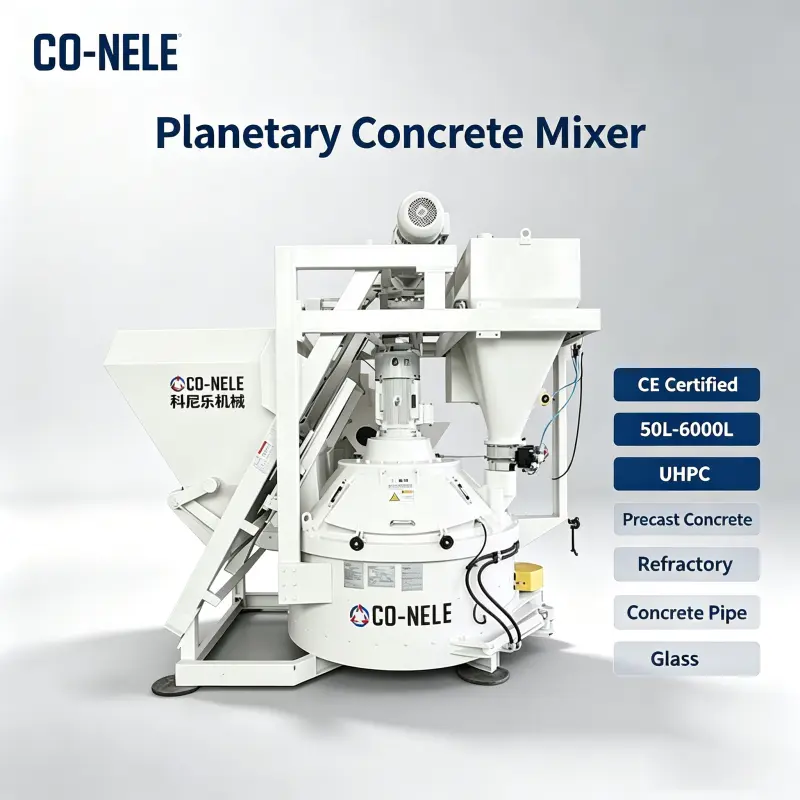
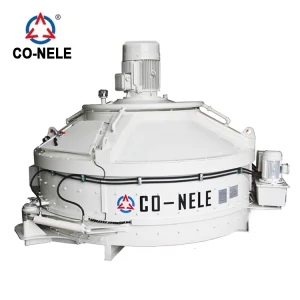
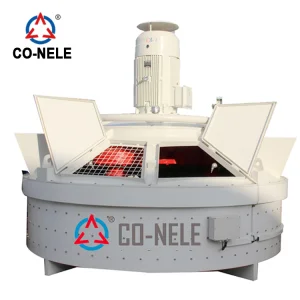
Vertical-shaft counter-current pan mixer producing micro-homogeneous batches for C60+ concrete, UHPC, GFRC and coloured dry-cast products. Star-arm kinematics eliminate dead zones at the pan wall.
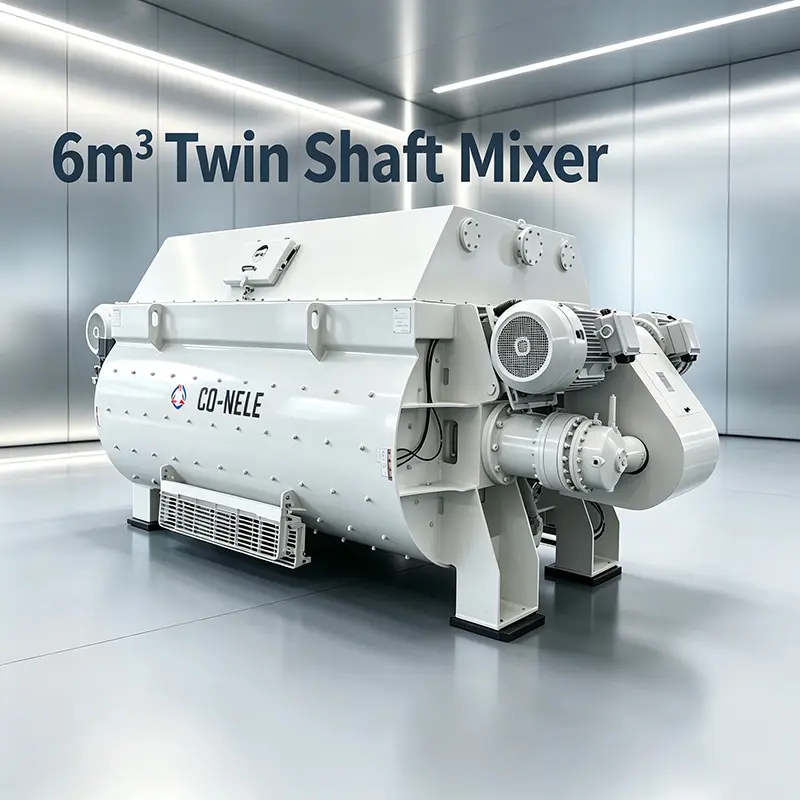
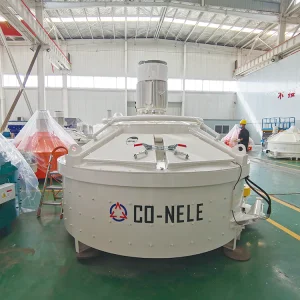
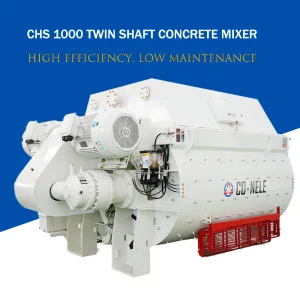
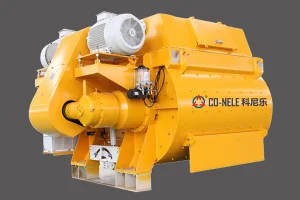
High-throughput compulsory mixers from 1 m³ up to 6 m³ output with dual hydraulic discharge gates, sealed shaft-end system and bolt-on high-chrome liners for ready-mix and infrastructure plants.
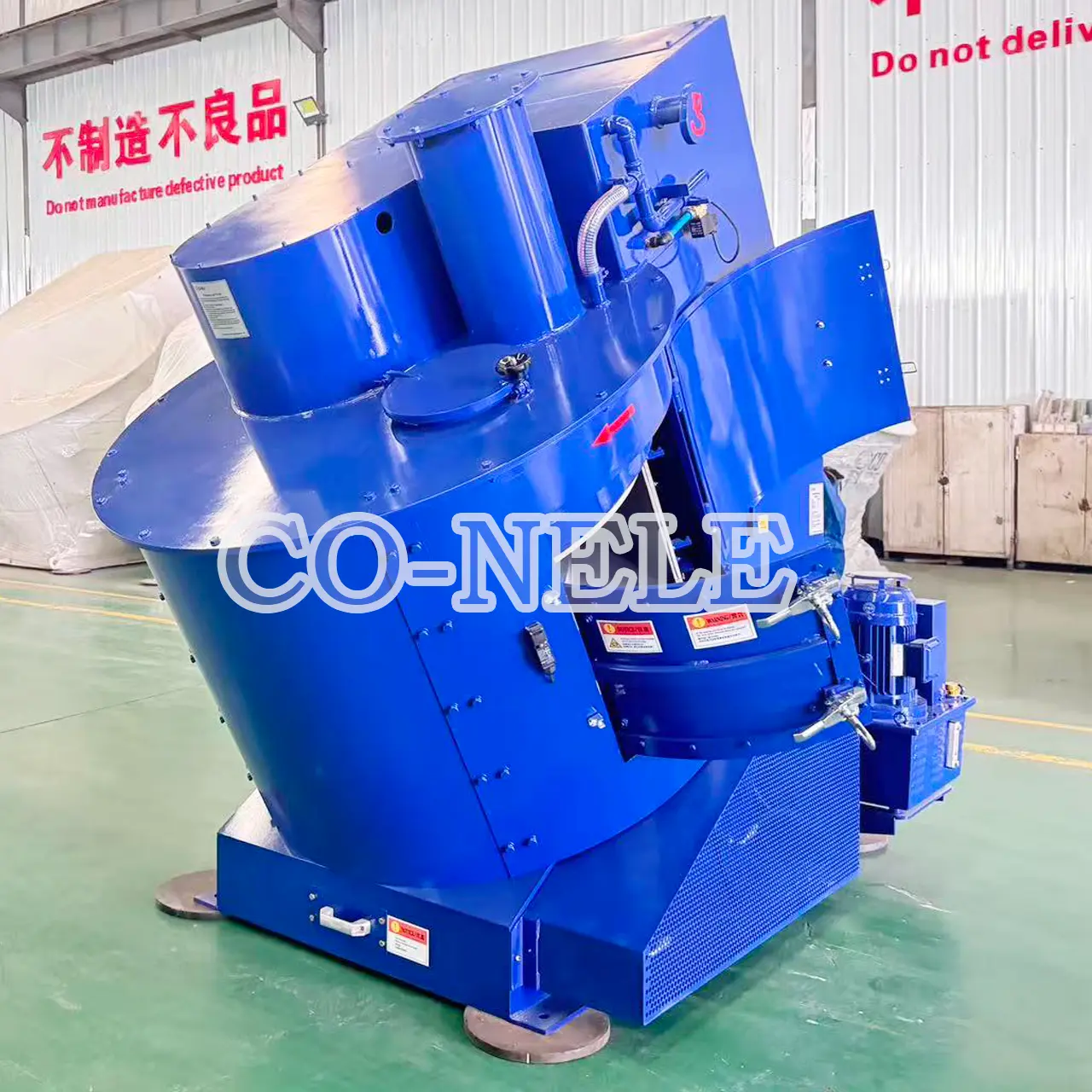
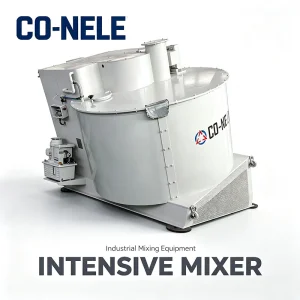
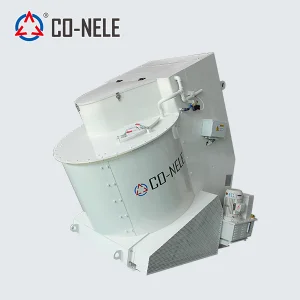
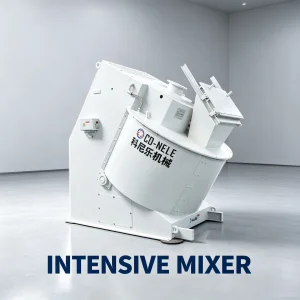
Inclined rotating pan with high-speed rotor: mixes, wets and granulates in a single vessel. Applied to metal powder, ceramics, refractories, battery materials and fertiliser pelletising.
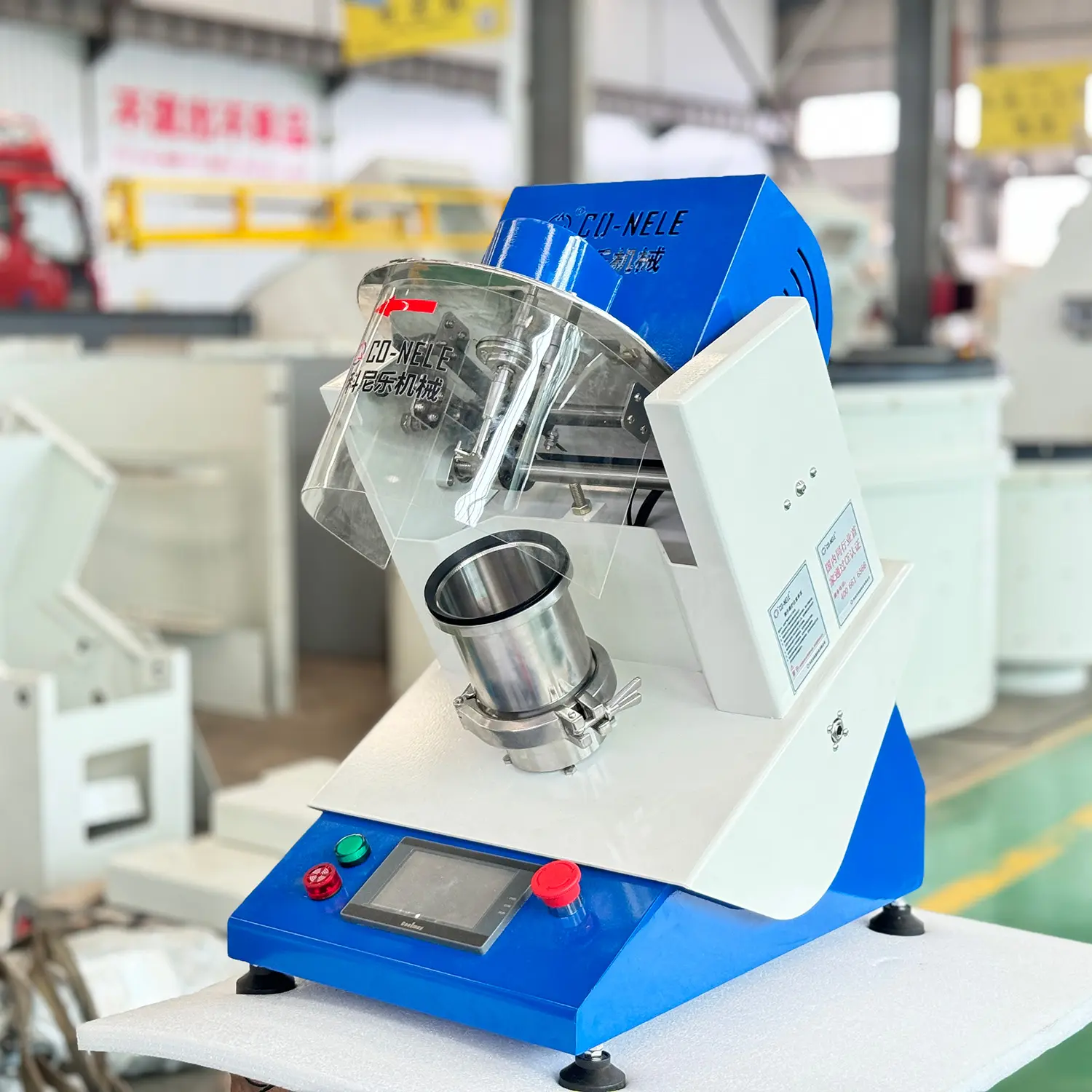
Dust-free wet granulation of alumina, zirconia and ceramic powders — 90%+ sphericity, uniform bulk density and improved flowability for pressing, without the energy load of spray drying.
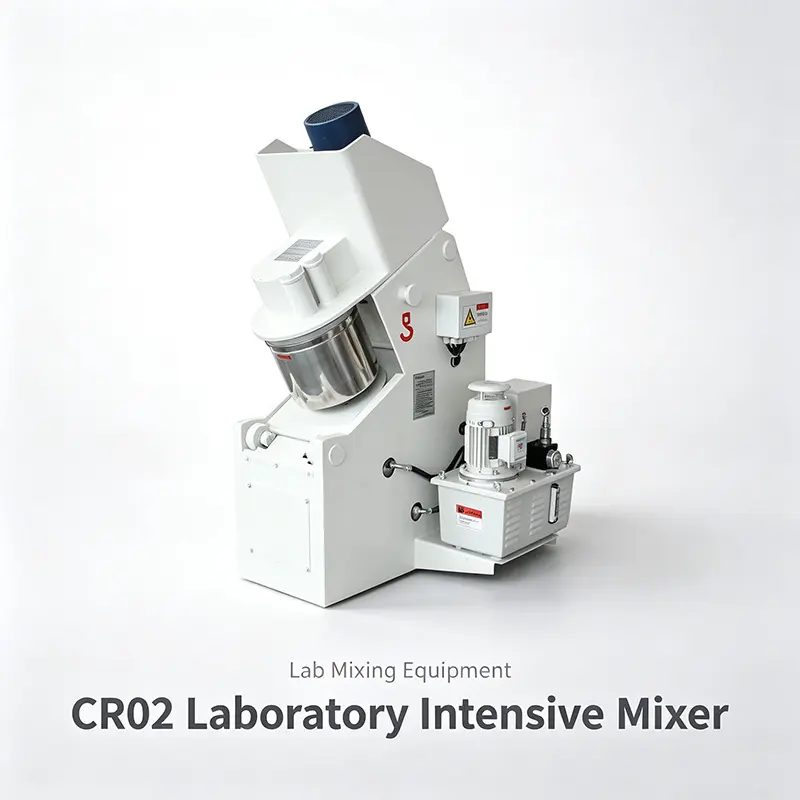
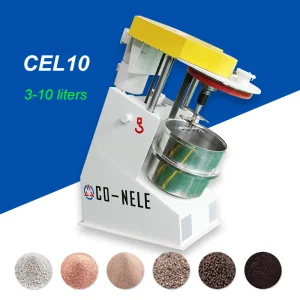
5–75 L lab units that reproduce production-scale kinematics, used for diamond/CBN powder, refractory and UHPC formula development. Scale-up data transfers directly to the industrial model.

Reinforced drive, hardened pan and controlled shear profile for fibre-reinforced ultra-high-performance concrete used in bridge joints, façades and offshore anti-scour grouting.
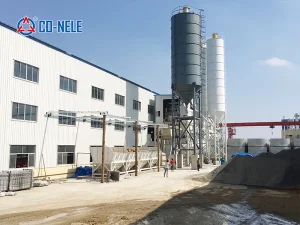
Stationary, compact, foundationless and mobile configurations from 25 to 180 m³/h. Aggregate batching accuracy ±2%, cement and water ±1%, admixture ±1%, all controlled by a Siemens-based PLC with recipe management and printable batch records.
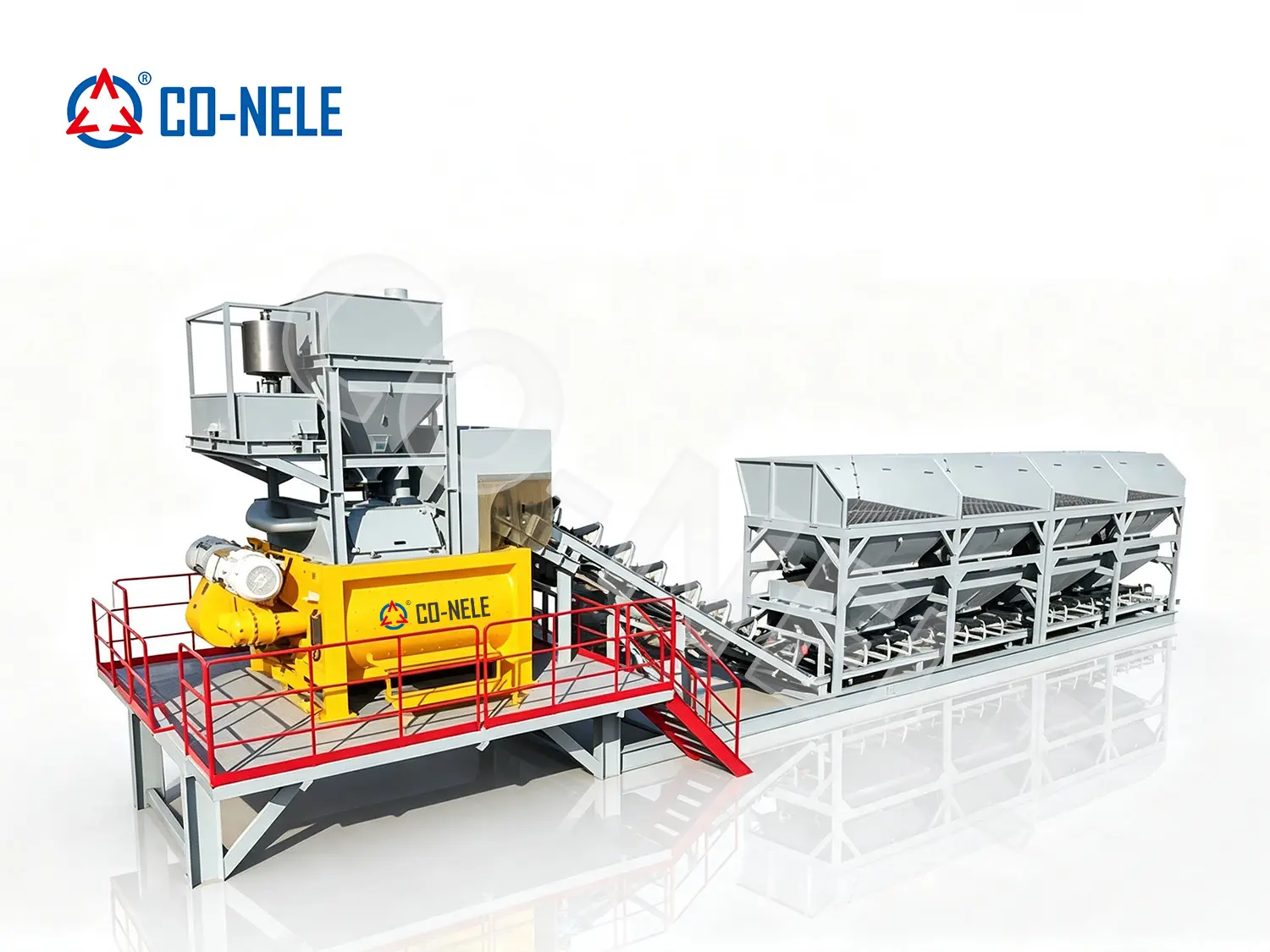
No concrete foundation, no pit: installed on a levelled slab in days. Ideal for leased land, rural projects and contractors who must relocate between contracts.
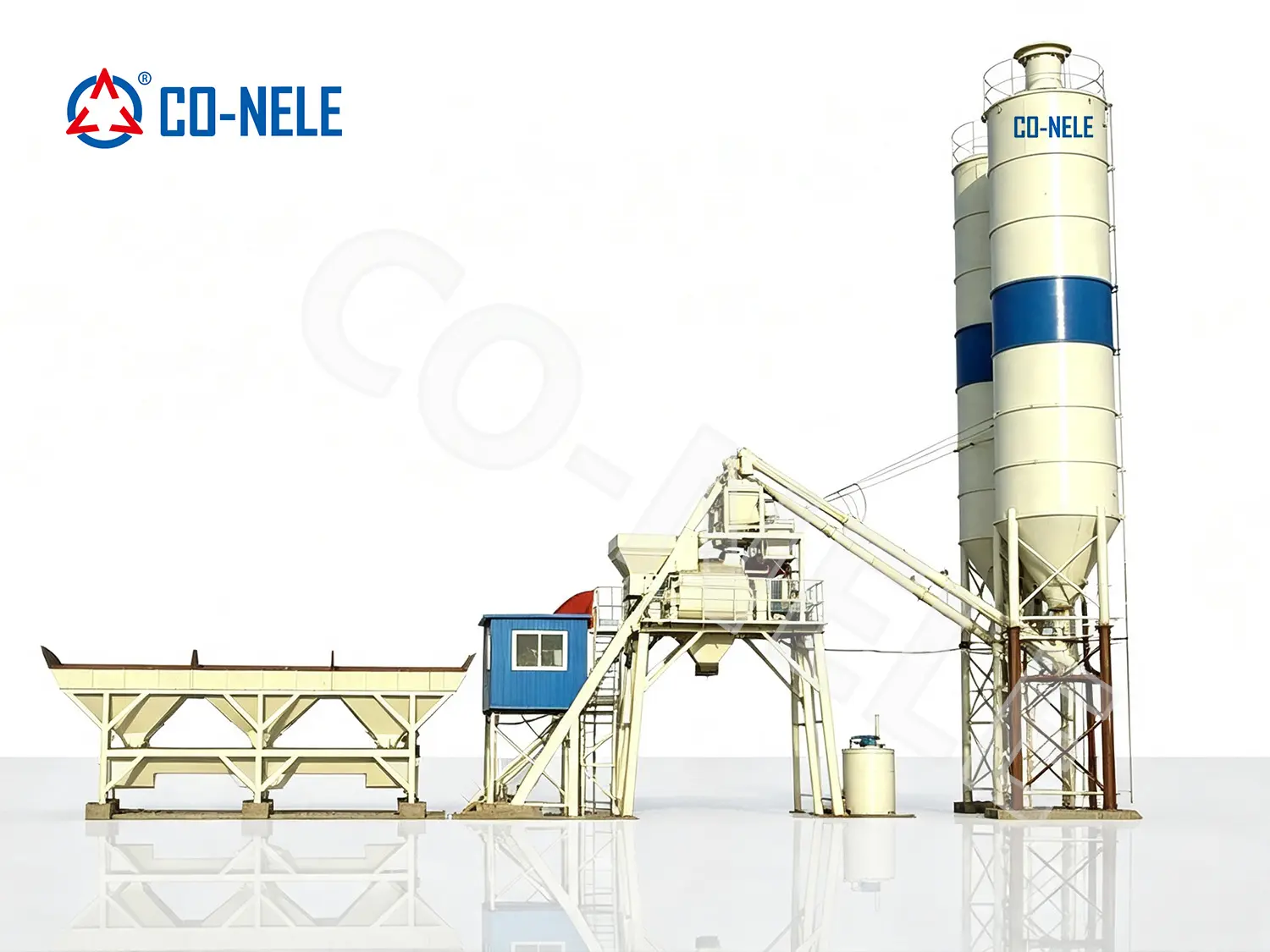
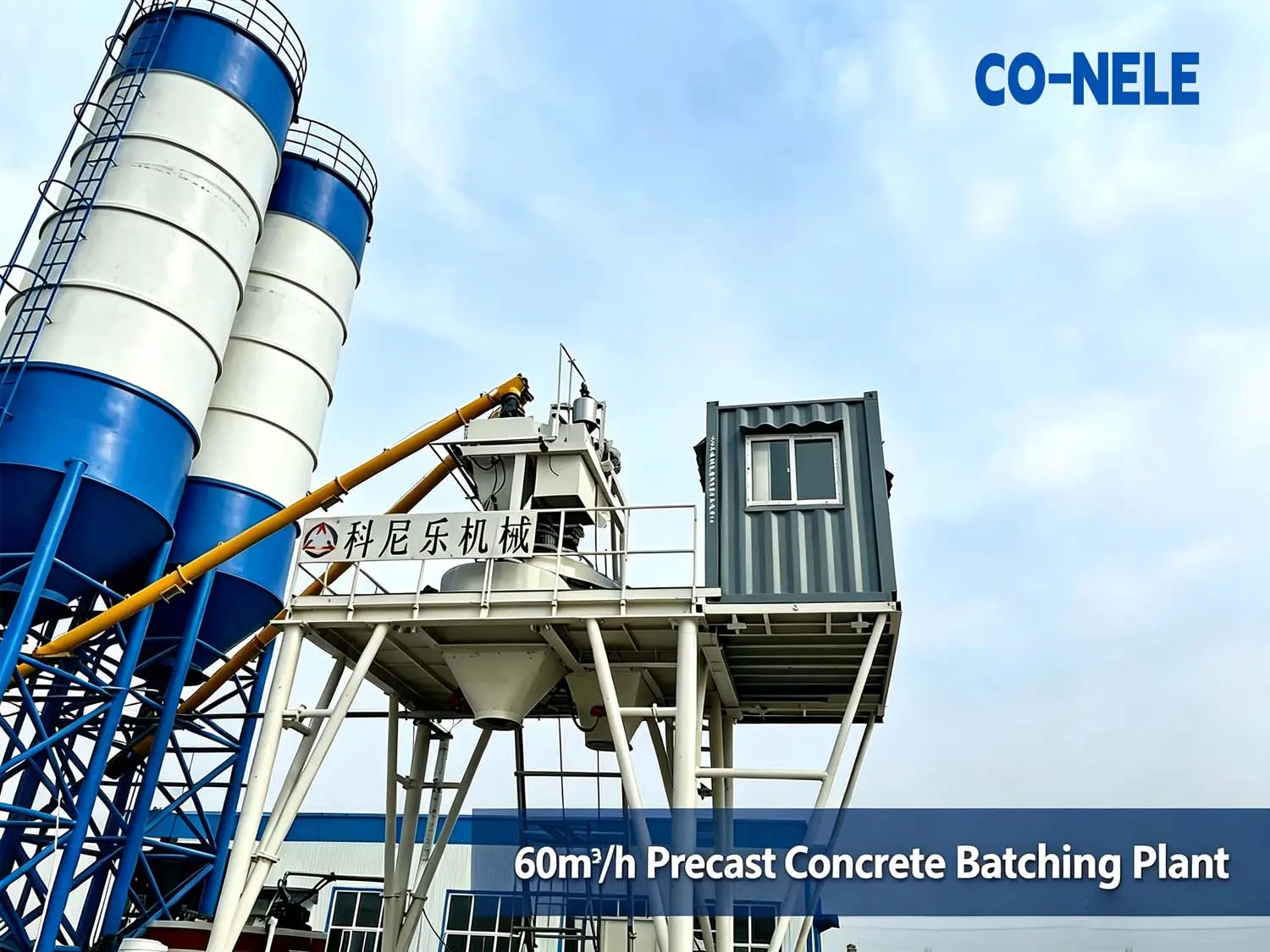
Modular 50 m³/h layout with a small footprint, shipped in standard containers and bolt-assembled on site — the shortest route from container to first batch.
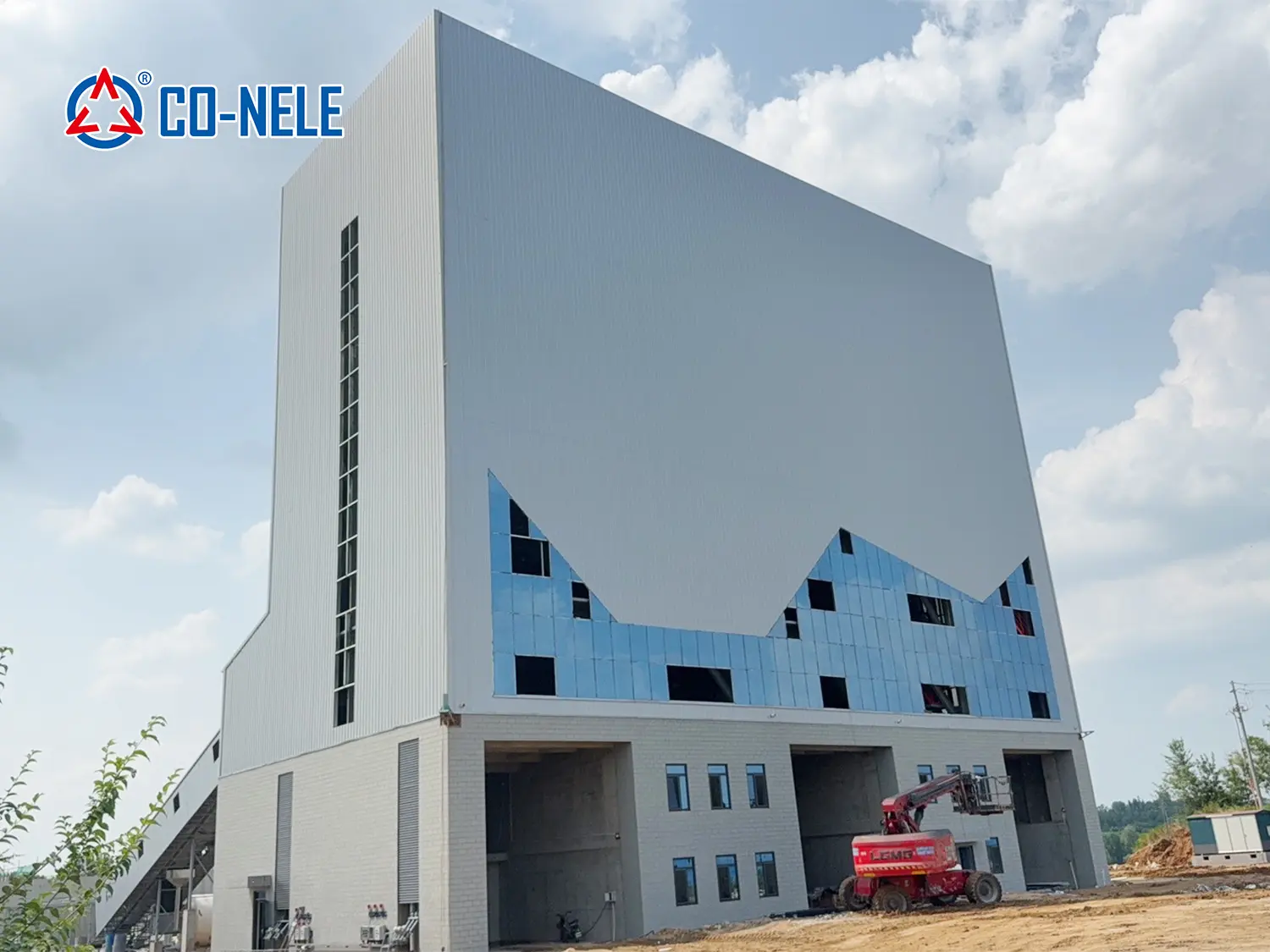
High-capacity stationary plant for commercial concrete supply and major infrastructure, with enclosed aggregate bins, dust filtration and truck-loading logistics design.
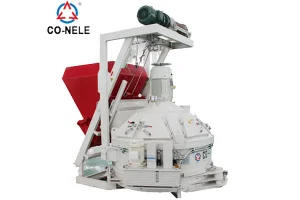
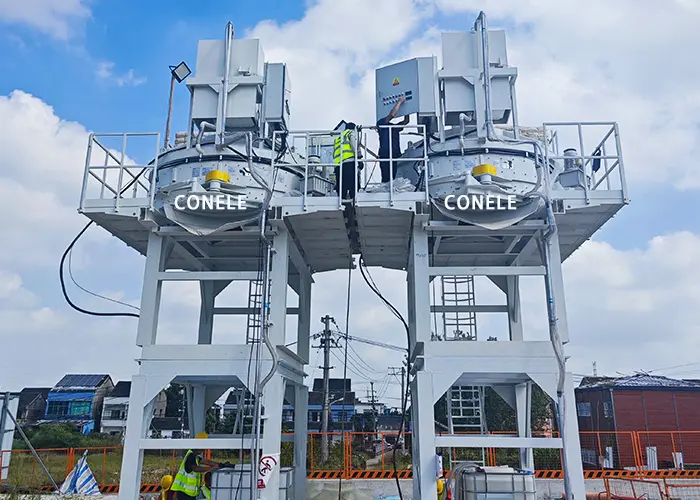
Built around a CMP1000 vertical-shaft planetary mixer for pavers, kerbs, poles, pipes and wet-cast elements where colour consistency and surface finish decide the sale price.
Trailer-mounted batching unit that tows to the next section of road, tunnel or bridge repair and restarts production the same day — a proven answer to long haul distances.
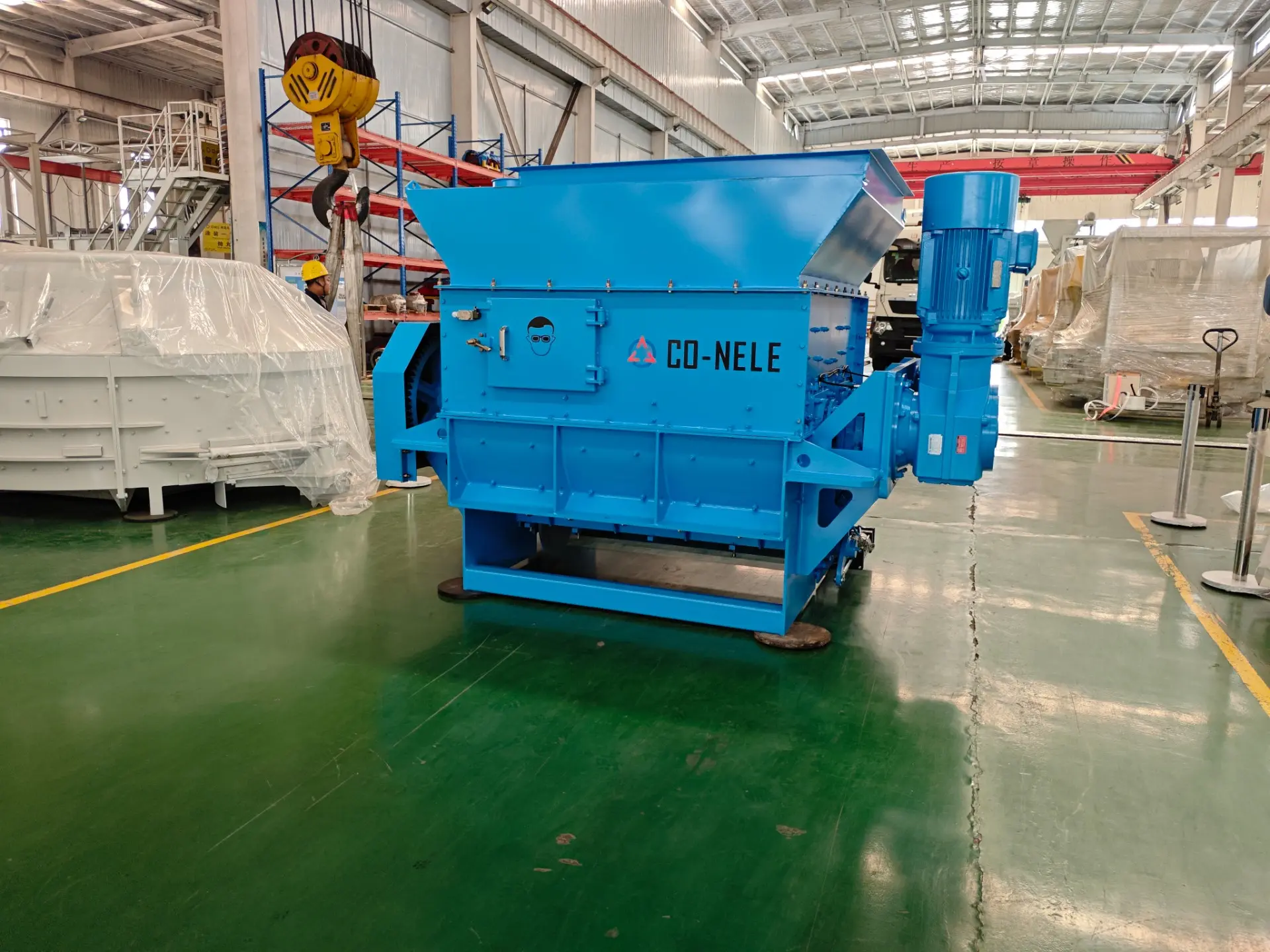
Twin-spiral dry powder mortar mixers and batch asphalt mixers, integrated with silo, screw conveying, weighing and bagging for tile adhesive, plaster and hot-mix asphalt output.
CO-NELE researches, manufactures and services mixing, granulating and coating equipment. Since 2004 our engineers have commissioned machines with more than 10,000 customers: intensive mixers, mixing granulators, vertical-shaft planetary mixers, twin shaft mixers, dry mortar mixers, asphalt mixers and complete production lines.
We hold the leading market share of planetary concrete mixers in Shandong Province, participated in drafting a national industry standard, and are regularly specified by refractory, precast, abrasive, ceramic and powder-metallurgy producers who need repeatable batch quality rather than the cheapest machine.
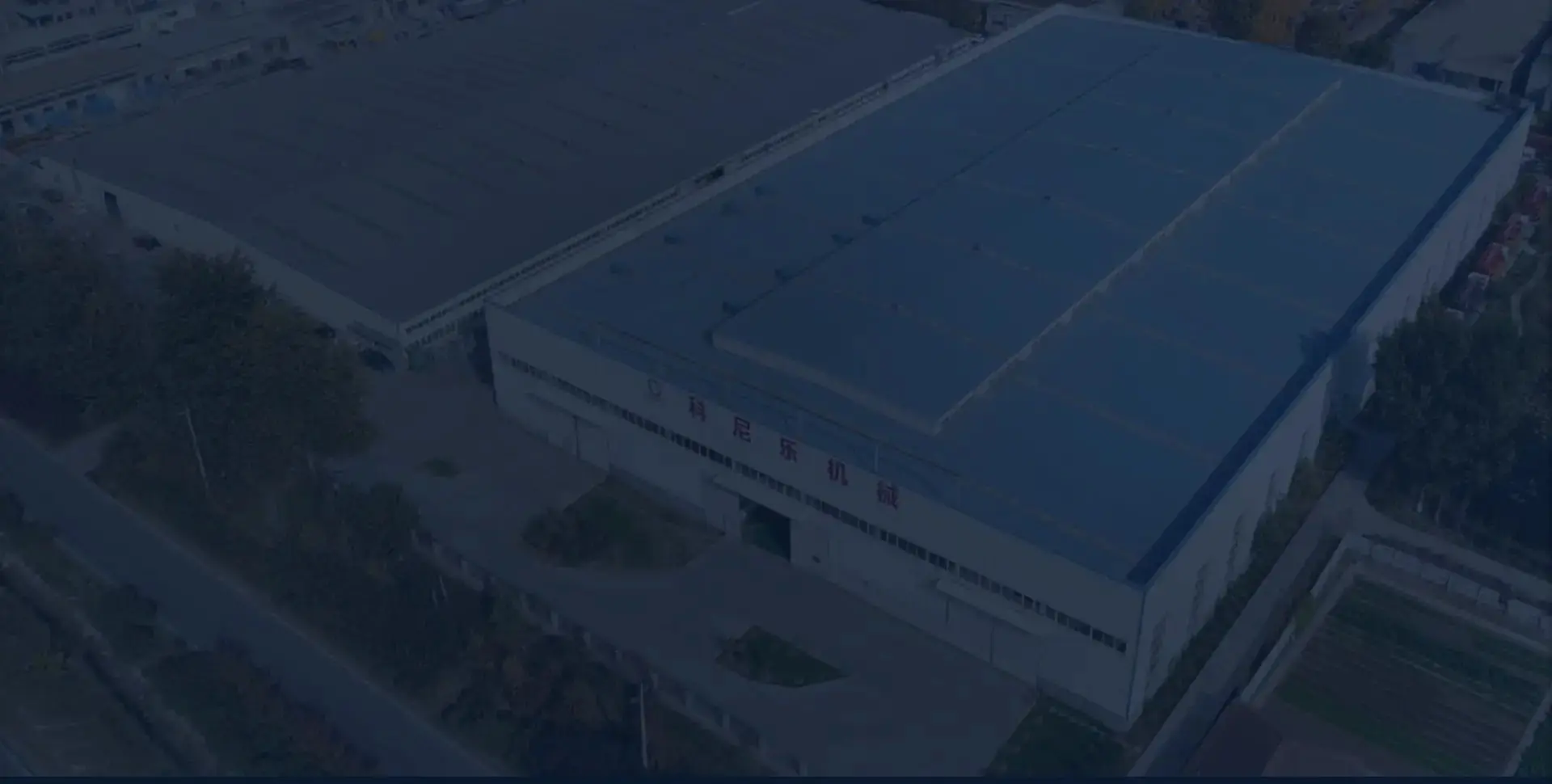
Machining, welding and assembly capacity across three Qingdao production bases, with in-house gearbox test benches and material trials.
Video: planetary mixer assembly, reducer testing and mixing trials in Qingdao.
Machine selection is only the first step. Our engineering team validates the recipe, designs the plant layout, supplies the drawings your civil contractor needs and stays involved through commissioning and wear-part planning.
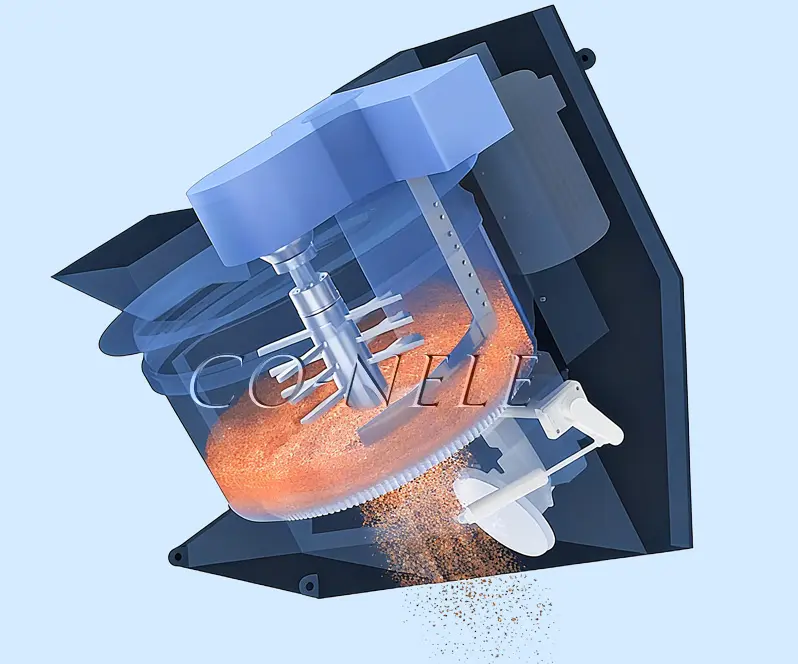
Rotor speed, arm geometry, wear material and discharge method are matched to your material’s bulk density, abrasiveness and moisture window — verified in our lab before the drawing is released for production.
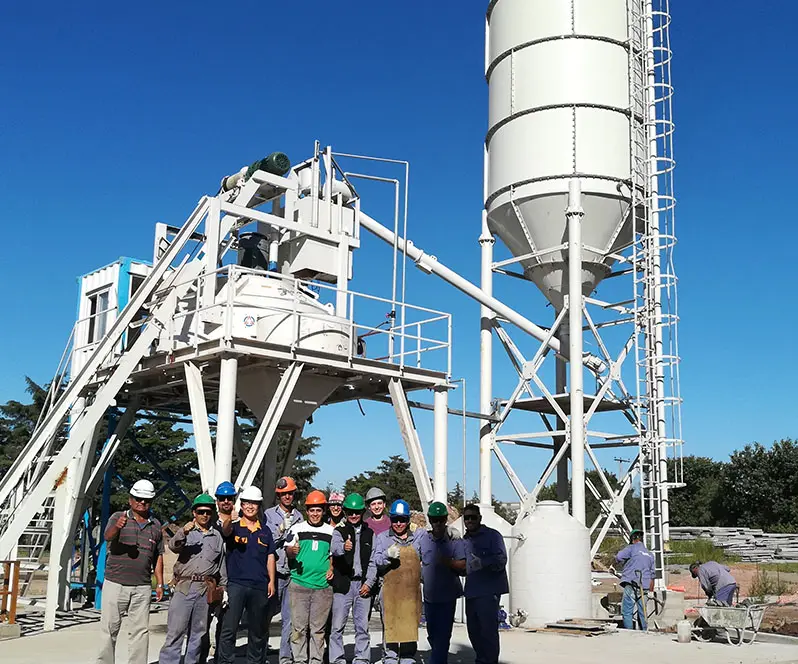
UHPC façade lines in Saudi Arabia, paving-block plants in Thailand, refractory brick plants in Luoyang, ceramic granulation in India and brick production in Kenya — installations we can describe batch-by-batch.
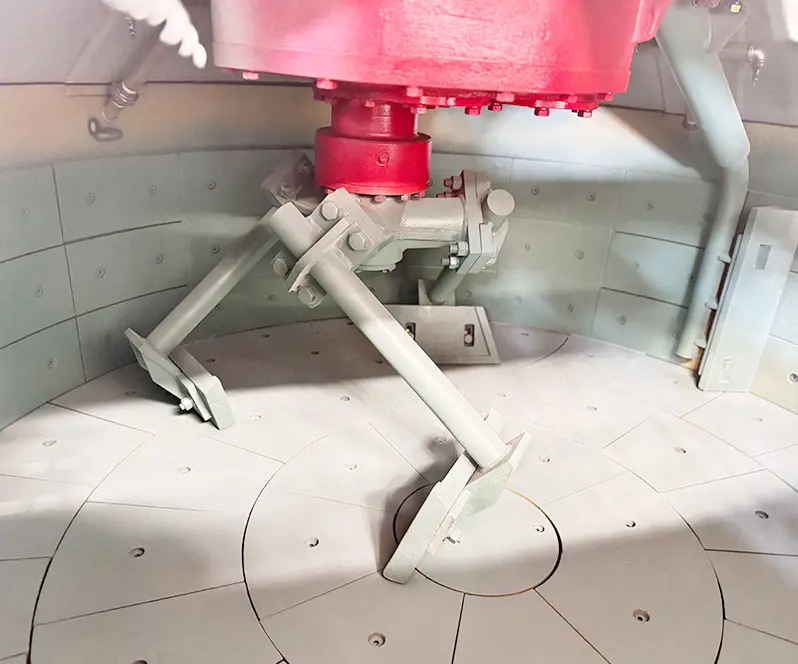
Recorded mixing and granulation trials show real charge volumes, cycle times and discharge behaviour — so a buying committee overseas can evaluate performance without flying to China.

Precast & UHPC, refractories, abrasives & diamond powder, ceramics, powder metallurgy, battery materials, fertiliser, glass, foundry sand and asphalt — each with its own proven mixer configuration.
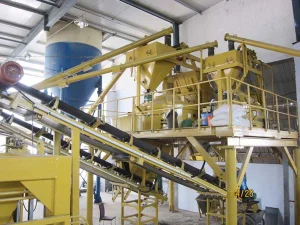
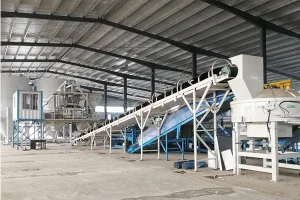
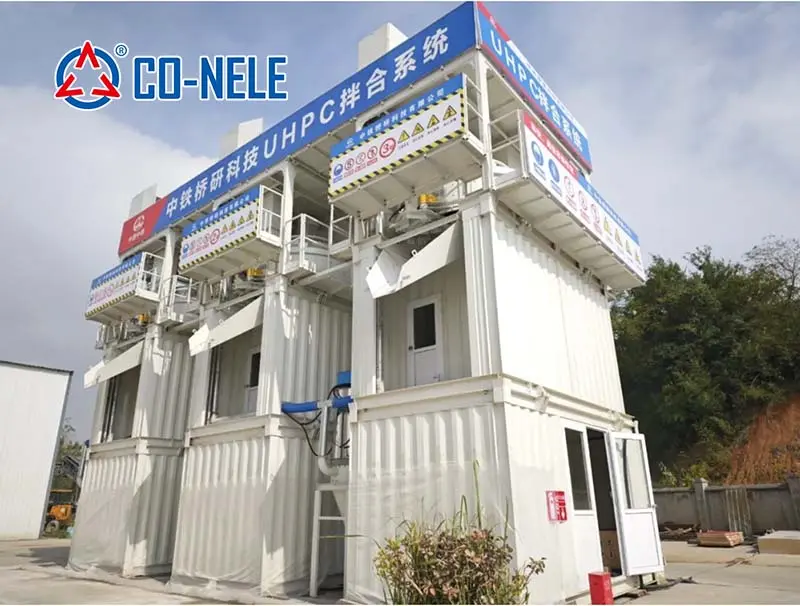
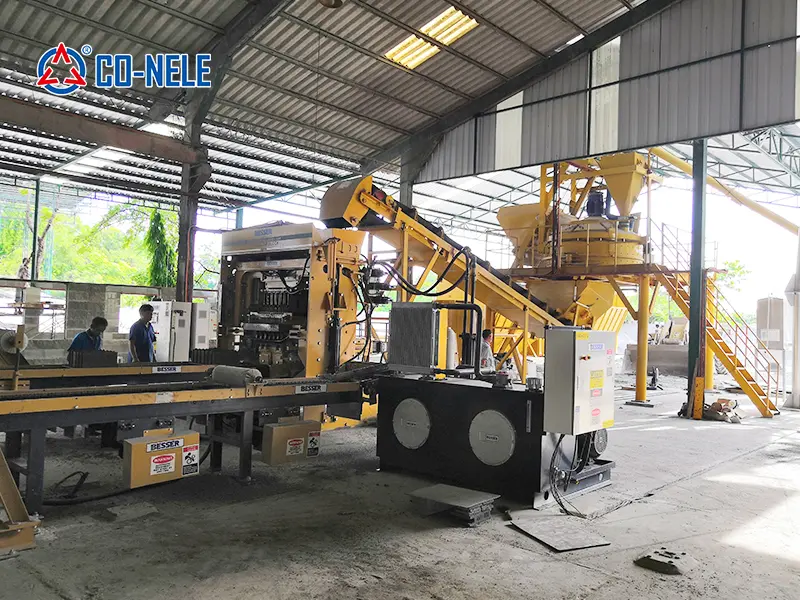
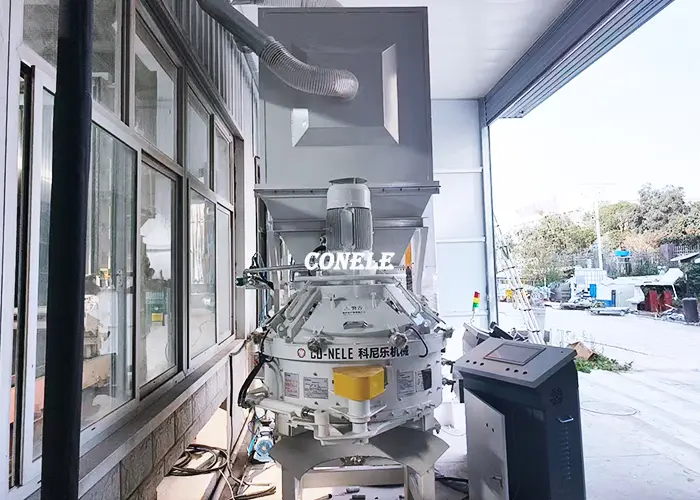
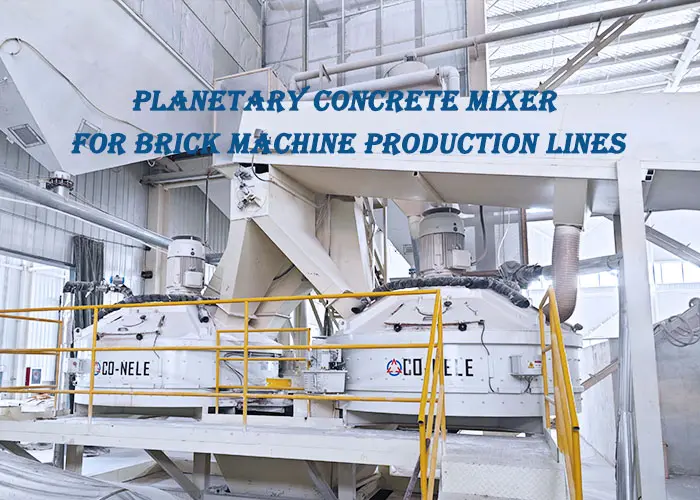
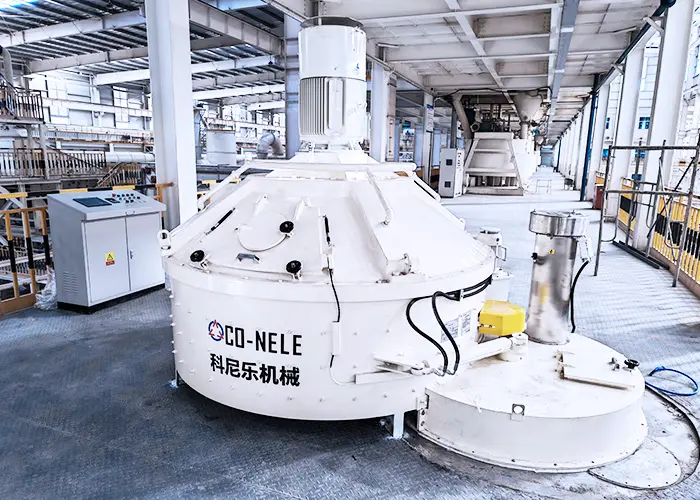
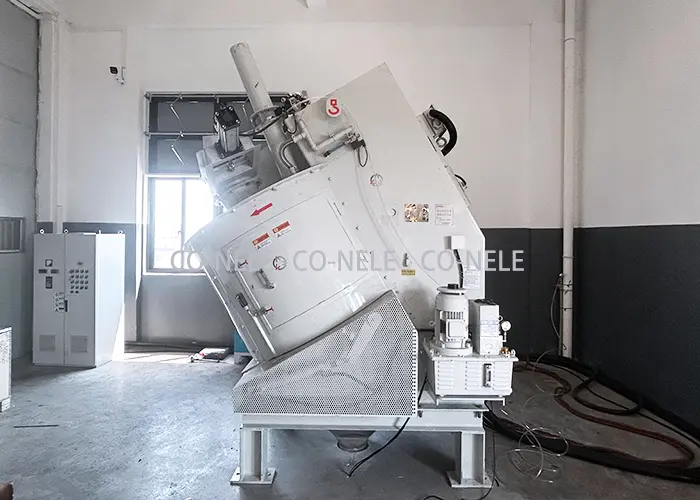
Original factory images from the CO-NELE production environment: intensive mixer and granulator workshop, planetary mixer assembly for precast and UHPC, and the twin shaft / dry mortar production line.
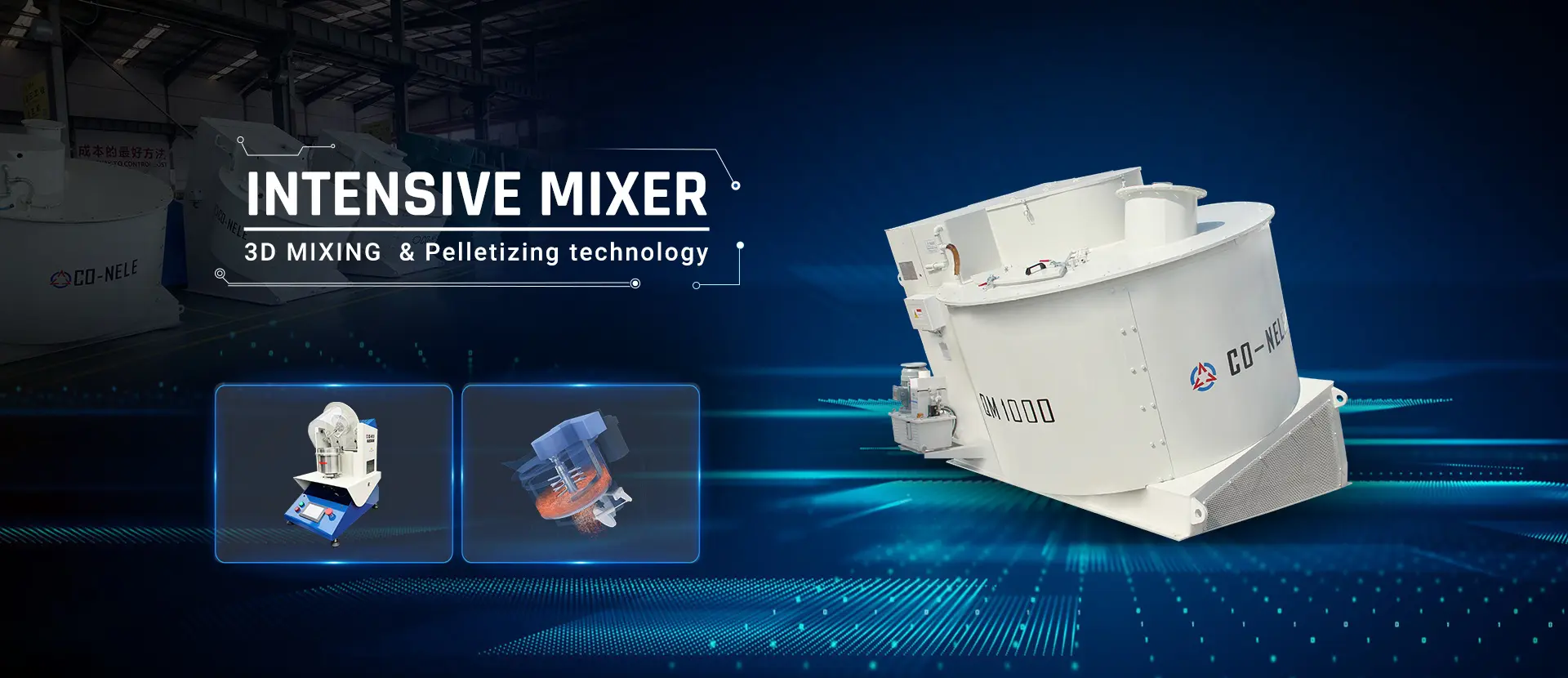
In-house fabrication and assembly for inclined pan intensive mixers used in ceramic, refractory, metal powder and fertiliser granulation.
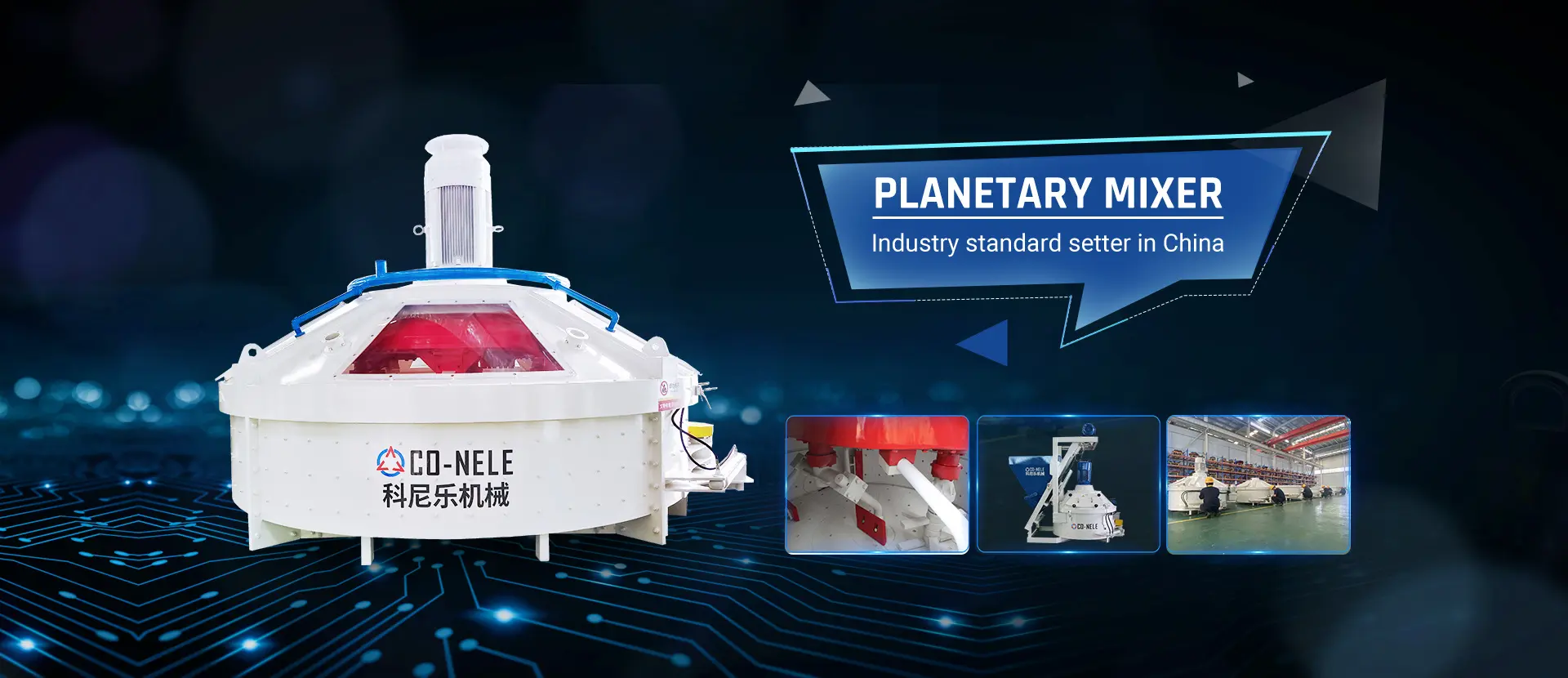
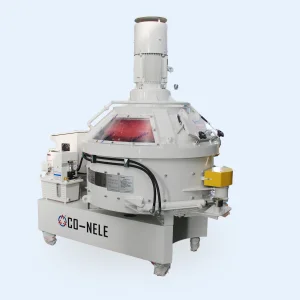
Vertical-shaft planetary counter-current mixers assembled and tested for precast, UHPC, GFRC, refractory and dry-cast block production.
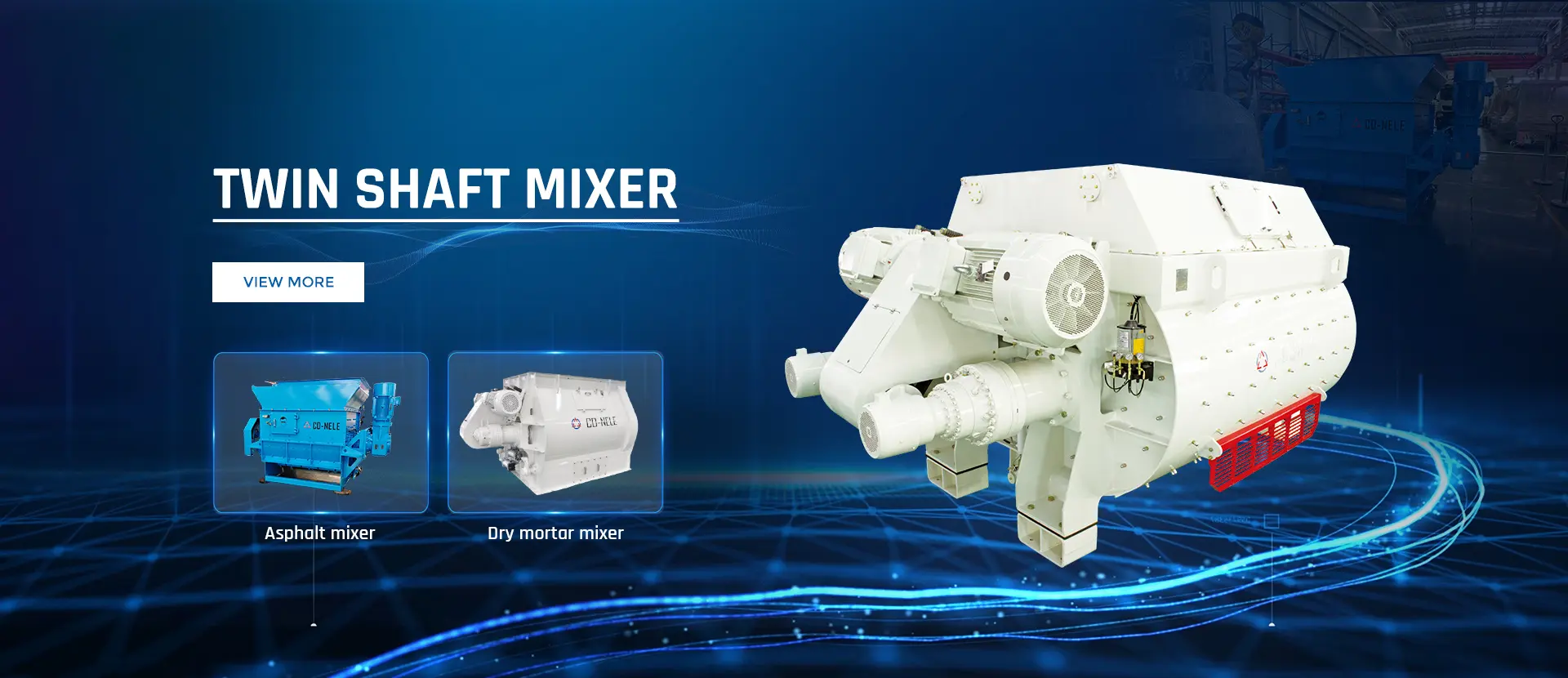
High-throughput twin shaft mixers, asphalt mixers and dry powder mortar mixers integrated with silo, weighing, conveying and bagging systems.
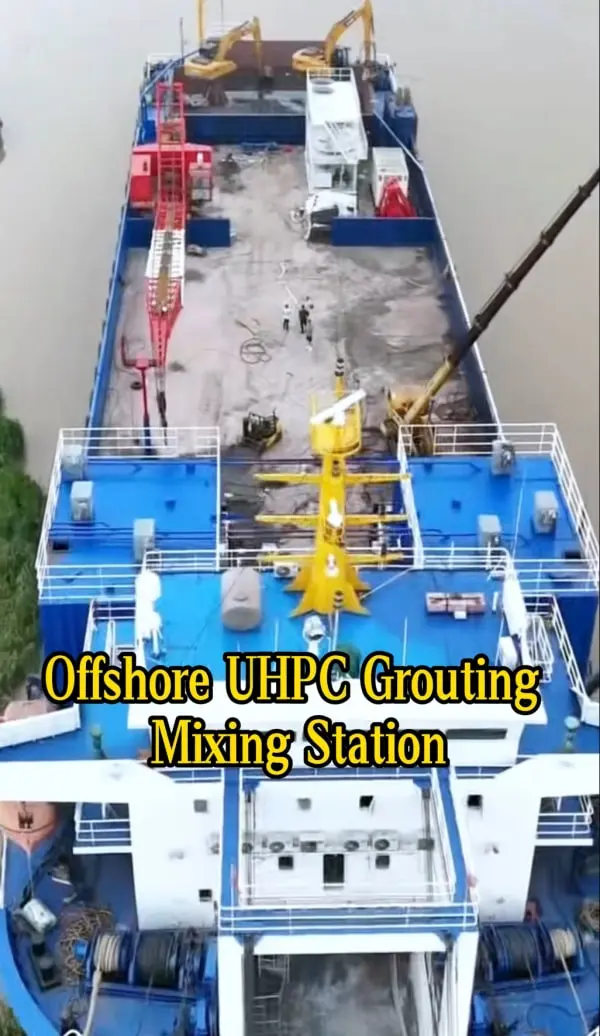
From offshore wind anti-scour grouting to ceramic powder granulation, these are the working environments where CO-NELE equipment is measured every shift.
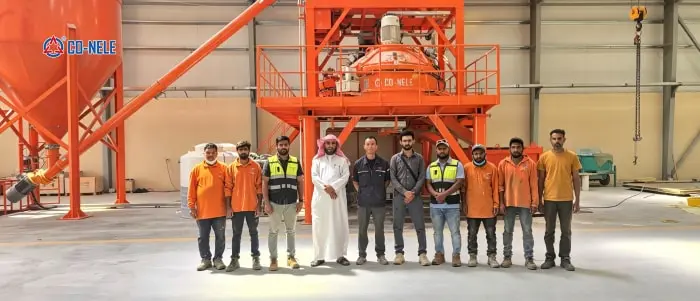
Whether you need higher mixing homogeneity, precise granulation or a full production line, we work from blueprint to commissioning. Three inputs from you are enough for our engineers to start a technical proposal.
Planetary counter-current mixing for fibre dispersion, colour consistency and micro-homogeneity in bridge joints, façades, offshore grouting and architectural precast.
High-chrome wear parts, dust-controlled charging and granulation routes for refractory castables, diamond/CBN powders, alumina and zirconia.
Wet mixing and granulation for flowability, bulk density and press-feed consistency, with recipe documentation suitable for process audits.

CO-NELE supports plant layout, equipment selection, foundation drawings, electrical design and commissioning for block, precast, dry mortar and ready-mix production.
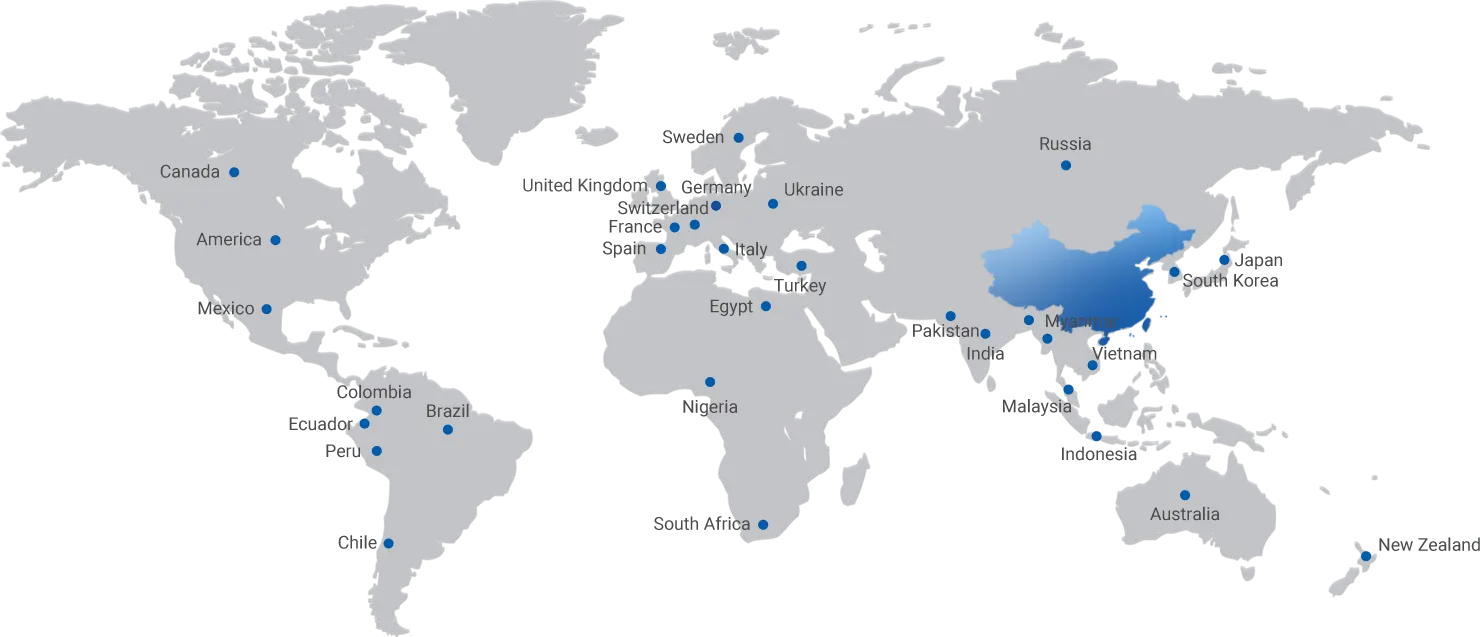
CO-NELE is headquartered in Qingdao, Shandong Province, with three manufacturing bases covering 30,000 m². Equipment and spare parts ship regularly to Germany, the United States, Brazil, South Africa, Saudi Arabia, South Korea, Thailand, India and Kenya, supported by remote commissioning and resident-engineer service.
Machines are built to the buyer’s local supply: 220V, 380V, 415V or 440V, 50 or 60 Hz. CE-compliant electrical design is available on request, with component documentation for project approvals.
Foundation and wiring drawings, English operation and maintenance manuals, recommended spare-part lists, test reports and commissioning checklists are supplied so local contractors and QA teams can work independently.
Installation guidance is delivered by video commissioning or resident engineers. Spare parts ship from stock in Qingdao, and interchangeable spares are retained for models produced since 2004.
The next stage of laboratory dry powder mixer development is not simply “more RPM”. It is the integration of material science, digital recipe transfer, containment, energy measurement and modular production planning into one validated system.
Laboratory trial reports will be linked more directly to production PLC recipes, with batch records, mixing energy and granule characteristics stored together.
In-line moisture, torque and particle-size signals can adjust binder addition and rotor energy, reducing operator dependence in abrasive and refractory recipes.
Containerised pilot lines and modular batching plants will allow producers to validate a recipe in one location and replicate it in another with known scale-up factors.
Wear-part planning and mixing-cycle optimisation will be simulated from material data, reducing unplanned downtime and improving spare-part stocking decisions.
Self-adjusting mixing cells will combine recipe recognition, dust containment and energy monitoring, especially for high-value powders where batch failure is expensive.
Roadmap statements describe industry direction and CO-NELE engineering priorities; final configurations depend on material testing and project requirements.
Straight technical answers written by the CO-NELE process team — the same guidance we give before quoting a machine, plus new laboratory dry powder mixer questions from global buyers.
Choose a vertical-shaft planetary counter-current mixer when the mix is dry, fibre-reinforced, pigmented or ultra-high performance: UHPC, GFRC, refractory castables, dry-cast paving blocks and precast elements that require homogeneity below a 5% coefficient of variation. A twin shaft mixer is the more economical choice for high-throughput ready-mix and wet concrete above 2 m³ per batch, where a 30–45 second cycle matters more than micro-homogeneity.
With standard high-chrome wear parts, liners and mixing arms typically run 90,000–150,000 batches on normal concrete and 40,000–60,000 batches on abrasive mixes such as refractory castables or quartz-rich UHPC. Every wear part is bolt-on and replaceable in the field, and CO-NELE keeps interchangeable spares for all models produced since 2004, so a ten-year-old machine is still serviceable.
Yes. Our Qingdao laboratory operates lab-scale intensive mixers and granulators from 5 to 75 litres. Send 10–20 kg of your powder or aggregate together with the target particle size, moisture window and required capacity; our process engineers return a test report covering granule sphericity, bulk density, mixing time, binder consumption and the recommended production model with scale-up factors.
Machines are built to your local supply (220V / 380V / 415V / 440V, 50 or 60 Hz) and can be supplied with CE-compliant electrical design. Deliveries include foundation and wiring drawings, an English operation and maintenance manual, a recommended spare-part list and a 12-month warranty on the drive unit. Installation is supported by video commissioning or by resident engineers, with spare parts shipped from stock in Qingdao.
Work backwards from truck logistics, not from the brochure figure. Rated output assumes continuous mixing; real output is usually 55–70% of theoretical once loading, discharge and haulage are counted. For a 30 m³/h actual demand, an HZS60 with a 1 m³ planetary or twin shaft mixer is normally the right balance. Also confirm aggregate bin volume covers at least two hours of production and that cement silo capacity matches your delivery interval.
A laboratory dry powder mixer is used to validate powder blending, wetting, granulation, binder distribution, colour consistency and scale-up behaviour before production investment. Typical materials include ceramic powders, refractory fines, diamond/CBN grit, metal powders, battery precursors, adsorbents, fertiliser blends and dry mortar additives. The goal is to produce a repeatable test report that predicts production mixing time, granule size and bulk density.
Only if the laboratory machine reproduces the production machine’s shear profile, tool geometry and discharge behaviour. CO-NELE lab units are designed for kinematic similarity rather than simple bowl mixing, so the recommended scale-up factors can be transferred to intensive mixer granulators and planetary mixers. Material testing is still required because powder rheology changes with moisture, binder and particle-size distribution.
Project-specific solutions include sealed charging, dust extraction, smooth vessel surfaces, quick-clean tooling, dedicated gaskets and validated wash-down procedures. For highly active or abrasive powders, we review containment requirements with the buyer before selecting the laboratory mixer configuration and discharge method.
Send the material composition and safety data, bulk density, target particle size, moisture window, batch size, required output, available voltage and any compliance requirements. A 10–20 kg sample is usually enough for the Qingdao laboratory to benchmark mixing time, granule sphericity and the recommended production model.
Process notes, comparison studies and test reports published by our engineering team.
Where old pan designs lose homogeneity on dry castables, and how counter-current kinematics recover it.
Sep 01, 2026RefractoriesHigh-efficiency metal powder granulation: flowability, bulk density and press-feed consistency.
Jul 23, 2026Powder MetallurgyWhy the gearbox — not the pan — determines the service life of a planetary concrete mixer.
Jul 16, 2026Planetary MixersEnergy, binder and yield comparison across three granulation routes for ferrous powders.
Jul 15, 2026GranulationLab granulator trial data, moisture curve and scale-up recommendation for fertiliser producers.
Jul 13, 2026FertiliserThe models, capacities and applications international buyers are comparing right now.
Jul 05, 2026Market DataSend your material, target specification and capacity. You will receive a model recommendation, layout concept and full technical catalog — reviewed by the engineers who build the machine.
Manufacturer of planetary concrete mixers, intensive mixer granulators, twin shaft mixers, dry powder mortar mixers, laboratory mixers and complete concrete batching plants since 2004.
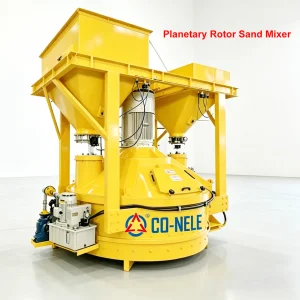
Eight further models from the supplied product set, retaining the original image assets and product URLs. These machines cover inclined intensive mixing, block and wall-panel batching, planetary rotor sand mixing, lab-scale granulation and planetary concrete mixing for export markets.