
CO-NELEMixing & Granulation
Explore our core product lineup engineered for extreme durability, low cycle times, and micro-homogeneity across demanding concrete and powder industrial applications.
A strategic overview of how decarbonization, mega-infrastructure demands, and advanced material formulations are reshaping global equipment procurement requirements.
The global industrial concrete landscape is currently undergoing a structural transformation driven by two converging forces: strict global carbon-neutrality mandates and the surging demand for ultra-high-performance structural materials. Traditional ready-mix plants designed purely for high volumetric output without precise shear control are no longer sufficient for contemporary engineering projects. Modern mega-structures—ranging from offshore wind turbine foundations and deep-water sea-crossing bridges to high-speed rail networks and nuclear containment vessels—demand concrete formulations with exceptionally low water-binder ratios, heavy mineral add-mixtures (such as fly ash, silica fume, and slag), and steel or synthetic fiber reinforcement.
Consequently, international procurement agencies and EPC (Engineering, Procurement, and Construction) conglomerates are shifting their evaluation criteria. Capital expenditure (CapEx) decisions are no longer determined solely by initial purchase price; rather, they are governed by Total Cost of Ownership (TCO), micro-mixing homogeneity, automated dosage accuracy, and operational reliability under continuous multi-shift operations.
To stay competitive, industrial concrete plant manufacturers must integrate advanced mechanical dynamics with digital IoT automation. Five critical technological vectors define the current standard for industrial-grade concrete plants globally:
Moving away from single-axis mixing to counter-current forced planetary rotation that guarantees 100% material envelope coverage without dead zones, critical for UHPC and SCC dry-cast mixes.
Integration of real-time microwave moisture sensors in mixing pans and aggregate bins with closed-loop PLC feedback to adjust added water dynamically per batch within milliseconds.
Closed-loop reclamation units capable of separating aggregate slurry and recycling treated water directly back into mixing sequences, maintaining zero environmental discharge.
Why leading global construction firms choose Qingdao-manufactured industrial concrete equipment for unparalleled precision, cost-efficiency, and operational longevity.
The operational lifespan of any industrial concrete plant hinges upon its core drive component: the planetary reducer. While many global assemblers outsource gearboxes to third-party providers—introducing vulnerability in supply chains and delays in replacement parts—leading Chinese manufacturers such as CO-NELE maintain fully integrated CNC machining centers, heat treatment plants, and load-testing facilities in Qingdao.
By engineering specialized vertical-shaft planetary gearboxes specifically tuned to withstand severe torsional vibration and heavy shock loads, Chinese Industry 4.0 factories provide drive systems with a Mean Time Between Failures (MTBF) exceeding 50,000 continuous operating hours. This vertical integration allows for total traceability of metallurgical casting quality, gear grinding tolerances (ISO Class 6), and structural shaft alignment.
A rigorous comparative guide for structural engineers and plant directors to match mixer mechanics with material rheology.
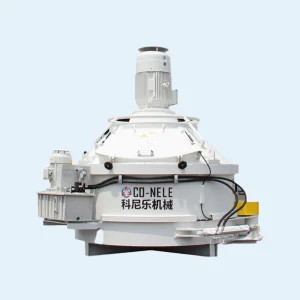
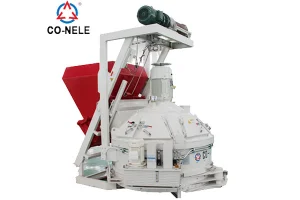
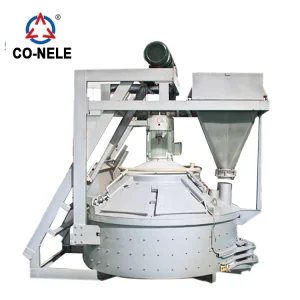
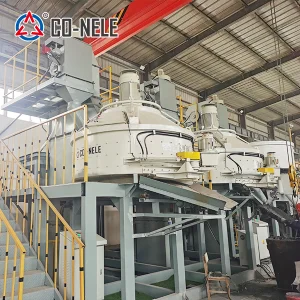
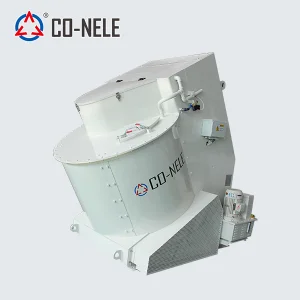
Vertical shaft rotation paired with satellite arm revolution. Ideal for zero-slump dry-cast, UHPC, precast elements, block manufacturing, and colored concrete. Guarantees complete dispersion without aggregate segregation.
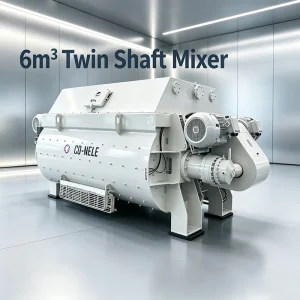
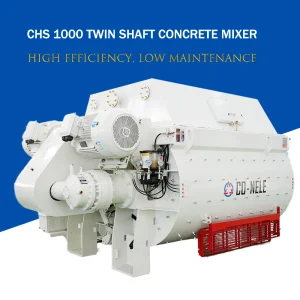
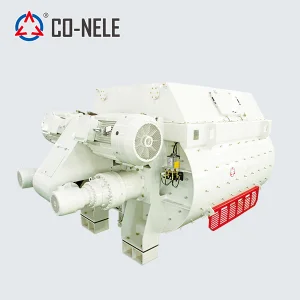
Dual horizontal counter-rotating axes creating high-turbulence overlapping shear zones. Designed for high-volume ready-mix plants (HZS series) and mass infrastructure dam/road pours where high throughput is critical.
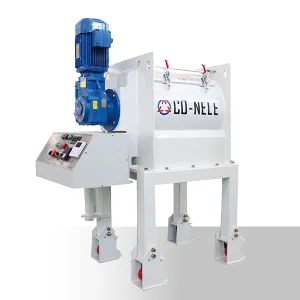
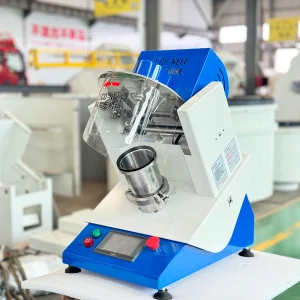
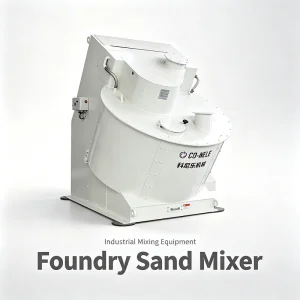
Inclined rotating pan combined with high-speed rotor tools running at variable velocity vectors. Enables mixing, micro-pelletizing, and wet granulation in a single step for refractory, ceramics, and chemical powders.
Engineered to perform seamlessly under severe ambient temperatures, remote geographical constraints, and specialized material demands.
Engineered for mixing dense, anti-scour grouting and chloride-resistant UHPC mixes for marine piling, harbor seawalls, and wind farm foundations. Custom anti-corrosion marine-grade painting and sealed electrical enclosures protect controls from salt-spray deterioration.
Deployed extensively across Middle Eastern desert sites. Plants are fitted with integrated ice-water dosing systems, insulated aggregate holding hoppers, and shaded belt conveyors to control concrete hydration temperature prior to discharge.
Equipped with thermal-insulated cladding, boiler-heated aggregate bin systems, and low-temperature synthetic lubricants allowing reliable continuous batching down to -30°C in mountainous or northern climates.
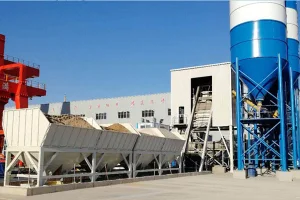
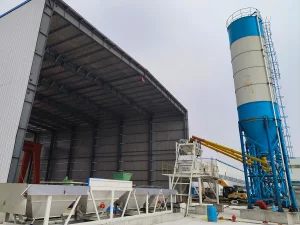
Designed for congested metropolitan infrastructure projects requiring zero ground-foundation digging. Fast-bolted modular frames permit complete erection within 72 hours on temporary slab sites with minimal noise and dust emissions.
Discover our specialized machinery tailored for concrete wall panels, refractories, dry mortar synthesis, and advanced powder metallurgy.
Expert insights regarding equipment sizing, wear-part life cycles, international electrical compliance, and custom material trial runs.
Planetary counter-current mixers utilize a vertical drive system where mixing arms revolve around a central axis while simultaneously rotating at high speeds in counter-directional paths. This kinematic pattern ensures complete geometric pan coverage without dead zones, eliminating cement balling and aggregate segregation. For precast, dry-cast blocks, UHPC, and colored concrete, planetary mixers achieve a coefficient of variation (CV) under 5% within 60 seconds, whereas twin-shaft mixers are optimized for macro-volume ready-mix applications where cycle speed takes priority over micro-homogeneity.
Under standard operating conditions with normal gravel aggregates (Mohs hardness 6-7), CO-NELE high-chrome alloy wear liners (hardness HB600+) and mixing paddles typically deliver 100,000 to 150,000 batches. When processing highly abrasive raw materials such as quartz sand, refractory castables, or metallic fiber UHPC, operational lifespan ranges from 40,000 to 60,000 batches. All wear liners feature bolt-on modular designs, enabling rapid field replacement without flame-cutting or major structural dismantling.
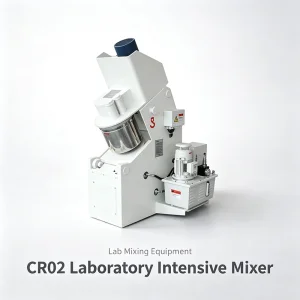
Yes. Our testing laboratory in Qingdao operates a dedicated fleet of lab-scale intensive mixers, granulators, and planetary mixers ranging from 5 to 75 liters. International buyers can ship 10 to 50 kg samples of their raw aggregate, binder, or industrial mineral powder. Our process engineering team will run trial batches, establish rheology curves, evaluate binder consumption, determine optimal rotor speed, and supply a comprehensive technical report including granule sphericity and bulk density before formal order placement.
All export machinery is built to regional electrical specifications, supporting 220V, 380V, 415V, 440V, and 480V grid inputs at 50Hz or 60Hz. Control cabinets feature Siemens PLC automation, Schneider low-voltage switchgear, and optional CE/UL certification. Full safety interlocks, pneumatic maintenance access locking mechanisms, and emergency power-off systems are integrated standard to comply with OSHA, EU Machinery Directive 2006/42/EC, and international jobsite safety audits.
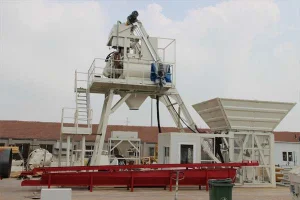
Mobile concrete plants (such as the MBP10 series) feature integral steel chassis and drop-down support legs that eliminate up to 90% of traditional concrete foundation requirements. This reduces civil works expenditure by $20,000 to $50,000 per installation site and slashes plant setup time from 3 weeks down to under 48 hours. Mobile units are ideal for linear infrastructure contracts (roads, railways, pipelines) where equipment must relocate every 6 to 12 months.