CO-NELEMixing & Granulation
Explore our core engineering portfolio deployed across global mega-infrastructure projects.
Comprehensive breakdown of China's premier 180m³/h compulsory concrete mixing system.
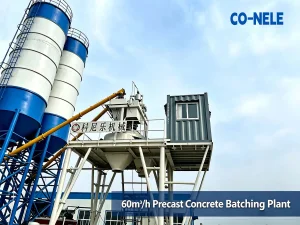
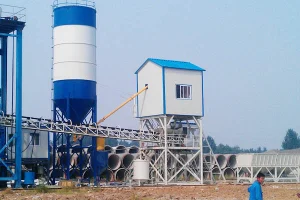
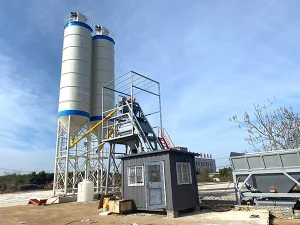
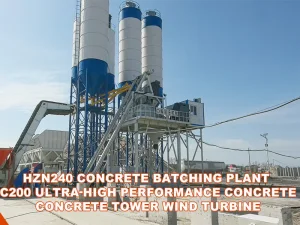
The HZS180 Concrete Batching Plant represents the pinnacle of heavy-duty, high-capacity ready-mix concrete production technology engineered in China. Standardized around a theoretical production capacity of 180 cubic meters per hour (180 m³/h), this stationary concrete mixing plant is specifically designed to satisfy the rigorous demand of large-scale infrastructure projects including high-speed railways, maritime mega-bridges, commercial precast yards, and nuclear power plant foundations.
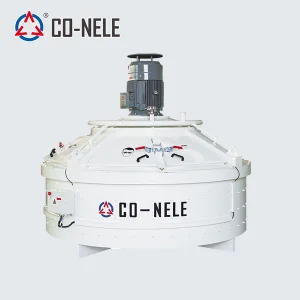
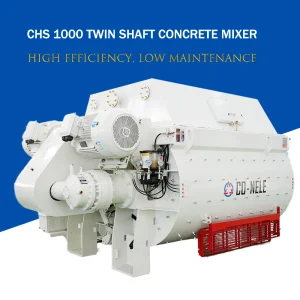
At the core of the HZS180 system lies the JS3000 twin-shaft compulsory concrete mixer, featuring a 3.0 m³ nominal discharge batch volume. Driven by synchronized heavy-duty electric motors connected to planetary gearboxes, the mixing shaft counter-rotates to establish a 3D turbulent flow pattern. This intense kinetic movement ensures micro-homogeneity of the mix within a rapid 30-to-45-second cycle time, maintaining a coefficient of variation (CV) of less than 5% even when dosing complex chemical admixtures, silica fume, and fly ash.
Material conveying is structured around an inclined closed-trough belt conveyor system equipped with self-aligning idlers, dual-side safety pull-cord switches, and an anti-rollback ratcheting mechanism. Aggregate storage bins (typically configured as 4-compartment PLD4800 systems) utilize individual coarse and fine weighing hoppers supported by multi-load-cell suspensions. This guarantees dynamic weighing accuracy within ±2% for aggregates and an incredible ±1% for cementitious powders, water, and liquid additives.
Adapting China's heavy industrial machinery to diverse global climate zones and soil geotechnics.
Specially customized with inline water-chilling units, ice-dosing screw conveyors, and fully thermal-insulated aggregate bins. Designed to operate continuously at ambient temperatures exceeding +50°C while keeping concrete batch temperatures strictly below +32°C.
Configured with fully enclosed sandwich-panel cladding, steam-injection jacketed mixing drums, and heated aggregate storage hoppers. Guarantees uninterrupted batching efficiency during severe winters down to -35°C without freezing line valves.
Deployed for casting massive anti-scour blocks, undersea tunnel segments, and deep-water port caissons. Integrates high-shear slurry mixers and micro-dosing systems capable of handling anti-washout admixtures and salt-resistant slag cements.
The transition from traditional batching plants to smart, AI-driven zero-carbon concrete nodes.
The development of Chinese HZS180 batching plants is experiencing a technological paradigm shift. The integration of Industrial Internet of Things (IIoT) and advanced material processing allows modern plant operators to transition from reactive monitoring to predictive control.
| System Architecture | Traditional HZS180 Generation | Next-Gen AI-Driven HZS180 Plant | Operational Gain / Advantage |
|---|---|---|---|
| Moisture Control | Manual sampling & manual recipe adjustment | High-frequency microwave probes in bins & mixer | Real-time w/c ratio dynamic auto-compensation |
| Control Automation | Basic PLC with fixed relay logic | Siemens S7-1500 + AI SCADA + Cloud Sync | Zero batch aborts; remote diagnostics ready |
| Dust Suppression | Standard bag filters at cement silos | Multi-stage pulse jet filters & fully sealed enclosures | Emissions reduced to < 10 mg/Nm³ (EU Standard) |
| Wear Diagnostics | Visual inspection during scheduled downtime | Vibration & acoustic thermal sensors on reducers | Predictive maintenance alerts prior to mechanical failure |
| Energy Efficiency | Fixed speed AC induction drives | VFD soft-start drives + kinetic energy recovery | 15% to 22% overall reduction in kWh per m³ |
Furthermore, as global environmental standards move toward low-carbon and decarbonized concrete manufacturing, the modern HZS180 plant is optimized to handle Calcined Clay Limestone Cement (LC3), alkali-activated geopolymer binders, and recycled concrete aggregates (RCA). Specialized powder dosing systems prevent cross-contamination and ensure micro-dosing precision for carbon-capture concrete curing technologies.
Unmatched industrial clusters, vertically integrated production, and global delivery guarantees.
China’s dominance as the global manufacturing hub for concrete mixing equipment rests on complete industrial supply chain integration. Leading factories located in Shandong and Henan industrial corridors leverage centralized access to heavy structural steel mills, high-chrome casting foundries, high-precision gear machining facilities, and world-class port logistics in Qingdao and Shanghai.
From raw Q355B steel plate plasma cutting to planetary gearbox assembly, heat treatment, and electrical control cabinet wiring—everything is executed within in-house manufacturing bases.
Mixing blades and pan liners are cast using proprietary high-chromium alloy matrices (Cr15Ni3 / Cr26), yielding hardness levels exceeding HRC 62 and extending wear life past 150,000 mixing cycles.
Modular bolt-together component design enables complete HZS180 plant manufacturing within 25 to 30 calendar days, reducing site establishment downtime by up to 40% compared to European counterparts.
Strategic CAPEX vs. OPEX evaluation for commercial concrete suppliers and EPC contractors.
Investing in an HZS180 concrete batching plant requires balancing initial Capital Expenditure (CAPEX) with long-term Operational Expenditure (OPEX). When evaluated against European or North American machinery of identical capacity, Chinese HZS180 plants deliver an initial CAPEX savings of 35% to 50% without compromising structural integrity or batch accuracy.
From an OPEX perspective, standardized component sourcing (utilizing internationally supported components such as Schneider electrics, WAM dust filters, AirTAC pneumatics, and Siemens PLCs) ensures spare parts are readily available in local markets worldwide. This prevents costly operational shutdowns caused by single-source proprietary hardware lock-ins.
Meeting local electrical codes, environmental regulations, and structural design standards globally.
Built custom for local industrial grids: 220V, 380V, 415V, 440V, 480V at 50Hz or 60Hz. Control cabinets meet IP55 enclosure protection and include full UL/CE-marked breaker components.
Steel supporting structures are engineered per Eurocode 3, AISC, and GB standards. Plants can be certified to resist typhoon wind loads (up to 60 m/s) and seismic zone 8 accelerations.
Resident field engineers provide complete foundation layout verification, mechanical erection supervision, electrical calibration, site testing, and crew operator training globally.
Addressing core engineering questions from plant buyers, quality managers, and site directors.
The theoretical rating of 180 m³/h is calculated based on continuous 60-second batch cycles (3.0 m³ per batch × 60 cycles/hour). In real-world ready-mix operations, accounting for concrete truck positioning, slump verification, and moisture variations, actual output typically ranges between 140 m³/h and 160 m³/h. For precast operations with longer mixing time demands, output varies based on specified mixing duration.
A skip hoist plant lifts aggregates using a cable winch bucket along a track, which keeps the footprint small but limits theoretical capacity to around 75 m³/h (e.g., HZS50/HZS75). An HZS180 plant utilizes a continuous inclined belt conveyor system. This enables rapid, continuous feeding of large aggregate volumes into an intermediate waiting hopper above the mixer, making high production outputs (180 m³/h) possible.
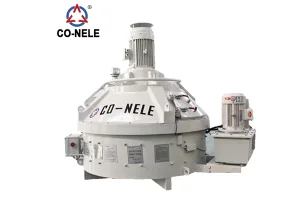
While the standard JS3000 twin-shaft mixer handles standard commercial concrete (C15 to C80) effortlessly, mixing intense UHPC or specialized fiber-reinforced recipes requires upgraded high-power drives or retrofitting with a vertical-shaft counter-current planetary concrete mixer. We offer customized hybrid HZS180 configurations specifically geared for UHPC precast manufacturing.
An HZS180 stationary plant requires a reinforced concrete slab foundation designed according to local soil bearing capacities. The foundation drawings provided by our engineering team specify placement for anchor bolts, load cell pits, aggregate ramp walls, and drainage channels. Foundation curing usually takes 14 to 21 days before main steel erection can begin.
We supply an initial "2-Year Recommended Operational Spare Parts Package" alongside the plant shipment. This includes spare high-chrome mixing arms, liner plates, shaft seal rings, solenoid valves, pneumatic cylinder seals, and belt scrapers. Interchangeable wear parts for all our models are kept permanently in stock for express international air-freight dispatch.
Complete product range engineered for heavy industry, lab research, and advanced granulations.