CO-NELEMixing & Granulation
Engineered for extreme homogeneity, structural density, and rapid cycle processing.
How Modern Intensive Counter-Current Kinematics Are Replacing Legacy Gravity and Horizontal Mixing Systems Worldwide
In contemporary material processing—spanning technical ceramics, high-density refractories, lithium-ion battery compounds, and ultra-high-performance concrete (UHPC)—the homogeneity of the raw material matrix directly dictates the physical properties of the final product. Traditional horizontal double-shaft mixers and standard planetary pan mixers often struggle with micro-segregation, dead zones, and prolonged mixing cycles when handling fine powders, viscous slurries, or abrasive aggregates.
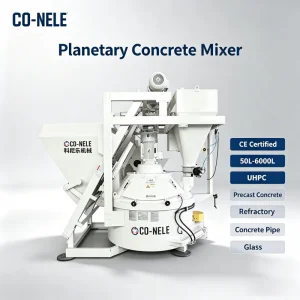
As a leading premier China Eirich intensive mixer manufacturer and factory, our engineering design principles mirror and advance upon the foundational counter-current intensive mixing concept. By separating the mechanical transport of materials from the dispersion process, our machinery enables precise energy input tailored specifically to recipe requirements. This technical whitepaper explores the operational mechanics, global macro-economic adoption, supply chain advantages, and localized application profiles of China-manufactured intensive mixing and granulating systems.
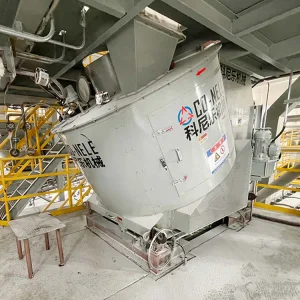
Deconstructing the Mechanical Advantage of Inclined Rotating Pans and High-Speed Agitator Rotors
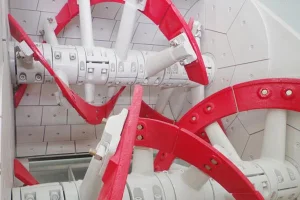
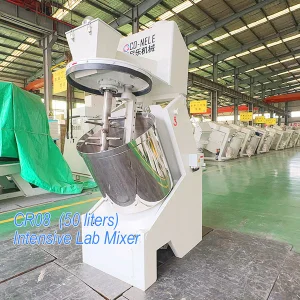
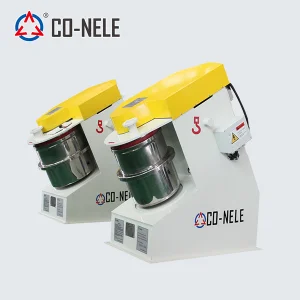
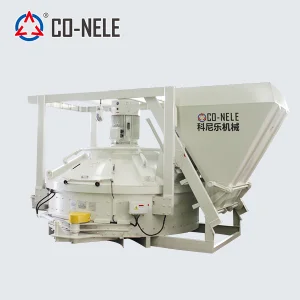
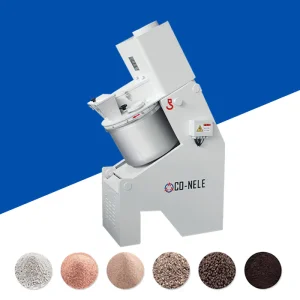
The rotating mixing pan transports material upwards against gravity. The inclined angle (typically 20° to 30°) continuously forces the material bed into the path of the high-speed rotor, ensuring 100% material turnover within every rotation without relying on static gravity fall.
Located eccentrically relative to the pan center, the variable-speed rotor operates in either co-current or counter-current directions. It introduces controlled shear energy, rapidly breaking up agglomerates, dispersing micro-additives, and homogenizing dry powders or moist pastes.
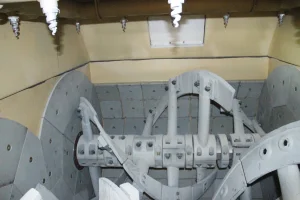
A multi-purpose stationary tool continuous guides material away from the pan wall and bottom. This prevents material caking, assists in rapid bottom-discharge, and recirculates unmixed pockets directly into the high-shear working zone.
By adjusting rotor speed, liquid binder dosing, and pan velocity, the system converts from a high-shear mixer into a precision pelletizer/granulator within the same cycle. This eliminates the need for external pelletizing discs or fluid bed granulators.
Why Tier-1 Global Procurement Executives are Diversifying Supply Chains Toward Chinese Advanced Machinery Manufacturers
The global industrial landscape is experiencing structural shifts. High energy costs in Western Europe and capital expenditure constraints in North America have driven international buyers to seek reliable, heavy-duty machinery suppliers who offer equivalent mechanical performance at optimized capital outlay.
Key global sourcing parameters now focus on:
How Advanced Chinese Manufacturing Hubs Deliver Uncompromised Reliability, Speed, and Technical Innovation
Our Qingdao production facilities utilize 5-axis CNC machining centers and automated floor-type boring mills. Pan bases, gear rings, and rotor hubs are machined in single settings to guarantee zero axial runout and high-precision gear mesh.
Intensive mixers face extreme abrasion. China’s robust industrial metallurgical ecosystem enables us to integrate Hardox 500/600 wear plates, tungsten carbide flame-sprayed scrapers, and ceramic liners (alumina/zirconia) at a fraction of Western replacement costs.
The beating heart of an intensive mixer is its transmission. China's integrated supply chain allows custom manufacturing of heavy-duty planetary gearboxes designed specifically to withstand high torsional shocks from dense refractory masses.
A Quantitative Comparison for Process Engineers and Procurement Directors
| Performance Vector | China Intensive Mixer (Eirich Type) | Standard Planetary Mixer | Horizontal Twin-Shaft Mixer |
|---|---|---|---|
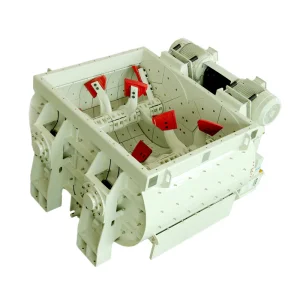
| Mixing Kinematics | Inclined pan + Eccentric Rotor (Dual Motion) | Vertical axis star arms (Single Motion) | Horizontal dual axis blades (Cross Flow) |
| Micro-Homogeneity (CV%) | < 1.5% - 3.0% | 5.0% - 8.0% | 8.0% - 12.0% |
| Agglomerate Dispersion | Exceptional (High Shear Rotor) | Moderate (Depends on liquid dosing) | Poor (Requires separate lump breakers) |
| Granulation Capability | Direct single-pot micro-granulation | Not suitable | Not suitable |
| Energy Density (kW/m³) | Variable (Optimized per recipe: 15–60 kW) | Fixed low shear (8–18 kW) | Fixed medium shear (10–22 kW) |
| Wear Distribution | Uniform wall & bottom wear scraper protection | Localized arm & tile impact wear | High shaft seal stress & blade tip erosion |
Proven Performance Across High-Requirement Material Processing Environments
Used extensively for shaped bricks and unshaped castables (Al2O3-C, MgO-C, silicon carbide). The intense shear completely breaks down silica fume agglomerates and distributes stainless steel micro-fibers without bending or balling them.
Achieves sub-micron powder homogenization for alumina, zirconia, silicon nitride, and electronic ceramic components. Enables precise moisture distribution prior to dry pressing or extruding.
Serves both dry coating processes and wet cathode/anode preparation. Ensures uniform binder distribution (PVDF/CMC) and carbon black conductive additive dispersion on active materials (LFP/NMC).
Transforms hazardous industrial dusts, fly ash, metallurgical slags, and filter cakes into handleable, dust-free granules for recycling or safe landfilling, combining conditioning and agglomeration in one step.
Reduces air entrainment and guarantees uniform fluid consistency in UHPC recipes with low water-to-cement ratios (<0.18). Accelerates hydration kinetics by overcoming mass-transfer limitations.
Prevents demixing of sand, soda ash, limestone, and micro-colorants during transport to the melting furnace. Wetting capability prevents batch dusting and lowers furnace energy consumption.
Expert Answers to Critical Engineering, Procurement, and Operational Enquiries
An "Eirich Type" intensive mixer specifically refers to an inclined rotating pan combined with an eccentrically positioned high-speed rotor tool. Unlike standard vertical axis pan mixers where mixing arms move at a fixed radius, the inclined intensive design allows the rotating vessel to continuously feed material into the rotor zone, where tip speeds can reach 15–40 m/s. This separates material transport from dispersion, enabling exact energy input adjustment.
Reputable Chinese manufacturers utilize premium wear-resistant materials tailored to specific industries. For abrasive refractories and sand mixtures, liners are fabricated from replaceable Hardox 500/600 steel plates, high-chrome alloy castings, or tungsten carbide brazed tile assemblies. Scraper blades are often hardfaced via plasma transferred arc (PTA) welding. For non-contamination ceramic applications, polyurethane or alumina ceramic linings are installed.
Yes. Single-pot granulation is a major operational advantage. The machine starts at high rotor speeds to thoroughly mix dry powders and liquid binders into a homogeneous moist paste. Once dispersed, the rotor speed is reduced to a calculated tip velocity, allowing capillary forces and rolling motion within the inclined pan to form uniform, spherical granules ranging from 0.2 mm to 8 mm.
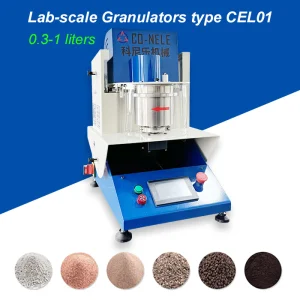
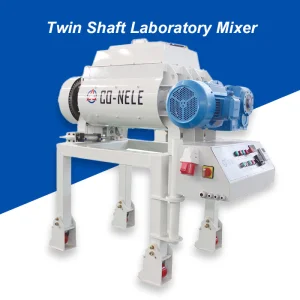
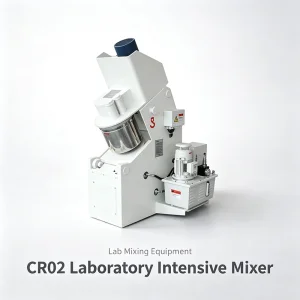
Industrial intensive mixers are categorized into laboratory R&D units (5 to 50 liters), pilot production units (100 to 250 liters), and full-scale industrial production units (375 liters up to 3,000+ liters per batch). Total processing rates range from 0.5 tons/hour to over 100 tons/hour, depending on batch density, residency time, and loading logistics.
Machinery built for international markets complies with CE directives (Machinery Directive 2006/42/EC, Low Voltage Directive 2014/35/EU) and UL/CSA standards for electrical control cabinets. Motors are supplied from global Tier-1 brands (Siemens, ABB, WEG) with local frequency/voltage compatibility (e.g., 380V/50Hz, 460V/60Hz, 415V/50Hz). Motors are mated to premium gear reducers (SEW, Bonfiglioli, or top-tier domestic heavy-duty equivalents).
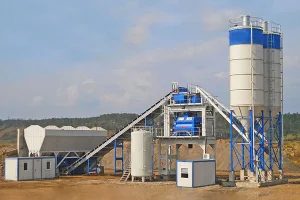
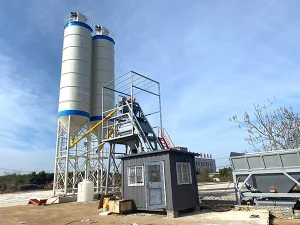
Explore full product specifications, laboratory testing units, and high-capacity batching plants.