
CO-NELEMixing & Granulation
Precision-engineered industrial concrete mixers, intensive lab granulators, and ready-mix batching plants developed for rigorous international operational environments.
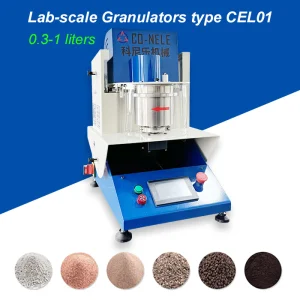
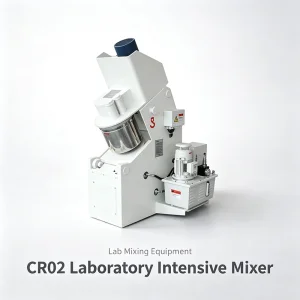
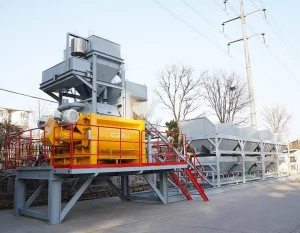
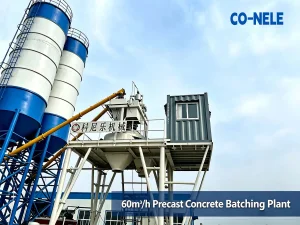
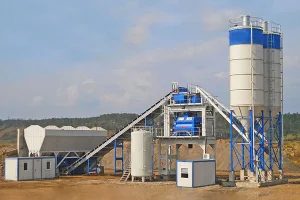
In modern civil engineering and industrial powder processing, the efficiency of batch mixing is governed directly by fluid shear stress, axial turbulence, and kinetic transfer efficiency. The Double Shaft Mixer (commonly referred to as the twin-shaft compulsory mixer) has emerged globally as the primary benchmark for heavy industrial concrete production, ready-mix batching, and high-density material homogenisation.
Unlike gravity-fed tilt-drum mixers or planetary pan mixers that rely on vertical axial rotation, a double shaft mixer utilizes dual horizontal synchronized shafts fitted with overlapping, counter-rotating mixing arms and staggered spiral blades. This spatial geometry creates an intense three-dimensional turbulence zone at the core of the mixing trough.
By spinning two parallel shafts inward at controlled angular speeds, raw aggregates, cements, water, and chemical admixtures are forcibly propelled into a central intersection zone. This eliminates static dead spots and guarantees homogeneous material dispersion within 30 to 45 seconds of charge initiation.
Mixing paddles are set at precise 45-degree angle offsets along each shaft. This spatial orientation pushes material continuously from the ends of the mixing chamber toward the center while simultaneously rotating it circularly, establishing a continuous fluid circulation loop.
Direct-drive planetary gearboxes coupled with synchronized hydraulic couplers deliver up to 96% mechanical efficiency. Energy consumption per cubic meter of mixed concrete is reduced by 15–22% compared to single-shaft or non-compulsory systems.
A premium Double Shaft Mixer manufactured in China achieves a material dispersion Coefficient of Variation (CV) of under 3% within a 35-second mixing cycle. This ensures uniform compressive strength, micro-pore elimination, and optimal hydration in Ultra-High-Performance Concrete (UHPC) and high-binder formulations.
The international market for industrial concrete mixing machinery is experiencing a structural pivot. Infrastructure megaprojects—ranging from high-speed railway networks and deep-water dam foundations to offshore wind turbine pedestals—demand unprecedented levels of concrete density, slump control, and operational uptime.
High-volume urban plants require throughput capacities from 60 m³/h to over 180 m³/h. Double shaft mixers excel in this sector due to their rapid discharge mechanisms (hydraulic gate actuations under 4 seconds) and ability to process coarse aggregates up to 80mm without jam occurrences.
Bridge decks, tunnel linings, and airport runways specify low-slump, stiff concrete recipes. Twin-shaft systems provide the forced mechanical torque necessary to shear through dense aggregate beds where conventional mixers stall or segregate raw materials.
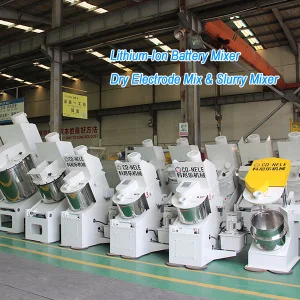
Beyond civil construction, customized twin-shaft continuous and batch mixers are widely deployed across green-tech industries, including lithium-ion battery slurry preparation, dry-powder mortar blending, and industrial waste stabilization.
As global EPC (Engineering, Procurement, and Construction) contractors seek optimal return on capital expenditure (CAPEX), Chinese double shaft mixer OEMs have established a dominant position in international supply chains. This competitiveness is rooted in localized supply chain integration, advanced metallurgy, and rapid customization capacity.
Operating machinery in extreme environmental conditions requires specialized engineering adaptations. Chinese twin shaft mixer designs incorporate specific localized hardware modifications to ensure seamless field performance:
Mixers destined for GCC regions feature integrated liquid nitrogen injection ports and jacketed water-chilling shells to manage concrete hydration temperatures during ambient conditions exceeding 50°C. Heavy-duty dust filtration prevents abrasive silica sand from compromising drive seals.
Equipped with steam-injection manifolds direct to the mixing chamber, insulated pan jackets, and low-temperature synthetic gear oil lubrication systems engineered for sub-zero operations down to -30°C.
Designed for continuous paste backfill using tailings and low-cement binders. Mixers incorporate ultra-thick rubber slurry liners, variable-frequency drives (VFD) for adjustable retention times, and reinforced mixing arms to process high-solid pastes.
The future of industrial forced-action mixing lies at the convergence of digital sensor integration, artificial intelligence, and low-carbon materials engineering:
Next-generation mixers are integrated with optical micro-viscometers and drive-motor current spectrum analysis. AI algorithms continuously adjust batch mixing duration and micro-water dosing based on real-time slump measurements before batch discharge.
Multi-stage floating shaft seals are equipped with embedded pressure transducers and dielectric sensors. Early warnings regarding seal wear or slurry ingress are transmitted to cloud dashboards before bearing destruction occurs.
As alkali-activated materials and calcined clays replace traditional OPC (Ordinary Portland Cement), double shaft mixing geometry is being optimized to deliver high-shear energy input to break down cohesive particle agglomerations in sticky geopolymer slurries.
Selecting the correct mixer typology depends on batch size, recipe viscosity, aggregate scale, and required hourly volume output:
| Performance Feature | Double Shaft Mixer (Twin Shaft) | Planetary Counter-Current Mixer | Single Shaft Mortar Mixer |
|---|---|---|---|
| Primary Application | Ready-Mix, Dam Concrete, Mass Civil Infrastructure | Precast, UHPC, Pavers, Refractories | Dry Mortar, Plaster, Tile Adhesives |
| Mixing Action | Compulsory Counter-Rotating Turbulence Zone | Vertical-Shaft Counter-Current Kinematics | Horizontal Ribbon / Single Axis Paddle |
| Batch Cycle Time | 30 – 45 Seconds | 60 – 90 Seconds | 90 – 180 Seconds |
| Maximum Aggregate Size | Up to 80 mm - 120 mm | Up to 40 mm | Up to 10 mm (Powder Dominant) |
| Mixing Efficiency (CV) | < 3% (Fastest Homogenization) | < 2% (Micro-Level Homogenization) | < 5% |
| Maintenance Profile | Low - Bolt-on modular high-chrome liners | Medium - Complex gearboxes inside lid | Low - Simple drive configuration |
Procuring industrial equipment internationally requires verified technical compliance and robust after-sales infrastructure. Premium Chinese manufacturers adhere to international quality benchmarks:
Fully compliant with European CE Directives (Machinery Directive 2006/42/EC, Low Voltage Directive 2014/35/EU), UL/CSA electrical motor standards for North America, and ISO 9001:2015 quality management systems.
Every double shaft mixer undergoes 4-hour continuous dry-run testing, full-load hydraulic discharge pressure checks, gearbox vibration spectrum monitoring, and noise emission testing (<80 dB) prior to export packaging.
Consumable wear parts (mixing paddles, wall liners, side scraper arms, shaft seals) feature standardized bolt hole patterns and are stored in overseas regional warehouses across Europe, South America, and Southeast Asia.
Explore our complete range of single-shaft, twin-shaft, planetary, and intensive laboratory mixing machinery.
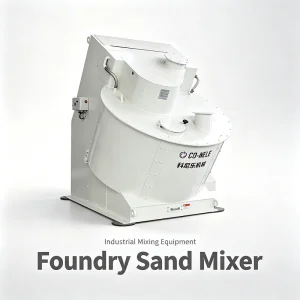
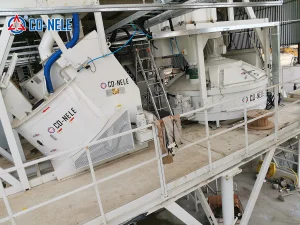
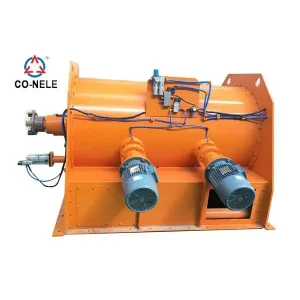
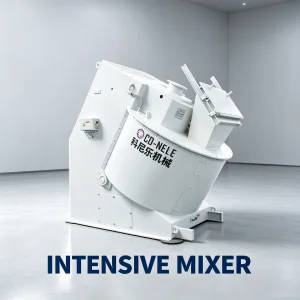
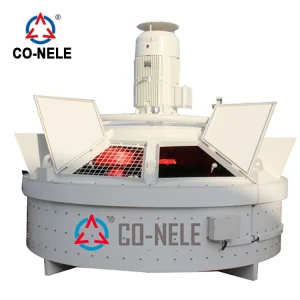
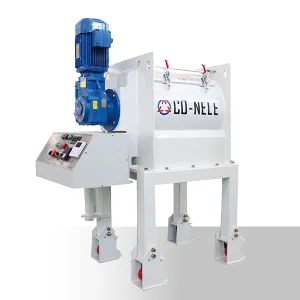
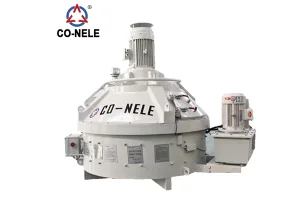
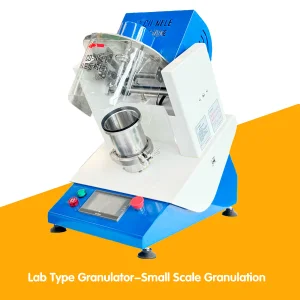
Engineering high-yield mixing systems tailored to your material rheology, plant footprint, and capacity requirements. Contact our technical team today for customized quotations and CAD engineering layouts.