
CO-NELEMixing & Granulation
Precision-engineered machinery built for heavy-duty batching, ready-mix production, and precast infrastructure applications.
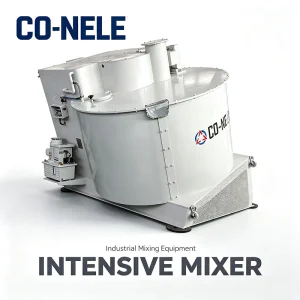
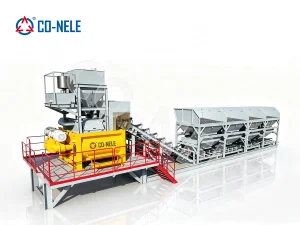
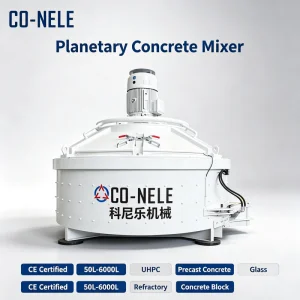
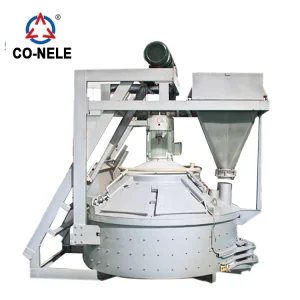
Understanding the Fluid Mechanics, Shear Rate Vectors, and Micro-Homogeneity Achieved by Dual Horizontal Shaft Compulsory Mixing Technology.
In modern industrial concrete engineering and material processing, the twin shaft (double shaft) compulsory mixer represents the golden standard for high-throughput, heavy-duty applications. Unlike gravity-fed drum mixers or single-shaft pan units, modern double shaft mixers utilize two counter-rotating horizontal shafts equipped with synchronized mixing arms and paddles. This configuration generates a three-dimensional turbulent flow field characterized by intense axial and radial movement, ensuring aggregate particles, cementitious binders, water, and chemical admixtures reach complete homogenization within 30 to 45 seconds per cycle.
The synchronized dual shafts rotate inward at controlled speeds (typically 21–26 RPM), projecting material into a central turbulence zone. This fluid dynamic mechanism eliminates mechanical friction wear while vastly accelerating hydration reactions across micro-silica and slag particles.
By lifting material into a temporary state of mechanical weightlessness within the center chamber, aggregate particles collide without destroying structural integrity. This prevents particle segregation in coarse-aggregate recipes such as RCC (Roller Compacted Concrete).
Engineered with multi-layer labyrinth seal rings combined with automatic high-pressure grease purging pumps. This proprietary seal arrangement guarantees zero slurry leakage into outer drive bearings, extending gearbox life beyond 100,000 operational batches.
| Performance Parameters | Double Shaft Concrete Mixer (CHS) | Vertical Shaft Planetary Mixer (CMP) | Single Shaft / Drum Mixer |
|---|---|---|---|
| Primary Application Profile | High-throughput Ready-Mix, Mass Infrastructure, RCC | Ultra-High Performance (UHPC), Precast, Color Blocks | Low-spec General Ready-Mix, Mortar |
| Mixing Cycle Time | 30 – 45 Seconds (Fastest industrial batch) | 60 – 90 Seconds | 120 – 180 Seconds |
| Mixing Homogeneity (CV%) | < 5.0% (High shear dispersion) | < 3.0% (Micro-level distribution) | > 10.0% (Risk of dead zones) |
| Wear Liner Durability | 90,000 – 150,000 Batches (Ni-Hard Chrome) | 80,000 – 140,000 Batches | 30,000 – 50,000 Batches |
| Maintenance & Field Serviceability | Superior: Wide top door & bolt-on liners | Moderate: Internal star arm access | Simple but frequent mechanical intervention |
How Vertical Integration, Metallurgical Excellence, and Qingdao Industrial Infrastructure Deliver Superior ROI for Global Procurement Managers.
The global preference for double shaft mixers engineered in China—specifically within the Qingdao machinery cluster—is rooted in unmatched industrial integration. Key structural components including heavy-duty planetary gear reducers, stress-relieved steel mixing tubs, hydraulic discharge gates, and precision-machined mixing shafts are fabricated under a single Quality Management System (ISO 9001:2015).
By controlling the entire production sequence—from raw steel cutting via CNC fiber laser systems to dynamic load testing on gearbox test benches—Chinese original equipment manufacturers (OEMs) eliminate third-party markup while enforcing strict tolerances ($\pm 0.02\text{ mm}$ on gear alignments).
The longevity of a concrete mixer is ultimately governed by its wear components. Leading China double shaft mixer factories utilize proprietary Ni-Hard cast irons and Chromium-Cobalt alloy liner plates boasting hardness levels exceeding 65 HRC (Rockwell Hardness).
Compared to standard European AR400 steel plates, these advanced ceramic-composite matrix liners resist aggregate abrasion from quartz, granite, and recycled concrete aggregates, delivering lower maintenance downtime per million cubic meters produced.
Key Procurement Considerations: Total Cost of Ownership (TCO), Energy Efficiency, and Technical Matrix of Standard Double Shaft Models.
When global EPC (Engineering, Procurement, and Construction) contractors evaluate double shaft mixers manufactured in China, purchasing decisions extend far beyond initial invoice cost. Total Cost of Ownership (TCO), energy consumption per cubic meter mixed, spare parts interchangeability, and operational safety dictate overall ROI.
Equipped with IE3 standard premium efficiency motors and heavy-duty dual-planetary gearboxes. Designed for soft-start operation under full load conditions, reducing peak electrical surge demand by up to 35% during plant restart.
All wear plates, mixing arms, and discharge gate seals utilize standard metric bolt patterns. Maintenance crews can replace worn components inside the mixer pan without welding, cutting downtime from days to hours.
Features multi-stage hydraulic door actuation allowing flexible discharge control (partial vs full open). Outfitted with emergency manual hand-pump systems to drain the mixing bowl in the event of jobsite power failures.
| Model Series | Charging Capacity (L) | Discharging Capacity (L) | Dry Concrete Output (m³/h) | Main Drive Motor (kW) | Max Aggregate Size (mm) |
|---|---|---|---|---|---|
| CHS1000 | 1500 L | 1000 L | 50 m³/h | 2 × 18.5 kW | 80 / 60 mm (Gravel / Crushed) |
| CHS1500 | 2250 L | 1500 L | 75 m³/h | 2 × 30 kW | 80 / 60 mm |
| CHS2000 | 3000 L | 2000 L | 100 m³/h | 2 × 37 kW | 100 / 80 mm |
| CHS3000 | 4500 L | 3000 L | 150 m³/h | 2 × 55 kW | 100 / 80 mm |
| CHS4500 | 6750 L | 4500 L | 225 m³/h | 2 × 90 kW | 120 / 100 mm |
Smart Automation, Industry 4.0 Integration, Ultra-High Performance Concrete (UHPC) Adaptations, and Low-Carbon Cement Processing.
Modern double shaft mixing systems seamlessly integrate high-precision microwave moisture sensors directly into the mixer floor and aggregate bins. Connected to a Siemens S7-1500 PLC automation system, the equipment dynamically recalculates water-to-cement ratios in real time ($< \pm 0.5\%$ error margin), compensating for sand moisture fluctuations batch by batch.
As Ultra-High Performance Concrete (UHPC) with compressive strengths exceeding 150 MPa gains market share in bridge and wind turbine foundation construction, double shaft mixers are being upgraded with specialized high-speed rotor choppers. These auxilliary shear tools break down micro-silica agglomerates and achieve uniform 3D orientation of steel micro-fibers without balling.
From Mega Infrastructure Projects to High-Tech Precast Manufacturing Facilities: Where Double Shaft Machinery Delivers Superior Results.
In high-capacity commercial batching operations producing 120 m³/h to 240 m³/h, double shaft mixers ensure rapid truck mixer loading. Short cycle times directly boost fleet turnover and reduce fuel consumption during batching plant idling.
Demanding low-slump and dry-cast concrete recipes utilized in core-vibration pipe machines, precast box culverts, and prestressed bridge girders require intense compulsory mixing force to prevent honeycombing and structural voids.
For roller-compacted concrete (RCC) dams, airport runways, and heavy highway pavements containing large maximum aggregate sizes (up to 120 mm), double shaft mixers provide the structural torque required to process coarse aggregate mixes efficiently.
Ensuring Worldwide Power Grid Compatibility, International Certification Standards, and Uninterrupted Spare Parts Logistics.
Export equipment is customized to match regional power grid specifications, including 220V, 380V, 415V, 440V, 480V, or 600V at 50 Hz or 60 Hz. Main electrical enclosures feature IP65 dust and water ingress protection, equipped with Schneider or Siemens switchgear, UL-listed wiring harnesses, and CE conformity declaration certificates for European and North American customs clearance.
Comprehensive safety interlocks—including dual-key mechanical door switches, safety grid meshes, and emergency stop circuits—meet international OSHA and EN 12151 machinery safety norms.
To guarantee effortless site assembly, factory technicians supply complete 3D foundation layout drawings, electrical wiring schematics, and piping blueprints prior to shipment. Installation support is delivered via on-site resident engineers or augmented-reality remote guidance tools.
Spare parts warehouses maintained in strategic global regions guarantee air-freight delivery of critical seals, wear blades, and solenoids within 48 to 72 hours, protecting batching operations from extended project downtime.
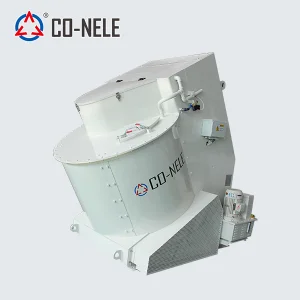
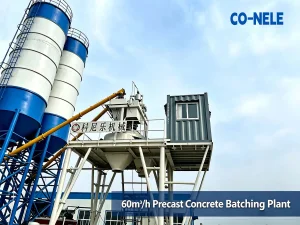
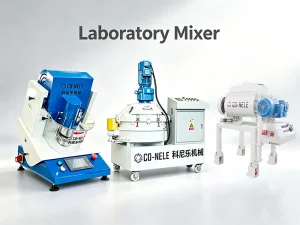
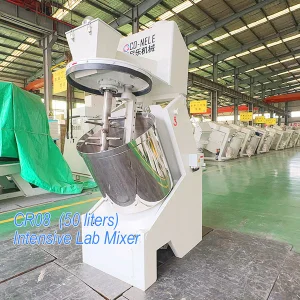
Explore specialized granulators, planetary concrete mixers, intensive lab units, and turnkey concrete plants.
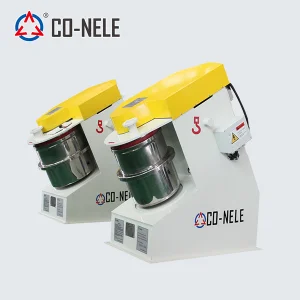
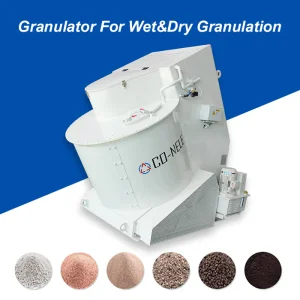
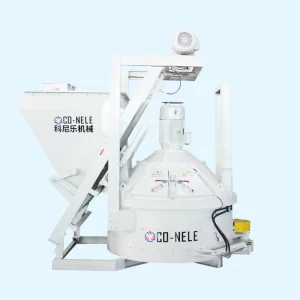
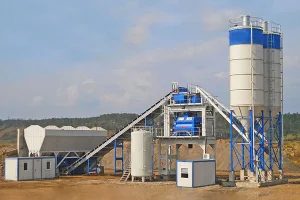
Expert Engineering Clarifications for Equipment Buyers, Plant Managers, and Project Engineers.
A horizontal double shaft mixer utilizes two counter-rotating shafts equipped with overlapping mixing blades, generating strong axial and radial circulation ideal for high-volume commercial ready-mix concrete and large aggregate formulations ($>40\text{ mm}$). A vertical planetary counter-current mixer features mixing stars that rotate around their own axes while orbiting a central axis, providing micro-homogeneity ($CV < 3\%$) essential for UHPC, precast elements, dry-cast blocks, and refractory materials.
Shaft end seal longevity is ensured through a multi-stage defensive seal architecture. This includes floating face seals, labyrinth rubber rings, and a dedicated automatic electric grease lubrication pump. The pump maintains continuous positive grease pressure at the seal faces during operation, continuously flushing fine cement particles away from the outer drive bearings and preventing slurry ingress.
Under standard standard aggregate conditions (crushed limestone or gravel ready-mix), high-chrome casting liners (hardness $\ge 62-65\text{ HRC}$) typically deliver between 90,000 to 150,000 operational batches. For highly abrasive materials such as quartz sand, granite aggregate, or refractory castables, wear life ranges from 40,000 to 70,000 batches before bolt-on replacement is necessary.
Yes. All exported double shaft machinery and modular concrete batching plants are built according to the customer's specific voltage requirements (e.g., 380V/50Hz, 415V/50Hz, 460V/60Hz). Drive motors can be equipped with CE or UL certification. Additionally, environmental dust collection covers, noise reduction insulation panels, and closed-loop wash water recovery systems can be integrated to comply with regional environmental standards.
Standard mixer manufacturing lead times are generally 20 to 35 calendar days. Complete batching plants require 35 to 45 days. Machinery is wrapped with anti-corrosion protective film and secured inside open-top or standard sea-freight containers. Engineering teams provide full civil foundation drawings, wiring diagrams, and online video guidance or dispatch field service technicians directly for site commissioning and crew training.
Contact our Senior Process Engineering Team in Qingdao for technical specifications, plant layout engineering drawings, and customized direct factory quotations.