CO-NELEMixing & Granulation
Engineered for extreme wear resistance, micro-homogeneity, and uninterrupted continuous output across international project sites.
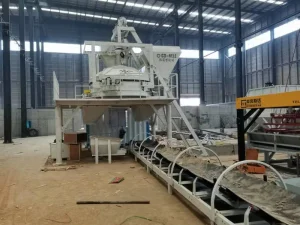
Global construction ecosystems are undergoing a structural transformation driven by high-performance concrete requirements, strict decarbonization mandates, and automated digital batching verification.
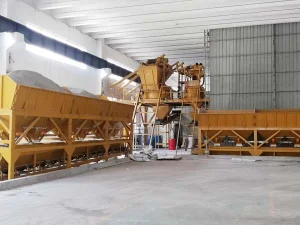
The global demand for high-grade concrete infrastructure requires plants capable of handling complex mix designs. From low-water-binder ratio UHPC formulations to aggregate-rich mass concrete, modern mixing plants must eliminate material segregation while optimizing cement hydration cycles.
As the epicenter of global equipment manufacturing, Chinese concrete plant producers have transitioned from low-cost assembly to engineering-driven innovations. Modern Chinese factories integrate heavy-duty planetary gearboxes, hardened alloy wear liners, and fully autonomous PLC control matrices.
Environmental standards now dictate plant operations. Closed-loop aggregate recycling, high-efficiency pulse-jet dust collection, and dynamic motor torque adjustments reduce carbon intensity per cubic meter of mixed concrete by up to 18% compared to traditional batching plants.
Customized plant configurations tailored to specific material mechanical properties, production velocities, and field logistics.
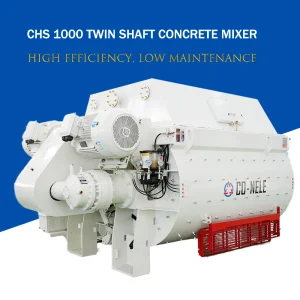
Designed for continuous high-throughput operations. Integrating twin-shaft compulsory mixers (such as the CHS series) featuring dual hydraulic discharge gates, synchronized drive shafts, and multi-stage shaft-end seal protection to prevent mortar leakage during high-slump batching.
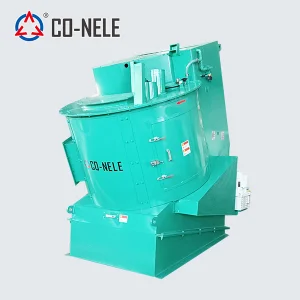
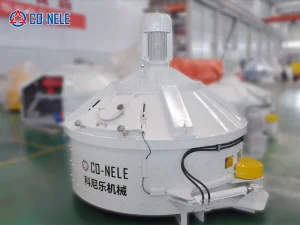
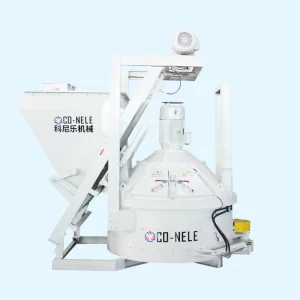
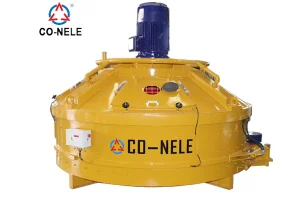
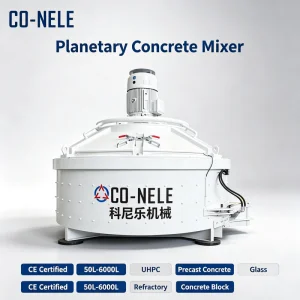
Precast structural members, architectural facade panels, and dry-cast pavers demand complete particle dispersion without balling. Vertical-shaft counter-current planetary concrete mixers rotate on dual axes, eliminating dead zones and maintaining a mixing coefficient of variation (CV) under 5%.
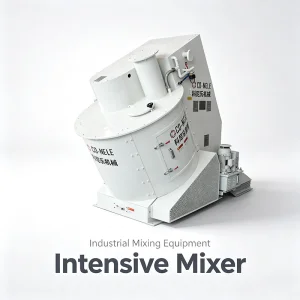
UHPC mix designs incorporate steel fibers, silica fume, and extremely fine powders with a low water-cement ratio (<0.20). Intensive mixers and planetary mixers feature high-shear rotor options engineered specifically to break up agglomerations and achieve high tensile and compressive strength (>150 MPa).
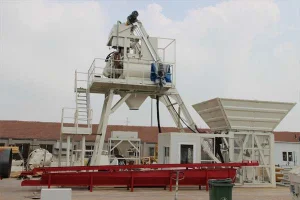
For remote mining, highway paving, bridge deck overlays, and temporary civil projects. Mobile batching stations (such as the MBP10 series) are pre-wired, trailer-mounted, and feature fold-out structural supports requiring minimal foundation work for fast operational startup.
Selecting the appropriate mechanical mixing mechanism is critical for operational efficiency, wear maintenance, and target compressive strength compliance.
| Evaluation Parameter | Vertical-Shaft Planetary Mixer | Twin-Shaft Compulsory Mixer | High-Speed Intensive Mixer |
|---|---|---|---|
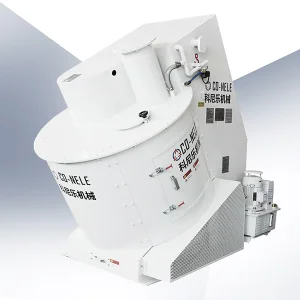
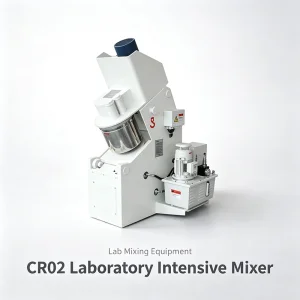
| Primary Mechanics | Counter-current revolution & rotation star arms | Dual counter-rotating horizontal shafts with overlapping paddles | Inclined rotating pan with off-center high-shear rotor tool |
| Target Applications | Precast elements, UHPC, dry-cast blocks, refractory materials | Commercial ready-mix, heavy civil dams, foundation concrete | Powder metallurgy, ceramic granulation, ultra-dense castables |
| Mixing Homogeneity (CV) | < 3% to 5% (Exceptional uniformity) | < 5% to 8% (High output efficiency) | < 1.5% (Micro-scale homogeneity) |
| Average Batch Cycle Time | 60 – 90 seconds | 30 – 45 seconds | 45 – 120 seconds |
| Wear Component Longevity | 90,000 – 150,000 batches (High-Chrome HB600) | 60,000 – 100,000 batches (Ni-Hard / Chrome Alloy) | Variable (Dependent on rotor tip speed & abrasive feed) |
| Energy Consumption / m³ | Moderate (Optimized kinetic path) | Low to Moderate (High throughput per kWh) | Higher shear force input per batch volume |
Proven mechanical reliability across demanding climate zones, strict regional building codes, and varied material raw feeds.
Challenge: Producing high-early-strength anti-scour UHPC grouting for subsea foundation structures under ambient temperatures exceeding 45°C.
Solution: Custom CMP planetary mixing plant equipped with chilled water metering, nitrogen purge connections, and insulated aggregate temperature control bins. Ensured consistent workability and slump retention without premature setting.
Challenge: Manufacturing prestressed track slabs requiring strict dimensional tolerances (±1mm) and high surface density.
Solution: Fully automated HZS60 precast batching plant fitted with CMP1000 planetary mixers and micro-dosing ad-mixture scales. Delivered zero-defect cast slabs meeting regional high-speed rail standards.
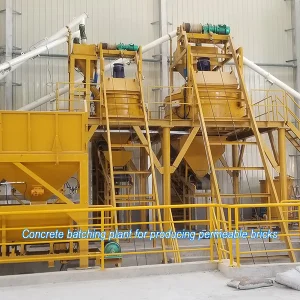
Challenge: Eco-friendly permeable concrete block production requires uniform binder distribution over coarse open-graded aggregate without clogging void networks.
Solution: CBP150 concrete batching plant configured with moisture-control microwave sensors and short-burst planetary mixing cycles, yielding uniform strength and high drainage porosity.
Ensuring flawless integration into local grid infrastructure, environmental regulations, and job site safety protocols worldwide.
Standardized integration with regional power grids, supporting 220V, 380V, 415V, 440V, and 480V systems at 50 Hz or 60 Hz. Control panels incorporate Schneider/Siemens switchgear built to UL508A and CE directives.
Equipped with reverse-pulse jet baghouse filters achieving emissions < 10 mg/Nm³. Completely enclosed conveyor galleries and aggregate bins comply with stringent EU and North American municipal dust/noise regulations.
Siemens S7-1500 PLC systems featuring multi-language touch HMI interfaces. Real-time API data connection options allow seamless transmission of batch weights, moisture offsets, and production logs into enterprise ERP systems.
Interchangeable replacement wear arms, mixing blades, floor tiles, and shaft seals maintain high commonality across machinery generations, guaranteeing rapid dispatch from international spare-part hubs.
Driving technological progression through AI-assisted rheology optimization, carbon capture aggregate blending, and modular plant designs.
Next-generation mixers integrate drive-motor electric feedback sensors that calculate viscosity variations during the initial dry-mixing cycle. The PLC dynamically adjusts liquid dosage timing and paddle rotation speeds to optimize hydration without human operator intervention.
As the cement industry shifts toward low-carbon LC3 (limestone calcined clay cement) and supplementary cementitious materials (SCM), mixer geometry must handle finer particles with high surface absorption properties, preventing mix stiffness while minimizing superplasticizer consumption.
Future batching plants feature fully hydraulic self-erecting structures that transition from transport trailer mode to active batching mode in under 6 hours, eliminating crane rental requirements during rapid military, disaster relief, or civil construction response.
Direct technical guidance formulated by senior batching plant systems engineers and material process specialists.
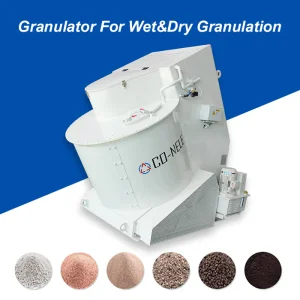
Advanced industrial process mixers, granulating systems, and custom batching setups for concrete, refractories, and technical powders.