CO-NELEMixing & Granulation
Explore original engineering machinery manufactured directly in our Qingdao industrial facility, optimized for precast, ready-mix, UHPC, and specialized industrial mixing applications.
Understanding the underlying engineering cost drivers, raw material metallurgy, and manufacturing efficiencies that shape global procurement prices.
When evaluating the China concrete mixer price landscape, procurement directors and engineering contractors must look beyond surface quotes to analyze Total Cost of Ownership (TCO). Pricing for industrial mixing machinery from Chinese OEMs varies significantly based on structural engineering, internal gearbox metallurgy, automation level, and specialized wear protection systems.
Historically, basic continuous twin-shaft mixers positioned for general commercial ready-mix concrete carry lower capital expenditure (CapEx) profiles, while specialized planetary counter-current mixers and intensive mixer-granulators command premium valuation due to their complex mechanical reducers and specialized mixing arm trajectories. Key variables influencing overall machinery price include:
The transmission gearbox represents up to 40% of a planetary mixer’s production cost. Heavy-duty hardened planetary reducers designed in-house deliver superior torque distribution and long-term durability compared to off-the-shelf commercial gearboxes.
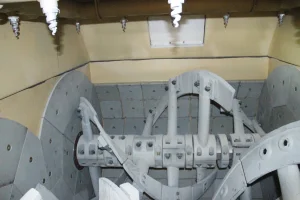
High-chrome alloy cast irons (such as Ni-Hard or Cr26 alloy with hardness exceeding 60 HRC) significantly increase wear resistance against abrasive quartz sand and synthetic aggregates, extending replacement intervals to over 150,000 batches.
Integration of real-time microwave moisture probes, automated high-pressure washdown systems, and Siemens PLC control cabinets adds upfront capital costs but lowers operational batch variance and energy consumption per cubic meter.
Evaluating shear kinematics, residence time, energy transfer efficiency, and application suitability across primary industrial mixer architectures.
| Mixer Architecture | Kinematic Principle | Typical Homogeneity (CV) | Optimal Materials | CapEx / OpEx Profile |
|---|---|---|---|---|
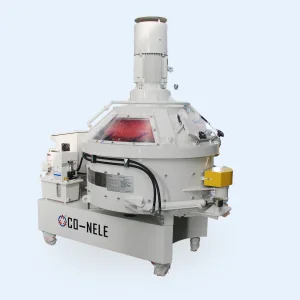
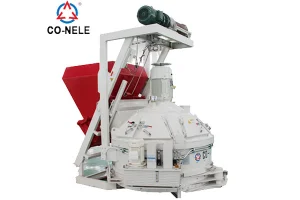
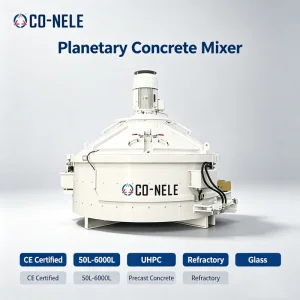
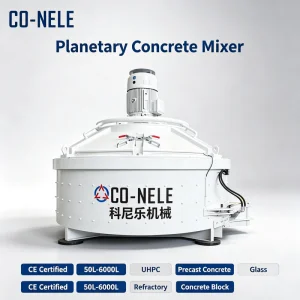
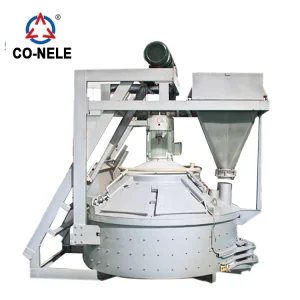
| Planetary Counter-Current (CMP Series) | Vertical axis rotation with counter-rotating mixing star arms sweeping 100% pan floor without dead zones. | < 3.5% (Micro-homogeneity) | Precast elements, UHPC, GFRC, refractory castables, colored paving blocks, kerbstones. | Moderate CapEx / Low OpEx (optimized wear part distribution). |
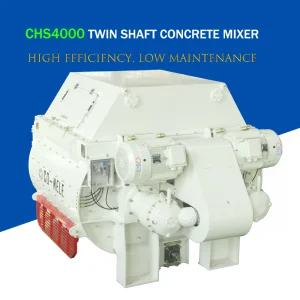
| Twin-Shaft Compulsory (CHS Series) | Dual horizontal synchronized shafts creating intensive cross-mixing turbulence zones. | < 5.0% (Macro-homogeneity) | Ready-mix concrete, mass dam concrete, road base pavement, high-volume structural pours. | Low CapEx / Moderate OpEx (high-throughput efficiency). |
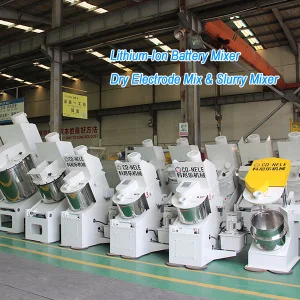
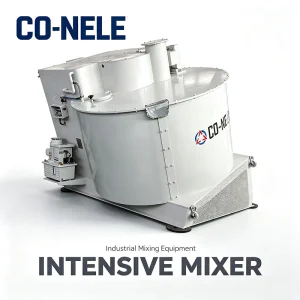
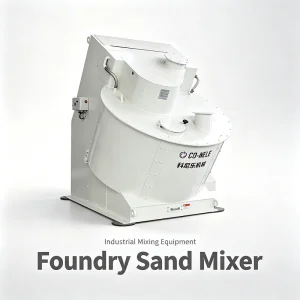
| Inclined Intensive Mixer (CEL Series) | Inclined rotating pan combined with high-speed eccentrically mounted rotor tools. | < 1.5% (Ultra-high dispersion) | Battery slurry, technical ceramics, glass batching, iron ore pelletizing, foundry sand. | Higher CapEx / Highly Efficient Process Integration. |
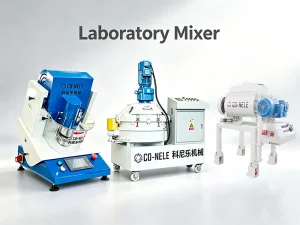
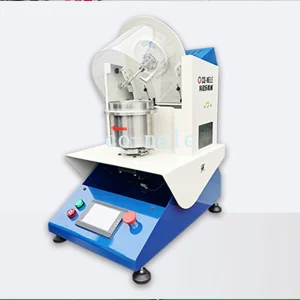
| Lab & R&D Scale Mixers | Scalable geometry mimicking full industrial batch kinematics on 5L to 75L test batches. | Exact match to industrial line | Formula development, binder research, aggregate grading optimization. | Low absolute CapEx / Critical R&D investment. |
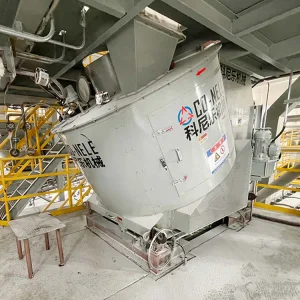
In a standard vertical shaft pan mixer, centrifugal forces tend to segregate heavier coarse aggregates toward the outer perimeter while fine cementitious particles remain concentrated near the inner core. The planetary counter-current design eliminates this fundamental physical limitation. By driving the mixing arms along planetary trajectories—where the mixing star rotates on its own axis while simultaneously revolving around the central axis of the mixing pan—the complex overlapping shear paths guarantee complete material displacement within seconds.
This forced-action mixing mechanism breaks up binder agglomerates rapidly, allowing complete dispersion of silica fume, pigments, and micro-steel fibers. For Ultra-High Performance Concrete (UHPC) mixes characterized by extremely low water-binder ratios (W/B < 0.18), planetary mixers provide the high shear energy required to fluidize the mix without thermal degradation or excessive mixing duration.
From stationary ready-mix plants to rapid-deploy mobile installations: modular engineering tailored for international infrastructure projects.
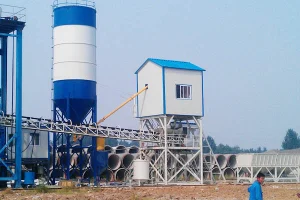
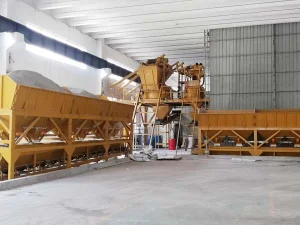
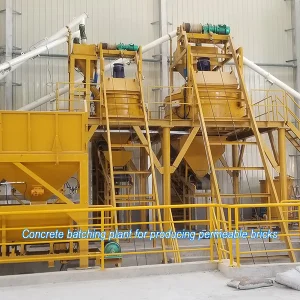
Ranging from HZS60 (60 m³/h) to HZS180 (180 m³/h), these complete plants feature enclosed aggregate storage bins, high-precision electronic batching scales (aggregate ±2%, cement/water ±1%), twin-shaft or planetary cores, and integrated pulse dust filters for eco-friendly operations.
Mounted on heavy-duty towed chassis units, mobile concrete batching plants integrate aggregate hopper, weighing belt, compulsory mixer, and control cabin onto a single transport vehicle. Commissioning is completed within 48 hours of site arrival, ideal for remote road, bridge, and dam construction.
Engineered with steel structure base pads that eliminate expensive concrete foundation works. Saves up to 70% in initial civil engineering work and enables rapid dismantling when relocating leased industrial land or temporary project yards.
Rigorous manufacturing protocols and international standards compliance to ensure hassle-free global deployment.
Every industrial mixer leaving our production facility undergoes strict inspection conforming to CE (Conformité Européenne) electrical and safety guidelines, ISO9001:2015 Quality Management Systems, and optional UL/CSA standards for North American grid requirements. Drive motors are configured to local grid specifications (220V/380V/415V/440V/480V at 50Hz or 60Hz).
To eliminate operational downtime, key wear parts—including mixing blades, scrapers, liner plates, and shaft seals—are standardized and stocked across international service hubs. Remote PLC diagnostics allow our automation engineers to troubleshoot electrical logic and calibration parameters in real time over secure IoT connections.
Pioneering advancements in AI-assisted rheology control, energy recovery systems, and sustainable low-carbon cement mixing processes.
Future iterations of our planetary mixers incorporate drive motor torque analytics and high-frequency acoustic sensors to measure real-time mix viscosity, automatically adjusting water dosage to ensure target slump without stopping the batch cycle.
As green concrete standards accelerate worldwide, our mixing tools are specially optimized for handling supplementary cementitious materials (SCMs) such as calcined clay, alkali-activated slag, and recycled concrete powder, achieving rapid dispersion without aggregate crushing.
Deploying advanced laser cladding technology to apply tungsten carbide and diamond-like carbon (DLC) coatings on high-wear mixing scrapers, extending wear component life by up to 300% in abrasive ceramic and mineral mixing environments.
Direct answers from our senior mixing engineers regarding factory selection, pricing metrics, and technical customization.
Planetary concrete mixers typically range between $8,000 USD for small laboratory/precast models (e.g., MP100/CMP150) up to $85,000+ USD for heavy-duty industrial units (e.g., CMP3000) depending on gearbox torque specifications and wear plate metallurgy. Twin-shaft compulsory mixers generally start lower on a per-cubic-meter basis for high-volume ready-mix plants, but planetary mixers provide significantly lower lifecycle operating costs for high-value precast, block, and UHPC manufacturing due to lower cement waste and higher batch consistency.
Choose a planetary counter-current mixer if your target application involves precast concrete elements, dry-cast paving blocks, pipe manufacturing, refractory castables, or standard UHPC where rapid batch homogeneity and fiber dispersion are required. Choose an inclined intensive mixer (CEL series) if your process involves ultrafine powder wet-granulation, lithium battery slurry, technical ceramic powders, glass batching, or applications requiring simultaneous mixing and pelletizing within a single vessel.
Yes. All CO-NELE machinery is custom-engineered to fit specific batch tower layouts, low-headroom plants, or existing batching systems. Electrical controls are built with multi-voltage transformers matching international power standards (e.g., 380V 50Hz, 415V 50Hz, 460V 60Hz, 480V 60Hz) and utilize globally available Schneider or Siemens switchgear for local maintainability.
Standard stand-alone planetary mixers (CMP500 to CMP1500) are typically manufactured and factory-tested within 20 to 30 calendar days. Turnkey batching plants or high-capacity intensive mixing lines require 35 to 50 days depending on custom automation specifications. Replacement wear liners and blades are kept in perpetual stock and ship within 48 hours via express air or containerized sea freight.
Explore specialized granulators, laboratory testing units, battery material mixers, and regional concrete plant solutions manufactured in China.