CO-NELEMixing & Granulation
Architecting Next-Generation Concrete Mixing Infrastructure: An In-Depth Technical Analysis of Counter-Current Planetary Systems, High-Efficiency Batching Automation, and Global Procurement Benchmarks.
High-performance machinery manufactured with precision engineering, heavy-duty planetary gearboxes, and automated dosing technology.
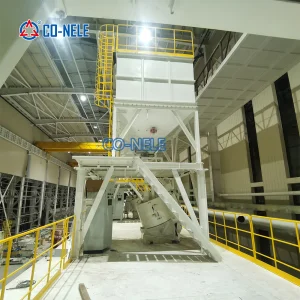
The global construction and material science sectors are currently undergoing a paradigm shift driven by stringent decarbonization targets, accelerating urbanization in emerging markets, and the widespread adoption of advanced precast concrete products. As a fundamental engine of modern infrastructure development, the global demand for Concrete Batching Plants is evolving beyond mere volumetric output toward high-precision batching accuracy, micro-homogeneity, and operational energy efficiency.
Historically, traditional stationary ready-mix concrete (RMC) plants dominated urban infrastructure developments. However, modern mega-projects—ranging from high-speed railway networks, deep-sea port terminals, and offshore wind turbine foundations to nuclear containment structures—demand customized mix designs such as Ultra-High-Performance Concrete (UHPC), Glass Fiber Reinforced Concrete (GFRC), and specialized polymer-modified mortars. These advanced materials necessitate mixing systems capable of achieving a Coefficient of Variation (CV) below 5%, a benchmark unachailable by legacy gravity-based or single-shaft mixers.
Consequently, global EPC contractors and commercial concrete producers are restructuring their procurement frameworks. Procurement decisions are no longer dictated purely by initial capital expenditure (CAPEX); instead, enterprise buyers rigorously evaluate Total Cost of Ownership (TCO), wear-liner longevity, electrical consumption per cubic meter, dynamic weigh-sensor accuracy, and the integration capability of SCADA/PLC automated control systems.
Over the past two decades, China’s industrial machinery manufacturing sector has transitioned from volume-driven production to high-tech, precision engineering. Today, a premier China Concrete Batching Plant Factory represents the confluence of complete industrial supply-chain integration, state-of-the-art metallurgical innovation, and digitalized quality assurance standards.
Chinese engineering hubs like Qingdao integrate specialized casting foundries, heavy gear machining facilities, precision laser cutting center networks, and automated PLC panel assembly within tight geographic clusters. This minimizes component sourcing delays and enables rapid custom machinery fabrication.
Leading factories no longer rely on off-the-shelf commercial gearboxes for heavy mixing cycles. In-house designed and load-tested planetary gear reducers provide exceptional torque distribution, heat dissipation, and mechanical resilience under harsh dry-cast loads.
Utilizing proprietary high-chrome alloy cast irons (such as Ni-Hard and Cr26 synthetic alloys) combined with diamond-tungsten cladding, Chinese batch plant components offer extended service lifespans exceeding 150,000 operational cycles under aggressive abrasive wear.
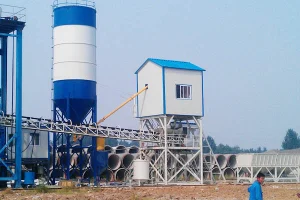
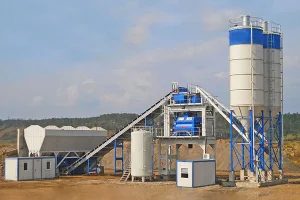
To assist procurement teams and structural engineers in selecting the optimal plant topology, the following matrix breaks down operational parameters across core batching configuration types engineered by Qingdao CO-NELE Machinery Co., Ltd.
| Plant Configuration | Mixer Technology Core | Capacity Range | Homogeneity (CV) | Primary Industrial Application |
|---|---|---|---|---|
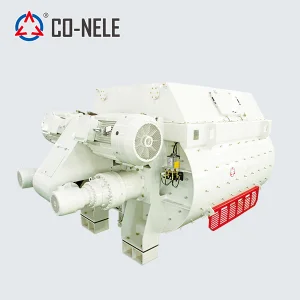
| HZS Stationary Plant | Twin Shaft compulsory (CHS Series) | 60 m³/h – 180 m³/h | ≤ 8% | Commercial Ready-Mix (RMC), Highway Paving, Mega Bridges |
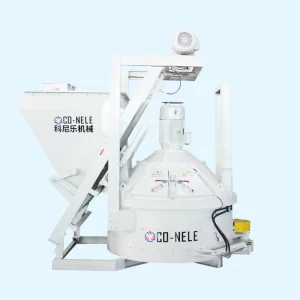
| Precast & Block Plant | Planetary Counter-Current (CMP Series) | 30 m³/h – 90 m³/h | ≤ 3% | Concrete Pipes, Utility Poles, Pavers, Architectural Facades |
| Mobile Batching Plant (MBP) | Planetary or Twin Shaft compact | 25 m³/h – 60 m³/h | ≤ 5% | Remote Roadways, Tunnel Linings, Temporary Infrastructure |
| Foundationless Modular Plant | Planetary Counter-Current | 25 m³/h – 90 m³/h | ≤ 4% | Leased Industrial Sites, Rapid-Deployment Mining Works |
| UHPC High-Shear Plant | Intensive High-Speed Shear Rotor | 10 m³/h – 40 m³/h | ≤ 1.5% | Offshore Wind Grouting, Steel-Bridge Overlays, Armored Panels |
Concrete is not a homogenous commodity; its rheological behavior changes drastically based on aggregate grading, water-cement ratios, mineral additives (fly ash, blast furnace slag, silica fume), and synthetic fiber loading. CO-NELE concrete batching plants are engineered to serve specific industrial niches:
Precast utility pole and drainage pipe production relies on zero-slump or dry-cast concrete mixes that require immediate demolding capability. CO-NELE 60m³/h Precast Batching Plants incorporate planetary counter-current mixing technology to guarantee that color pigments, micro-silica, and aggregates are evenly coating every particle without segregation, yielding smooth surface finishes and superior compressive strength.
UHPC recipes feature extremely low water-binder ratios (< 0.20) and heavy steel fiber reinforcement (up to 3% by volume). Standard mixers fail to break down agglomerates and cause fiber balling. CO-NELE UHPC Mixers employ dynamic high-shear mixing arms operating in synchronized counter-current orbits to fully hydrate cementitious matrices and disperse steel fibers homogenously within tight cycle windows.
Linear infrastructure projects—such as highways, high-speed rail beds, and canal linings—require batching assets to advance alongside construction fronts. The MBP10 40m³/h Mobile Concrete Batching Plant integrates aggregate bins, weighing hoppers, twin-shaft or planetary mixers, water dosing systems, and PLC control units onto a fully towable articulated trailer chassis.
Achieving maximum material performance relies on understanding the physical forces applied during the batching phase. A major technical distinction in modern plant design lies between vertical-shaft planetary mixers and horizontal twin-shaft mixers.
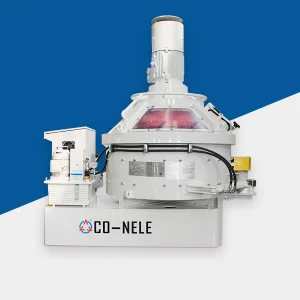
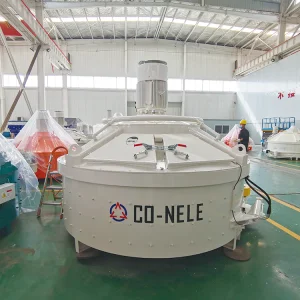
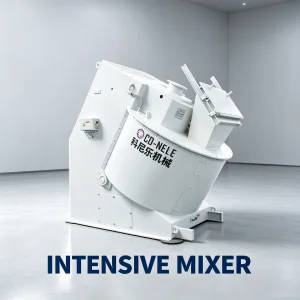
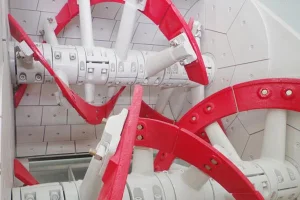
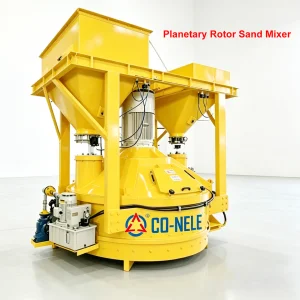
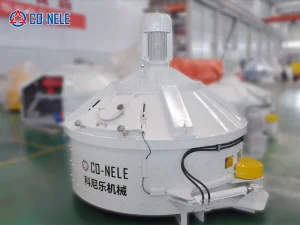
In a planetary mixer (such as the CO-NELE CMP Series), the mixing star arms rotate on their own central axis while simultaneously revolving around the main central vertical shaft. This complex "planetary" motion forces the mixing blades to trace intricate, overlapping paths that cover every square millimeter of the mixing pan bottom and sidewalls without leaving dead zones.
Twin-shaft compulsory mixers (such as the CO-NELE CHS Series) feature two horizontal counter-rotating shafts equipped with overlapping paddle arms. The material is thrown into a dynamic 3D turbulence zone at the center of the mixing trough, creating intense macro-mixing action.
For enterprise purchasing Directors, EPC contractors, and plant engineers, acquiring a concrete batching plant from China requires evaluating comprehensive quality indicators beyond initial price quotes. Use the following technical evaluation checklist prior to issuing a purchase order:
Verify load cell sensitivity and dynamic weighing compensation protocols. Aggregate scales must maintain ±2% accuracy, while cement, water, and chemical additive scales must consistently achieve ±1% accuracy under full operational loads.
Ensure the plant relies on non-proprietary industrial hardware (e.g., Siemens PLC, Schneider electrics) with automatic moisture-probe integration (such as Franz Ludwig or Hydronix microwave sensors) for instant water compensation.
Confirm structural steelwork adheres to international wind-load and seismic rating standards. Ensure aggregate bins and mixing towers feature integrated reverse-pulse jet dust collectors to meet global ISO 14001 emission benchmarks.
Audit the standard hardness rating (HBW) of mixing liners and arms. Suppliers should maintain standard modular wear component inventories that ship rapidly via worldwide DHL/FedEx logistics hubs.
As the construction sector targets net-zero carbon emissions by 2050, concrete batching plant engineering is undergoing transformative technological upgrades:
Modern batching plants utilize machine-learning algorithms to adjust dosing parameters dynamically. By analyzing real-time sensor feedback regarding aggregate moisture variations, ambient humidity, and slump requirements, the control system adjusts water and admixture dosing in real time, preventing rejected truck loads.
To offset Portland cement footprints, next-generation batch plants incorporate precise gaseous CO2 injection systems during the mixing phase. Trapped CO2 mineralizes into micro-calcium carbonate crystals, permanently sequestering carbon while increasing early compressive strength by up to 10%.
Closed-loop concrete recycling units integrated directly into the batching plant automatically separate returned wet concrete into re-usable aggregate fractions and greywater. Advanced control algorithms recalculate mix recipes automatically when using recycled wash-water, reducing fresh water consumption.
Specialized material processing systems engineered for concrete, ceramics, refractories, and industrial granulation.
Detailed technical guidance compiled by senior process engineers at Qingdao CO-NELE Machinery Co., Ltd.
A vertical-shaft planetary counter-current mixer uses star arms that revolve around a central axis while rotating on their own sub-axes. This motion ensures 100% pan coverage, making it ideal for dry-cast concrete, UHPC, pigmented mixes, and precast elements requiring a Coefficient of Variation (CV) under 3–5%. A twin-shaft concrete mixer uses two horizontal shafts to create intense fluid turbulence. It is optimized for high-volume, wet-mix commercial ready-mix concrete (RMC) where fast cycle times (30–45 seconds) and high output (up to 180 m³/h) are prioritized.
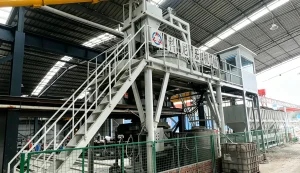
Foundationless batching plants feature integrated heavy-duty steel sub-frames and modular support pads. Instead of pouring deep reinforced concrete pit foundations and support piers—which can take weeks to cure—a foundationless plant can be assembled directly on a simple, flat compacted gravel or light concrete slab. This reduces site preparation civil expenditure by up to 60% and allows the entire batching plant to be dismantled, transported, and re-erected on a new project site in under 5 days.
UHPC mix designs incorporate micro-silica powders, ultra-fine quartz sand, high chemical additive dosages, and metallic or synthetic fibers with extremely low water-binder ratios (< 0.20). Standard gravity or single-shaft mixers cannot generate sufficient shear force to de-agglomerate silica particles or distribute steel fibers evenly. CO-NELE planetary mixers apply intensive mechanical energy and high shear rates, preventing fiber balling and ensuring complete particle hydration in a homogeneous matrix.
CO-NELE mixing pans utilize high-chrome alloy wear plates (Cr26 / Ni-Hard) with a surface hardness rating exceeding 60 HRC. Under standard ready-mix concrete production, liner life typically exceeds 120,000 to 150,000 batches. For highly abrasive materials such as refractory castables, quartz-rich UHPC, or glass powders, wear liners and mixing blades maintain operational lifespans between 40,000 and 60,000 batches. All wear elements feature bolt-on designs for rapid field replacement.
CO-NELE batching plants are controlled by fully automated Siemens S7 PLC industrial processing units paired with SCADA visual software interfaces. The system features multi-language support, unlimited recipe storage, dynamic moisture compensation, automatic batch weight calibration, real-time error diagnostics, and cloud-integrated data reporting compatible with enterprise ERP networks. Manual override switches ensure operational continuity during control maintenance.
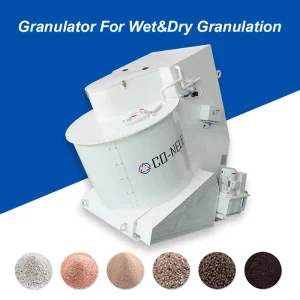
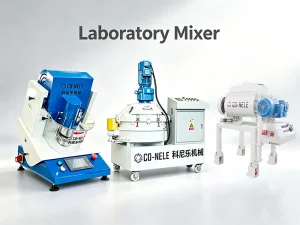
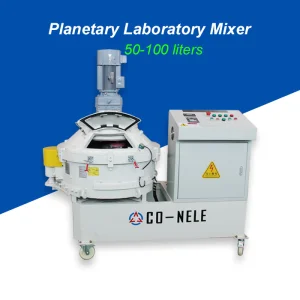
Qingdao CO-NELE operates a 1,500 m² material trial laboratory equipped with 5-liter to 75-liter intensive mixers and granulators. International clients can ship 10–50 kg of raw powder, aggregate, or mineral binder to our facility. Process engineers analyze moisture absorption curves, mixing cycle parameters, granule sphericity, and bulk density, producing a complete lab test report and scale-up proposal before commercial machinery order placement.
All equipment exported by CO-NELE is fully compliant with European CE safety directives (MD 2006/42/EC and LVD 2014/35/EU), ISO 9001 Quality Management Systems, and ISO 14001 Environmental Standards. Electrical cabinets are engineered to customized local power grids (220V/380V/415V/440V/480V at 50Hz or 60Hz) with UL/CSA compliant wiring configurations available for North American projects.
CO-NELE provides comprehensive technical support including remote online commissioning, 3D foundation/wiring engineering assistance, and on-site mechanical installation by senior field engineers. Spare parts—such as mixing blades, liner plates, discharge gate seals, load cells, and pneumatic valves—are stocked in central warehouses in Qingdao, enabling dispatch within 24 to 48 hours via international express freight lines.
Partner with Qingdao CO-NELE Machinery Co., Ltd.—over 20 years of mixing innovation, 80+ patents, and 10,000+ successful installations across 80+ countries. Contact our process engineering team to request customized plant layouts, CAD foundation drawings, or material mixing trial reports.
Consult Our Senior Process Engineers