CO-NELEMixing & Granulation
Explore elite-grade Chinese manufactured concrete batching plants, compulsory double screw mixers, lab-scale R&D units, and planetary refractory machinery engineered for global infrastructure scale.
A comprehensive analysis of global infrastructure demands, material science transformations, and Chinese OEM manufacturing superiority in compulsory mixing equipment.
The global construction, precast concrete, and heavy industrial processing sectors are undergoing a profound paradigm shift. As infrastructure projects demand higher durability, lower carbon footprints, and extreme mechanical strength, the technical expectations placed upon a China Concrete Batching Plant have evolved far beyond basic aggregate blending. Modern batching plants are now sophisticated, cyber-physical production hubs integrated with real-time moisture sensing, automated dosing algorithms, dynamic planetary counter-current mixing, and cloud-connected telemetry.
China's industrial machinery sector—anchored by specialized manufacturing capitals like Qingdao—has captured over 45% of the worldwide market for specialized industrial mixers and batching facilities. This dominance is not merely built on cost competitiveness, but on decades of engineering refinement, robust domestic supply chains, continuous trial iteration, and massive investments in gearbox technology and wear-resistant metallurgy. From standard readymix (RMC) applications to Ultra-High-Performance Concrete (UHPC), GFRC, refractory castables, ceramic powder granulations, and nuclear waste vitrification matrices, Chinese manufacturers deliver unrivaled volumetric efficiency and mixing homogeneity.
Selecting an OEM concrete batching plant manufacturer in China requires evaluating holistic lifecycle costs (TCO) rather than raw machine purchase price (CAPEX). Superior engineering manifests in customized planetary gearboxes, high-chrome wear alloy liners (≥60 HRC), sub-percentage aggregate weighing precision, and localized PLC automation systems that meet EU CE, UL, and EAC standards seamlessly.
Mapping international procurement drivers across North America, Europe, the Middle East, Southeast Asia, and Latin America.
Global demand is pivoting toward automated precast element manufacturing (segmental bridges, hollow-core slabs, utility vaults). Buyers require planetary pan mixers capable of zero slump discharge within 60–90 seconds per cycle without segregation.
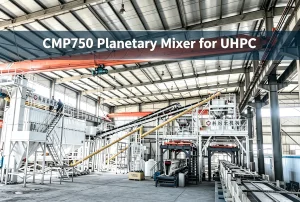
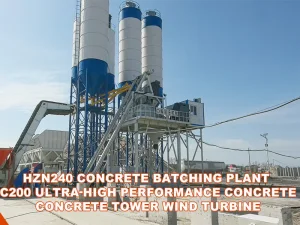
Ultra-tall precast concrete wind turbine towers (140m+ hub heights) and offshore gravity base foundations necessitate dedicated UHPC batching stations. Mixers must handle steel micro-fibers without clumping while maintaining compressive strengths exceeding 150 MPa.
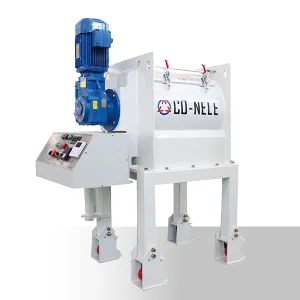
Non-construction industries—such as metallurgy, ceramic processing, and powder chemical synthesis—procure intense vertical and horizontal forced-action mixers to handle dense powders, abrasive alumina, magnetic materials, and dry mortars.
Enterprise procurement directors evaluate four non-negotiable structural capabilities when vetting Chinese concrete batching plant manufacturers:
Understanding the fluid dynamics, shear forces, and mechanical energy dispersion required for diverse material formulations.
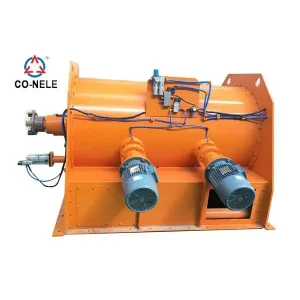
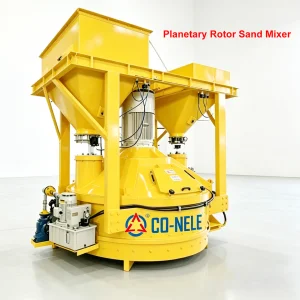
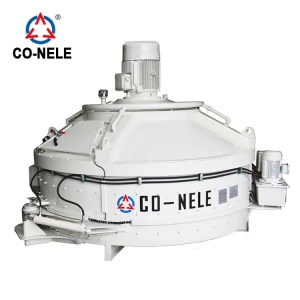
Achieving perfect material distribution within a concrete batching plant requires matching the correct mechanical mixing action to the specific rheological behavior of the mixture. Below is a engineering evaluation comparing the three primary industrial mixing technologies utilized in modern Chinese manufacturing plants:
| Kinematic Parameter | Counter-Current Planetary Mixer | Compulsory Twin Shaft Mixer | High-Speed Intensive Mixer |
|---|---|---|---|
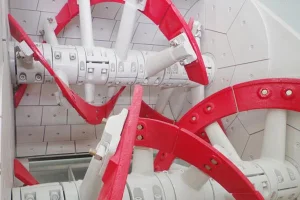
| Primary Mixing Mechanism | Vertical shaft rotation with counter-revolution star arms moving along non-overlapping elliptical tracks. | Dual horizontal shafts with overlapping spiral paddles creating intense 3D turbulence. | Inclined rotating pan combined with high-speed eccentrically mounted rotor tool. |
| Shear Energy & Intensity | High uniform shear across 100% of the mixing pan, eliminating all dead corners. | Medium-high shear; fast macro-blending ideal for large coarse aggregate volumes. | Extreme shear force adjustable up to 30 m/s rotor tip velocity. |
| Target Material Compatibility | UHPC, GFRC, precast blocks, refractory castables, dry-mix mortars, pigmented mixes. | Commercial Ready-Mix Concrete (RMC), dam RCC mass concrete, highway pavement. | Fine powders, ceramic granulations, magnetic oxide materials, battery slurries. |
| Homogeneity Standard | Coefficient of Variation (CV) < 3% achieved within 45–60 seconds. | CV < 5% achieved within 30–45 seconds. | Micro-granulation & dispersion achieved down to micron scales. |
| Discharge Efficiency | Bottom hydraulic drop door; 99.8% clean discharge with minimal wall adhesion. | Horizontal rotary gate; high volumetric discharge rate per hour. | Dynamic tilt discharge; zero material remaining in the vessel. |
Integrating microwave moisture probes embedded in mixing pan liners with machine learning algorithms. The system continuously adjusts water-cement ratios (W/C) dynamically during the active mixing cycle to guarantee target slump within ±5mm tolerance.
Optimizing mixing kinematics for high-volume supplementary cementitious materials (SCM) like calcined clays, ground granulated blast furnace slag (GGBS), fly ash, and carbon-captured mineralized aggregates. Specialized high-shear blades ensure rapid dispersion of fine silica fume particles.
Sensorization of planetary reducers, bearing temperature profiles, oil vibration spectrum analysis, and wear plate thickness metrics. Telemetric data is transmitted directly to factory digital twins to eliminate unexpected downtime.
Custom-engineered concrete batching plants and mixing systems deployed across extreme working environments globally.
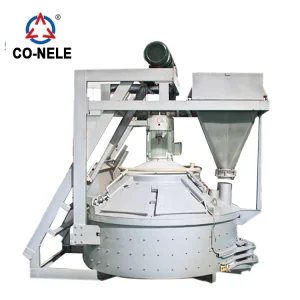
Complete batching stations utilizing CMP2000 Planetary Mixers to process high-strength fiber-reinforced UHPC. Designed for precise casting of hybrid concrete-steel wind turbine segments that endure extreme fatigue and bending moments.
Integrated batching solutions pairing high-speed aggregate skipping hoppers with precise pigment dosing units. Ensures color consistency, dense compaction, and flawless surface finishes for interlocking pavers, kerbstones, and acoustic barrier blocks.
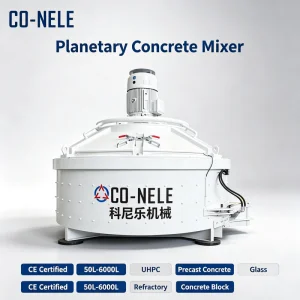
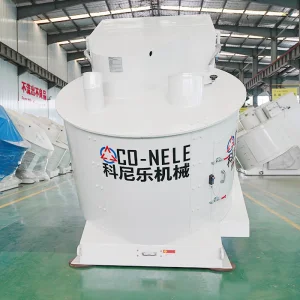
Heavy-duty vertical planetary mixers engineered specifically for abrasive, high-density unshaped refractory materials. Equipped with specialized anti-corrosion heating jackets, vacuum degassing covers, and reinforced mixing arms.
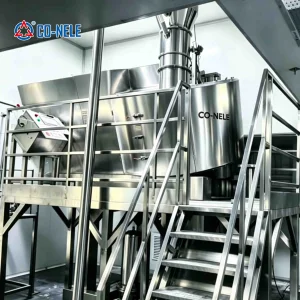
Intensive mixers and granulators dedicated to non-concrete industrial processes including alumina powder granulations, vitamin pelletizing, fertilizer compaction, battery oxide preparation, and sand reclamation systems.
Ensuring seamlessly compliant operational deployments in regulated international markets.
Exported batching plants are engineered from the ground up to satisfy regional code requirements. Electrical control panels are built using world-class components (Siemens PLC, Schneider breakers, ABB VFDs) with options for European CE certification (EN 60204-1 safety standards), UL listing for North America, and EAC certification for the Eurasian Customs Union.
Voltage configurations are customized to match target job site grids, supporting 380V/50Hz, 415V/50Hz, 460V/60Hz, or 220V dual-phase configurations seamlessly with multi-language human-machine interfaces (HMI).
To prevent operational disruptions, leading Chinese manufacturers maintain comprehensive spare parts inventories and international engineering field dispatch networks. Fast-wear parts—including alloy scrapers, outer liners, discharge gate seals, and batching gate pneumatic cylinders—are standardized to enable fast field replacement.
Remote telemetry modules allow factory automation engineers in China to perform diagnostic support, software PLC logic updates, and calibration troubleshooting via encrypted VPN connections anywhere in the world within hours.
Detailed technical answers provided by senior process engineers to guide enterprise procurement decisions.
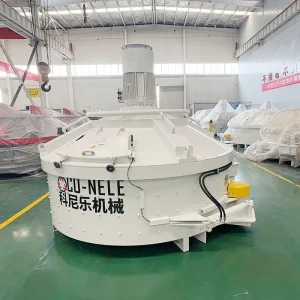
Select a planetary counter-current mixer when mixing dry-cast, stiff concrete (slump < 30mm), micro-silica formulations, colored paver mixes, or Ultra-High-Performance Concrete (UHPC). Planetary mixers ensure zero dead zone coverage through non-overlapping elliptical blade trajectories. Twin shaft mixers are optimal for high-volume commercial ready-mix concrete (RMC) with high slump characteristics where maximum hourly volumetric output (>120 m³/h) is the priority.
Under standard aggregate conditions, high-chromium wear liners (Cr26+, hardness ≥ 60 HRC) deliver between 100,000 to 150,000 batches for standard concrete formulations. When processing highly abrasive materials such as quartz-rich UHPC, corundum ceramics, or refractory castables, wear part service life ranges between 40,000 and 60,000 batches. All wear plates feature bolt-on designs for rapid field replacement.
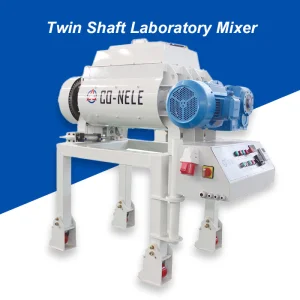
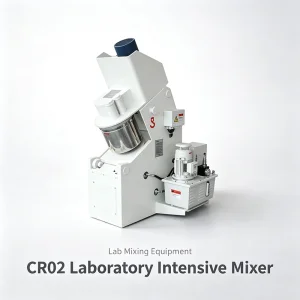
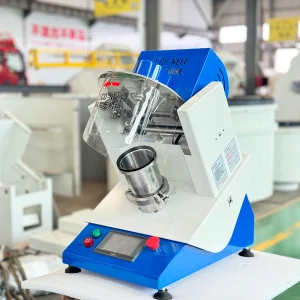
Leading manufacturers maintain state-of-the-art material testing laboratories equipped with lab-scale intensive mixers (5L to 75L capacity). Overseas clients can ship 10kg to 50kg samples of raw aggregates, binders, or chemical powders. Process engineers conduct mixing duration, torque profile, particle sphericity, and density tests, delivering a full quantitative report and recommended machine sizing prior to contract execution.
Mobile and compact foundationless batching plants are engineered with integrated heavy-duty steel skid frames that eliminate the need for permanent deep concrete foundations. They require only a compacted gravel surface or simple flat concrete slab capable of supporting 15–20 tons/m². Site setup, mechanical erection, and electrical interconnects can be completed in under 72 hours.
Discover specialized planetary concrete mixers, alumina granulators, single shaft dry mortar units, and full-scale concrete block plant lines.