CO-NELEMixing & Granulation
Explore primary batching equipment engineered for ultra-high homogeneity, precast production, continuous intensive mixing, and demanding industrial applications.
The global construction equipment market has undergone a paradigm shift over the past two decades. Historically dominated by Western European and North American OEMs, the market for batching, mixing, and material processing plants now sees Chinese manufacturing taking a decisive leadership role. What began as low-cost equipment cloning has evolved into an advanced, vertically integrated engineering ecosystem that delivers superior mechanical reliability, advanced automation, and unmatched process adaptability.
Modern commercial concrete production, precast element casting, ultra-high-performance concrete (UHPC) mixing, and industrial powder processing demand precise control over aggregate grading, binder dispersion, and liquid additive dosing. As a leading manufacturer of concrete batch plants and compulsory mixing systems based in Qingdao, China, CO-NELE (Qingdao CO-NELE Machinery Co., Ltd.) represents the vanguard of this engineering evolution.
Today’s global buyers—ranging from multinational infrastructure EPC developers in Southeast Asia to specialized precast element producers in Europe and South America—no longer buy from Chinese manufacturers purely for pricing advantages. Instead, they seek Information Gain regarding material science optimization, energy-efficient mixing kinematics, tailored PLC control algorithms, and rapid modular deployment capability.
Understanding why Chinese batch plant manufacturers excel requires analyzing the underlying macro-industrial structures, supply chain density, and technological integration native to key machinery hubs like Qingdao, Shandong Province.
Unlike secondary assemblers who purchase off-the-shelf gearboxes, premier Chinese manufacturers design and build heavy-duty planetary reducers in-house. This ensures gear ratio optimization specifically tailored for high-torque, counter-current mixing cycles under maximum load conditions.
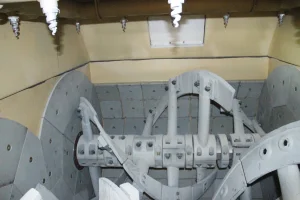
China holds massive domestic raw material reserves and metallurgical expertise in high-chrome cast iron alloys (Ni-Hard and Chrome 20+). Mixing arms, scraper blades, and pan liners boast wear life ratings exceeding 150,000 continuous mixing cycles even under abrasive quartz-aggregate conditions.
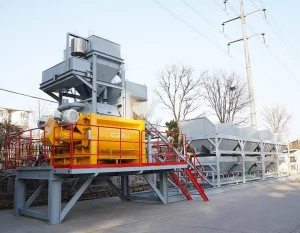
Chinese batching plants utilize foundationless, skid-mounted, and containerized designs. Prefabricated wiring harnesses, plug-and-play pneumatic controls, and pre-commissioned hydraulic discharge gates shorten site installation times from months to under 10 days.
By controlling every manufacturing stage—from CAD finite element modeling (FEM) of mixing pans to laser-cutting plate fabrication and robot-assisted arm welding—manufacturers achieve strict quality management standards equivalent to ISO 9001 and European CE certifications while retaining an attractive total cost of ownership (TCO).
The batching plant market is transitioning rapidly toward intelligent, green, and micro-precision mixing technologies. Buyers must evaluate equipment based on emerging technological standards:
Modern concrete batching plants integrate dynamic microwave moisture sensors inside aggregate bins and mixing pans. The PLC algorithm recalculates water-to-cement ratios in real time every 0.5 seconds, compensating for moisture fluctuations in fine sand and aggregate stockpiles to ensure consistent slump metrics.
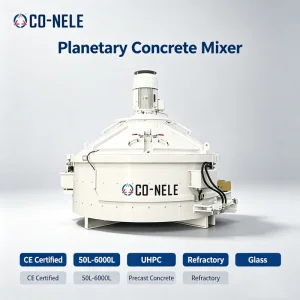
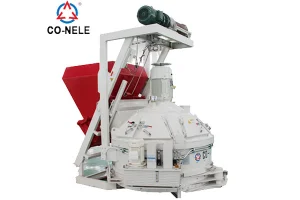
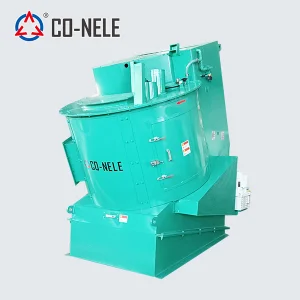
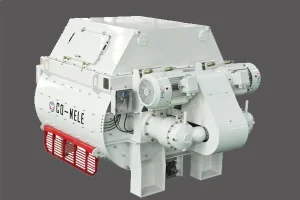
Standard twin shaft mixers fail to disaggregate micro-silica sand and steel fibers effectively in UHPC matrixes. Vertical-shaft counter-current planetary mixers with high-speed fly-cutter attachments generate intense fluid dynamic shear, dispersing fibers homogeneously without balling or segregation.
Urban plants operate under zero-discharge environmental regulations. Integrated pulse-jet bag filters maintain dust levels under 10 mg/Nm³, while closed-loop concrete reclaimer systems separate aggregate and slurry water for 100% recycling back into batching cycles.
| Mixer Type | Kinematic Action | Mixing Homogeneity (CV) | Ideal Application Scenario | Cycle Time per Batch |
|---|---|---|---|---|
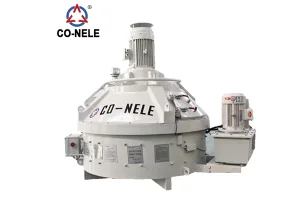
| Planetary Counter-Current Mixer | Vertical-shaft, multi-star rotation + revolution | < 3.5% (Exceptional) | Precast elements, UHPC, dry-cast pavers, refractory blocks | 60 – 90 seconds |
| Twin Shaft Compulsory Mixer | Horizontal dual-shaft counter-rotating blades | < 5.0% (High) | Commercial ready-mix, dam construction, high-throughput road beds | 30 – 45 seconds |
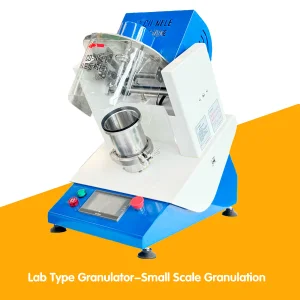
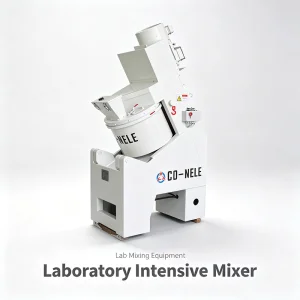
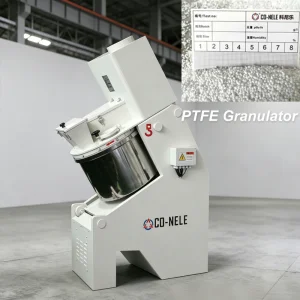
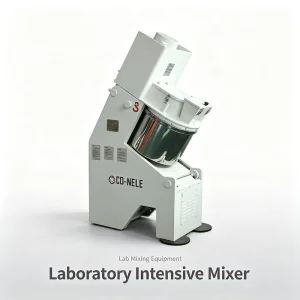
| Intensive Mixer & Granulator | Inclined rotating pan + high-speed rotor pin | < 1.5% (Micro-level) | Powder metallurgy, proppants, ceramic granulates, battery materials | 120 – 180 seconds |
| Double Spiral Shaft Mixer | Continuous horizontal ribbon-spiral action | < 4.0% (Medium-High) | Dry mortar powder, decorative wall plasters, asphalt mixes | 45 – 75 seconds |
Concrete batching plants must be engineered according to regional aggregate characteristics, climate extremes, and local building codes. Chinese manufacturers supply modular solutions tailored to diverse operational environments globally:
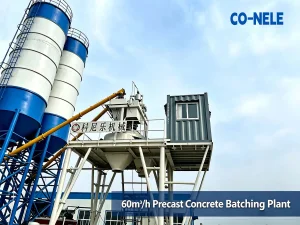
In tropical conditions, aggregate bin moisture varies rapidly between rain squalls and intense sunlight. Our HZS50 and HZS60 compact plants fitted with moisture-proof load cells and planetary mixers ensure color-consistent dry-cast road tiles and kerb stones with zero efflorescence risk.
Desert mega-infrastructure projects require strict concrete placement temperatures below 32°C. Batching plants integrate ice-dosing screws, insulated water tanks, and air-chilled aggregate belt conveyors alongside heavy-duty dust suppression enclosures.
Demanding architectural precast, bridge deck overlays, and offshore wind turbine foundation grouting rely on specialized CMP planetary mixers. Integrated fly-cutters disperse micro-silica powder and stainless steel fibers homogeneously into compressive strengths exceeding 150 MPa.
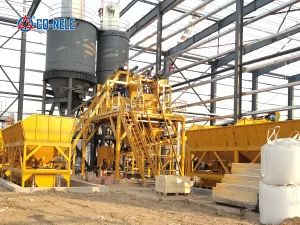
For remote road construction and mine backfill operations, trailer-mounted mobile concrete batching plants (25 m³/h – 50 m³/h) provide rapid relocation capability. Built-in diesel generators and self-erecting cement silos eliminate reliance on weak local power grids.
Procuring industrial batching equipment from China requires a structured evaluation framework that looks beyond the initial FOB machinery quotation. Chief Procurement Officers (CPOs) and Plant Engineering Managers should prioritize five critical operational factors:
Detailed answers compiled by CO-NELE Senior Application Engineers to guide machine specification, site installation, and operational maintenance.
A planetary mixer features a vertical shaft layout where mixing arms rotate on their own axes while simultaneously revolving around the central axis of the pan (counter-current motion). This kinematics leaves zero dead zones, ensuring 100% material movement and a coefficient of variation below 3.5%. It is ideal for dry, stiff, colored, or fiber-reinforced mixes. A twin shaft mixer uses dual horizontal shafts to cross-mix wet concrete rapidly; it is preferred for high-throughput commercial ready-mix concrete above 2 m³ per batch where cycle speed (30–45 seconds) takes priority over extreme micro-homogeneity.
Theoretical rating assumes zero delay between batch cycles (e.g., an HZS60 plant theoretical output is 60 m³/h based on 60 batches of 1 m³ per hour at a 60-second cycle). In actual field operations, truck mixer positioning, aggregate bin feeding delays, cement weighing stabilization, and discharge door open times adjust real output to 70%–85% of theoretical capacity. For an actual site demand of 50 m³/h continuous pour, an HZS60 or HZS75 plant with an oversized aggregate batching hopper is recommended.
Using standard CO-NELE high-chrome alloy wear plates (hardness ≥ 60 HRC), wear life averages 90,000 to 150,000 batches on standard concrete aggregate mixes. For highly abrasive applications like quartz sand, refractory castables, or ceramic slip, liner life averages 40,000 to 60,000 batches. All wear liners are bolt-on segment tiles, allowing field maintenance crews to swap localized worn sections near the pan wall without replacing the entire liner liner assembly.
Yes. All electrical control cabinets, motors, and PLC systems are custom-built to match regional power supplies (3-phase 220V, 380V, 415V, 440V, 480V at 50Hz or 60Hz). Electrical cabinets can be wired to CE directives or UL/CSA standards with double-insulated control wiring, IP65-rated enclosures, air-conditioned cabinet cooling, and multi-language HMI screens (English, Spanish, Russian, French, Arabic).
Equipment packages ship with complete 3D foundation layout drawings, electrical wiring schematics, and detailed operation/maintenance manuals. CO-NELE provides three commissioning tiers: (1) Remote HD video commissioning guided by senior field engineers; (2) On-site technician dispatch for foundation inspection, mechanical alignment, PLC commissioning, and operator training; (3) Lifecycle spare parts supply shipped directly from our inventory hubs within 48 hours of request.
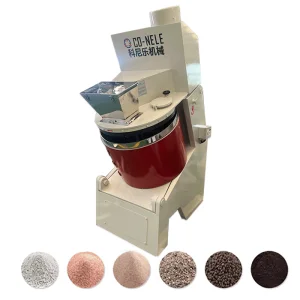
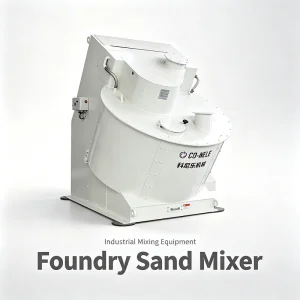
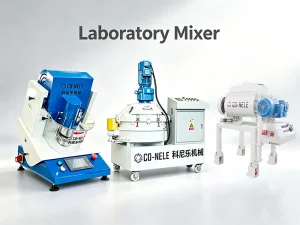
Discover our advanced laboratory scale mixers, intensive granulating systems, mobile batching stations, and material-specific equipment series.
Partner directly with China's leading mixing technology manufacturer. Send us your raw material specifications, target strength grades, and required output capacity—our engineering team will generate complete plant CAD layouts and customized quotations within 24 hours.