CO-NELEMixing & Granulation
Explore our precision-engineered mixing systems optimized for ready-mix batching, ultra-high performance concrete (UHPC), refractory formulations, and specialized dry mortar production.
The international ready-mix concrete (RMC) and precast machinery market is undergoing a seismic structural transition. Global infrastructure demands, combined with stringent environmental mandates (such as Euro Stage V emissions and ISO 14001 carbon accounting), have forced commercial batching plant operators to re-evaluate capital expenditures (CAPEX) versus operational efficiencies (OPEX). Modern industrial procurement is no longer driven purely by initial machine costs; it is dictated by mixing homogeneity coefficients, volumetric throughput reliability, dosing accuracy (<1%), energy consumption per cubic meter ($kWh/m^3$), and Total Cost of Ownership (TCO) across a 15-to-20-year operational lifecycle.
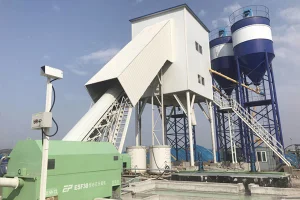
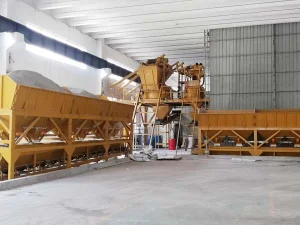
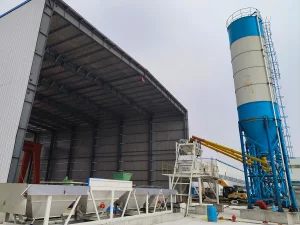
China has emerged as the definitive global manufacturing hub for advanced concrete batch mixing plants, shifting from low-cost assembly to high-precision engineering leadership. Factory-direct procurement from tier-1 Chinese manufacturers allows global buyers to capture a **30% to 55% CAPEX advantage** compared to European or North American equivalents without compromising structural steel integrity, PLC automation protocols, or mixing mechanics.
Understanding the cost breakdown of a Chinese concrete batching plant requires a granular examination of equipment specifications, material engineering, and automation levels. A common industry pitfall is evaluating prices based solely on nominal capacity (e.g., $m^3/h$). Two plants rated at $90\text{ m}^3/\text{h}$ can differ in price by over $50,000 due to key technical component selection.
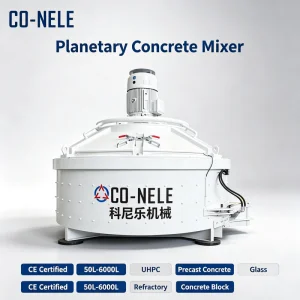
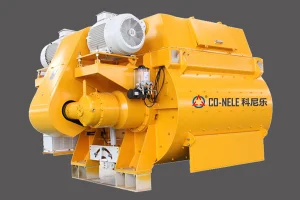
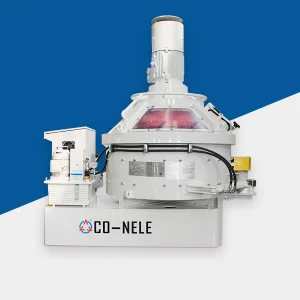
The central mixer accounts for 25% to 40% of the entire batching plant cost. Compulsory twin-shaft mixers (such as the CHS series) offer high volumetric output at lower investment for standard ready-mix. In contrast, vertical-shaft counter-current planetary mixers (CMPS series) command a 20-30% premium due to complex planetary gearboxes, ideal for zero-slump, UHPC, and precast applications.
Basic relay-operated semi-automatic systems lower initial costs but increase labor and aggregate waste. Enterprise-grade plants integrate Siemens S7-1500 PLCs, Toledo load cells, and microwave moisture sensors (e.g., Hydronix) for dynamic water compensation, adding $8,000–$25,000 to plant pricing while yielding long-term material savings.
Plant durability depends on steel thickness and wear liner hardness. Premium Chinese factories utilize Q355B structural steel, hot-dip galvanized scaffolding, and high-chromium alloy casting liners (Brinell hardness HB600+), preventing rust and structural fatigue during heavy duty continuous operation.
| Plant Model | Nominal Capacity | Mixer Type & Power | FOB China Factory Price (USD) | Key Target Applications |
|---|---|---|---|---|
| HZS25 / HZN25 | $25\text{ m}^3/\text{h}$ | JS500 Twin Shaft (18.5 kW) | $18,000 – $28,000 | Small bridge repair, rural roads, localized precast work |
| HZS60 / HZN60 | $60\text{ m}^3/\text{h}$ | CHS1000 / CMP1000 (37 kW) | $45,000 – $68,000 | Precast pipe plants, commercial ready-mix, medium infrastructure |
| HZS90 / HZN90 | $90\text{ m}^3/\text{h}$ | CTS2000 Twin Shaft (2x37 kW) | $75,000 – $115,000 | Commercial RMC supply, highways, urban construction towers |
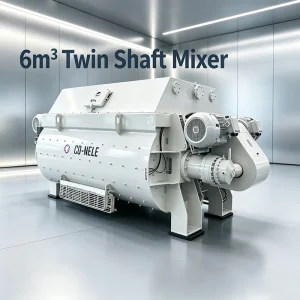
| HZS180 Stationary | $180\text{ m}^3/\text{h}$ | CTS3000 / 6m³ Heavy Twin (2x55 kW) | $140,000 – $220,000 | High-speed rail projects, megadam construction, hub batching |
| UHPC Dedicated Unit | $15 – $40\text{ m}^3/\text{h}$ | Planetary Intensive CMP750 (45 kW High-Speed) | $65,000 – $110,000 | Marine anti-scour grouting, bridge joint sealing, precast facades |
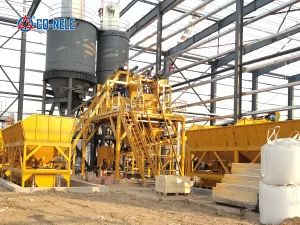
The competitive advantage of Chinese batch mix plant factories (notably located in industrial clusters like Qingdao, Shandong) extends far beyond raw material pricing. It is built upon comprehensive supply chain vertical integration, advanced manufacturing robotics, and deep localized engineering expertise.
Unlike commercial assemblers who source third-party gearboxes, premier Qingdao plants (such as CO-NELE) maintain dedicated gearing test benches and machine their own planetary reducers. This internal manufacturing control eliminates component lead-time bottlenecks and guarantees long-term spare parts interchangeability for units operating overseas.
Robotic seam welding on mixer pans, aggregate batcher hoppers, and cement silos ensures structural integrity under continuous fatigue stress. High-precision CNC boring of gear shafts guarantees zero axial misalignment, significantly reducing bearing friction and thermal wear.
By controlling raw steel procurement, painting lines, electrical cabinet wiring, and pre-shipment dry running under one roof, leading Chinese factories achieve standard plant delivery within 15–25 days, compared to 12–20 weeks from European original equipment manufacturers (OEMs).
Achieving concrete homogeneity requires a deep understanding of fluid dynamics, shear rates, and mechanical agitation kinematics. The choice between mixing mechanisms defines batch quality:
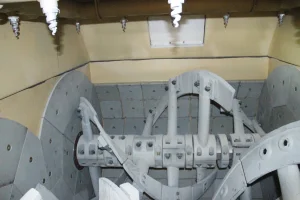
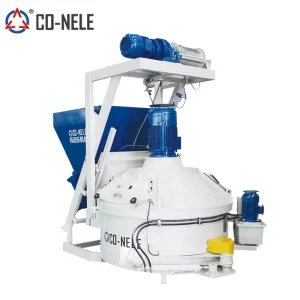
In vertical-shaft planetary mixers, the mixing star blades rotate on their own axis while simultaneously revolving around the central pan axis. This dual-rotation motion creates complex, intersecting velocity vectors ($V_{rel}$). The mixing trajectory covers every square millimeter of the pan floor within 4 to 6 revolutions, eliminating dead zones and ensuring cementitious matrix dispersion with variance coefficients ($\text{CV}$) below 5%.
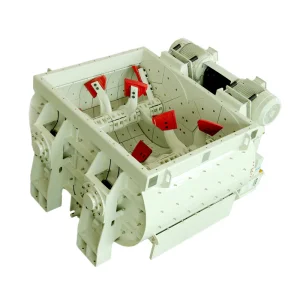
Twin-shaft mixers employ synchronized counter-rotating dual shafts fitted with overlapping helical paddle blades. This forces the concrete mass into a continuous three-dimensional turbulence zone. Aggregate particles collide in suspension, reducing blade wear while rapidly breaking up dry cement agglomerates within 30 to 45 seconds of mixing.
| Era | Control Architecture | Dosing & Moisture Tech | Maintenance & Diagnostic Paradigm |
|---|---|---|---|
| Legacy (Gen-1) | Manual relays, mechanical dials | Volumetric water dosing, estimated slump | Breakdown maintenance (unplanned downtime) |
| Current (Gen-2) | PLC + Touchscreen SCADA interface | Gravimetric load cells, microwave probes | Scheduled wear component replacement |
| Next-Gen (Gen-3 AI) | Edge-cloud hybrid, neural recipe optimization | Real-time optical rheology, auto-water compensation | IoT vibration telemetry & predictive bearing analytics |
Concrete mixing equipment must adapt to local raw materials, climate extremes, and specific engineering applications worldwide. Below are field-proven deployment scenarios using Chinese-manufactured batching systems:
In tropical environments like Vietnam, Thailand, and Indonesia, high ambient temperatures demand precise water-cement ratio control ($w/c$). Our planetary batching plants feature integrated aggregate chillers and high-shear water mist injection, allowing block factories to maintain consistent green strength for pavers and road tiles without flash setting.
Operating in sub-zero winter temperatures (-25°C), specialized batch plants in Russia utilize insulated aggregate bins, steam injection manifolds, and planetary mixers (CMP series) tailored for zero-slump, dry-cast block and brick production lines.
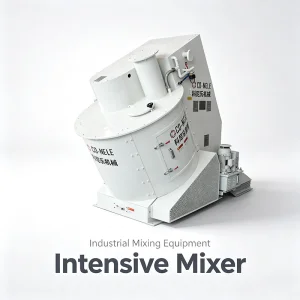
Heavy infrastructure projects require Ultra-High Performance Concrete (UHPC) mixes with dense steel fiber reinforcement (>2% volume). Dedicated intensive planetary units disperse micro-silica and steel fibers uniformly without balling or segregation, achieving compressive strengths exceeding 150 MPa.
Global machinery buyers frequently face integration challenges due to electrical voltage discrepancies, regional safety codes, and after-sales service response times. Leading Chinese exporters proactively address these concerns:
Control panels are wired to local regional standards, supporting 220V, 380V, 415V, 440V, and 480V grid configurations at 50Hz or 60Hz. Electrical components carry global CE, UL, and CSA certifications, featuring Schneider switchgear and Siemens PLCs for effortless field servicing.
To meet stringent municipal environmental guidelines, plants incorporate pulse-jet bag filter dust collectors at cement weighing hoppers and silo vents, achieving dust emission levels under 20 mg/Nm³.
Integrated VPN routers allow engineers in Qingdao to perform real-time PLC diagnostics, software updates, and recipe troubleshooting remotely within 24 hours, complemented by local engineering partners for physical commissioning.
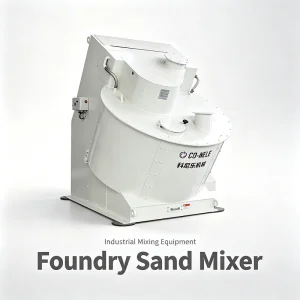
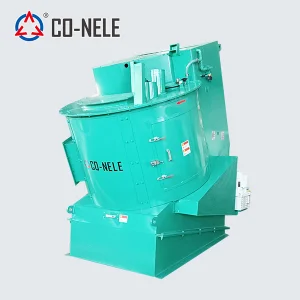
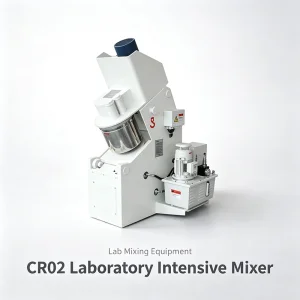
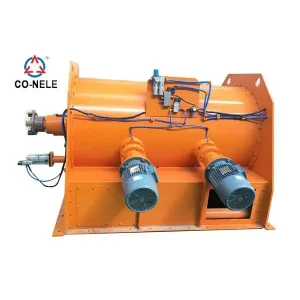
Browse our secondary catalog of specialized industrial mixing machines, laboratory scale granulators, sand mixers, and heavy stationary ready-mix plants.
Choosing the right factory partner in China involves balancing CAPEX investment with operational performance. By aligning mixer kinematics, load cell dosing precision, and wear plate metallurgy with your local aggregate characteristics, you ensure maximum ROI across the machine's lifespan.