CO-NELEMixing & Granulation
Explore our core engineering portfolio designed for heavy-duty civil engineering, precast plants, refractory mixing, and advanced powder material processing.
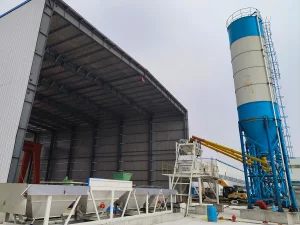
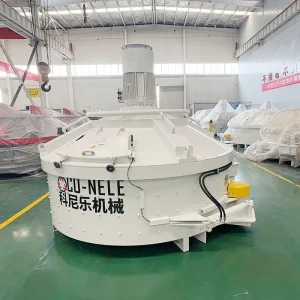
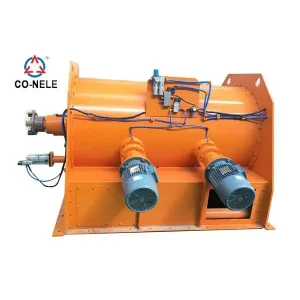
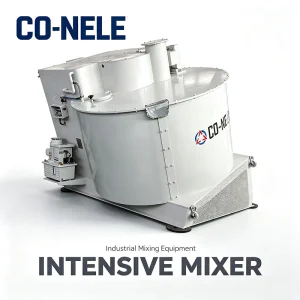
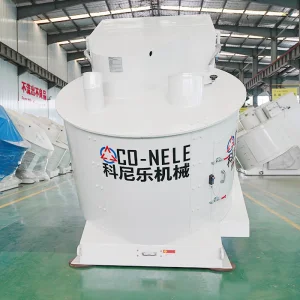
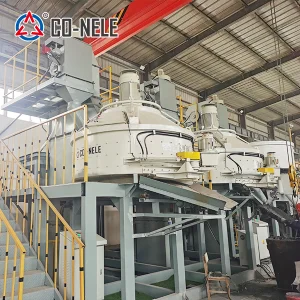
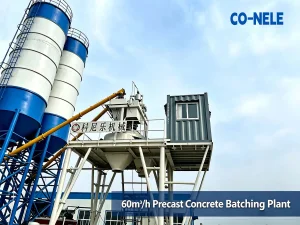
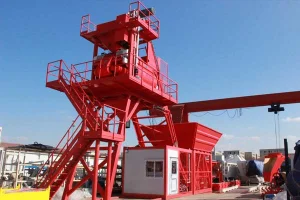
In modern mega-infrastructure engineering, the demand for continuous, high-homogeneity ready-mix concrete has positioned the 180m³/h Concrete Batching Plant (HZS180) as the benchmark standard for commercial concrete producers and mega-project contractors globally. Operating at a theoretical maximum capacity of 180 cubic meters per hour, an engineered HZS180 plant integrates precise aggregate batching, micro-silica powder handling, high-speed fluid dosing, and heavy-duty compulsory twin-shaft mixing into a fully synchronized matrix.
As leading China-based original equipment manufacturers (OEM) and technology leaders in industrial mixing, our manufacturing methodologies bridge high-throughput capacity with micro-level material homogeneity. Standard twin-shaft forced-action mixers within an HZS180 framework must overcome significant rheological resistance, shear stress, and aggregate segregation—particularly when handling high-strength concrete mixes (C60 to C100), self-consolidating concrete (SCC), and mass pour formulations requiring strict thermal and hydration control.
| Technical Parameter | HZS180 Standard Specification | Heavy-Duty Commercial Grade | Engineering Advantage |
|---|---|---|---|
| Nominal Output Capacity | 180 m³/h | 180 – 200 m³/h (Peak) | Optimized for continuous truck mixer loading cycles |
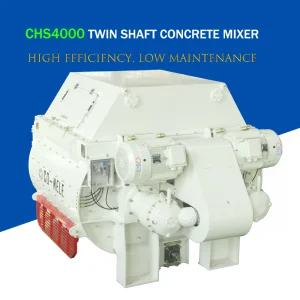
| Mixer Model & Volume | JS3000 (3.0 m³ Discharged) | CHS4000 / Twin-Shaft 3.0m³ | Dual-shaft counter-rotating forced mixing action |
| Aggregate Batching Storage | PLD4800 (4 or 5 Bins) | Custom Modular Aggregate Silos | Dynamic weigh belt with micro-pulse dosing accuracy |
| Aggregate Weighing Accuracy | ±2.0% | ±1.0% (High Precision Option) | Real-time moisture compensation via microwave sensors |
| Cement & Powder Weighing | ±1.0% | ±0.5% | Pneumatic fluidization with anti-bridging air pads |
| Discharge Height | 4.2 Meters | 4.5 Meters (Clearance) | Universal clearance for 8m³ to 14m³ transit mixers |
| Control System Interface | Dual PLC + PC Automation | SCADA Cloud-Connected AI System | Full traceability, automated batching report & remote diagnostics |
The macroeconomic trend in worldwide urban development, high-speed rail network construction, deep-water port infrastructure, and renewable energy foundations (such as wind turbine base pads) has fundamentally transformed operational expectations for high-capacity concrete batching plants. The global market for 180m³/h batching systems is undergoing an evolution driven by four regional industrial drivers:
Driven by giga-projects like NEOM, Saudi Vision 2030, and UAE infrastructure expansion, 180m³/h plants in this region require extreme-ambient cooling engineering, ice-batching plant integration, and heavy-duty dust suppression to maintain continuous pouring under temperatures exceeding 50°C.
Rapid expansion across Vietnam, Indonesia, Thailand, and the Philippines demands fast-erection modular 180m³/h batching stations. Plants are tasked with supplying core vibration pipe production, mass precast box girder yards, and high-density commercial ready-mix hubs.
With aging bridge networks and highway systems being refurbished under federal infrastructure bills, American contractors heavily source specialized Chinese mixing units and full HZS180 plant modules certified to UL/CSA electrical standards with strict ASTM batching tolerances.
EU environmental compliance mandates net-zero operational footprints. Consequently, exported 180m3 concrete plants are designed to batch low-carbon supplementary cementitious materials (SCM), ground granulated blast-furnace slag (GGBS), and geopolymers while achieving zero-waste aggregate recovery.
A high-capacity 180m³/h batching plant is not merely an assembly of larger tanks and conveyor belts; it is a complex kinetic system requiring harmony between material flow rate, structural rigidity, pneumatic pressure, and dynamic scale settling. Below is an engineering overview of the essential modular sub-systems:
The beating heart of the HZS180 plant. Featuring dual horizontal shafts equipped with staggered helical mixing paddles, the system creates a three-dimensional counter-current turbulent flow. Wear parts are cast from Ni-Hard and High-Chrome alloy irons (hardness ≥60 HRC), providing operational lifespans exceeding 100,000 mixing cycles under abrasive granite aggregate contact.
To achieve 180m³/h continuous output, the aggregate belt conveyor operates at an incline of 18° to 20° with a chevron belt speed of 2.0 to 2.5 m/s. An intermediate aggregate waiting hopper located directly above the main mixer pre-stores weighed aggregates, eliminating batching latency and allowing immediate loading as soon as the main mixer discharges.
Separate lever-action scale hoppers measure Cement, Fly Ash, Ground Slag, Water, and Liquid Admixtures concurrently. Utilizing multi-load-cell suspension and pneumatic butterfly valves with coarse and fine dosing control, weight tolerances are held within ultra-tight industrial margins required for nuclear and bridge-grade concrete.
Purchasing a 180m3 concrete batching plant from a top-tier Chinese manufacturer involves far more than acquiring mechanical components. Modern OEMs supply end-to-end engineered ecosystems customized for harsh operational environments and specialized concrete mix designs:
Integration of automatic truck mixer wash-out stations and concrete reclaimer systems. Slurry water is dynamically agitated and re-dosed into non-structural batches, while reclaimed aggregates are separated into stone and sand fractions for 100% material reuse.
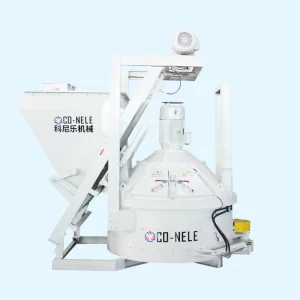
For specialized precast component manufacturing—such as core vibration concrete pipes, segment linings for subsea tunnels, and railway sleepers—the plant can be integrated with vertical-shaft planetary mixers (such as the CMP series) alongside the primary CHS twin-shaft mixer to supply both wet-mix commercial concrete and dry-cast/UHPC recipes simultaneously.
Siemens PLC architecture paired with industrial IoT edge gateways allows plant managers to monitor real-time amp loads on mixer motors, aggregate moisture levels, batch weights, and truck dispatch queues from anywhere in the world. Fully automated error reporting prevents out-of-spec batches from ever leaving the plant floor.
As the international construction industry transitions toward automation, carbon neutrality, and digital twin management, Chinese manufacturers are pioneering key technological advancements in concrete batching station design:
Integration of torque-sensing inline viscometers and high-frequency microwave moisture probes directly into the twin-shaft mixer bowl. The system auto-adjusts water and admixture dosing mid-cycle to guarantee exact slump performance regardless of variations in aggregate absorption.
Implementation of carbon-capture dosing modules that inject precise liquid CO2 during the concrete mixing phase. This permanently traps carbon dioxide as nano-calcium carbonate crystals, increasing compressive strength while lowering cement requirements by up to 15%.
Self-diagnostic batching facilities utilizing autonomous wheel loaders, drone-based aggregate stockpile volume analysis, and robotic wear-liner monitoring systems to eliminate scheduled downtime and operational labor overhead.
In-depth engineering answers compiled by our chief equipment designers to assist international contractors, engineers, and plant managers.
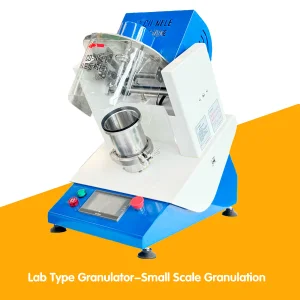
Complete your operational ecosystem with our complete line of mobile mixing plants, lab-scale intensive granulators, dry mortar mixers, and specialized brick batching systems.