
CO-NELEMixing & Granulation
Specifically matched to Colombian aggregate gradations, silica fume reactivity, and high steel fiber volume ratios.
Analyzing material science, mountain topography, seismic codes (NSR-10), and mixing mechanics for Latin America's fastest-growing infrastructure sector.
Colombia’s civil construction landscape is undergoing a massive transformation driven by 4G and 5G road concession networks, mega-viaducts across the Andean ranges, urban transit expansions (such as the Metro de Bogotá line), and coastal port modernizations in Cartagena and Buenaventura. However, Colombia presents unique engineering challenges: highly complex mountainous topography, active seismic zones governed by the strict NSR-10 (Norma Sismorresistente Colombiana) standard, and extreme microclimates ranging from tropical humidity to high-altitude cold plateaus like the Sabana de Bogotá.
To meet these requirements, structural engineers across Colombia are increasingly shifting from standard C40/C50 concrete to Ultra-High Performance Concrete (UHPC) boasting compressive strengths exceeding 150 MPa, flexural strength above 25 MPa, and near-zero capillary porosity. UHPC allows for ultra-slender bridge decks, rapid seismic joint connections, and maintenance-free viaduct overlays. However, producing consistent, high-yield UHPC in Colombia requires localized engineering solutions—specifically designed UHPC mixers capable of overcoming raw material variability and extreme fiber-reinforced viscosity.
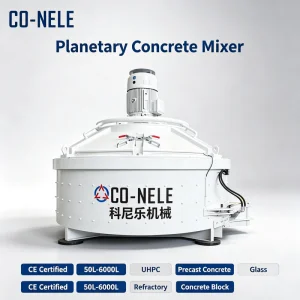
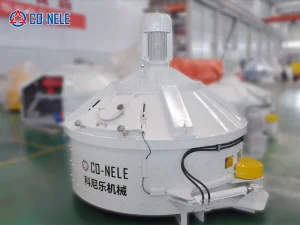
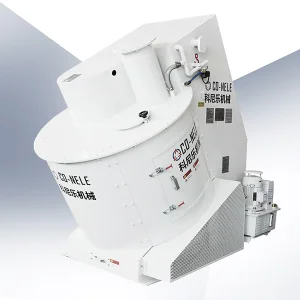
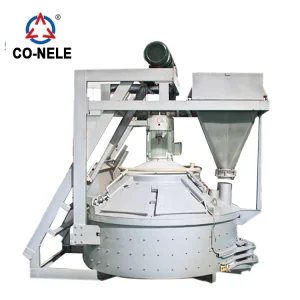
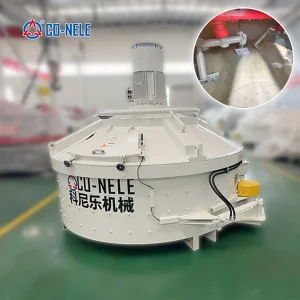
Key Engineering Insight for Colombian Contractors: Conventional twin-shaft or gravity drum mixers fail when batching UHPC formulas. High shear resistance, micro-silica agglomeration, and heavy steel fiber loadings (up to 3% by volume) cause premature shaft lock, fiber balling, and dead zones. CO-NELE planetary counter-current UHPC mixers solve this via forced intensive mechanical energy input.
UHPC is not simply strong concrete—it is a densely packed particle matrix with a ultra-low water-to-binder (w/b) ratio typically between 0.14 and 0.18. Mixing this material requires transitioning from a dry, high-friction powder state to a dense, fluid viscoelastic paste within a brief cycle time. Conventional equipment suffers from severe performance degradation during this phase shift.
As a leading Chinese UHPC mixer manufacturer with over 20 years of dedicated forced-mixing R&D, CO-NELE provides Colombian contractors with an ideal balance of cutting-edge technology, European-grade durability, and direct factory pricing. Unlike basic trading companies, CO-NELE operates three fully integrated production bases covering 30,000 m² in Qingdao, China, holding over 80 national patents.
Our planetary reducers are designed, machined, and load-tested in-house specifically to withstand the brutal torsional resistance of dry UHPC recipes, eliminating third-party gearbox failures.
Pan liners and mixing blades utilize ultra-hardened high-chrome alloys (HRC ≥ 62) or optional ceramic tile coatings engineered to resist quartz sand and abrasive basalt aggregate wear.
Every electrical cabinet is custom-configured for Colombian power grids (220V, 380V, or 440V at 60 Hz) featuring Siemens PLCs, Schneider electronics, and IP65 dust/water isolation.
CO-NELE UHPC mixing machinery is engineered to integrate seamlessly into key Colombian civil projects:
In steep mountain corridors such as the Bogotá-Villavicencio or Medellín-Bogotá highways, bridge expansion joints and precast beam connections require rapid-strength UHPC casting. CO-NELE compact planetary units (CMP250 / CMP500) can be mounted onto mobile trailers, providing on-site batching capability directly at high altitude without risk of cold joints.
Modern architectural projects in Colombian metropolitan areas are heavily utilizing thin, lightweight, highly complex decorative UHPC cladding panels. The counter-current mixing motion ensures zero air bubble retention and absolute color consistency across all pigment batches, guaranteeing pristine architectural finishes.
Under NSR-10 mandates, existing aging bridge structures require seismic strengthening. Jacketing piers and strengthening decks with thin UHPC overlays bonded to existing concrete reduces overall structural dead weight while multiplying load capacity and seismic energy dissipation.
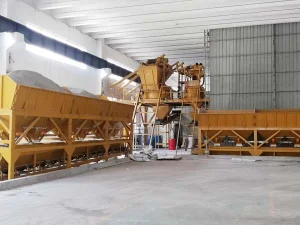
Hydraulic structures subject to extreme water velocity, cavitation, and abrasive sediment carrying require UHPC linings. CO-NELE high-capacity UHPC plants deliver continuous high-volume outputs with batch coefficient of variation (CV) held under 3%.
Extensive field experience delivering heavy-duty mixing machinery to over 80 countries worldwide.
Direct technical guidance covering mixing economics, logistics, spare parts, and local support.
Twin-shaft mixers excel at high-volume wet concrete above 2 m³, but struggle with dry, viscous UHPC formulas. In twin-shaft units, stiff UHPC pastes stick to shaft centers, creating dead zones, while steel fibers ball together near discharge gates. CO-NELE planetary mixers utilize forced vertical-shaft kinematics where arms cover every square centimeter of the pan floor, ensuring 100% micro-homogeneity and perfect fiber dispersion within 90–120 seconds.
We handle full export documentation, container loading, and CIF shipping to major Colombian ports including Buenaventura (Pacific) and Cartagena / Barranquilla (Atlantic). All machinery electrical systems are custom-built for Colombian grid standards—440V, 380V, or 220V at 60Hz. PLCs are pre-programmed with dual English and Spanish operator interfaces for seamless field operation.
Quartz sand and silica flour used in UHPC are extremely abrasive. CO-NELE standard high-chrome alloy wear parts (hardness ≥ 62 HRC) typically deliver 40,000 to 60,000 batches on aggressive UHPC mixes. For high-volume industrial precast plants, we also offer tungsten-carbide coated blades and alumina ceramic tiles that extend wear life beyond 100,000 batches. All wear elements are bolt-on and field-replaceable within hours.
Yes. CO-NELE planetary mixers feature flexible drop-in footprints, multiple discharge door options (hydraulic or pneumatic), and adaptable skip hoist or belt feeding systems. Our engineering team provides custom 3D CAD/BIM foundation and elevation drawings to ensure zero collision when retrofitting existing ready-mix or precast towers.
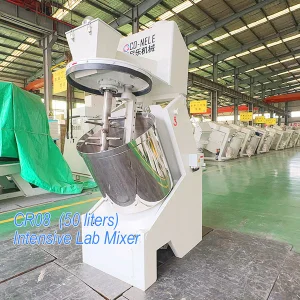
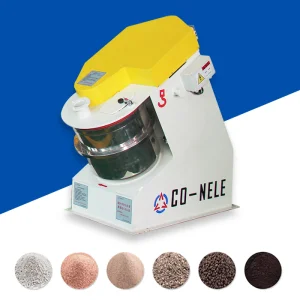
Absolutely. Contractors can send 20–50 kg samples of local aggregate, cement, and pozzolans to our Qingdao mixing R&D center. Our process engineers conduct trials on our laboratory intensive mixers, providing complete reports on mixing torque curves, bulk density, air content, fiber distribution, and recommended full-scale machine sizing.
From R&D lab units to ready-mix concrete batching plants serving the Colombian market.

Get a customized technical proposal, 3D plant layout drawings, aggregate trial reports, and direct factory pricing within 24 hours.
Send Inquiry Now