
CO-NELEMixing & Granulation
From high-precision laboratory test benches to specialized fly-cutter composite mixers and industrial glass-batch units, our equipment delivers zero-dead-zone dispersion for Georgetown's fastest expanding developments.
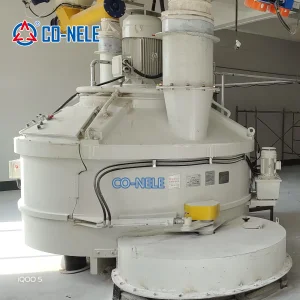
High-torque sealed pan mixer optimized for abrasive batching, chemical silicates, refractory matrices, and uniform thermal-glass production.
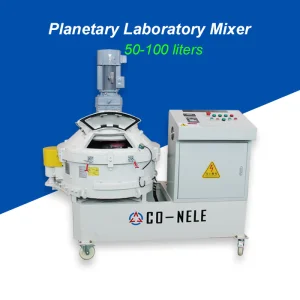
Precision pilot-scale vertical counter-current pan mixer designed for Georgetown civil labs, testing mix rheology, coastal additives, and UHPC formulation.
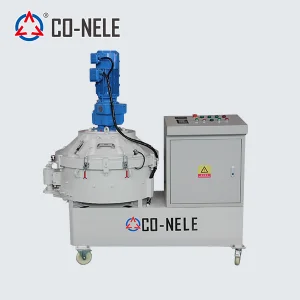
Compact, reinforced planetary mixer built for university research facilities and precast batching plants executing micro-silica and ternary binder trials.
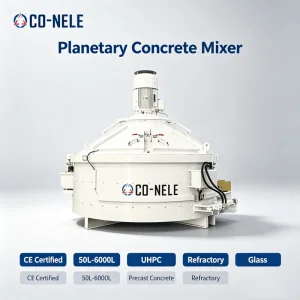
Equipped with dual high-speed chopper fly-cutters, rapidly de-agglomerating steel fibers, polypropylene mesh, and pigments in heavy maritime precast blends.
Georgetown, the administrative, commercial, and logistical capital of Guyana, is experiencing one of the world's fastest infrastructure and economic expansions. Driven by major offshore energy projects, deepwater port developments, and transformative transportation master plans—such as the new Demerara River Crossing, the Linden-to-Mabura Hill road corridor, and massive coastal sea-defense rehabilitations—the demand for high-durability concrete has shifted permanently away from low-efficiency gravity mixing toward compulsory counter-current planetary mixing technology.
In coastal South American and Caribbean maritime environments like Georgetown, concrete structures are subjected to relentless saltwater exposure, fluctuating groundwater tables, high tropical humidity, and saline pore-water infiltration. Structural civil engineering specifications for port quays, sea dykes, interlocking coastal revetment blocks, and precast bridge piles demand strict water-cement ratios (w/c ≤ 0.32), total micro-silica dispersal, and high early compressive strength (C50/60 to C90/105). Traditional horizontal twin-shaft or gravity drum mixers frequently leave micro-agglomerations, unhydrated cement nodules, and localized moisture differentials that accelerate chloride penetration and structural reinforcement carbonation.
Georgetown Material Engineering Insight: Utilizing locally dredged coastal sands and crushed volcanic stones from the interior requires precise rheological management. Planetary counter-current mixers ensure uniform binder distribution across variable aggregate gradings, eliminating segregations and guaranteeing a batch-to-batch variation coefficient (CV) below 3%.
The core advantage of our planetary concrete mixer lies in its planetary motion gearbox and counter-current mixing geometry. As the central drive rotates the mixing star carriage around the vessel centerline, the individual mixing blades revolve around their own axis in the opposite direction. Simultaneously, outer wall scraper blades and bottom scraper blades funnel fresh aggregate continuously into the intersecting paths of the high-velocity mixing stars.
This dual-axis planetary kinematic curve forces every aggregate particle through complex multi-directional trajectory lines within fractions of a second. Shear forces overcome water surface tension and shear-thickening thixotropic resistance in low water-binder blends without causing aggregate crushing. The resulting paste matrix demonstrates complete particle packing, critical for impermeable marine concrete used along the Georgetown seawall and drainage sluice outfalls.
| Mixing Technology | Kinematic Trajectory | Dispersion of Silica Fume / Fibers | Dry-Cast Paving & Block Suitability | Energy Consumption per m³ |
|---|---|---|---|---|
| Planetary Counter-Current (CMP Series) | Double-elliptic interlocking planetary orbits | Superior (Under 30s micro-wetting) | Optimal (No aggregate segregation) | 3.8 - 4.5 kWh/m³ (Highly Efficient) |
| Twin Shaft Horizontal Mixer | Dual counter-rotating circular arcs | Moderate (Prone to fiber clumping) | Fair (Residual damp clumps on arms) | 5.2 - 6.0 kWh/m³ (Fluid mixes only) |
| Pan Mixer (Fixed Arm Rotary) | Single circular trajectory | Poor (Dead zones near vessel walls) | Moderate (Extended cycle times needed) | 6.5 - 7.2 kWh/m³ (High friction loss) |
| Reversing Drum Gravity Mixer | Free-fall cascading action | Unacceptable for high-spec mixes | Unsuitable (Cannot mix dry zero-slump) | 4.0 - 5.0 kWh/m³ (Low shear only) |
Unlike regional machine assemblers or middleman distributors, our modern 30,000 m² Qingdao industrial facility controls the entire lifecycle—from alloy casting and heavy CNC gearbox gear hobbing to robotic welding and automated test-bench load runs.
Manufactured entirely in-house using forged 20CrMnTi carburized steel gears, vacuum heat treatment, and precision gear grinding. Designed to absorb severe torsional shock loading from zero-slump dry-cast batches.
Lining plates and mixing paddles are cast from ultra-durable high-chromium alloys (Cr26+ with Rockwell hardness ≥ 62 HRC), guaranteeing 120,000 to 160,000 standard batches before replacement.
Every planetary unit destined for Georgetown and the global export market undergoes continuous 72-hour temperature, vibration, and hydraulic discharge testing on our automated testing rigs in Qingdao.
Across Georgetown, expanding concrete contractors, engineering firms, and modular precast yards require planetary concrete mixing systems configured specifically for severe coastal challenges and accelerated development timelines:
Modern EPC procurement teams in North America, Europe, Latin America, and the Caribbean now evaluate industrial mixers on Levelized Cost of Concrete (LCOC). Rather than purchasing cheaper, light-duty pan mixers that require motor rewinds and gearbox replacements within 18 months, leading companies demand heavy-duty drive units backed by documented MTBF (Mean Time Between Failures) metrics exceeding 20,000 running hours.
Furthermore, decarbonization mandates are pushing the adoption of ternary and quaternary blended cements featuring high dosages of calcined clay, granulated blast-furnace slag (GGBS), and pulverized fuel ash (PFA). These supplementary cementitious materials exhibit high plastic viscosity, demanding superior torque curves and planetary shear patterns to maintain workability at minimum water volumes.
In-depth technical answers addressing aggregate compatibility, cycle speed, wear longevity, and shipping logistics for Georgetown and international contractors.
From compact MP-series units to high-volume CMP planetary mixers, our complete line delivers unmatched micro-homogeneity, high-chrome wear resistance, and reliable heavy-duty planetary reducers.
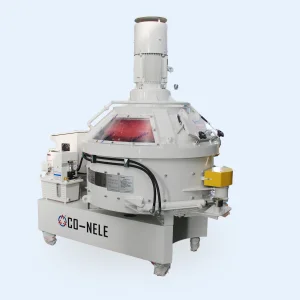
Ideal for specialized precast products, high-end terrazzo tiles, pigmented wet-cast units, and small pilot batching stations across Georgetown.
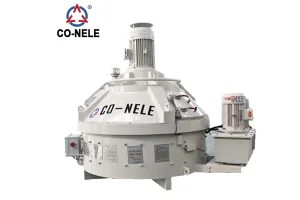
Compact planetary mixing station engineered for precast drainage tiles, kerbstones, and high-density electrical utility precast items.
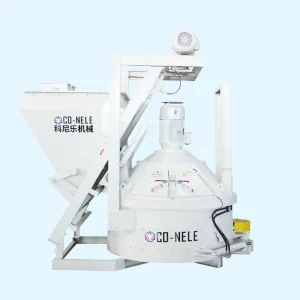
A dependable workhorse for small-to-medium block and paver manufacturing lines, offering rapid mixing cycles and low power consumption.
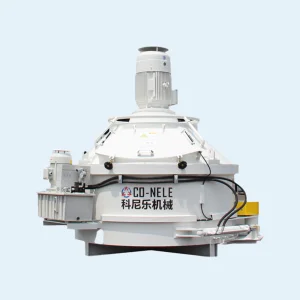
Designed with a specialized planetary gearbox and counter-current mixing geometry for consistent production of coloured pavers and architectural precast.
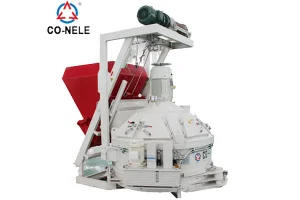
Engineered for medium precast yards fabricating prestressed floor beams, concrete boundary walls, and municipal drainage pipes in Guyana.
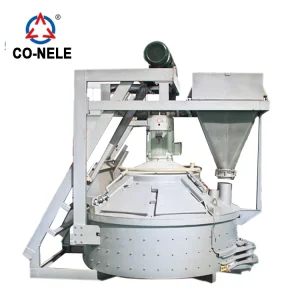
High-efficiency compulsory mixing machine built for high-throughput batching plants serving major commercial transport and port revetment projects.
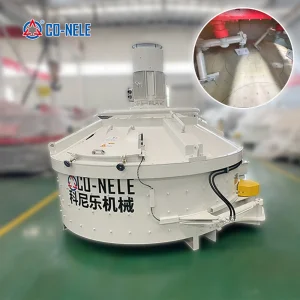
Delivers 1.0 m³ compacted output per cycle; ideal for automatic high-capacity block machines, precast box girders, and coastal barrier casting.
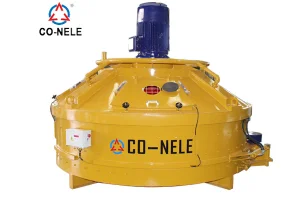
Our premier large-scale planetary mixer delivering 1.5 m³ per cycle for major deepwater port construction, highway paving, and regional ready-mix plants.