
CO-NELEMixing & Granulation
Customized mixing and wet/dry pelletizing solutions optimized for high-density, abrasive, and heat-sensitive raw materials across Indian manufacturing hubs.
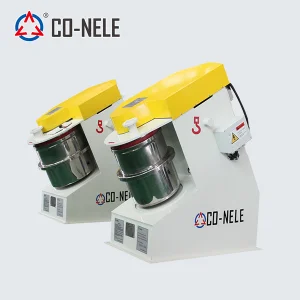
Compact intensive granulating mixer engineered for high-value ceramic powders, micro-granule synthesis, and battery chemistry batching.
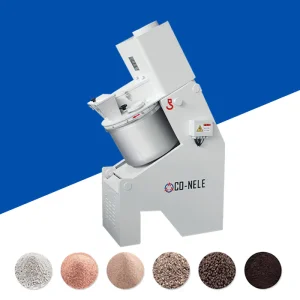
High-shear counter-current granulating system built for refractory castables, iron ore fines, and proppant pelletization lines.
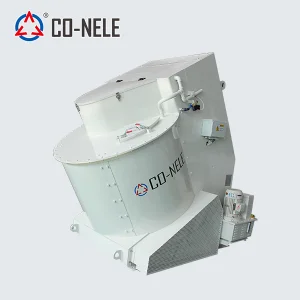
Complete mechanical granulation process control combining liquid dispersion, intensive shearing, and rapid grain growth.
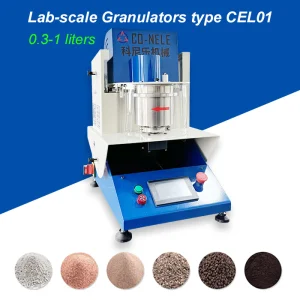
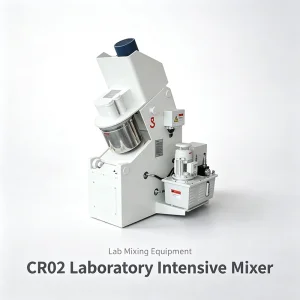
Precision pilot-scale intensive granulator (5L–15L capacity) designed for university research laboratories and formula optimization.
As India experiences an unprecedented industrial expansion driven by the "Make in India" initiative, National Steel Policy 2017, and aggressive infrastructure modernization, manufacturing plants across Gujarat, Maharashtra, Odisha, Tamil Nadu, and Jharkhand face increasing pressure to upgrade their solid-liquid processing technologies. Traditional granulation systems—such as disc pelletizers, horizontal drum granulators, and low-speed pug mills—are encountering severe operational bottlenecks when handling ultrafine powders, abrasive compounds, and strict grain size distribution targets.
The modern industrial granulating mixer represents a quantum leap in mechanical energy transfer and micro-homogeneity. By integrating an inclined rotating mixing pan with a counter-rotating or co-rotating ultra-high-speed rotor homogenizer, intensive granulators perform three critical unit operations—homogenizing, liquid binder dispersion, and controlled granule growth—within a single closed vessel. This whitepaper analyzes the engineering principles, local industrial integration scenarios, supply chain economics, and technological roadmap for granulating mixers operating within India's dynamic industrial landscape.
India’s rapid transition toward advanced manufacturing demands raw material preparation machinery capable of delivering consistent bulk density, high crushing strength, and zero dust pollution. The demand for industrial intensive granulators in India is driven by five core sectors:
Concentrated in the Morbi hub (Gujarat), ceramic tile producers are shifting from energy-intensive spray drying towers to mechanical wet intensive granulating mixers. Intensive granulators reduce thermal energy consumption by up to 45% while achieving uniform granule moisture (6%–8%) required for high-tonnage hydraulic presses.
With Indian crude steel capacity expanding toward 300 million tonnes per annum (MTPA), steelmakers in Odisha, Chhattisgarh, and Jharkhand require high-performance granulators to turn micro-fine iron ore dust, blast furnace sludge, and mill scale into uniform sinter feed granules (2mm–6mm) with superior cold crushing strength.
Indian refractory plants supplying furnace linings to aluminum and steel plants rely on intensive granulators for mixing silica, alumina, silicon carbide, and graphite oxides. The process guarantees zero micro-segregation of additives and binder micro-dispersion.
Driven by the Production Linked Incentive (PLI) scheme for Advanced Chemistry Cell (ACC) battery storage in India, battery chemical refiners in Tamil Nadu and Karnataka utilize clean-room intensive granulating mixers to process LFP, NMC, and synthetic graphite powders with precision liquid dosing.
Fertilizer hubs across Gujarat and Andhra Pradesh are replacing traditional drum granulators with high-shear mixers to produce dust-free, controlled-release NPK granules, organic bio-humate pellets, and micronutrient agricultural additives.
Indian power plants and green building material manufacturers utilize granulators to turn coal fly ash, bottom ash, and phosphogypsum waste into lightweight synthetic aggregate and eco-friendly masonry bricks.
Unlike standard horizontal ribbon blenders or planetary mixers, an intensive granulating mixer relies on counter-current mechanical friction, variable shearing geometry, and synchronized fluid dynamics. The process cycle consists of three distinctly controllable phases:
| Process Phase | Kinematic Action | Rotor Tip Speed (m/s) | Target Output / Sphericity |
|---|---|---|---|
| 1. Dry Homogenization | Counter-rotating inclined pan transports powder into the high-shear rotor zone without dead corners. | 12 – 18 m/s | Homogeneous micro-dispersion (CoV < 3.0%) |
| 2. Liquid Binder Dosing | Liquid atomization nozzles inject water/binder directly onto the maximum turbulence zone created by the rotor. | 18 – 30 m/s | Uniform capillary liquid bridging across raw grains |
| 3. Controlled Granulation | Rotor speed is reduced; mechanical energy promotes snow-balling grain growth and surface compaction. | 4 – 10 m/s | Narrow particle distribution (d50: 0.2mm – 4.0mm) |
| 4. Rapid Discharge | Bottom discharge door opens; rotating vessel wall wipers flush out 99.5%+ of material in under 30 seconds. | 2 – 5 m/s | Zero vessel buildup, high batch-to-batch efficiency |
Indian mineral fines—such as quartz sand, bauxite, iron ore, and chromite—exhibit extreme wear coefficients. Industrial granulating mixers engineered for this environment incorporate advanced mechanical safeguards:
To demonstrate practical engineering application, below are benchmarked operational deployment profiles across four key industrial hubs in India:
Challenge: Traditional spray dryers consuming 35% of plant LNG energy budget; inconsistent powder bulk density leading to press cracks in large-format porcelain slabs.
Solution: Implementation of a CO-NELE 1500L Intensive Granulating Mixer with high-speed rotor homogenizer and automated binder dosing.
Results: Thermal energy consumption cut by 42%; granule sphericity exceeded 92%; press cycle speed increased by 15% with zero edge delamination.
Challenge: Ultrafine iron ore tailings (<45 microns) failing to agglomerate in disc pelletizers, resulting in poor sinter permeability and high dust emissions.
Solution: High-energy intensive granulator operating at 1,450 RPM tip speed for 90 seconds, followed by 30 seconds of grain polishing.
Results: Cold crushing strength of green pellets increased from 11 N/pellet to 34 N/pellet; sinter plant productivity improved by 18%.
Challenge: Segregation of metallic steel fibers and micro-silica additives during mixing, causing premature thermal cracking in blast furnace refractory bricks.
Solution: Counter-current pan granulator with tungsten carbide rotor blades, processing 1.2-tonne dry batches in 120 seconds.
Results: Micro-homogeneity variation dropped below CoV 2.2%; refractory brick density variance reduced to 0.4% across production shifts.
Challenge: Dust contamination and moisture gradient in LFP cathode powder synthesis, affecting battery cell energy density consistency.
Solution: Stainless steel 316L mirror-polished lab & pilot granulator with vacuum-assisted liquid spray and dry nitrogen purging.
Results: Spherical agglomerate yield between 10µm and 25µm achieved 96.4%; complete elimination of metallic wear contamination.
For Indian industrial buyers evaluating capital machinery, total cost of ownership (TCO), delivery schedule reliability, and structural engineering quality are paramount. China's mature machinery industrial ecosystem—coupled with CO-NELE's 20+ years of dedicated mixing engineering—provides an unmatched value proposition:
Unlike assemblers who outsource planetary gearboxes and rotors, CO-NELE owns three modern manufacturing bases covering 30,000 m² in Qingdao. From gear hobbing and thermal treatment to dynamic balance testing, every core component is manufactured under ISO9001 certified control.
Compared to European OEM granulators (e.g., Eirich style), CO-NELE delivers equivalent mixing homogeneity, mechanical torque, and granule yield at approximately 40%–50% lower initial capital expenditure, drastically shortening the payback period for Indian factory owners.
Leveraging Qingdao Port’s international shipping routes to major Indian ports (Mundra, Nhava Sheva, Chennai, Vizag), standard granulator models ship within 25–35 days, minimizing plant setup delays compared to 6-month European lead times.
To ensure seamless integration into Indian manufacturing facilities, CO-NELE equipment is custom-engineered to comply fully with local electrical, safety, and operational standards:
Custom-built dual-voltage electrical control panels configured for 415V, 50Hz, 3-Phase power supply. Premium ABB/Siemens motors and Schneider/Siemens PLC systems with BIS-compliant wiring.
Indian clients can ship 15kg–30kg of raw material samples to our Qingdao laboratory for complimentary testing. Our process engineers deliver full diagnostic reports on sphericity, moisture curves, and power consumption.
All wear parts—including high-chrome mixing blades, discharge door seals, and liner plates—are standardized and stocked for rapid dispatch via DHL/FedEx or sea freight, ensuring zero unscheduled downtime.
As industrial automation, green hydrogen metallurgy, and smart factory initiatives evolve in India, granulating mixer technology is advancing toward intelligent, low-carbon processing:
Next-generation CO-NELE granulators feature inline microwave moisture sensors and optical granule size analyzer cameras inside the mixing vessel. Real-time neural network algorithms adjust liquid injection flow rate and rotor RPM on-the-fly to maintain precise d50 particle distribution.
To support green steel production in India, specialized granulating mixers are being engineered to handle ultrafine direct reduced iron (DRI) fines under inert argon/nitrogen atmospheres, preventing oxidation while creating dense micro-pellets for electric arc furnaces.
Advanced high-torque rotor designs are enabling binderless mechanical compaction for chemical salts and oxide powders, eliminating the thermal energy required for downstream moisture drying.
Explore our full lineup of wet/dry granulators, magnetic material processing units, and high-shear intensive mixers engineered for extreme heavy-duty industrial environments.
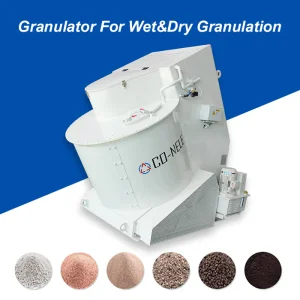
Universal intensive granulating machine capable of switching between dry powder blending and liquid binder pelletization.
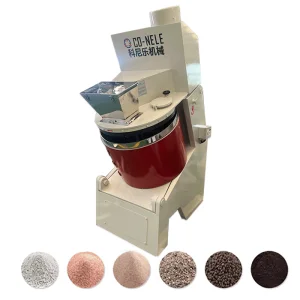
High-shear powder granulating equipment designed for dense chemical powders, minerals, and oxide compounds.
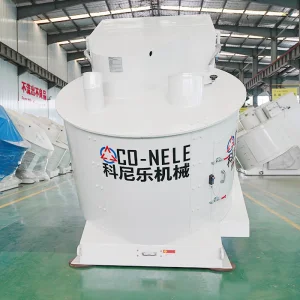
Specialized non-contaminating granulator designed for ferrite powders, neodymium magnets, and electronic core pressings.
Ultra-precise micro-granulation system engineered for diamond grit, CBN powders, and superabrasive tool manufacturing.
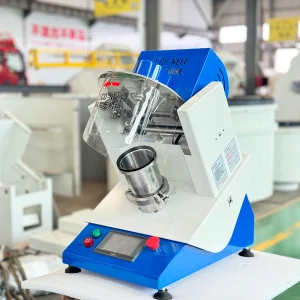
High-efficiency alumina powder granulator producing ultra-spherical granules for dry pressing and ceramic insulators.
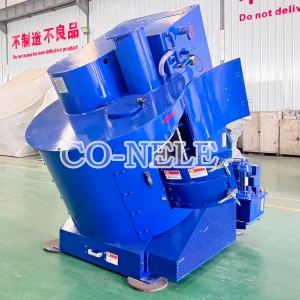
Large-capacity intensive mixer granulating machine built for 24/7 continuous operation in steel and refractory plants.
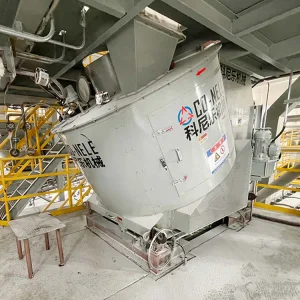
Intensive bentonite clay pelletizing machine optimizing green sand moisture and binding performance for foundries.
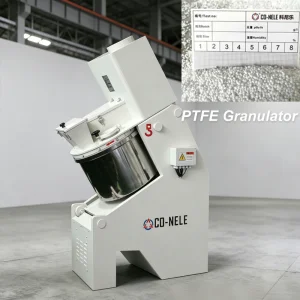
Temperature-controlled intensive mixer granulator specially engineered for PTFE resin and engineering plastics compaction.
Direct technical answers from CO-NELE senior process engineers regarding machinery selection, power grid compatibility, and operational performance.
A disc pelletizer relies on passive gravity tumbling, which often results in uneven liquid distribution, long processing times, and uncontrolled particle size ranges. An intensive granulating mixer actively forces material through a high-speed rotor zone inside an inclined rotating pan. This delivers micro-homogeneity within seconds, enables precise liquid dosing, yields higher sphericity (90%+), and operates in a fully dust-sealed vessel.
All CO-NELE machinery shipped to India is configured for 415V, 50Hz, 3-Phase power supply as standard. Drive units feature heavy-duty energy-efficient motors (IE3/IE4 ratings) manufactured by Siemens or ABB, paired with VFD speed control for both the mixing pan and high-speed rotor shaft.
Yes. We encourage Indian clients to send 15 kg to 30 kg of raw material fines to our Qingdao mixing testing center. Our engineers conduct comprehensive trial runs using lab-scale intensive granulators (CEL01/CEL05 series) and issue detailed diagnostic reports detailing granule size distribution, bulk density, water/binder consumption ratio, and recommended full-scale production models.
With standard high-chrome or tungsten carbide armored blades and vessel liners, wear parts typically last between 80,000 to 140,000 batches on standard ceramic clays, and 35,000 to 60,000 batches on highly abrasive quartz or refractory castables. All wear components are bolt-on for rapid onsite replacement.
Consult with CO-NELE process engineers today. We will analyze your raw material properties, target throughput, and plant floor layout to engineer the optimal granulating mixer solution.