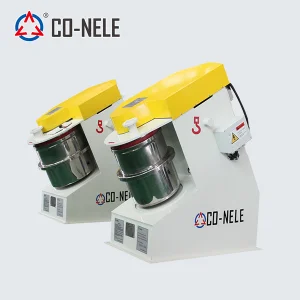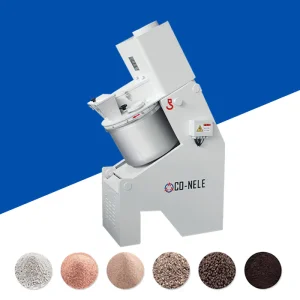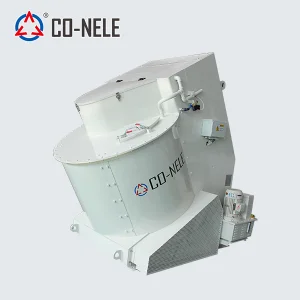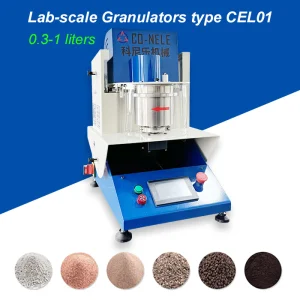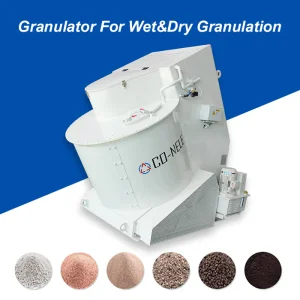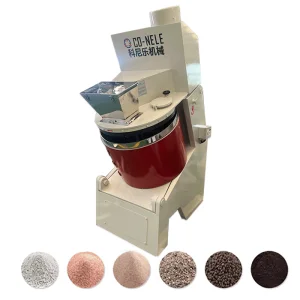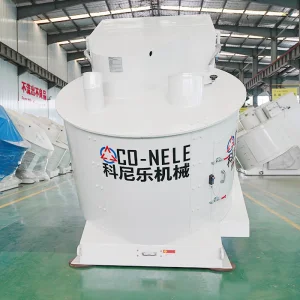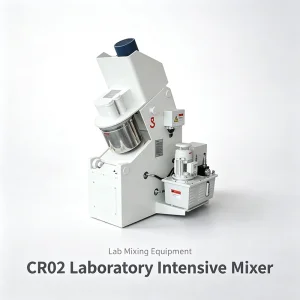
CO-NELEMixing & Granulation
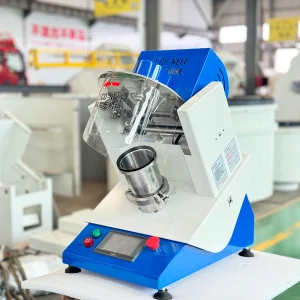
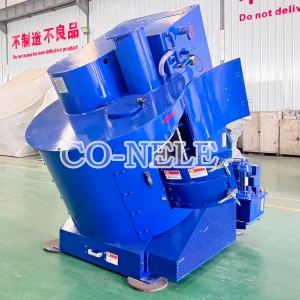
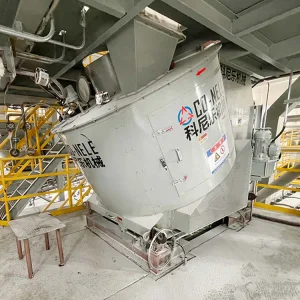
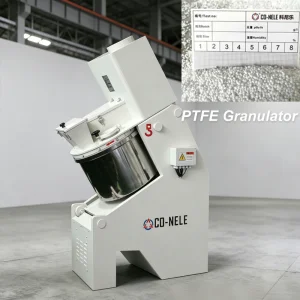
Precision-engineered intensive pelletizing and granulating systems designed for high-homogeneity processing.
Serving the Heart of Japan's Manufacturing Capital (Monozukuri) with Next-Generation Material Processing Equipment
The Greater Nagoya area (Aichi Prefecture and adjacent regions) represents the beating heart of Japan’s industrial economy, accounting for the highest value of manufactured goods shipments in the country for over four decades. Renowned worldwide as a global capital of high-precision engineering, automotive manufacturing, and advanced technical ceramics, Nagoya’s industrial landscape demands processing machinery that performs with zero defect tolerances, exceptional repeatability, and maximum energy efficiency.
In modern powder metallurgy, fine ceramics, lithium-ion battery precursor synthesis, and abrasive compound production, conventional drum granulators and standard ribbon blenders no longer satisfy stringent microstructural requirements. The modern industrial mandate in Nagoya requires precise control over grain size distribution, granule density, particle sphericity, and binder dispersion kinetics. As a premier Granulating Mixer Manufacturer & Factory supplying equipment integrated into Japanese manufacturing lines, CO-NELE delivers state-of-the-art intensive counter-current granulating mixers tailored specifically to the rigorous demands of Aichi's high-tech manufacturing sector.
Understanding the Mechanics of Micro-Homogenization and Controlled Granule Agglomeration
Unlike standard planetary mixers where material moves passively, CO-NELE granulating mixers utilize an inclined or horizontal rotating pan combined with an eccentrically mounted high-speed rotor tool. The pan rotates clockwise at a moderate velocity to transport material to the high-speed rotor tool, which spins counter-clockwise at variable speeds (up to 30 m/s tip speed), creating extreme velocity gradients and micro-turbulences.
The mechanical design allows process engineers to independently control mixing dry homogenization and wet pelletizing phases within a single vessel cycle. By modulating the variable-frequency drive (VFD) of the rotor, the process transitions smoothly from high-shear dispersion (breaking down micro-agglomerates) to low-shear grain growth (spherical granule buildup) without discharging the product.
By controlling the Froude number ($Fr > 10$), kinetic energy is uniformly delivered into the powder matrix. Liquid binders are mist-atomized directly into the high-energy shearing zone, preventing localized over-wetting, eliminating dead zones, and ensuring pristine batch-to-batch repeatability required by Nagoya’s automated pressing operations.
Engineered solutions for fine ceramics, electric vehicle batteries, magnetic materials, and superabrasives.
The regions surrounding Nagoya have been ceramic manufacturing centers for over a thousand years. Today, this tradition has evolved into advanced industrial ceramics: High-Purity Alumina ($\text{Al}_2\text{O}_3$), Silicon Nitride ($\text{Si}_3\text{N}_4$), Zirconia, and LTCC/HTCC electronic substrates.
CO-NELE intensive granulators replace energy-intensive, maintenance-heavy spray drying towers. Powder slurry moisture is reduced from 40% down to 8-12%, producing narrow particle size distribution (d50: 150 µm to 600 µm) with exceptional press flowability and zero internal voids in dry-pressed ceramic components.
With Aichi Prefecture leading Japan’s electric vehicle transformation, battery research laboratories and gigafactories in the Nagoya area demand uniform dispersion of solid-state electrolyte powders, cathode precursor materials (NCM/LFP), and conductive carbon additives.
Our granulating mixers operate under vacuum gas-tight enclosures (purged with Nitrogen/Ar) to prevent oxidation and moisture contamination. High shear energy deagglomerates nano-scale carbon black particles, coating them uniformly over active materials within short batch cycles (under 4 minutes).
Automotive drivetrain suppliers in Toyota City and Kariya rely heavily on sintered iron powder components, friction materials, and Rare Earth Neodymium (NdFeB) permanent magnets. These ultra-fine metallic powders pose extreme risks of segregation, dust explosions, and oxidation.
CO-NELE granulating machines utilize specialized wear-resistant alloy liners (Tungsten Carbide / Hardox 500) and explosion-proof ATEX/JIS electrical components to safety bind metal powders with organic lubricants, achieving uniform green density during cold iso-static pressing (CIP).
Nagoya’s precision machining industry requires high-performance diamond cutting tools, grinding wheels, and CBN (Cubic Boron Nitride) inserts. Homogeneous distribution of diamond grit inside matrix bond powders (cobalt, nickel, bronze, ceramic matrix) is crucial.
Our micro-granulators eliminate heavy metal segregation through precise liquid micro-dosing and gentle pelletizing kinematics, ensuring diamond grains are individually encapsulated within matrix granules without mechanical damage.
An objective engineering comparison for plant modernizations and greenfield project feasibility in Japan.
| Performance Metrics | CO-NELE Intensive Granulating Mixer | Spray Drying Tower | Fluidized Bed Granulator | Standard Planetary / Drum |
|---|---|---|---|---|
| Energy Consumption (kWh/ton) | 12 – 18 kWh (Low) | 120 – 220 kWh (Extremely High) | 45 – 75 kWh (Medium-High) | 10 – 15 kWh (Low) |
| Granule Density & Porosity | High Density, Controlled Porosity | Hollow Spheres, Low Density | Medium Porosity, Irregular | Low Density, Inconsistent |
| Space / Footprint Requirement | Compact (Single Level Installation) | Vertical Height Required (3–5 Floors) | Medium Footprint + Dust Collectors | Compact |
| Product Changeover & Cleaning | Rapid (Automatic CIP/WIP Nozzles) | Difficult & Time-Consuming | Moderate Cleaning Time | Moderate |
| Binder Consumption Rate | Minimised (1.5% - 4% by weight) | High (6% - 12% Liquid Carrier) | Moderate (3% - 6%) | High / Incomplete Dispersion |
| Particle Size Range (d50) | 0.1 mm to 6.0 mm (Fully Adjustable) | 0.05 mm to 0.3 mm (Fine Only) | 0.2 mm to 2.0 mm | Uncontrolled Agglomerates |
*Data calculated based on standard technical ceramics batch runs (Alumina 96% purity) under comparative laboratory test conditions.
Why Leading Manufacturers in Aichi Choose CO-NELE OEM/ODM Partnerships
In today's fast-moving industrial environment, Nagoya-based manufacturers face dual pressures: maintaining uncompromising Japanese quality (Monozukuri precision) while dramatically lowering Capital Expenditure (CAPEX) and lead times for equipment expansion.
CO-NELE bridges this gap seamlessly. Headquartered in Qingdao—the premier heavy machine engineering hub of China—CO-NELE operates 3 state-of-the-art production facilities spanning 30,000 m². By leveraging complete vertically integrated manufacturing (in-house CNC machining of planetary gearboxes, plasma cutting, dynamic balancing, dynamic torque test benches, and automated wear-liner cladding), we deliver robust granulating mixers at up to 40-50% TCO savings compared to European alternatives, with lead times of under 60 days from drawing approval to shipping at Nagoya Port.
Send us your powder characteristics (mesh size, moisture, binder type) for a complimentary process evaluation and customized equipment quote.
Explore specialized intensive granulating mixers for diverse material compositions in Nagoya plants.
Seamless Integration into Japanese Electrical, Mechanical, and Safety Operating Environments
All granulators exported to Nagoya can be wired according to Japanese Industrial Standards (JIS). We integrate 200V/380V/440V dual-frequency (50Hz/60Hz - West Japan 60Hz compatible) electrical control systems, equipped with Mitsubishi MELSEC PLC, Omron relays, and Fuji Electric VFDs as standard specification options.
Whether fitting into existing plant structures in Tokai, Komaki, or Yokkaichi, our 3D CAD modeling team works directly with your engineering firm to design custom discharge chutes, automated dosing flange connections, explosion-vent ducting, and vibration isolation mounts.
All standard units come equipped with secure IoT gateway options for remote online troubleshooting by CO-NELE senior automation engineers. In addition, localized field service engineers provide on-site commissioning supervision, trial runs, and maintenance training in Japanese or English.
How CO-NELE is Driving Industry 4.0 Transformation in Powder Processing
Traditional granulation relies heavily on operator experience or simple timed batch cycles. CO-NELE’s upcoming smart granulator platform integrates real-time fast-Fourier transform (FFT) acoustic sensors and high-frequency rotor motor torque analysis. By detecting the exact point of capillary transition during liquid binder addition, the control system automatically adjusts rotor speed and triggers discharge at peak granule sphericity, eliminating human error.
In response to global carbon neutrality goals set by automotive OEMs in Aichi, CO-NELE is pioneering solvent-free, dry binder filmation technology. Our ultra-high-shear intensive mixing granulators operate under thermal jacket control (up to 200°C) to coat dry PTFE fibrillated binders directly onto active battery materials, cutting drying oven energy requirements by 100%.
Technical Answers for Process Engineers and Procurement Directors in Nagoya
Elevate your plant’s productivity, granule quality, and process energy efficiency today.