
CO-NELEMixing & Granulation
Specially engineered for high-homogeneity demands in precast, UHPC, laboratory formula testing, and glass-silica manufacturing across Malaysian operations.
How mega-projects, tropical climate constraints, and stringent CIDB standards drive the shift from conventional drum mixers to vertical-shaft planetary technology.
Malaysia’s industrial and civil infrastructure sector is undergoing an unprecedented wave of modern upgrades. From multi-billion ringgit railway corridors such as the East Coast Rail Link (ECRL) and the Klang Valley Mass Rapid Transit Line 3 (MRT3) to cross-border logistics hubs like the Johor-Singapore Rapid Transit System (RTS) Link and the expansive Pan Borneo Highway, engineering specifications for structural concrete have never been more rigorous. Contractors and ready-mix supplier consortia across Selangor, Johor, Penang, Sarawak, and Sabah face strict target criteria regarding early-age compressive strength, micro-porosity reduction, and extreme durability against sulfate attack and coastal humidity.
Under the Malaysian National Energy Transition Roadmap (NETR) and the Construction Industry Development Board (CIDB) Green Construction Guidelines, local manufacturers are rapidly substituting traditional Portland cement with high percentages of Ground Granulated Blast-furnace Slag (GGBS), Pulverized Fuel Ash (PFA), and Condensed Silica Fume. Achieving zero segregation and total dispersion of these ultra-fine mineral admixtures requires high-shear kinetic energy. Chinese-engineered vertical-shaft planetary concrete mixers deliver dynamic 3D mixing trajectories that eliminate unhydrated binder pockets and agglomeration, guaranteeing structural compliance with Malaysian Standard MS EN 206.
An in-depth analysis of mixing mechanics, shear-zone optimization, and wear prevention for ultra-demanding applications.
Why Tier-1 global EPC contractors choose Chinese planetary mixing equipment for operations in Malaysia and worldwide.
Global procurement teams evaluating machinery for concrete precast factories, dry-mortar plants, and glass manufacturing lines constantly balance initial capital outlay against long-term maintenance liabilities. Chinese planetary concrete mixers manufactured under ISO9001 and CE certifications offer up to 40% capital cost savings compared to European equivalents, without compromising on mechanical reliability, component tolerances, or mixing performance.
By using premium components—such as hard-faced tungsten carbide scraper blades, high-chromium cast-iron pan liners (hardness ≥ HRC62), and Schneider/Siemens electrical switchgear—the overall wear cost per cubic meter of concrete is reduced by over 25% over a 5-year operating window.
Modern batching plants in industrial zones like Shah Alam, Pasir Gudang, and Bayan Lepas require full integration into enterprise SCADA and ERP architectures. CO-NELE planetary mixing machinery comes standard with smart PLC control modules, real-time microwave moisture monitoring probes, and multi-gate hydraulic discharge logic.
This automated ecosystem continuous measures moisture fluctuations in fine aggregates (such as washed river sand or quarry dust), making instant micro-dosing adjustments to batching water volumes to preserve concrete consistency regardless of tropical weather fluctuations.
Strategic advancements in intelligent mixing algorithms, low-carbon geopolymer concrete, and energy recovery.
Comprehensive engineering support, field commissioning, and rapid spare-parts replacement tailored to Malaysian contractors.
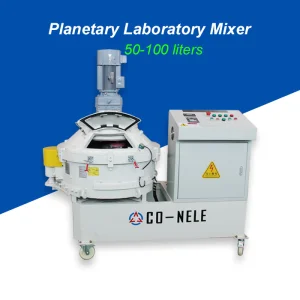
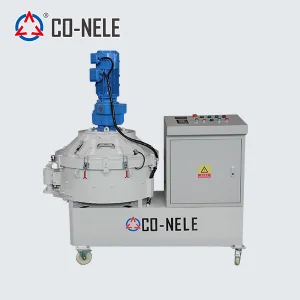
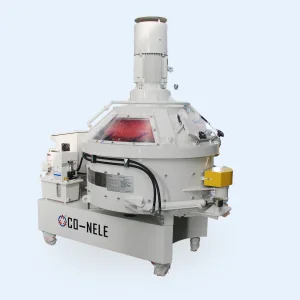
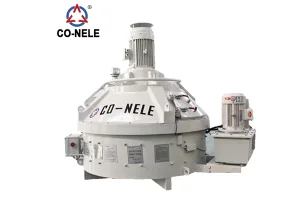
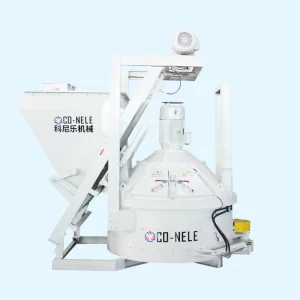
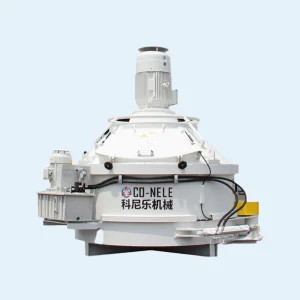
Explore our full capacity portfolio from compact 100-liter laboratory units to heavy-duty 1500-liter commercial batching mixers engineered for maximum durability.
Detailed technical responses curated by expert concrete machinery process engineers.
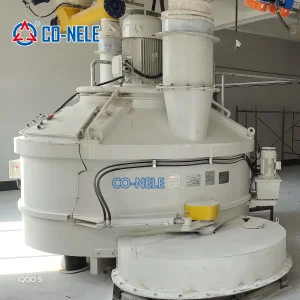
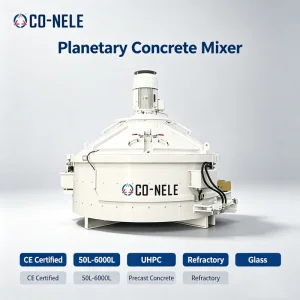
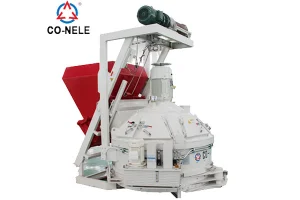
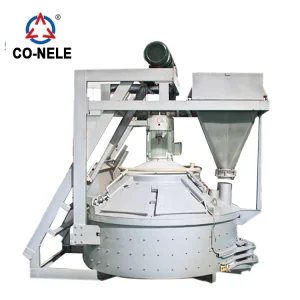
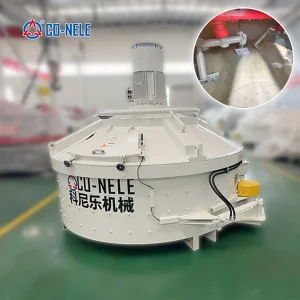
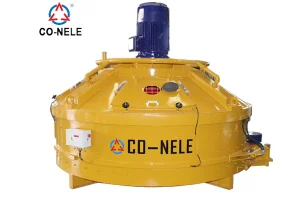
Planetary counter-current mixers utilize a vertical shaft design where mixing stars revolve around a central point while simultaneously rotating on their own axes. This complex trajectory eliminates dead zones, ensuring 100% agitation of the mixing pan. Twin-shaft mixers excel at high-volume, standard ready-mix concrete (>2m³ per batch), but planetary mixers provide superior micro-homogeneity with a coefficient of variation (CV) under 3%. This makes planetary mixers essential for dry-cast precast products, pigmented pavers, UHPC, refractory materials, and glass batching.
Machines exported to Malaysia are equipped with upgraded tropical engineering specs. This includes IP65-rated control cabinets with cooling fans and anti-condensation heaters, motor insulation class H, and custom 415V/50Hz/3-Phase electrical systems. Hydraulics use high-temperature synthetic oil, while mixing pan covers feature mist-suppression dust seals to prevent humidity-induced cement clumping during batching.
Under normal structural concrete batching conditions using granite aggregates, high-chrome cast iron liners (HRC ≥ 62) typically last between 90,000 and 150,000 batches. For highly abrasive applications such as quartz-heavy UHPC or refractory castables, wear life typically ranges from 40,000 to 60,000 batches. All wear parts feature bolt-on designs for fast field replacement within a single shift.
Yes. Our engineering team provides custom structural retrofit drawings, mounting plate adapters, and interface protocols (Modbus, Profinet) to seamlessly replace worn pan mixers or twin-shaft units in existing concrete plants across Malaysia. Our engineers assist with foundation load calculations, discharge chute alignments, and PLC signal handshakes.
Clients can send 10-20kg samples of their local raw aggregates, sand, and binders (such as local silica fume or GGBS) to our Qingdao testing laboratory. Our process engineers will conduct pilot batch runs using our laboratory CMP series planetary mixers, providing a complete report detailing slump consistency, mixing speed, density distribution, and recommended production mixer sizing.