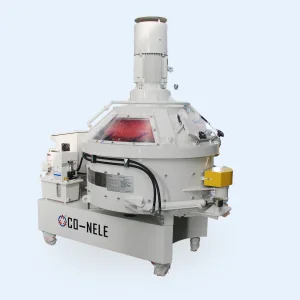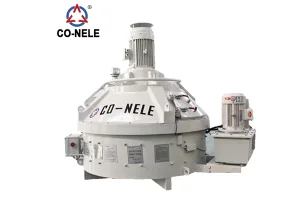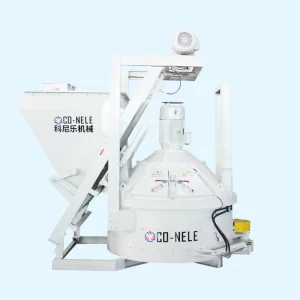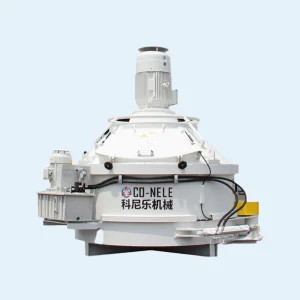
CO-NELEMixing & Granulation
Engineered for maximum micro-homogeneity, strict EU compliance, and robust operation in demanding concrete batching environments.
Bulgaria’s construction and industrial sector is undergoing a profound structural modernization driven by European Union cohesion funds, expanding transport infrastructure projects (such as the Struma Motorway, Sofia Metro extensions, and the Black Sea highway corridors), and growing private investment in high-grade commercial precast structures. In response to stringent European building standards (EN 206-1, BDS EN 13369 for precast concrete products), local contractors, ready-mix producers, and precast concrete plants in key industrial hubs like Sofia, Plovdiv, Varna, and Burgas are aggressively replacing outdated pan mixers and basic twin-shaft systems with vertical-shaft planetary concrete mixers.
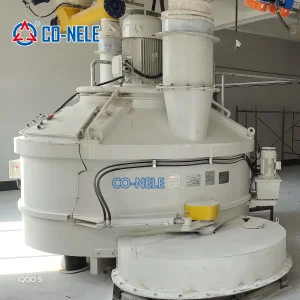
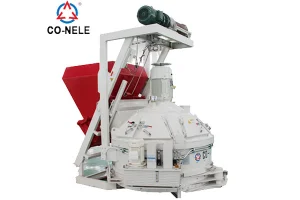
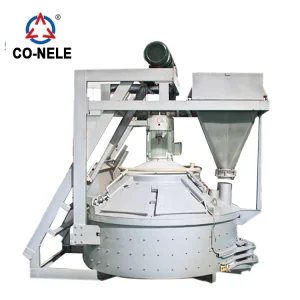
Planetary counter-current mixing technology delivers unprecedented micro-homogeneity, rapid cycle times, and minimal material segregation. As a premier Chinese machinery manufacturer with over two decades of dedicated R&D, specialized gearbox engineering, and thousands of global installations, CO-NELE provides tailored industrial mixing machinery optimized for the specific aggregate profiles, cement types, and climate conditions of the Bulgarian market.
Understanding the physics behind counter-current forced mixing vs. conventional twin-shaft and tilting mixers.
The mixing star arms rotate on a central vertical axis while simultaneously orbiting around the pan center. This double-rotation trajectory covers 100% of the pan floor every 4 rotations, leaving zero unmixed zones.
For UHPC, GFRC, and pigment-dyed dry-cast concrete, optional high-speed fly-cutters break aggregate agglomerates instantly, reducing pigment loading by 12% while maintaining color uniformity across batches.
Unlike competitors using commercial industrial speed reducers, CO-NELE designs and manufactures robust vertical planetary gearboxes in-house to handle high impact, thermal stress, and heavy torsional loads.
The global concrete mixing equipment market has historically been dominated by European brands. However, rising procurement costs, long lead times (often 24 to 36 weeks), and expensive proprietary spare parts from Western manufacturers have placed a heavy financial burden on Bulgarian concrete producers seeking to expand capacity.
Chinese mixing equipment manufacturers—led by top-tier factories in Qingdao—have redefined the industry benchmark by offering **European-grade engineering performance combined with agile manufacturing supply chains**. This synergy allows Bulgarian enterprises to acquire state-of-the-art concrete batching systems at highly competitive capital expenditure (CapEx) levels without compromising on quality, certification, or longevity.
| Evaluation Parameter | Legacy European Brand | Standard Twin-Shaft Mixer | CO-NELE Planetary Mixer (China) |
|---|---|---|---|
| Mixing Homogeneity (CV) | < 5% (Excellent) | 8% – 12% (Moderate) | < 3% – 5% (Ultra-Precision) |
| Equipment Lead Time | 20 – 32 Weeks | 6 – 10 Weeks | 4 – 8 Weeks (Accelerated) |
| Gearbox Manufacturing | Proprietary / High Cost Spares | Standard Helical Gearbox | In-House Built Planetary / Heavy Duty |
| Wear Parts Material | High Chrome Alloy | Standard Chilled Iron | Ni-Hard / High Chrome (60+ HRC) |
| CapEx to Bulgaria | 100% (Baseline Premium) | 40% – 50% | 45% – 60% (High ROI) |
| EU CE Compliance | Certified | Varies | Fully CE & ISO 9001 Certified |
Concrete formulation demands vary drastically depending on local geography, aggregate geology (e.g., river gravel from the Danube vs. crushed granite from the Balkan range), and targeted construction end-uses. Below are four key application areas where Chinese planetary concrete mixers deliver transformative operational gains across Bulgaria:
In Bulgaria's expanding industrial logistics parks near Plovdiv and Sofia, precast concrete elements such as prestressed roof girders, hollow-core slabs, and columns require low-slump, zero-slump, or dry-cast concrete recipes. CO-NELE MP and CMP series planetary mixers eliminate aggregate balling and ensure instantaneous distribution of hydration water across dry mixes. The result is maximum early-age compressive strength, enabling precast plants to demold elements earlier and double daily casting cycles.
Coastal infrastructure and municipal beautification in Varna and Burgas require high-density paving stones, kerbs, and architectural concrete blocks capable of withstanding freeze-thaw cycles and salt-air corrosion. The forced counter-current mixing motion ensures uniform dispersion of iron oxide pigments and surface-hardening additives, preventing batch-to-batch color variance and guaranteeing crisp edge definitions in dry-cast block machines.
Bulgaria’s national road agency and bridge engineering contractors are increasingly specifying UHPC for expansion joints, viaduct deck overlays, and structural retrofit projects. Equipped with fine silica fume, quartz flour, and up to 3% steel fibers by volume, UHPC cannot be mixed in standard concrete plants. CO-NELE CMPS Fly-Cutter Planetary Mixers generate high shear rates that deagglomerate silica particles and thoroughly coat micro-fibers without bending or clustering them.
Beyond traditional civil construction, Bulgaria hosts major glass container plants and heavy metallurgical facilities in regions such as Ruse and Stara Zagora. These industries require specialized batch mixing of silica sand, soda ash, dolomite, or abrasive refractory castables. High-chrome wear liners, sealed dust-proof discharges, and heat-resistant mixing arms make CO-NELE batch mixers the preferred choice for industrial glass and refractory manufacturing plants.
As the construction equipment industry shifts toward smart automation and carbon-neutral building materials, procurement directors in Bulgaria and the broader EU are evaluating machinery based on long-term sustainability and Total Cost of Ownership (TCO).
Modern CO-NELE planetary mixers are equipped with advanced microwave moisture sensors embedded directly into the pan floor. These sensors feed real-time moisture data to the automated Siemens PLC control unit 50 times per second, dynamically adjusting water dosing to maintain exact water-cement ($w/c$) ratios regardless of aggregate moisture fluctuations.
When purchasing from a Chinese factory, Bulgarian buyers prioritize spare parts availability and interchangeability. CO-NELE maintains standard modular components (wear plates, mixing blades, discharge gate seals) designed for fast bolt-on replacement. High-wear liners engineered with 60+ HRC chromium alloy ensure operational lifespans exceeding 100,000 to 150,000 batches under standard aggregate conditions.
Shipping large industrial machinery from Qingdao to the Bulgarian Black Sea ports of Varna or Burgas (or via Piraeus container hubs) is fully optimized. Machines are modularly packed into standard 40ft Open Top (OT) or Flat Rack containers with anti-corrosion marine wrapping. All electrical control panels strictly conform to CE Low Voltage Directive 2014/35/EU and Machinery Directive 2006/42/EC.
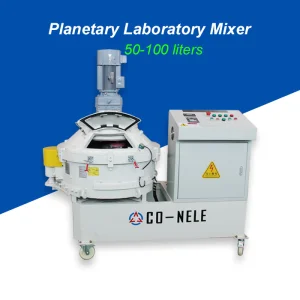
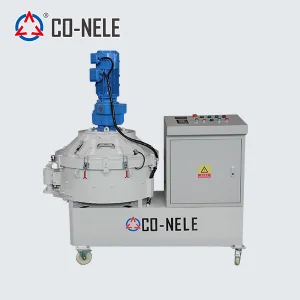
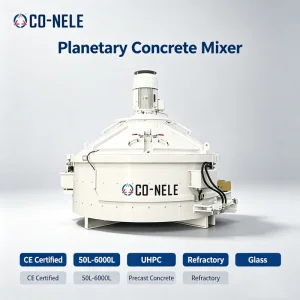
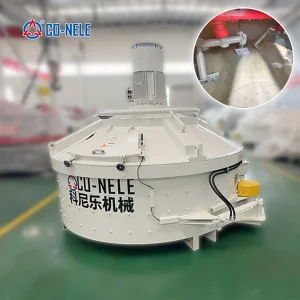
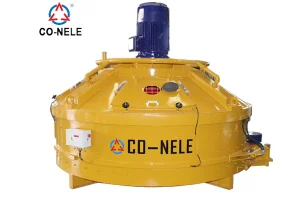
Explore our complete lineup of laboratory, medium, and heavy industrial-duty planetary concrete mixers.
In-depth engineering answers regarding machine selection, electrical standards, wear components, and logistics.
Contact our engineering specialists to receive custom CAD foundation drawings, technical data sheets, and a factory-direct quotation for your project.
Send Inquiry Now