CO-NELEMixing & Granulation
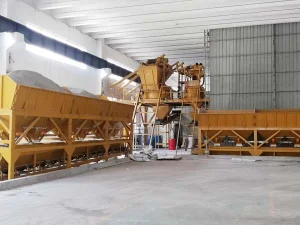
Engineered with heavy-duty towable chassis, rapid-deployment hydraulics, and automated Siemens PLC control systems designed for instant operational readiness across Cape Town sites.
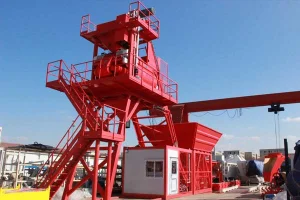
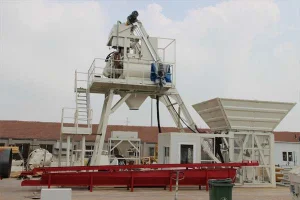
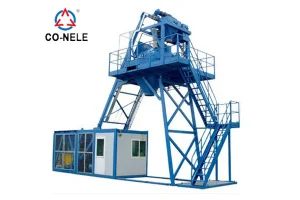
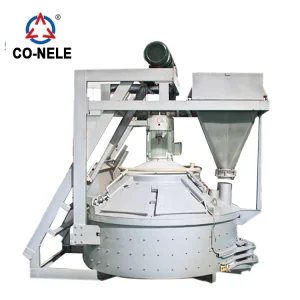
A technical examination of infrastructure dynamics, climatic challenges, and batching plant performance requirements across the Western Cape metropole.
The Cape Town metropolitan region and the broader Western Cape province are undergoing significant infrastructure capital expansion. Driven by targeted municipal upgrades, residential expansion in corridors such as the Northern Suburbs, Durbanville, and along the West Coast towards Saldanha Bay, construction contractors require reliable on-site ready-mix capabilities. Commercial concrete batching in Cape Town faces distinct structural and operational hurdles: expansive logistics chains, stringent municipal zoning, and high urban transit congestion across critical arterials such as the N1, N2, and R300.
Consequently, civil engineering contractors and ready-mix concrete suppliers are moving away from traditional stationary plants toward modular mobile concrete batching plants. Mobile batching systems eliminate the non-productive transit times of mixer trucks, significantly diminish the risk of premature slump loss during summer conditions, and provide agile relocatability between municipal roadworks, commercial foundations, and renewable energy sites in the nearby Karoo and Swartland belts.
Plants operating in coastal zones (Table Bay, False Bay, Saldanha) face severe atmospheric salinity. CO-NELE integrates multi-coat C5-M marine-grade epoxy coatings, sealed electrical enclosures (IP66), and stainless steel pneumatic lines to prevent premature corrosion.
Western Cape aggregate streams present significant grading challenges, from fine dune sands to coarse Malmesbury hornfels and Cape granite aggregates. Accurate dynamic moisture compensation systems and high-shear mixers are crucial for water-binder ratio stability.
Given South Africa’s load shedding and power supply interruptions, all export units destined for Cape Town feature automated switchgear ready for instant generator coupling, low-loss soft-start drives, and surge protection safeguards.
Key technical criteria demanded by international EPC contractors and premier construction conglomerates sourcing Chinese concrete machinery.
Procurement managers across multinational construction corporations operate with strict criteria. When evaluating Chinese concrete equipment manufacturers, primary metrics extend beyond ex-factory purchase prices. Decision matrices evaluate three non-negotiable vectors: mechanical lifecycle predictability, international parts interchangeability, and software intelligence.
In regions like South Africa, downtime incurred while waiting for proprietary electronic components or custom gear drives can paralyze high-capital civil tenders. CO-NELE mitigates this risk by standardizing all drive train assemblies with internationally supported architectures: Siemens PLCs, Schneider switchgear, SEW-Eurodrive or proprietary heavy-duty reducers with standardized bearing configurations (SKF/NSK), and WAM filtration units.
| Evaluation Parameter | Standard Low-Cost Alternatives | CO-NELE Engineering Benchmark (Export Spec) |
|---|---|---|
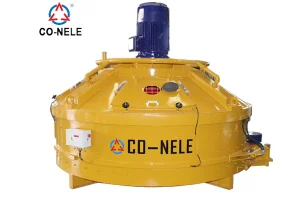
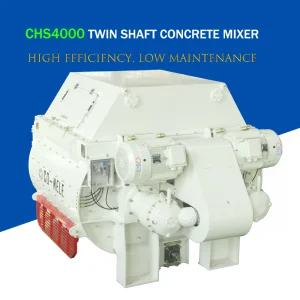
| Mixer Core | Generic planetary or single-shaft | Vertical-Shaft Counter-Current Planetary / Compulsory Twin-Shaft |
| Wear Liners & Blades | Ordinary cast iron (10,000–20,000 batches) | High-Chrome Alloy (Cr26 / Ni-Hard), 90,000–150,000 batches life |
| Chassis Engineering | Light folded sheet sections | Heavy box-section structural steel, twin heavy-duty transport axles |
| Weighing Automation | Basic digital meters, ±3% error | High-resolution load cells, multi-point dynamic damping, ±1% tolerance |
| Cape Town Logistics | High dismantle cost / breakbulk cargo | Modular containerized shipping (40' HQ compliant), rapid fold-out design |
How next-generation mobile plants adapt to South Africa's evolving construction engineering and green building codes.
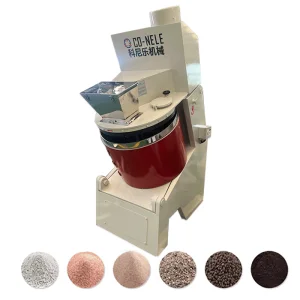
With South African standards progressively adopting lower-clinker cements incorporating high percentages of GGBS (Ground Granulated Blast Furnace Slag) and fly ash, our forced-action counter-current planetary mixers deliver complete shearing without unmixed agglomerates.
The Cape Town commercial building sector is increasingly specifying Ultra-High-Performance Concrete (UHPC) and decorative architectural precast facades. CO-NELE mobile plants integrate precision liquid admixture dosing (±0.5%) and high-energy mixing stars for fiber dispersion.
Real-time batch tracking via 4G/5G cellular modules allows engineering managers in Cape Town head offices to audit batching deviations, slump indices, energy consumption, and preventive wear status remotely via cloud dashboards.
Deploying concrete plant machinery into South Africa requires alignment with local statutory frameworks, primarily the Occupational Health and Safety Act (OHSA) and relevant SANS (South African National Standards) for electrical installations (SANS 10142) and pressure vessels. CO-NELE builds export-ready configurations tailored to these statutory demands:
Electrical Harmonization: 380V/400V, 50Hz, 3-Phase standard wiring with full schematic drawings, local color codes, emergency stop trip loops at aggregate conveyors, batching platforms, and mixer discharge gates.
Logistics & Port Clearance: Strategically routed shipments directly from Qingdao Port to the Port of Cape Town via major container lines, avoiding interior transshipment delays and ensuring rapid customs release through authorized Western Cape clearing agents.
Field Commissioning: Comprehensive remote video calibration, on-site certified engineering deployment options, full English manuals, and rapid-dispatch consumables (liner tiles, mixer blades, pneumatic valves, load cell kits).
Direct engineering guidance regarding transit, commissioning, site prep, and mixer selection.
A mobile concrete batching plant minimizes costly foundation engineering, requires zero permanent concrete pits, and features a compact footprint ideal for constrained urban projects in Cape Town. When contracts migrate from the Atlantic Seaboard to Somerset West or Paarl, the unit folds and tows efficiently, cutting civil reinstatement and transit costs.
Our plants for coastal South African applications undergo comprehensive surface shot-blasting to Sa 2.5 standards followed by multi-pass epoxy zinc-rich primer and polyurethane topcoats (C5-M specification). Critical hardware, fasteners, and sensor housings are treated or specified in stainless steel to resist salt-fog corrosion.
Our mobile plants are engineered for modular shipping. Major modules fit into standard 40-foot High Cube (40' HQ) shipping containers, significantly reducing ocean freight tariffs compared to open-deck breakbulk cargo. Transit time from Qingdao to Cape Town typically averages 28 to 35 days.
Yes. The electrical control panel is fitted with heavy-duty surge protection units (SPDs), low-voltage protection relays, and a dedicated dual-power manual or automatic transfer switch (ATS) interface for rapid connection to industrial diesel generator sets.
Complete manufacturing range engineered in Qingdao, backed by 80+ patents and 20+ years of industrial mixing excellence.