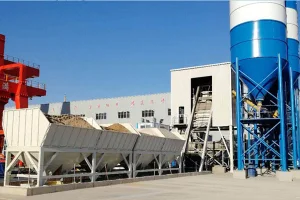
Tokyo Ready Mixed Concrete Plant with Planetary Concrete Mixer
Equipped with counter-current planetary technology. Achieves micro-homogeneity (<3% CV) for high-strength Tokyo commercial foundation pours.
View Technical Specs
Engineered specifically for space-constrained job sites, stringent JIS concrete formulations, and rapid installation across the Greater Tokyo Metropolitan Region.
Equipped with counter-current planetary technology. Achieves micro-homogeneity (<3% CV) for high-strength Tokyo commercial foundation pours.
View Technical Specs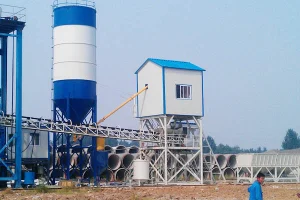
Designed for zero-slump, high-density concrete mixes required in Tokyo underground utility tunnels, culverts, and heavy shield-piping works.
View Technical Specs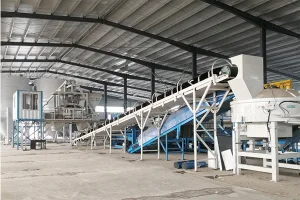
Precision batching for lightweight, fiber-reinforced wall panels optimized for Tokyo's seismic energy dissipation building designs.
View Technical Specs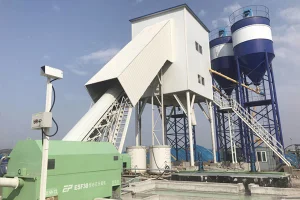
90 m³/h continuous heavy-duty batching station designed for major Tokyo metropolitan railway hubs, expressways, and harbor projects.
View Technical SpecsThe Greater Tokyo Metropolitan Area represents one of the world's most sophisticated and demanding construction markets. Fueled by ongoing mega-redevelopment schemes—including the Yaesu and Toranomon-Azabudai tower complexes, the expansion of Haneda infrastructure, the Tokyo Outer Ring Road (Gaikan), and the Chuo Shinkansen maglev terminal hubs—demand for specialized, high-performance concrete has reached an unprecedented high. However, operating concrete batching machinery within Tokyo presents a unique combination of extreme engineering constraints and regulatory scrutiny.
Combining in-house mechanical engineering, automated robotics manufacturing, and resilient global logistics to deliver superior ROI to Japanese contractors.
In recent years, procurement strategies among leading Tokyo general contractors (Taisei, Kajima, Shimizu, Obayashi) have shifted toward strategic sourcing of Chinese heavy industrial machinery. Modern Chinese batching plant manufacturers—such as CO-NELE—have integrated advanced Industry 4.0 manufacturing processes, establishing direct technical parity with European brands while offering substantial lead-time and financial advantages.
Unlike third-party assemblers, premier Chinese manufacturers engineer proprietary planetary reducers designed specifically for high-stress counter-current mixing. The mixing arms rotate on planetary axes while simultaneously orbiting the entire mixing pan. This dual-motion kinematics eliminates "dead zones" near pan walls, ensuring that fine silica fume, steel fibers, and chemical admixtures are completely dispersed within 30 to 45 seconds.
Equipped with high-speed Siemens PLC controllers and microwave aggregate moisture sensors, Chinese Industry 4.0 batching plants continuously adjust water dosing in real time. This micro-second adjustment ensures that concrete delivered to Tokyo mixer trucks meets target slump standards down to the millimeter, regardless of ambient weather variations in Tokyo Bay.
With fully integrated digital manufacturing bases in Qingdao, equipment manufacturing leads are reduced from the typical European standard of 8–10 months down to just 35–50 days. Located directly adjacent to major East Asian maritime shipping lanes, delivery from Qingdao Port to Tokyo Bay (Yokohama/Tokyo Port) takes less than 3 to 5 transit days, minimizing project startup risks for Japanese general contractors.
A comprehensive comparison of mixing kinematics, output capacity, and structural footprints tailored for Tokyo job site demands.
| Plant Configuration | Mixer Kinematics | Discharge Capacity | Homogeneity (CV) | Tokyo Site Footprint | Primary Local Application |
|---|---|---|---|---|---|
| Planetary Counter-Current Plant | Vertical Planetary Counter-Current | 0.5 m³ to 4.0 m³ / batch | < 3.0% (Micro) | Ultra-Compact (< 250 m²) | UHPC, Precast Wall Panels, Seismic Dampers |
| HZN Series Stationary Plant | Heavy-Duty Twin-Shaft Compulsory | 60 m³/h to 180 m³/h | < 5.0% | Standard Fixed Yard (> 800 m²) | Metropolitan Expressway, Rail Hub Ready-Mix |
| HZS Modular Compact Plant | Compact Twin-Shaft / Planetary | 25 m³/h to 60 m³/h | < 4.0% | Modular Urban Plot (< 350 m²) | Tokyo Infill Redevelopment, High-Rise Buildings |
| Quick-Deploy Foundationless Plant | Planetary / Low-Profile Twin Shaft | 25 m³/h to 90 m³/h | < 4.5% | Zero-Foundation Steel Baseplate | Tunnel Grouting, Road Repair, Leased Site Works |
Infrastructure development along Tokyo Bay (including wharf expansions and offshore wind energy substructures) demands concrete with extreme resistance to chloride penetration and marine corrosion. CO-NELE planetary concrete batching plants facilitate the precise mixing of high-slag, silica-fume modified concrete formulations. The intense shear generated by planetary star arms ensures that dense pozzolanic micro-powders coat every aggregate surface, preventing seawater infiltration into reinforced steel structures.
Modern architectural codes in Shinjuku and Minato Wards mandate curtain walls and partition elements featuring embedded steel micro-fibers and lightweight expanded aggregates. Traditional mixers suffer from fiber clumping (balling effect), which creates structural weak points. Chinese planetary batching plants utilize counter-current shear trajectories that evenly disperse synthetic and metallic fibers throughout the matrix, yielding defect-free precast slabs that satisfy Tokyo's rigorous seismic resilience audits.
For urgent repair projects along the Metropolitan Expressway (Shuto K高速), lane closures are restricted to narrow 6-hour night windows. Modular, foundationless batching plants are transported via standard low-bed trailers, setup on steel load-distribution plates directly at the job perimeter, and begin discharging rapid-setting polymer concrete within hours. Once work concludes, the entire batching plant can be disassembled and transported to the next maintenance section.
Explore our complete export lineup of stationary, precast, compact, and mobile concrete plants configured for Japanese operational standards.
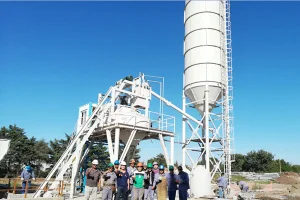
Compact 35 m³/h precast plant designed for architectural precast elements, underground utility vaults, and concrete kerbs.
View Technical Specs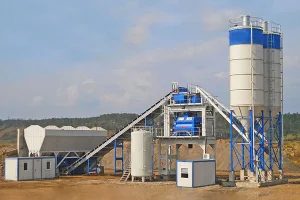
Features high-efficiency aggregate skip-hoist systems and twin-shaft mixing for high-volume urban ready-mix supply.
View Technical Specs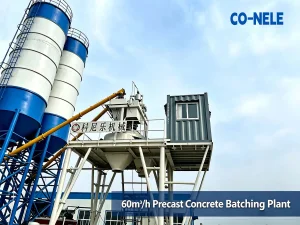
Integrated with a CMP1000 planetary mixer. The preferred setup for high-density retaining walls and structural beams.
View Technical Specs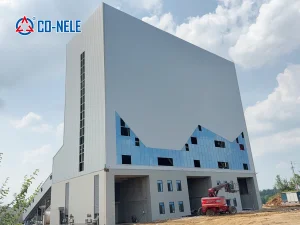
Ultra-high-throughput commercial concrete matrix equipped with dual-truck loading lines and fully enclosed dust filters.
View Technical Specs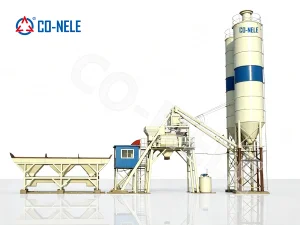
Modular containerized batching plant engineered to fit standard shipping dimensions and ultra-narrow job site access routes.
View Technical Specs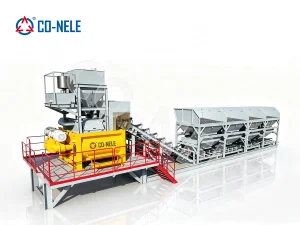
Zero concrete foundation requirement. Fully bolt-assembled on steel pad frames for quick relocation across Tokyo construction sites.
View Technical Specs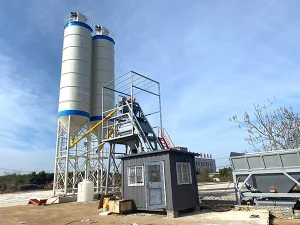
Small-scale portable mixing station optimized for localized UHPC grouting, bridge deck repairs, and tunnel lining jobs.
View Technical Specs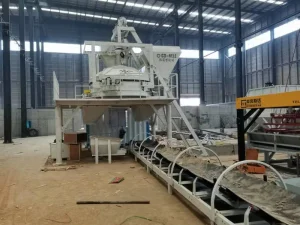
Complete turn-key production plant integration for prefabricated concrete (PC) building components and insulated curtain walls.
View Technical SpecsDirect technical and compliance answers provided by CO-NELE Senior Application Engineers.
Submit your raw material specifications, target strength grade, and site dimensions. Our technical team will return a complete CAD layout concept, batching cycle simulation, and formal engineering quotation within 24 hours.