CO-NELEMixing & Granulation
Explore primary vertical shaft planetary concrete mixers, intensive mixers, and batching plants engineered for global infrastructure and precast demands.
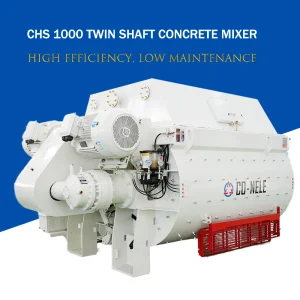
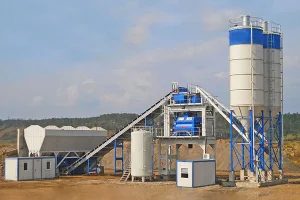
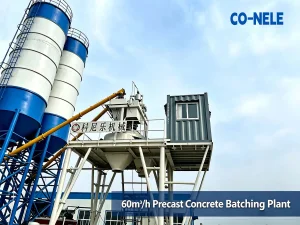
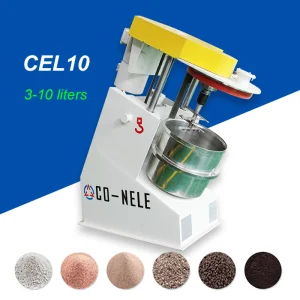
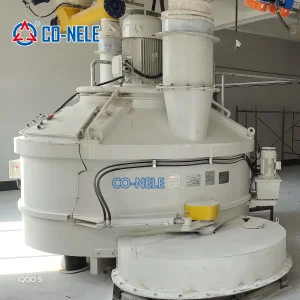
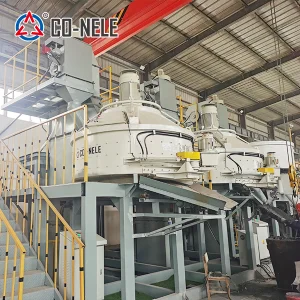
In modern structural civil engineering, the transition from traditional horizontal twin-shaft mixing to Vertical Shaft Planetary Counter-Current Mixing represents a fundamental paradigm shift. Where horizontal twin-shaft mixers rely primarily on gravity-assisted displacement and overlapping circular arcs, vertical shaft planetary mixers induce rigorous forced-action mechanical shear, guaranteeing zero-dead-zone dispersion across complex multi-phase concrete formulations.
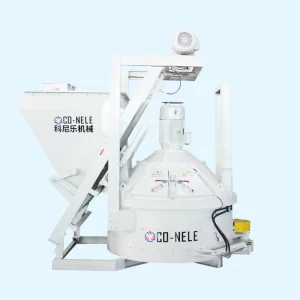
The mechanical superiority of a vertical shaft planetary concrete mixer lies in its planetary motion trajectory. The mixing arms and mixing stars rotate around their own dedicated vertical axes while simultaneously orbiting around the central axis of the mixing pan. This dual-rotation vector (counter-current kinematics) forces raw materials—ranging from dense aggregate matrices to ultrafine silica fume particles—into complex, intersecting turbulent pathways. The relative velocity differential generated between the outer wall scraping blades, internal mixing stars, and central discharge zone ensures that every cubic millimeter of the batch undergoes intense kinetic shearing within seconds.
By forcing materials through overlapping planetary trajectories, vertical shaft mixers achieve a Coefficient of Variation (CV) below 3%. This is critical for high-grade precast elements, pigments, and fiber distribution where color streaks or particle segregation compromise structural integrity.
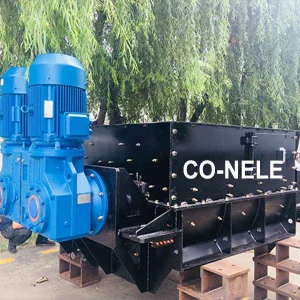
Power transmission efficiency is maximized via customized planetary gearboxes. Rather than wasting energy splashing wet concrete, mechanical energy is converted directly into high shear forces, thoroughly de-agglomerating dry cementitious fines and micro-silica powders.
The geometric sweep of the planetary arms, combined with heavy-duty outer and inner wall scrapers, ensures 100% pan coverage. Material buildup along wall contours or bottom plates is completely eliminated, allowing rapid, complete discharge without residue accumulation.
The international concrete machinery landscape has undergone a monumental shift. China’s advanced heavy machinery sector—centered in industrial clusters such as Qingdao, Shandong—has moved from cost-competitive manufacturing to world-class metallurgical and robotic drive-train engineering.
When engineering consulting firms and international EPC contractors evaluate a China Vertical Shaft Concrete Mixer Manufacturer, the competitive value proposition spans far beyond initial Capital Expenditure (CAPEX). It encapsulates total supply chain integration, proprietary metallurgical alloys, custom electrical controls, and rapid modular scaling.
The heart of any vertical shaft planetary mixer is its gearbox. Leading Chinese manufacturers design and cast specialized planetary gearboxes in-house. These gearboxes feature hardened alloy gears (20CrMnTi carburized steel), high-capacity thrust bearings, and dual-seal isolation systems. They are built to withstand severe torsional spikes, sudden start-stop loads under full charge, and abrasive dust environments without oil leakage or gear face spalling.
Abrasion resistance determines long-term Operational Expenditure (OPEX). Chinese foundries utilize high-chromium alloy cast iron (Ni-Hard and Cr26/Cr28 series) alongside chromium-carbide hardfaced steel plates for pan liners and mixing blades. Achieving a hardness rating of HBW ≥ 600 (HRC 58-62), these wear elements deliver service lifespans exceeding 120,000 to 150,000 mixing cycles when processing quartz-heavy aggregates or refractory castables.
Equipped with multi-axis CNC gantry machining centers, Chinese manufacturing facilities execute single-setup machining for pan bodies and main drive mounting flanges. This precise geometric tolerance guarantees concentricity across all vertical shaft assemblies, minimizing vibration, reducing bearing stress, and lowering operating decibels below 75 dB(A).
Chinese manufacturers excel at tailoring machine dimensions, discharge door configurations (pneumatic vs. hydraulic multi-point opening), high-pressure washdown systems, moisture probes, and explosive-proof electrical cabinets (ATEX/IECEx compliant) to integrate smoothly into existing precast plants or customized batching installations worldwide.
As the global construction sector pivots toward decarbonization, material optimization, and Industry 4.0 automation, the technical expectations placed upon vertical shaft concrete mixing machines are expanding rapidly.
Modern civil structures—such as offshore wind turbine tower foundations, high-speed rail viaducts, and ultra-thin architectural panels—increasingly mandate Ultra-High-Performance Concrete (UHPC) and Glass Fiber Reinforced Concrete (GFRC). UHPC formulations exhibit water-binder ratios as low as 0.14 to 0.18, alongside high steel fiber loadings (up to 2%–3% by volume). Standard mixers fail under the extreme viscosity and fiber balling risks. Modern vertical shaft planetary mixers utilize high-speed rotor options and specialized arm geometries to ensure uniform fiber dispersion without shearing synthetic or metallic fibers apart.
Static batch mixing timers are being replaced by dynamic closed-loop sensing. Integrated optical, microwave, or electrical resistance moisture sensors embedded directly into the floor liner of the vertical mixing pan measure moisture variations at 100 Hz. Advanced PLC control algorithms dynamically adjust water dosing and calculate batch homogeneity in real time, automatically opening the hydraulic discharge gate only when target consistency is reached.
With the global cement industry striving for net-zero carbon, mix designs are incorporating high percentages of supplementary cementitious materials (SCMs) including blast furnace slag, fly ash, calcined clays, and recycled concrete aggregates (RCA). These fine powders possess unique surface charges and water absorption kinetics. The intense counter-current forced mixing of vertical shaft machinery de-agglomerates sticky calcined clays and ensures uniform chemical activator contact in alkali-activated (geopolymer) concretes.
Standard industrial specifications across common planetary concrete mixer models engineered for high-duty precast and ready-mix batching plants.
| Model Series | Charging Capacity (L) | Discharging Capacity (L) | Mixing Motor Power (kW) | Mixing Stars / Arms | Weight (kg) | Primary Application Scenarios |
|---|---|---|---|---|---|---|
| CMP250 / MP250 | 375 L | 250 L | 7.5 – 11 kW | 1 Star / 2 Arms | ~ 1,800 kg | Lab R&D, Specialized Precast, Pigmented Tiles |
| CMP500 / MP500 | 750 L | 500 L | 18.5 kW | 1 Star / 3 Arms | ~ 3,200 kg | Concrete Block Plants, Refractory Castables |
| CMP750 / MP750 | 1,125 L | 750 L | 30 kW | 2 Stars / 4 Arms | ~ 4,500 kg | Precast Pipe Lines, UHPC Wind Towers |
| CMP1000 / MP1000 | 1,500 L | 1,000 L | 37 – 45 kW | 2 Stars / 4 Arms | ~ 5,800 kg | Precast Structural Elements, Railway Sleepers |
| CMP1500 / MP1500 | 2,250 L | 1,500 L | 55 – 75 kW | 3 Stars / 6 Arms | ~ 7,800 kg | High-Volume Precast, Architectural Wall Panels |
| CMP2000 / MP2000 | 3,000 L | 2,000 L | 75 – 90 kW | 3 Stars / 6 Arms | ~ 9,500 kg | Major Infrastructure Batching Plants, Dam Grouting |
How vertical shaft concrete mixers deliver specialized processing performance across distinct industrial sectors.
For dry-cast blocks, curb stones, and interlocking pavers, immediate green strength depends on ultra-consistent moisture distribution. Vertical shaft mixers prevent moisture clustering, enabling automated block machines to cycle every 12-15 seconds without face-mix slump variations.
Railway sleepers require zero structural voids and exceptional fatigue resistance under dynamic train loads. Vertical shaft planetary mixing removes micro-entrained air bubbles and ensures homogeneous stress distribution around prestressing steel tendons.
Outside standard concrete, vertical shaft mixers are indispensable in steel mill refractory plant operations. Mixing high-alumina castables, silicon carbide powders, and graphite slurries demands intense torque and zero thermal breakdown during the mixing phase.
In glass batching plants, sand, soda ash, limestone, and cullet must be thoroughly blended without creating airborne toxic dust clouds or batch segregation. Specialized sealed vertical shaft mixers deliver dust-free, fully homogenized batching.
Key engineering checklists for procurement managers and EPC project engineers issuing RFQs for Chinese vertical shaft mixing plant equipment.
Evaluate hydraulic discharge door actuators equipped with emergency manual hand-pump valves. In the event of a total site power outage while carrying a full 3-cubic-meter wet batch, manual activation prevents premature concrete hardening inside the mixing pan.
Verify that mixing blades, arms, and liner tiles are standardized bolt-on components with clear part numbers. Partner with manufacturers who maintain global logistics warehouses for rapid 48-hour air-freight dispatch of wear elements.
Direct answers from our Senior Application Engineers regarding machine selection, maintenance, and mixing physics.
Explore planetary, intensive, refractory, and single-shaft mortar equipment solutions available for international dispatch.