CO-NELEMixing & Granulation
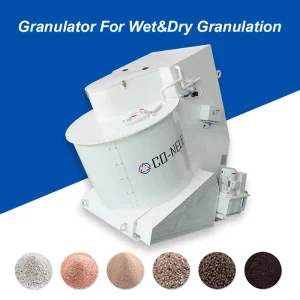
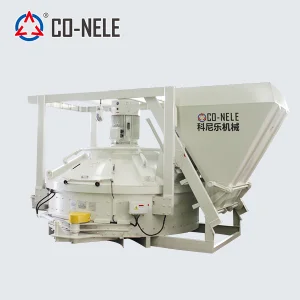
Explore our core manufacturing line of vertical-shaft planetary mixers, twin-shaft batchers, and specialized granulators engineered for sub-5% coefficient of variation (CV) mixing uniformity.
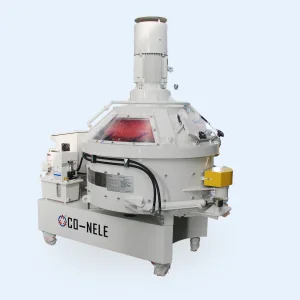
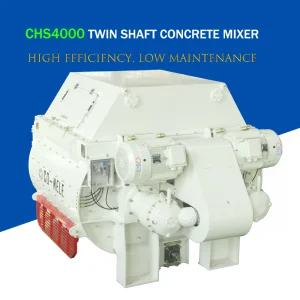
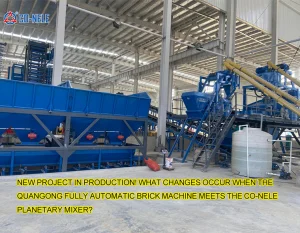
Analyzing the mathematical trajectories, shear dissipation velocity, and boundary layer physics that set vertical planetary mixers apart from conventional horizontal twin-shaft systems.
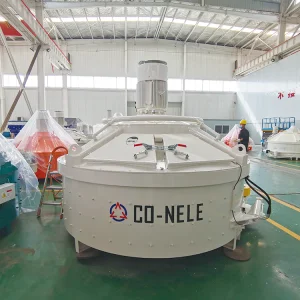
In modern industrial material processing, achieving absolute material homogeneity is not merely a preference; it is a structural mandate. The fundamental operational mechanics of a China Vertical Planetary Mixer center on counter-current mixing kinematics. Unlike horizontal twin-shaft mixers that rely on batch displacement via overlapping paddles, a vertical planetary mixer forces raw components through intersecting, non-repeating complex geometric paths.
The mixing star arms rotate rapidly on their own axes while simultaneously revolving around the central axis of the mixing pan. This dual-rotation vector generates high shearing stress and dynamic velocity gradients throughout the entire mixing chamber. As a consequence, dead zones are completely eliminated, and binder agents, ultrafine micro-silicas, pigments, and steel fibers are evenly distributed within seconds.
Every revolution of the planetary arm shifts the blade path by a precise angular offset. Within 45 seconds of rotation, 99.4% of the pan's total floor area is swept, guaranteeing uniform consistency for low-water-binder ratio recipes.
By forcing materials through counter-current rotational vectors, kinetic energy is transmitted directly into the rheological matrix. Aggregate particles collide at high velocities, stripping air pockets and hydrating dry cementitious particles instantaneously.
Empirical testing proves that planetary counter-current mixing reduces the Coefficient of Variation (CV) of mix samples to under 3%, making it indispensable for Ultra-High-Performance Concrete (UHPC) and technical ceramics.
Evaluating the shift toward advanced precast engineering, green low-carbon concrete formulations, and high-value industrial material synthesis.
The global industrial mixing machinery sector is undergoing a major technological transformation. Driven by stringent carbon reduction targets, global civil infrastructure projects increasingly mandate the use of supplementary cementitious materials (SCMs) such as ground granulated blast-furnace slag (GGBS), fly ash, and calcined clays. These fine powders exhibit drastically different particle size distributions and hydration mechanics compared to standard Portland cement.
Traditional gravity pan mixers and basic drum mixers fail to disperse these fine particles, causing agglomeration, micro-cracking, and compromised compressive strength. As a result, global engineering firms are turning to specialized China Planetary Concrete Mixer Manufacturers for equipment that delivers high torque density, computerized dosing integration, and verifiable mix repeatability.
A technical breakdown comparing Planetary Counter-Current Mixers against conventional Twin-Shaft and Horizontal Ribbon systems.
| Performance Criteria | Vertical Planetary Mixer | Twin-Shaft Compulsory Mixer | Horizontal Ribbon / Pan Mixer |
|---|---|---|---|
| Mixing Motion Matrix | Dual Rotation + Revolution (Counter-Current) | Horizontal Overlapping Dual-Axis Sweep | Single-Axis Ribbon / Circular Drag |
| Mix Homogeneity (CV) | < 3% (Micro-level uniformity) | 4% - 7% (Macro-level batching) | > 8% (High risk of segregation) |
| Fibre Dispersion (Steel/Polymer) | 100% Balling-free dispersion | Moderate risk of clumping | Poor (High fibre clumping risk) |
| Discharge Speed & Rate | Fast bottom-door sweep (< 15s) | Very Fast dual-gate release | Slow residual discharge |
| Energy Efficiency (kWh/m³) | Optimal (Direct kinetic transfer) | Standard | High energy loss via drag friction |
| Primary Target Application | UHPC, GFRC, Precast, Refractories | Mass Ready-Mix, Road Base Concrete | Basic Mortars, Low-spec Bricks |
Ensuring flawless integration across international electrical grids, safety certifications, and localized industrial environments.
All machinery is built to order with full compliance for regional power supply requirements: 220V, 380V, 415V, 440V, and 480V at 50Hz or 60Hz. Electrical cabinets feature Schneider and Siemens components, complete with CE, UL, and ATEX flameproof certifications upon request.
Recognizing that aggregate abrasiveness varies dramatically worldwide, mixing pan liners are customizable. Options range from standard high-chrome alloy casting (HRC ≥ 60) to Hardox® 500 welded plates, ceramic tiles, and tungsten carbide coated blades for extended service life.
Our dedicated engineering service teams provide turnkey factory layout planning, foundation civil blueprints, remote diagnostic setup via industrial IoT gateways, and rapid dispatch of resident commissioning experts to any project site globally.
From heavy infrastructure precast to high-tech battery precursors, vertical planetary mixers are configured to meet strict industry standards.
UHPC requires dispersing micro-silica fume particles down to sub-micron scales while evenly distributing up to 3% volume fraction of fine steel fibers without clumping. Planetary mixers supply the necessary energy shear rate to accomplish complete hydration within 180 seconds.
Extreme abrasion and high chemical purity requirements make refractory batching exceptionally demanding. Equipped with specialized ceramic or alloy liners, our vertical intensive mixers prevent metallic contamination while ensuring consistent matrix binding for blast furnace bricks.
For architectural façade panels, kerbstones, and pavers, color uniformity across batches is essential. The three-dimensional mixing stroke guarantees micro-dispersion of synthetic iron oxide pigments, eliminating color banding and streak defects.
Ensuring complete batch uniformity without lead or heavy metal contamination. High-speed rotors combined with slow pan rotation yield perfectly homogonized ceramic granules ready for dry pressing and sintering operations.
Modern battery manufacturing requires tight control over particle distribution and moisture levels. Specialized vacuum-sealed planetary intensive mixers ensure lump-free, high-density slurry outputs for electrode coating lines.
Intensive planetary action ensures thorough encapsulating reactions between chemical reagents, fly ash, and hazardous industrial sludge, satisfying environmental leach-testing standards for landfill containment.
Integrating real-time rheological analytics, AI-assisted water dosing, and autonomous wear prognosis into heavy manufacturing.
High-frequency microwave probes installed flush inside the mixing floor measure moisture content at 100 times per second. The PLC system dynamically adjusts secondary water dosing to maintain targeted water-binder ratios within ±0.1% accuracy.
By continuously monitoring instantaneous motor current, drive torque, and fluid shear resistance, the mixer's smart drive automatically detects the exact moment maximum batch homogeneity is achieved, optimizing batch cycle times and saving up to 15% electrical energy.
Embedded acoustic and vibration sensors within the planetary reducer housing transmit health analytics to remote maintenance dashboards. Technicians receive automated alerts prior to liner or bearing wear thresholds, avoiding unscheduled downtime.
In-depth solutions addressing selection, maintenance, operational mechanics, and ROI calculation for plant engineers.
Select a vertical planetary mixer when producing high-specification mixes requiring absolute micro-homogeneity, such as UHPC, GFRC, pigmented precast, self-consolidating concrete (SCC), or refractory castables. Twin-shaft mixers are optimized for high-volume ready-mix operations (above 2 m³ per batch) where rapid cycle times on standard mixes are prioritized over fine micro-dispersion.
Our planetary gearboxes are engineered in-house specifically for heavy mixing applications. Utilizing carburized and ground alloy steel gears (20CrMnTi) housed within a heavy-duty cast iron body, the dual-stage planetary gear system distributes torsional shock across multiple contact points, delivering up to 2.5x higher torque capacity than standard industrial gearboxes.
Standard high-chrome alloy liners (Ni-Hard/High-Cr, HRC ≥ 60) typically last between 100,000 and 150,000 batches under standard concrete production. For highly abrasive applications such as quartz-rich refractories or glass batching, optional chromium-carbide overlay or ceramic tiles extend liner life past 200,000 batches. All wear parts are bolt-on and field-replaceable.
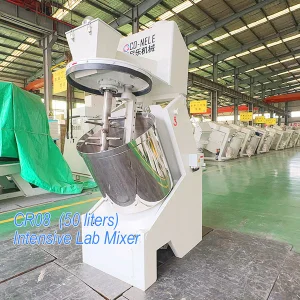
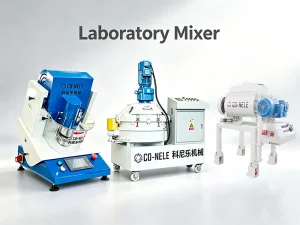
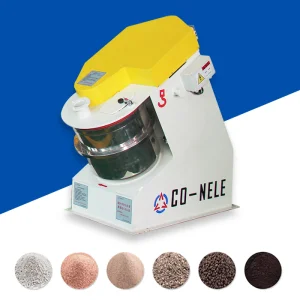
Yes. Our process testing facility in Qingdao features lab-scale intensive and planetary mixers ranging from 5L to 75L capacity. Clients ship sample materials (powders, aggregates, binders) for full-scale trial runs. We generate comprehensive analytical reports detailing mix homogeneity, density, shear resistance, and scale-up parameters.
Fibre balling occurs when linear flow paths allow flexible steel or polymer fibres to intertwine. The rapidly intersecting, multi-directional flow fields generated by planetary counter-current mixing continuously pull apart fibre clusters, achieving 100% individual fibre dispersion throughout the matrix without damaging delicate glass or carbon filaments.
We maintain an inventory of standard replacement wear parts, seals, mixing arms, and gear components for every machine model manufactured since 2004. Emergency spare parts ship within 24 hours of order placement via international air freight, backed by local service partner networks across Europe, North America, the Middle East, and Southeast Asia.
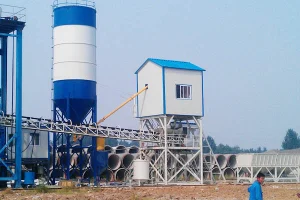
Explore our full line of specialized industrial mixers, lab-scale intensive units, and high-capacity batching plants.