CO-NELEMixing & Granulation
Explore our core compulsory twin-shaft, planetary counter-current, and specialized material granulating machinery engineered in Qingdao, China.
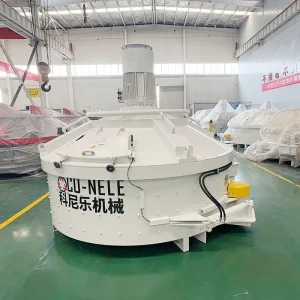
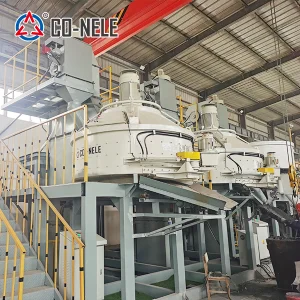
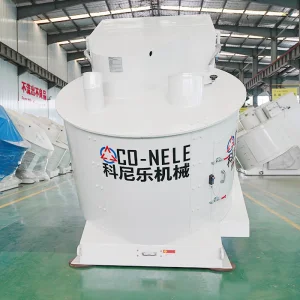
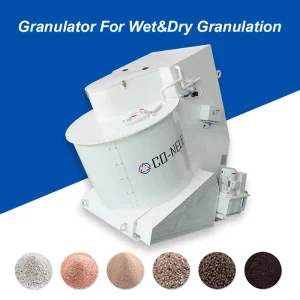
The global construction, ready-mix concrete (RMC), precast manufacturing, and advanced material processing industries are undergoing a fundamental paradigm shift. Driven by worldwide commitments toward decarbonization, strict quality standards for infrastructure projects, and the rapid adoption of specialized concrete formulations—such as Ultra-High Performance Concrete (UHPC), Glass Fiber Reinforced Concrete (GFRC), and high-substitution Supplementary Cementitious Material (SCM) mixes—the demands placed on industrial mixing equipment have escalated far beyond basic mechanical blending.
Historically, gravitational tilting mixers and legacy single-shaft units sufficed for standard C20–C40 concrete mixes. However, modern concrete technology demands rigorous micro-homogeneity, absolute binder dispersion, rapid cycle times, and minimal mechanical downtime. As a premier China Twin Shaft Mixer Concrete Manufacturer & Factory, QINGDAO CO-NELE MACHINERY CO., LTD. stands at the forefront of this industrial transformation. By leveraging counter-rotating compulsory fluid dynamics, state-of-the-art wear-resistant metallurgy, and digital automation, CO-NELE delivers industrial mixing solutions engineered to meet the stringent demands of global Tier-1 contractors, precast producers, and raw material processing conglomerates.
In modern high-SCM mixes (containing up to 50% fly ash, ground granulated blast-furnace slag, or silica fume), mechanical agglomeration prevents full cementitious hydration. Compulsory twin-shaft mixers generate three-dimensional spatial cross-currents, shearing material clumps within 30 to 45 seconds—yielding up to a 12% strength enhancement over conventional gravity mixing with identical cement ratios.
Understanding the mechanical forces, fluid turbulence, and wear distribution in compulsory twin-shaft concrete mixing plants.
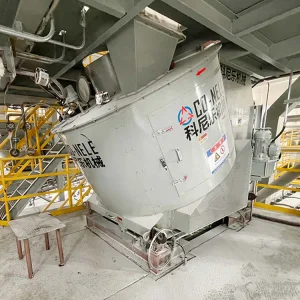
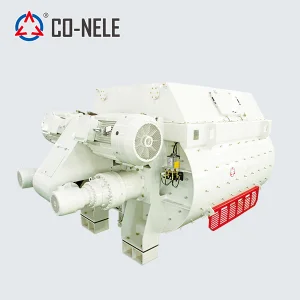
Unlike single-shaft or vertical drum mixers, CO-NELE twin-shaft mixers feature synchronized counter-rotating shafts equipped with overlapping, angled mixing arms. This geometry induces a powerful three-dimensional turbulence zone at the center of the mixing trough, forcing materials into continuous intense collision, shear, and redistribution.
The core lifetime of any concrete batching plant mixer is governed by its drive system. CO-NELE integrates high-torque, low-noise planetary and helical reduction gearboxes designed specifically to absorb violent mechanical shocks caused by large aggregate sizes (up to 180mm) without suffering gear fatigue or shaft deflection.
Slurry ingress into shaft bearings is the leading cause of premature mixer failure. CO-NELE utilizes a proprietary quadruple-layer shaft-end sealing technology combining floating mechanical face seals, automatic grease injection pumps, and high-pressure hydraulic purge barriers to guarantee absolute sealing integrity under continuous immersion.
Selecting the optimal mixing architecture depends on specific mix design parameters, target cycle times, and batch homogeneity requirements:
| Parameters & Kinematics | CHS Series Twin Shaft Mixer | CMP Series Planetary Mixer | Single Shaft Dry Mortar Mixer |
|---|---|---|---|
| Primary Flow Dynamics | 3D Horizontal Double-Vortex Circulation | Planetary Counter-Current Micro-Shear | Radial Spiral & Ribbon Displacement |
| Typical Batch Cycle Time | 30 – 45 Seconds | 60 – 90 Seconds | 90 – 180 Seconds |
| Target Applications | Commercial Ready-Mix, Mass Dams, Roads | Precast Concrete, UHPC, GFRC, Refractories | Dry Powder Mortar, Tile Adhesives |
| Maximum Aggregate Size | Up to 150 – 180 mm | Up to 40 – 80 mm | Powder to 5 mm fine aggregate |
| Discharge Speed & Efficiency | Ultra-Fast Double Hydraulic Door | Pneumatic/Hydraulic Bottom Gate | End-cap / Bottom flap discharge |
| Coefficient of Variation (CV) | ≤ 5% (Standard Concrete) | ≤ 1-3% (Micro-Homogeneity) | ≤ 5-7% (Dry Blends) |
For international EPC contractors, ready-mix concrete suppliers, and precast factory owners, purchasing a concrete mixer is a multi-year capital investment. Evaluating machinery solely on initial purchase price (CAPEX) often leads to ballooning operational costs (OPEX) caused by frequent liner replacement, excessive power consumption, and unscheduled downtime.
CO-NELE engineers design twin-shaft concrete mixers around a zero-unplanned-downtime philosophy. By optimizing motor drive torque curves, reducing power consumption per cubic meter of concrete mixed, and utilizing ultra-wear-resistant Ni-Hard and high-chromium cast irons (hardness ≥ HRC 62), CO-NELE machines dramatically depress lifetime operating expenses.
Ensure drive units carry a continuous heavy-load service factor of ≥ 2.0 to handle emergency restarts under full batch load.
Verify the inclusion of progressive multi-line automatic greasing systems with pressure fault monitoring alarms.
Confirm motor voltages (380V/415V/440V/480V at 50Hz/60Hz), CE certifications, and ISO9001 factory accreditation.
Customized mixing engineering adapted to diverse sector requirements across global markets.
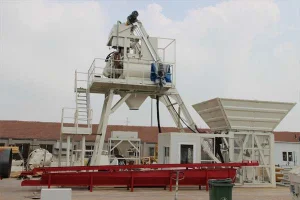
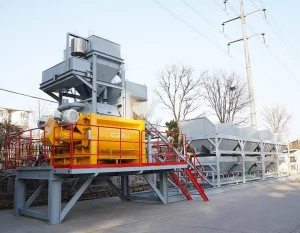
Integrating high-capacity CHS twin shaft mixers (up to 6 m³ output per batch) into stationary batching plants. Delivers rapid charge-to-discharge speed, allowing concrete dispatch plants to process over 180 m³/h continuously with zero batch variation.
Engineered mixing solutions for architectural precast panels, prestressed girders, concrete pipes, and hollow-core slabs. Provides tight moisture control via microwave moisture probes and precise pigment dispersion.
Dedicated UHPC and GFRC mixers featuring high-speed shear rotors and heavy-duty planetary gear drives. Solves steel fiber balling issues and ensures absolute dispersion of silica fume powders for compressive strengths exceeding 150 MPa.
Specialized pan and intensive counter-current mixers designed to blend highly abrasive corundum, silicon carbide, and graphite materials required for furnace linings and steel ladle refractories.
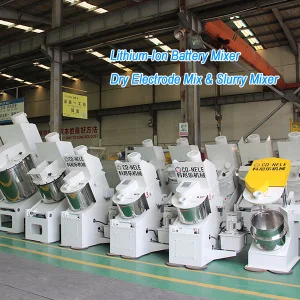
Dust-tight, vacuum-capable mixing and granulating machines built for lithium-ion dry electrode mixing, cathode powder homogenization, and magnetic material pelletizing with zero metal contamination.
Compact, foundationless, trailer-mounted mixing modules designed for remote highway paving, bridge deck overlays, dam construction, and rapid site relocation across global job sites.
As an established export-oriented machinery factory based in Chengyang District, Qingdao, CO-NELE understands that global buyers require more than mechanical hardware; they require comprehensive compliance, localized voltage adaptability, and continuous technical support.
Every twin-shaft and planetary mixer manufactured in CO-NELE’s 30,000 m² facilities undergoes rigorous non-destructive testing (NDT) on structural welds, ultrasonic shaft inspections, and dynamic bench testing prior to shipment. Mechanical wear liners are cast using high-chromium alloy steels (Cr26) tested to withstand aggregate friction across over 100,000 concrete cycles.
To serve clients across Europe, North America, the Middle East, Southeast Asia, and South America, CO-NELE mixers are equipped with fully customized electrical systems conforming to local grid requirements:
CO-NELE backs its international exports with comprehensive after-sales engineering support, including detailed foundation layout drawings, 3D CAD step files for EPC plant designers, remote video commissioning assistance, and resident engineer dispatch for large-scale production line setups.
Looking toward 2030 and beyond, mixing equipment is evolving from passive mechanical machinery into intelligent, data-driven processing hubs. CO-NELE’s R&D department is leading several key technological initiatives:
Embedding torque sensors, acoustic emission monitoring, and inline optical sensors within the mixing trough to continuously calculate concrete slump, yield stress, and plastic viscosity in real time without requiring manual sampling.
Developing cloud-connected digital twin software that tracks blade wear based on aggregate abrasiveness indices and cumulative batch mass, alerting maintenance teams to schedule liner flips before structural damage occurs.
Refining high-intensity micro-shear mixing zones to activate geopolymers, calcined clays, and alkali-activated binders, allowing precasters to minimize Portland cement content while maintaining early-age strength targets.
Direct technical insights provided by CO-NELE engineering directors to help prospective buyers make informed equipment decisions.
A twin shaft concrete mixer utilizes two counter-rotating horizontal shafts with overlapping mixing arms that create a 3D turbulent cross-mixing zone. This forced compulsory action homogenizes coarse aggregates, fine sands, cement, and water within 30 to 45 seconds per batch. In contrast, a single shaft mixer relies primarily on circumferential displacement, requiring longer mixing times (up to 90 seconds) and producing higher wear variance across blades when handling coarse aggregates above 40mm.
Shaft end leakage is prevented using a multi-layer sealing system. This includes floating mechanical seals, precise labyrinth oil rings, and an automated continuous grease injection pump that maintains positive pressure inside the seal housing. This purge system prevents concrete grout, micro-silica, or fine sand particles from reaching the main spherical roller bearings, extending bearing life significantly.
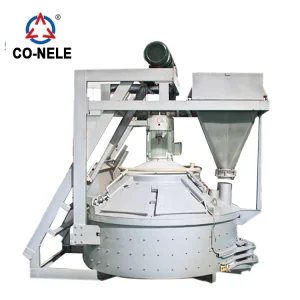
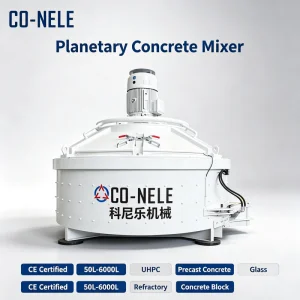
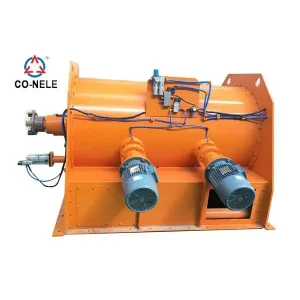
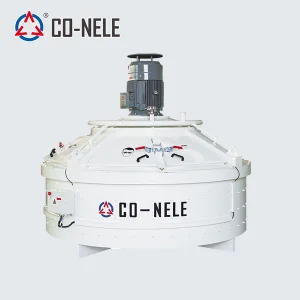
Choose a vertical-shaft planetary counter-current mixer (CMP series) when producing dry-cast concrete, UHPC, GFRC, colored paving blocks, or refractory castables where absolute micro-homogeneity (≤ 3% CV) and zero material dead zones are required. Choose a twin-shaft mixer (CHS series) for high-throughput ready-mix batching plants or infrastructure projects needing fast output volumes (> 1 m³ to 6 m³ per batch) with standard aggregate mixes.
Under standard ready-mix concrete batching operations using limestone or crushed granite aggregates, CO-NELE high-chromium alloy liner plates (HRC ≥ 60) typically last 90,000 to 150,000 batches. Mixing arms and paddle blades typically achieve 50,000 to 80,000 batches. All wear parts are bolt-on and symmetrical, allowing field technicians to flip blades 180 degrees to double their useful wear life before replacement.
Yes. All machines exported by CO-NELE are custom-engineered to match the destination country's electrical grid (e.g., 380V/50Hz for Europe/Asia, 460V/60Hz for North America, 415V/50Hz for Australia/UK). We integrate international standard electrical components such as Siemens PLCs, Schneider contactors, and ABB VFDs, complete with multi-language touchscreen HMI interfaces and CE certification documentation.
CO-NELE maintains a dedicated material testing laboratory in Qingdao equipped with lab-scale intensive mixers, granulators, and planetary units (5L to 75L capacity). Overseas clients can send 10–50 kg of raw powders, aggregates, or binders. Our engineers run formula mixing and granulation trials, returning a comprehensive test report detailing mixing time, granule sphericity, density, and recommended industrial machine sizing.
Explore our full range of mobile batching plants, sand mixers, and dry mortar mixing technology.