CO-NELEMixing & Granulation
Discover our enterprise-grade mixing machines, laboratory intensive mixers, and turnkey batching plants configured for high-output engineering projects.
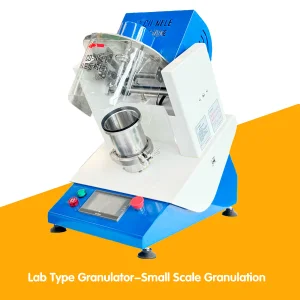
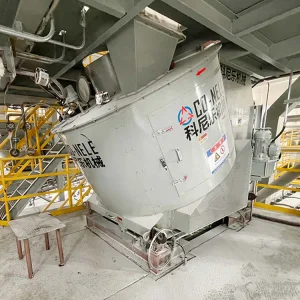
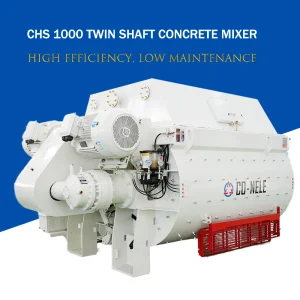
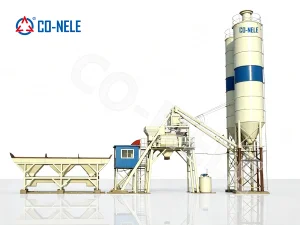
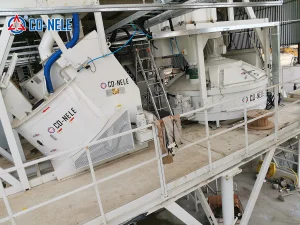
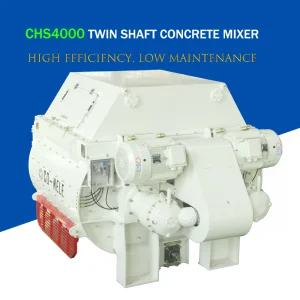
In modern infrastructure, commercial ready-mix concrete production, precast element manufacturing, and specialized material blending, the choice of mixing equipment directly governs structural integrity, material yield, and operational profitability. A Twin Shaft Compulsory Mixer operates on a forced mechanical displacement paradigm, setting it fundamentally apart from gravity-fed drum mixers or standard pan agitation systems.
The core fluid dynamics inside a twin shaft compulsory mixer rely on two synchronized, counter-rotating horizontal shafts fitted with high-wear-resistant mixing arms and paddles. Arranged at precise helical angles along the shaft axis, these arms produce a 3D counter-current turbulence zone in the center of the mixing trough. Rather than simply rolling materials along the perimeter, the opposing axial and radial forces generate a dynamic weightless state at the intersection zone. This forced shear action rapidly breaks down agglomerates of cementitious binder, disperses fine silica fume, and evenly distributes micro-admixtures across coarse and fine aggregates within 30 to 45 seconds per cycle.
By establishing intense mechanical shear early in the cycle, water absorption into aggregate pores is optimized, enabling lower water-to-cement (W/C) ratios without sacrificing workability or slump retentivity. This kinematic capability renders twin shaft mixers indispensable for high-grade structural projects, bridge girders, high-speed railway slab tracks, and dam construction.
Synchronized twin-axis rotation creates cross-current fluid flows that minimize peripheral friction while maximizing shear intensity across all aggregate fractions.
Optimized blade geometry achieves complete batch homogeneity within 30 to 45 seconds, supporting high-throughput batching plants up to 240 m³/h capacity.
High-chrome Ni-Hard cast iron liners and hardfaced paddle blades deliver service lifetimes exceeding 150,000 operational batch cycles under abrasive aggregate loads.
Over the past two decades, China has evolved into the world’s leading hub for structural machine manufacturing, combining heavy metallurgy, automated CNC fabrication, and robust industrial supply chains. Choosing a premier China Twin Shaft Compulsory Mixer Manufacturer & Factory provides enterprise buyers with technical parity to European machinery at significantly optimized total cost of ownership (TCO).
| Technical Parameter | Standard Chinese Industry Benchmark | Premium CO-NELE Engineering Spec | Operational Impact |
|---|---|---|---|
| Discharge Capacity | 1,000 L – 4,000 L | 500 L – 6,000 L (CHS Series) | Accommodates small precast to mega ready-mix plants |
| Shaft Seal Mechanism | Triple labyrinth seal | Multi-layer floating seals + Auto-Grease Pump | Prevents slurry ingress; extends shaft life by 300% |
| Liner Plate Hardness | HRC 55 – 58 | HRC ≥ 62 (High-Chrome Chromium Alloy) | Resists high abrasion from crushed quartzite/granite |
| Mixing Speed (RPM) | 21 – 24 RPM | Optimized Variable Speed (18 – 28 RPM) | Reduces power peak during heavy cold-start batches |
| Discharge Cycle Time | 12 – 18 seconds | 8 – 12 seconds (Dual Hydraulic Gate) | Increases hourly plant throughput efficiency |
Furthermore, China’s industrial ecosystem benefits from localized, vertically integrated manufacturing hubs—such as Qingdao in Shandong Province. This proximity grants immediate access to top-tier steel rolling mills, specialized gear-cutting foundries, and automated robotic welding infrastructure. As a result, Chinese twin shaft compulsory mixers provide exceptional mechanical reliability, rapid spare-part turnaround, and custom structural tailoring at competitive price-to-performance metrics.
Empirical proof of manufacturing capacity, reliability indices, and global deployment footprint across modern concrete industries.
The global construction equipment market is undergoing a structural shift driven by decarbonization targets, rising raw material costs, and the rapid adoption of digital automation. Procurement teams evaluating concrete mixing technology must align their machinery choices with key macro trends shaping the sector:
As global environmental regulations push concrete producers away from pure Ordinary Portland Cement (OPC) toward supplementary cementitious materials (SCMs)—such as Calcined Clay (LC3), Ground Granulated Blast-Furnace Slag (GGBS), and high-volume fly ash—mixing kinetics become substantially more challenging. SCMs exhibit finer particle sizes and unique surface rheologies that resist dispersion under low-shear conditions. China twin shaft compulsory mixers incorporate modified paddle geometry and high-torque drives to ensure rapid wetting and homogenization of SCM-dense mixes, preventing agglomeration and reducing binder consumption per cubic meter.
Modern commercial batching plants demand minimal un-planned downtime. Contemporary Chinese twin shaft mixers feature integrated IoT sensor packages monitoring oil temperature, gearbox vibration signatures, seal pressure, and motor current draw. Real-time telemetry allows plant supervisors to schedule liner replacements and seal maintenance long before catastrophic failures occur.
International EPC contractors, commercial ready-mix suppliers, and precast concrete manufacturers evaluate mixers across four vital benchmarks:
Engineered for diverse structural concrete applications, specialized industrial mortars, and high-volume infrastructure projects.
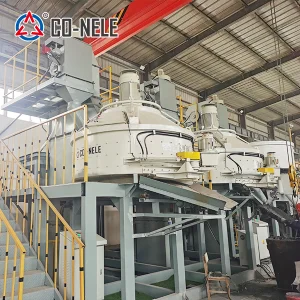
Integrated into HZS90 to HZS240 plant configurations, delivering rapid 30-second batching cycles for high-volume truck-mixer loading in urban infrastructure hubs.
Supplying zero-slump and stiff concrete formulations for precast wall panels, prestressed bridge girders, concrete pipes, and hollow-core slabs.
Configured with heavy-duty drive systems to mix Roller-Compacted Concrete (RCC) containing ultra-coarse aggregates up to 120mm for hydraulic dam projects.
Direct technical answers provided by our engineering team to assist buying committees and plant directors.
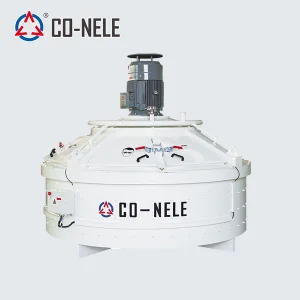
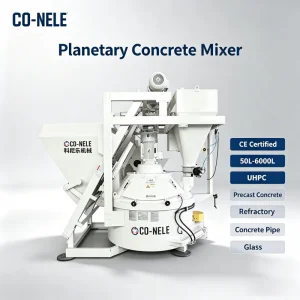
A twin shaft compulsory mixer utilizes two horizontal counter-rotating shafts suited for high-volume ready-mix and infrastructure concrete (1.0 m³ to 6.0 m³ per batch) requiring short cycle times (30–45 sec). In contrast, a planetary mixer uses vertical-shaft kinematics ideal for dry-cast, UHPC, color-sensitive pavers, and precast applications requiring extreme micro-homogeneity on smaller batch sizes.
Under normal aggregate conditions (crushed limestone/gravel), high-chrome liners (HRC ≥ 62) and paddle arms typically achieve 120,000 to 150,000 mixing cycles before requiring replacement. Highly abrasive quartz or granite aggregates may reduce lifespan to 80,000–100,000 cycles. All wear parts are fully bolt-on for fast field exchange.
CO-NELE twin shaft mixers integrate a quadruple sealing architecture: multi-ring labyrinth seals, floating face seals, and an automatic multi-line high-pressure grease lubrication pump. The pump maintains continuous outward grease pressure, ensuring slurry can never migrate past the shaft housing into the heavy-duty spherical bearings.
Yes. Custom mounting adapter frames, standardized discharge chute dimensions, and flexible PLC interface options (Siemens, Schneider, Allen-Bradley) allow seamless retrofit replacements for aging European mixers (e.g., BHS, SIMEM, Sicoma) at a fraction of OEM replacement costs.
Explore our full line of specialized planetary mixers, intensive granulators, and heavy compulsory twin shaft mixing solutions.