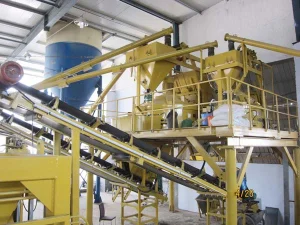
China Stationary Concrete Plant Manufacturer & Machine

Industrial Whitepaper on Next-Generation High-Shear Concrete Batching, UHPC Micro-Homogeneity Kinematics & Global Supply Chain Optimization
Flagship Machinery Lineup

Featured Industrial Mixers & Concrete Machinery

Explore our engineered forced-action mixing systems, planetary counter-current mixers, and laboratory intensive batching equipment designed for maximum homogeneity.
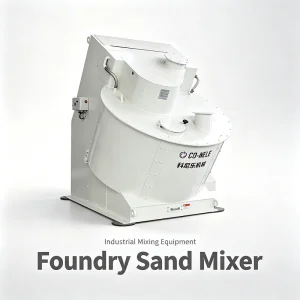
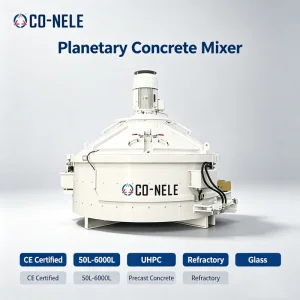
China Foundry Sand Mixer Factory, Machine
View Details & Specs
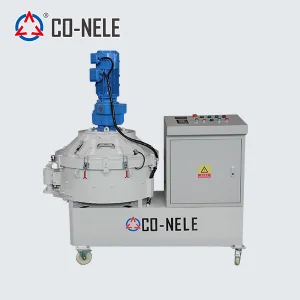
China Planetary fly-cutter Concrete Mixer Type CMPS Manufacturer, Factory
View Details & Specs
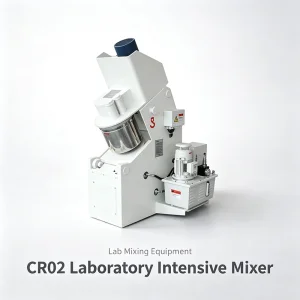
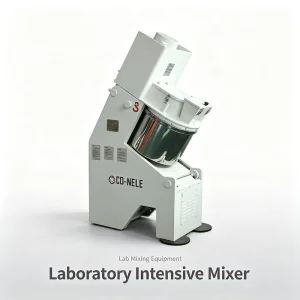
China CR02 laboratory intensive mixer for mixing and granulating Factory, Machine
View Details & Specs
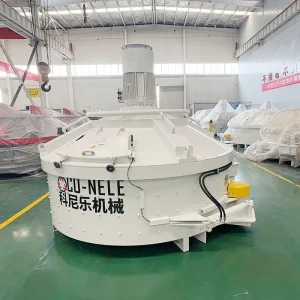
China Planetary concrete mixers For Blocks Factory, Machine
View Details & Specs
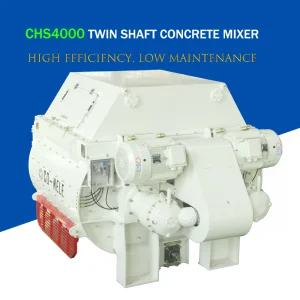
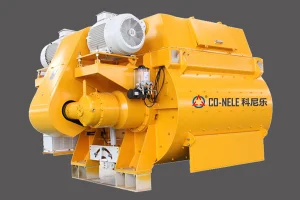
China CHS4000 (4 m³) Twin Shaft Concrete Mixer Manufacturer, Factory
View Details & Specs
China Refractory mixer Manufacturer, Factory
View Details & Specs
China CR04 Intensive Laboratory Mixer Manufacturer, Machine
View Details & Specs
China CMP50 Laboratory planetary concrete mixer Factory, Machine
View Details & Specs
Industry Whitepaper | Section 1

Global Macro Landscape & Evolution of Stationary Concrete Batching Systems

The global construction infrastructure paradigm is undergoing a structural shift. Demand has rapidly evolved from high-volume, low-grade bulk concrete toward specialized, micro-homogeneous recipes including Ultra-High-Performance Concrete (UHPC), Glass Fiber Reinforced Concrete (GFRC), self-consolidating mixes, and low-carbon cementitious formulations with high supplementary cementitious materials (SCM) replacement ratios.

The Paradigm Shift in Concrete Rheology

Conventional continuous pan mixers and legacy drum batching units are increasingly failing to meet modern civil engineering criteria. Modern mega-structures—such as deep-sea offshore wind turbine gravity foundations, ultra-long-span stay bridges, and high-speed rail viaducts—require a coefficient of mixing variation (CV) under 5%. Achieving uniform dispersion of silica fume, nano-additives, and synthetic/steel fibers requires high-shear forced-action mixing dynamics that stationary plants engineered in China now lead globally.

Stationary vs. Mobile Plant Economic Lifecycle

While mobile plants offer rapid deployment for short-term road patching, stationary concrete batching plants remain the backbone of commercial ready-mix suppliers, precast block manufacturers, and centralized infrastructure hubs. Stationary configurations accommodate heavy foundation loading, multi-silo storage systems (up to 1,000 tonnes capacity per silo), aggregate thermal conditioning units (steam heating/chilled water dosing), and sophisticated environmental filtration systems delivering zero dust emissions and closed-loop slurry recycling.

< 3.8%
Mixing Coefficient of Variation (CV)
180 m³/h
Peak Stationary Throughput
150,000+
Batch Wear-Life per Liner Set
±1.0%
PLC Dosing Precision (Cement/Water)
Engineering Core | Section 2

Kinematics, Gearbox Engineering & Plant Architecture

At the core of every premium China Stationary Concrete Batching Plant lies the compulsory mixing system. Understanding the mechanical divergence between Vertical Planetary Counter-Current Mixers and Horizontal Twin-Shaft Compulsory Mixers dictates plant ROI and product quality.

Technical Parameter Planetary Counter-Current Mixer (CMP/CMPS) Twin Shaft Compulsory Mixer (CHS/CTS)
Kinematic Pattern Vertical shaft star-arm counter-current rotation; non-overlapping parallel motion tracking. Dual horizontal counter-rotating shafts creating intense 3D turbulent mixing zone.
Ideal Mix Application UHPC, GFRC, refractory castables, dry-cast pavers, colored architectural precast. Commercial ready-mix (C20–C60), high-volume mass concrete for dams & foundations.
Micro-Homogeneity (CV) Exceptional (CV < 3.5%); zero dead zones at pan bottom and perimeter walls. High (CV < 5.0%); rapid macro-blending ideal for large coarse aggregate.
Batch Cycle Time 60 to 90 seconds (including micro-silica and fiber dispersion). 30 to 45 seconds (optimized for rapid truck-mixer loading).
Wear Parts Material High-chromium alloy (Cr26) tiles with diamond-hardness coating (HRC ≥ 62). Ni-Hard / High-Chrome replaceable liners and paddle tips.

In-House Reducer Innovation: The CO-NELE Mechanical Superiority

Unlike secondary assemblers who purchase commercial off-the-shelf gearboxes, premier Chinese manufacturers like CO-NELE design and cast heavy-duty planetary reducers in-house. Featuring dual-input balance distribution, hardened spiral bevel gears, and forced-circulation oil lubrication with cooling radiator units, these gearboxes withstand torsional shock loads up to 300% of nominal rating—preventing catastrophic shear failures during sudden power loss with fully loaded drums.

Technology Roadmap & Future Industry Trajectory (2026–2030)

1. AI-Driven Moisture Dosing

Real-time microwave probe arrays inside mixing pans sample moisture content 50 times per second. Neural-network algorithms adjust added water and admixture dosing mid-cycle to account for aggregate surface moisture fluctuations, achieving slump control within ±5mm automatically.

2. Carbon Capture Dosing (CO₂ Curing)

Direct injection of liquid/gaseous carbon dioxide into the mixing chamber during aggregate wetting. The CO₂ permanently mineralizes into nano-scale calcium carbonate matrix, increasing early 3-day compressive strength by 15% while sequestering embedded carbon emissions.

3. Cloud Diagnostic Telemetry

IoT sensors monitor bearing vibration spectra, oil temperature, motor current draw, and liner thickness degradation. Preventive maintenance alerts broadcast to cloud dashboards, preventing unplanned downtime on high-demand infrastructure sites.

Supply Chain Dominance | Section 3

China Factory Supply Chain Resilience & Manufacturing Efficiency

Selecting a stationary concrete plant manufacturer requires evaluating supply chain longevity, metallurgical control, and total cost of ownership (TCO). China’s heavy machinery industrial clusters—particularly in Qingdao, Shandong—offer unequaled advantages in structural engineering and manufacturing scalability.

Vertical Integration Under One Roof

Unlike global brands that outsource fabrication to third-party contract shops, Qingdao CO-NELE maintains three full-scale manufacturing bases spanning over 30,000 m². Every critical stage is conducted in-house:

  • In-House Metallurgy & Casting: Custom formulation of high-chromium wear liners and abrasion-resistant mixing paddles resistant to highly quartz-rich aggregates.
  • Robotic Gantry Welding: Automated multi-axis welding robots execute stress-relieved seams on mixer frames and batching plant structural columns.
  • Full-Load Gearbox Test Benches: 100% of planetary reducers undergo 24-hour continuous load testing prior to frame mounting.
  • Standardized Component Sourcing: Seamless integration of global premium electrics including Siemens PLC modules, Schneider breakers, Parker hydraulics, and WAM dust collectors.
Comparative TCO Analysis (10-Year Lifecycle)

European or North American stationary batching plants carry extreme upfront capital expenditure premiums and expensive OEM replacement parts. Chinese engineering hubs deliver identical structural steel gauge (Q350B/Q460 structural steel), international electrical compliance, and interchangeable bolt-on wear parts at a 35% to 50% lower capital entry investment, enabling plant owners to amortize equipment costs in less than 24 months of operational throughput.

Global Logistics Advantage: Modular container-sized batching frame design allows 100% of plant structure (including skip hoists, batchers, and enclosed towers) to ship via standard 40ft High Cube containers—minimizing breakbulk ocean freight costs.
Field Applications | Section 4

Localized Application Scenarios & Field Performance Case Studies

China stationary concrete plants operate under extreme climatic, environmental, and geological conditions across 80+ nations. Technical customization ensures seamless operation across distinct application profiles.

Offshore Wind & UHPC Infrastructure

Deploying specialized stationary UHPC mixing plants configured with CMP Planetary Counter-Current Mixers. Engineered to disperse micro-steel fibers (up to 3% by volume) without clumping (balling) for anti-scour grouting of offshore wind turbine jacket foundations and bridge expansion deck overlays.

High-Volume Commercial Ready-Mix

Heavy-duty HZS180 stationary plants incorporating dual CHS 3.0m³ twin-shaft mixers. Designed for continuous 24/7 truck loading in metro hubs, featuring automated multi-aggregate bin dosing, pneumatic cement conveyance, and fully insulated acoustic exterior cladding.

Dry-Cast Concrete Pavers & Blocks

Integration with automated block machines. Requires semi-dry zero-slump concrete with exact color pigment distribution. Planetary counter-current mixers eliminate pigment streakiness, ensuring identical density and compressive strength across every unit produced.

Climatic & Regional Engineering Customizations

Desert & Tropical High-Heat Environments (Middle East / Southeast Asia)

Equipped with chilled water dosing networks, flake-ice batching screws, and reflective insulated aggregate bin covers to maintain fresh concrete batch discharge temperature below 30°C, preventing premature hydration flash-setting.

Arctic & Cold Climates (Northern Europe / Central Asia)

Features fully enclosed sandwich-panel plant housings, boiler steam-injection pipes inside aggregate bins, and pre-heated mixing pan jackets to ensure continuous batching down to -35°C ambient temperatures.

Global Compliance | Section 5

Localization Support, Regulatory Compliance & Operational Safeguards

Navigating international electrical codes, structural wind-load parameters, and environmental emissions requires an export manufacturer equipped with global certifications and localized field commissioning networks.

International Norms Compliance

Every stationary concrete plant built for export conforms to international design codes:

  • Electrical: CE Mark, UL/CSA control panel wiring standards, IP65 protection ratings.
  • Pressure Vessels: Air receivers and silo relief valves certified to ASME / PED standards.
  • Structural Safety: Eurocode / AISC seismic and typhoon resistance design (up to 160 km/h wind load).

Material Testing Laboratory

Before committing capital, overseas buyers can send raw aggregates, cementitious binders, silica fume, and fibers to our testing facility in Qingdao. Process engineers benchmark mixing speed, wear parameters, and slump retention, delivering comprehensive lab reports prior to manufacturing contract sign-off.

Global Lifecycle Assistance

CO-NELE maintains a global field engineering network delivering:

  • Rapid Remote Telemetry: 24/7 PLC remote troubleshooting via secure VPN connectivity.
  • Resident Field Engineers: On-site mechanical & electrical assembly supervision.
  • Spare Parts Hubs: Rapid air-dispatch of standardized wear liners, mixing blades, pneumatic valves, and load cells from Qingdao stock.
Extended Portfolio

Advanced Specialized Mixers & Batching Solutions

Review specialized machinery including lithium battery slurry mixers, UHPC precast batching plants, and high-capacity ready-mix installations.
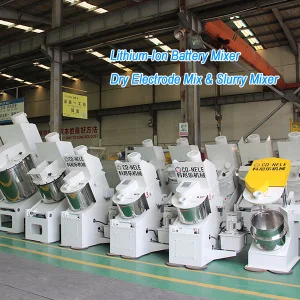
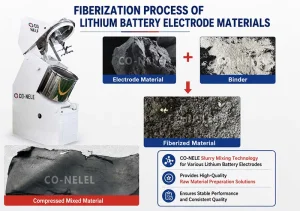
China Lithium-Ion Battery Mixer | Dry Electrode Mix & Slurry Mixer Factory, Machine
View Details & Specs
China Dry Electrode Mixing & PTFE Fibrosis Machine Manufacturer, Machine
View Details & Specs
China CTS 3000/2000 Twin shaft concrete mixer Manufacturer, Factory
View Details & Specs
China Planetary Refractory Mixer Manufacturer, Machine
View Details & Specs
China 180 m³/h Ready Mix Concrete Batching Plant Manufacturer, Machine
View Details & Specs
China Stainless Steel Vitamin Granulator Manufacturer, Machine
View Details & Specs
China UHPC Batching Plant for Precast Concrete Wind Turbine Towers Manufacturer, Factory
View Details & Specs
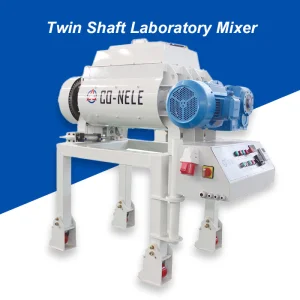
China Laboratory twin shaft concrete mixer Factory, Machine
View Details & Specs
Technical Knowledge Base | Q&A

Frequently Asked Questions by International Engineering Procurement Teams

Direct technical responses authored by CO-NELE Senior Process Engineers regarding machinery specification, plant sizing, and global logistics.

When should I choose a planetary counter-current mixer instead of a twin shaft mixer for a stationary plant?
Choose a vertical-shaft planetary counter-current mixer (such as the CMP series) when your mix design requires micro-homogeneity below a 5% coefficient of variation, involves dry-cast mixes, micro-pigments, fine silica fume, or fiber reinforcement (UHPC, GFRC, refractory castables, architectural paving blocks). Choose a horizontal twin shaft mixer (such as the CHS series) for high-volume ready-mix operations where rapid batch cycle times (30–45 seconds) and high throughput (above 2 m³ per batch) of standard slump concrete take priority over intense micro-shearing.
What is the realistic service life of CO-NELE mixing pan liners and mixing blades?
With standard high-chromium alloy wear parts (HRC ≥ 62), pan liners and counter-current mixing arms typically achieve 90,000 to 150,000 batch cycles under standard concrete aggregate conditions. For highly abrasive applications such as quartz-heavy UHPC or corundum refractory castables, life expectancy averages 40,000 to 60,000 batches. All wear parts are fully bolt-on and field-replaceable without requiring specialized welding torch intervention.
Can CO-NELE execute material mixing trial runs with client aggregate samples prior to contract award?
Yes. Our process testing center in Qingdao operates lab-scale intensive mixers and planetary units from 5 to 75 liters capacity. Clients ship a 20–50 kg sample of their binder, aggregate, and additives. Our engineers perform mixing sequence optimization, record power draw curves, measure bulk density and granule sphericity, and deliver an official technical report detailing exact scale-up factors for production-scale stationary plants.
What electrical voltage, PLC controls, and documentation are provided for export projects?
All stationary batching plants are custom-built to match regional power standards (220V / 380V / 415V / 440V / 480V at 50Hz or 60Hz). Control systems utilize Siemens S7-1200/1500 PLCs paired with multi-language winCC touchscreen interfaces supporting English, Spanish, Russian, Arabic, and French. Shipments include full structural foundation engineering drawings, electrical schematics, English maintenance manuals, CE certification documentation, and a 12-month complete drive-train warranty.
How is real plant output calculated versus theoretical plant capacity?
Brochure ratings (e.g., HZS180 = 180 m³/h) represent theoretical peak output based on continuous 30-second mixing cycles without truck movement delays. Real-world continuous throughput typically averages 65% to 75% of theoretical capacity due to aggregate bin loading intervals, cement screw dosing speeds, truck positioning logistics, and recipe-mandated dry mixing times. When sizing a stationary plant, clients should select a theoretical capacity 30% higher than their peak hourly job site demand.