
CO-NELEMixing & Granulation
Explore our core industrial batch mixers, intensive lab granulators, and planetary machinery designed for zero-dead-zone homogenization.
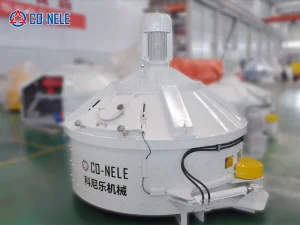
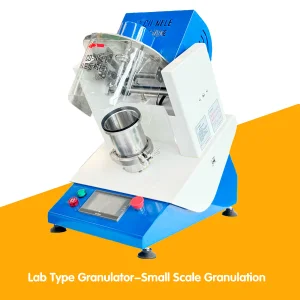
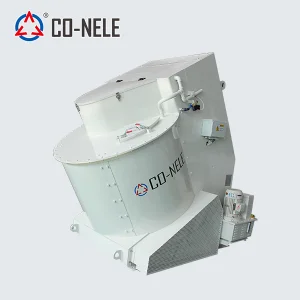
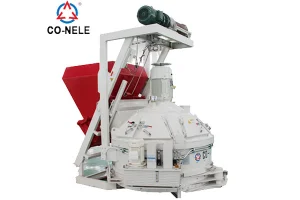
In modern industrial processing, particle size engineering dictates material performance. Traditional pelletizing equipment—such as disc granulators, extruders, and standard drum pelletizers—often suffers from broad particle size distribution (PSD), high binder consumption, and inconsistent micro-density. As global manufacturing transitions toward high-value advanced ceramics, lithium-ion battery precursors, ultra-high-performance concrete (UHPC), and synthetic refractories, the global procurement focus has shifted decisively toward Intensive Small Pelletizers and Counter-Current Granulating Mixers.
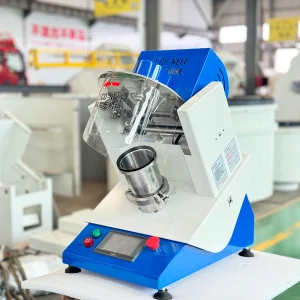
Small pelletizers engineered in China have evolved far beyond basic mechanical agitators. By combining high-speed rotor shear dynamics with an inclined, counter-rotating mixing pan, modern China-manufactured small pelletizers enable single-vessel mixing, binder dispersion, and micro-pelletization in a continuous or batch cycle. This technological jump provides global industrial plants with a micro-homogeneity index unattainable through legacy mechanical systems.
Unlike standard disk pelletizers that rely strictly on gravitational rolling, intensive small pelletizers utilize mechanical high-shear rotors operating at tip speeds up to 30 m/s. This generates controlled kinetic energy, producing micro-pellets with over 92% sphericity and a Coefficient of Variation (CV) under 3% across consecutive batches.
Achieves uniform spherical granules ranging from 0.2 mm to 6 mm without requiring secondary screening or thermal pre-drying stages.
Reduces liquid binder requirements by up to 25% due to optimized mechanical kinetic wetting and surface tension distribution.
The synchronization between the rotating pan and high-speed rotor ensures 100% material movement, preventing segregation.
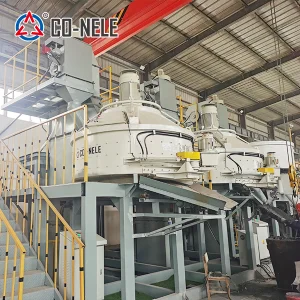
As international original equipment manufacturers (OEMs) face rising component overheads and extended lead times, China has solidified its leadership position as the global hub for heavy industrial mixing and granulating machinery. Centers like Qingdao represent the pinnacle of Chinese heavy equipment manufacturing, blending complete vertical integration with Industry 4.0 precision.
Chinese small pelletizer manufacturing leverage fully integrated supply ecosystems. From raw steel sourcing and high-chrome wear-resistant casting to in-house CNC machining of proprietary planetary gear reducers, Chinese factories deliver uncompromised build quality at optimal total cost of ownership (TCO).
A major structural failure point in imported or generic pelletizing machinery is the transmission drive. Leading Chinese manufacturers design and test heavy-duty vertical pan reducers specifically for severe thermal, abrasive, and mechanical stress. Key engineering highlights include:
Small pelletizers and counter-current intensive mixers are deployed worldwide across technical sectors requiring micro-granulation and homogenized powder preparation.
Replaces energy-intensive spray drying towers. Prepares press-ready oxide and non-oxide ceramic powders (Al2O3, ZrO2, SiC) with consistent bulk density and superior flowability for cold isostatic pressing.
Ideal for dry-mix and wet-mix refractory castables, carbon-bonded bricks, and synthetic aggregate pelletizing. Prevents micro-segregation of fine additives and silica fume.
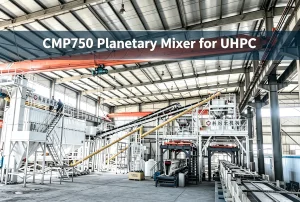
Disperses micro-silica, quartz flour, and steel fibers uniformly without balling or fiber clumping. Essential for achieving compressive strengths exceeding 150 MPa.
Used for continuous coating and dry/moist granulation of battery cathode and anode materials, ensuring homogeneous binder network formation without metal oxide contamination.
Micro-granulation of metal powder matrix blended with synthetic diamond or CBN grains, maintaining exact grain-to-matrix spatial distribution prior to hot pressing.
Pelletizes glass batch raw materials (sand, soda ash, limestone) to eliminate melting tank dust emissions, reduce energy consumption, and eliminate silica carryover.
This comparative overview highlights how Intensive Small Pelletizers stack up against legacy granulating and mixing machinery:
| Performance Parameter | Intensive Small Pelletizer | Traditional Disc Granulator | Standard Twin Shaft Mixer | Spray Drying Tower |
|---|---|---|---|---|
| Granule Sphericity (%) | 90% – 95% | 70% – 80% | N/A (Bulk Mix Only) | 95% – 98% |
| Particle Size Range | 0.2 mm – 8.0 mm (Controlled) | 1.0 mm – 15.0 mm (Wide) | Non-Granulated | 20 µm – 300 µm (Fine) |
| Binder Consumption | Low (Optimized kinetic wetting) | High (+25% excess liquid) | Moderate | Very High (Solvent/Water carrier) |
| Energy Demand (kW/ton) | 12 – 18 kW/t | 8 – 12 kW/t | 10 – 15 kW/t | 120 – 220 kW/t (Thermal) |
| Batch Cycle Time | 60 – 180 seconds | Continuous / Uncontrolled | 45 – 90 seconds | Continuous / Slow |
| Mixing Uniformity (CV) | < 3% | > 8% | < 5% | N/A |
Technical guidance direct from our process engineering team regarding small pelletizer design, scale-up, and material trials.
A standard pan mixer relies solely on slow-moving mixing arms to push material around a stationary or rotating pan. An intensive small pelletizer combines an inclined, rotating pan with an independently powered, high-speed eccentric rotor. The pan transports material to the rotor zone, where tip speeds up to 30 m/s break agglomerates, distribute liquid binders evenly, and roll micro-granules rapidly. This dual-action motion eliminates dead zones and achieves high sphericity in a fraction of the time.
Granule size distribution (PSD) is controlled by four key parameters: (1) Rotor speed during the nucleation vs. growth phases, (2) Pan speed and angle of inclination, (3) Binder liquid volume and spray rate, and (4) Residence time. Using variable frequency drives (VFDs) governed by automated PLC profiles, operators can switch from high-shear mixing to low-shear granule rounding seamlessly within a single batch run.
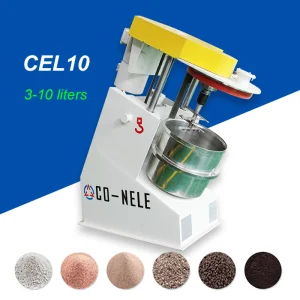
Yes. Our laboratory intensive pelletizers (ranging from 5 to 75 liters) are engineered with geometrically scaled rotor-to-pan ratios and identical kinematic parameters to industrial production models (up to 3,000 liters). Key parameters such as Froude number, tip speed, and specific power input per unit mass transfer directly, ensuring reliable scale-up for commercial plants.
Depending on material abrasiveness, we outfit units with replaceable tungsten carbide coated rotor blades, high-chrome cast iron liners (HV1100 hardness), or polyurethane/elastomer liners for iron-free processing (e.g., electronic ceramics and battery materials). All liners are bolt-on for fast maintenance cycles.
Standard small pelletizer models ship within 30 to 45 days. We maintain an extensive inventory of interchangeable spare parts—including gearboxes, seal kits, rotor tips, and liner plates—shipped worldwide via international air express or consolidated sea freight. Full remote commissioning support and resident engineer dispatch are available for all export deliveries.
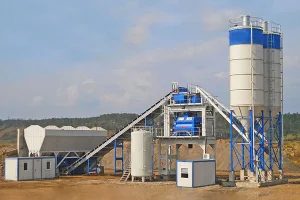
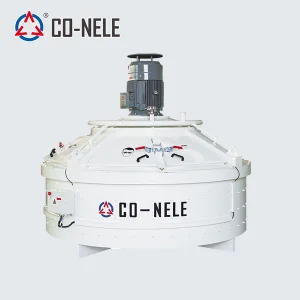
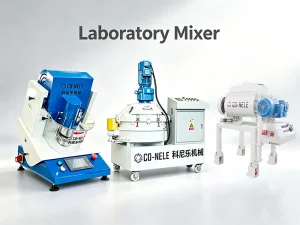
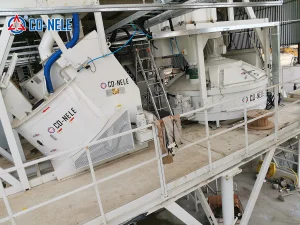
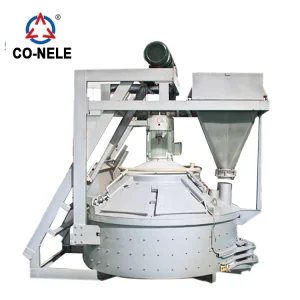
Discover our extended range of laboratory, concrete batching, and continuous granulating solutions built for worldwide industrial operations.
Send your raw powder samples to our process testing facility. Our engineering team will return a comprehensive test report detailing granule sphericity, density metrics, binder optimization, and recommended equipment scaling.