CO-NELEMixing & Granulation
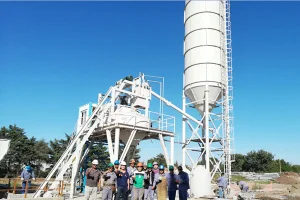
Featured high-shear mixing, intensive granulating, and concrete batching units deployed across global heavy manufacturing hubs.
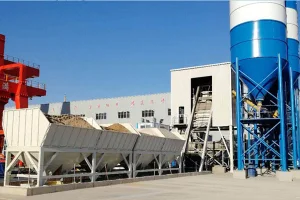
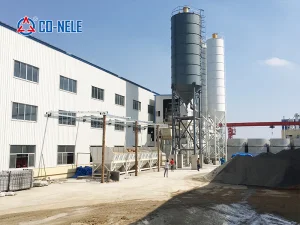
From legacy horizontal twin-troughs to counter-current planetary force fields in modern furnace bricking and monolithics.
In high-temperature industrial processing—encompassing blast furnace steelmaking, cement rotary kilns, glass melting tanks, and petrochemical cracking units—refractory mortars serve as the vital bond between unshaped monolithics and shaped refractory bricks. The performance of refractory mortar directly dictates the thermal lifecycle and energy containment capabilities of industrial kilns. Over the past decade, the metallurgical and ceramics industries have undergone a paradigm shift from traditional low-alumina mortars to complex, multi-component synthetic mortars enriched with corundum, silicon carbide (SiC), graphite, and nano-binder systems.
Mixing these specialized formulations presents unique physical challenges. Raw materials exhibit dramatic differences in bulk density (ranging from light silica fume at 0.2 g/cm³ to dense calcined bauxite at over 3.2 g/cm³) and abrasive hardness (Mohs scale 7 to 9.5). Standard ribbon blenders and gravity drum mixers fail to generate sufficient shear stress, resulting in binder segregation, unmixed dry pockets, and prolonged batch cycle times.
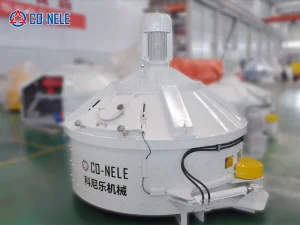
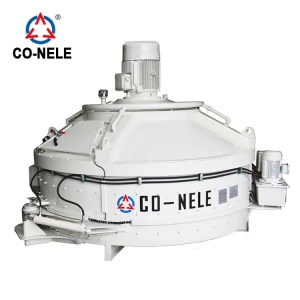
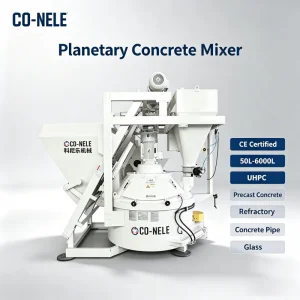
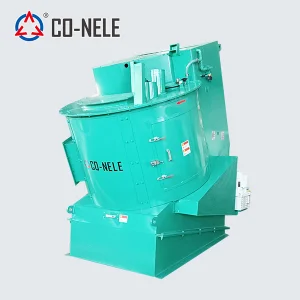
Utilizes dual-rotating star arms that orbit a central vertical axis while rotating on their own axes. This complex kinematic path eliminates 100% of internal dead zones and achieves micro-homogeneity within 45 to 60 seconds.
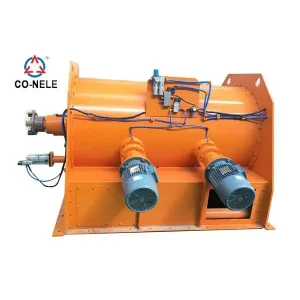
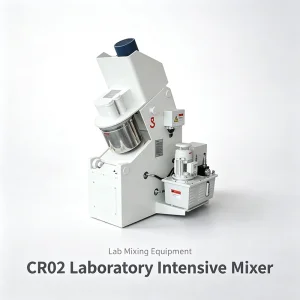
Designed for recipes incorporating fine powders and liquid binders. Variable-speed rotor tools impart high kinetic energy to break down electrostatically bonded agglomerates without degrading fragile aggregate grains.
Equipped with interchangeable HARDOX 500, Ni-Hard, or tungsten carbide-tipped mixing blades and floor liners, ensuring over 120,000 continuous operating cycles under extreme abrasive stress.
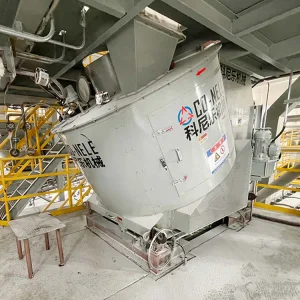
Modern Chinese refractory mortar mixer factories, led by engineering hubs in Qingdao, have developed vertical-shaft planetary mixers that solve the rheological bottlenecks of refractory mortar preparation. By optimizing blade pitch angles, scraping geometry, and power-to-volume ratios, Chinese industrial mixers achieve a Coefficient of Variation (CV) under 2.5%, setting a global benchmark for thermal material homogeneity.
Quantitative validation of China-manufactured refractory mixing technology across global operational metrics.
Why Tier-1 Chinese equipment factories provide unmatched competitive advantages in heavy engineering machinery.
Global industrial procurement leaders are increasingly shifting their capital equipment sourcing strategies toward specialized Chinese machinery manufacturers. This transition is driven not merely by cost considerations, but by the profound structural advantages realized through China’s Industry 4.0 industrial transformation.
Regions such as Shandong Province (specifically the Qingdao machinery cluster) house complete, hyper-localized supply chain networks. From high-grade raw steel production and heavy foundry forging to specialized planetary gearbox machining and sensor integration, 95% of component supply chains exist within a 100-kilometer radius. This geographic concentration minimizes lead times, accelerates custom design iterations, and insulates overseas buyers from global logistics disruptions.
Modern Chinese refractory mortar mixer factories utilize automated robotic welding cells, five-axis CNC machining centers, and laser-guided inspection systems. The heart of the mixer—the planetary gearbox—is engineered in-house with case-hardened alloy gears (carburized and ground to DIN Class 6 precision). In-house dynamic load testing ensures gearboxes withstand full-torque starts under heavy batch conditions without oil leaks or thermal breakdown.
Leading factories comply strictly with ISO 9001 quality management systems, CE machinery directives, and ATEX explosion-proof certification standards for hazardous dry-powder environments. Prior to dispatch, every refractory mortar mixer undergoes a mandatory 4-hour dry-run testing protocol, dynamic vibration analysis, and hydraulic discharge door leak verification.
Direct partnerships with domestic metallurgical giants ensure constant availability of high-chrome wear plates, specialized alloy shafts, and standard Siemens/Schneider electrical components, keeping delivery lead times within 20 to 30 days worldwide.
Refractory mixers are engineered with modular bolt-on wear liners, quick-disconnect fluid injection manifolds, and universal mounting frames, allowing rapid field maintenance and low long-term operation costs.
Essential evaluation criteria for plant managers, EPC contractors, and refractories purchasing executives.
When procuring industrial refractory mortar mixing machinery, procurement directors must weigh both initial capital expenditure (CAPEX) and long-term operating expenditure (OPEX). Selecting the wrong mixing technology leads to frequent downtime, excessive wear parts consumption, and inconsistent mortar quality that damages end-user confidence.
| Performance Metric | Planetary Counter-Current Mixer | High-Speed Intensive Mixer | Traditional Twin-Shaft Mixer |
|---|---|---|---|
| Mixing Uniformity (CV) | < 2.5% (Exceptional) | < 1.5% (Ultra-High Precision) | < 5.0% (Moderate) |
| Batch Cycle Time | 45 - 90 Seconds | 30 - 60 Seconds | 60 - 120 Seconds |
| Micro-Silica Dispersion | Optimal (Zero Balling) | Superior (High Shear Rotor) | Fair (Risk of Agglomerates) |
| Abrasive Wear Resistance | High (Bolt-on Liners) | Very High (Tungsten Tools) | Moderate (High Blade Count) |
| Power Consumption / Ton | Low (Efficient Kinetic Path) | Moderate-High | Moderate |
| Primary Application | Precast, UHPC, Refractory Mortars | Ceramics, Granulation, Fine Powders | Standard Mass Concrete & Ready-Mix |
Field-tested application blueprints across critical thermal and metallurgical manufacturing industries.
Industry: Integrated Steel Mill Blast Furnaces & Hot Blast Stoves.
Challenge: Mixing raw calcined bauxite, tabular alumina, and silica fume with ultra-low water content (<5%). Standard mixers leave dry pockets, leading to joint erosion under molten iron contact.
Solution: Planetary Counter-Current Mixers equipped with high-torque gearboxes and multi-directional scraping arms. Achieves homogeneous binder hydration within 50 seconds, doubling furnace wall joint integrity.
Industry: Aluminum Reduction Cells & Copper Converter Linings.
Challenge: Graphite and SiC exhibit high hydrophobic properties, resisting aqueous binder wetting and causing extreme abrasive tool wear.
Solution: Intensive Mixers featuring specialized ceramic-coated wear plates and high-velocity liquid atomization bars, ensuring 100% particle wetting without tool degradation.
Industry: Cement Kiln Preheater Hoods & Cooler Drop Zones.
Challenge: Stainless steel fibers tend to ball together during dry batching, clogging discharge gates and creating structural weakness in installed linings.
Solution: Counter-current planetary mixing action systematically unpacks and distributes steel fibers evenly throughout the matrix without bending or shearing individual fibers.
Industry: Glass Container Melting Tanks & Chemical Waste Incinerators.
Challenge: Acid-proof silicate binders require air-tight mixing conditions and zero metallic contamination to preserve chemical purity.
Solution: Fully sealed stainless-steel lined planetary mixing pans with automated nitrogen purging capability and non-contaminating polyurethane mixing tips.
In-depth responses to critical engineering and procurement inquiries derived from 20+ years of plant operations.
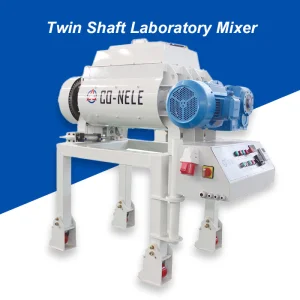
Comprehensive machinery solutions for block making, dry powder production, and high-performance material labs.
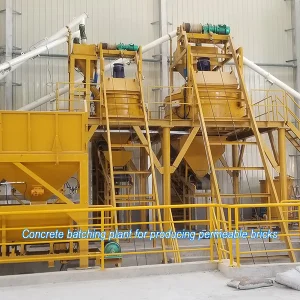
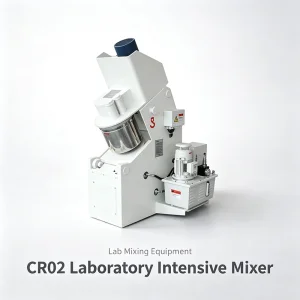
Contact our senior engineering team in Qingdao for custom equipment sizing, CAD plant layouts, and material trial laboratory testing.