CO-NELEMixing & Granulation
Direct OEM industrial mixing equipment engineered for precast plants, high-rise structural foundations, and refractory material processing.
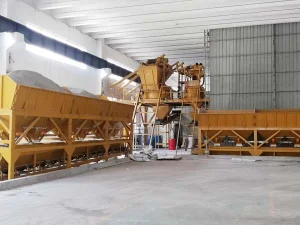
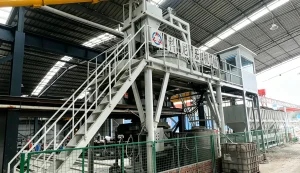
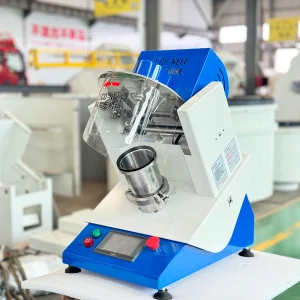
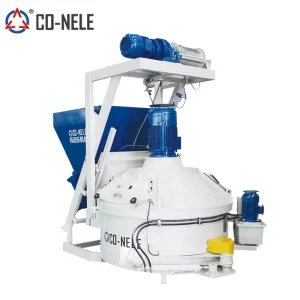
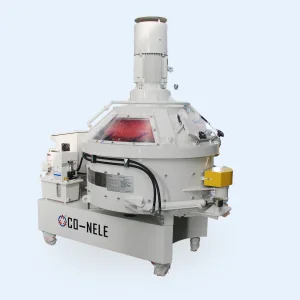
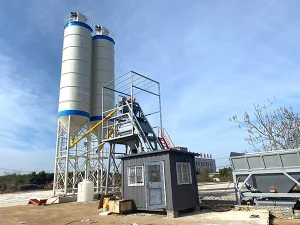
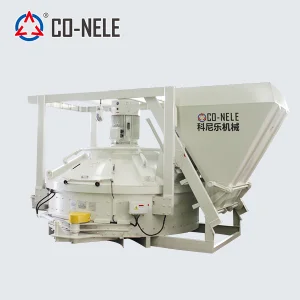
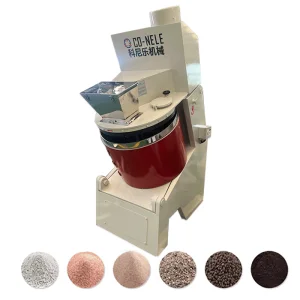
The global construction ecosystem is undergoing a structural transition toward decarbonized, ultra-high-strength, and micro-structurally uniform concrete formulations. Driven by global urban expansion, mega-infrastructure initiatives, and offshore renewable installations, the demand for Ready Mix Concrete (RMC) batching plants has shifted from basic continuous volumetric output to high-precision batching accuracy (CV < 3%).
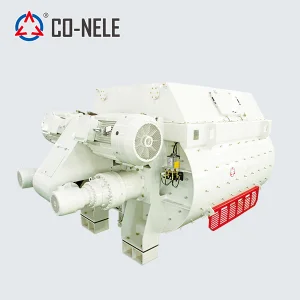
Traditional twin-shaft horizontal mixing configurations—while effective for mass concrete pours exceeding 120 m³/h—frequently fall short in micro-homogeneity when processing low water-cement ratio mixes (<0.28), Ultra-High Performance Concrete (UHPC), fiber-reinforced structural castables, and dry-cast precast elements. Consequently, civil engineering procurement directors increasingly specify vertical-shaft counter-current planetary batching plants capable of imparting intense mechanical shear without segregation.
Modern global procurement strategies require batching machinery that seamlessly integrates digital aggregate moisture dynamic compensation, multi-admixture pulse dosing, and heavy-duty planetary gear reduction to handle intense operational friction loads. China’s manufacturing ecosystem, centered around advanced industrial clusters in Qingdao, Shandong, has evolved to meet these rigorous global mandates with exceptional cost-to-performance metrics.
Why leading global EPC contractors, concrete precast operators, and industrial ceramic processors partner directly with tier-1 Chinese manufacturers.
Situated within Shandong’s advanced machinery manufacturing corridor, leading factories leverage vertically integrated supply chains—from specialized foundry casting of high-chrome wear liners to CNC precision machining of heavy-duty planetary gearboxes within a 50 km radius.
Direct OEM manufacturing delivers 35% to 50% lower total capital expenditure (CAPEX) relative to traditional European legacy OEMs (e.g., BHS, Liebherr) while maintaining identical or superior metallurgy, SKF bearing specs, and Siemens SCADA integration.
Fully compliant with international electrical standards (CE, UL, CSA), Chinese batching plants feature multi-language Siemens PLC control systems with cloud telemetry, predictive maintenance alerts, and aggregate loss compensation algorithms.
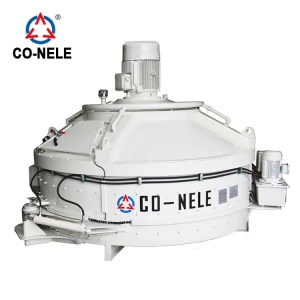
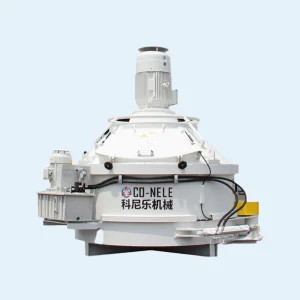
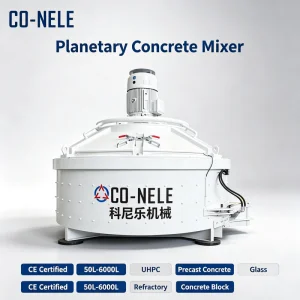
Unlike standard twin-shaft mixers that rely on intersecting horizontal arcs—which can leave unmixed dead zones when handling dense micro-powders like silica fume—our vertical-shaft planetary mixers execute complex counter-current kinematics. The mixing arms rotate on planetary axes while simultaneously orbiting around the central pan center.
An engineering benchmark comparing primary mixing technologies used across ready-mix batching plants worldwide.
| Performance Indicator | Planetary Counter-Current | Twin-Shaft Compulsory | Intensive Rotary Pan | Mobile Volumetric Continuous |
|---|---|---|---|---|
| Primary Application | Precast, UHPC, Blocks, Refractory | High-Volume Ready Mix, Mass Pour | Ceramics, Battery Powder, Pellets | Remote Road Repair, Pavement |
| Mixing Homogeneity (CV) | < 3% (Ultra-High) | < 5% (Standard High) | < 1% (Precision) | < 8% (Moderate) |
| Low W/C Ratio Capability (<0.28) | Exceptional (High Shear) | Moderate to Good | Superior / Lab Level | Poor (Prone to Clogging) |
| Micro-Fiber Dispersion | Uniform (No Agglomeration) | Moderate (Risk of Balling) | N/A (Powder Focus) | Limited |
| Batch Cycle Time (Sec) | 45 - 75 sec | 30 - 45 sec | 60 - 180 sec | Continuous Discharge |
| Wear Liner Life (Batches) | 120,000 - 150,000 | 80,000 - 100,000 | 100,000+ | Variable (Screw Wear) |
Customized batching plant engineering configurations designed for extreme geographic and industrial requirements.
Requirement: Concrete compressive strength exceeding 150 MPa with 2% steel fiber inclusion.
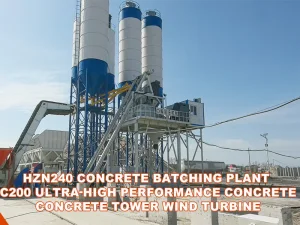
Plant Solution: HZS60/UHPC batching plant fitted with CMP1000 planetary mixer, equipped with high-torque gearboxes, double-door hydraulic discharge gates, and continuous microwave moisture probes in aggregate hoppers.
Requirement: High-temperature slump control (>45°C ambient operational conditions).
Plant Solution: Fully enclosed aggregate bin structure with integrated chilled water dosing, ice-flaking plant feed chute, thermal insulation panels, and automated dust filtration scrubbers.
Requirement: High-purity mixing without metallic iron contamination during aggressive shear.
Plant Solution: Specialized refractory mixing plant with ceramic/polyurethane pan lining, vacuum degassing chamber attachments, and variable-frequency driven (VFD) high-speed rotor agitators.
When procuring concrete batching equipment from China, international engineering procurement managers must evaluate Total Cost of Ownership (TCO) rather than focusing solely on FOB unit prices. A comprehensive TCO framework balances energy consumption per cubic meter, wear part replacement cycles, and international freight container optimization.
Detailed technical answers to common questions encountered during international plant specification and procurement.
A planetary batching plant utilizes vertical counter-current mixing arms that orbit around a central axis while rotating on their own axes. This ensures 100% mechanical pan coverage without dead zones, making it essential for dry-cast precast, UHPC, refractory, and colored block production where mixing homogeneity (CV < 3%) is paramount. Twin-shaft plants use dual horizontal paddles, offering higher throughput for wet ready-mix concrete above 120 m³/h, but with lower shear energy for specialized low-slump mixes.
High-precision batching plants integrate high-frequency microwave sensors inside sand and aggregate storage hoppers or under batching gates. These sensors measure real-time moisture content at millisecond intervals. The Siemens or Omron PLC automatically recalculates the exact dry weight of the sand and adjusts the water dosing valve in real-time, ensuring precise water-cement ratio control (w/c ±0.01) batch after batch.
Under standard aggregate concrete production (crushed basalt/granite with sand), our high-chrome alloy liners (Cr26 / Ni-Hard IV equivalent) deliver between 120,000 to 150,000 batch cycles. For highly abrasive applications such as refractory castables or quartz-rich UHPC mixtures, liner service life ranges from 40,000 to 60,000 batches. All floor and wall liners feature bolt-on designs for rapid field replacement.
Converting a standard plant to produce UHPC requires three main upgrades: (1) Replacing or supplementing the mixer with a vertical planetary counter-current mixer to handle the extreme shear demand; (2) Upgrading drive motors and gearboxes by 25-40% to prevent stall during low-water mixing; and (3) Installing automated steel fiber dosing hoppers with magnetic separation and vibratory dispersion units to prevent fiber balling.
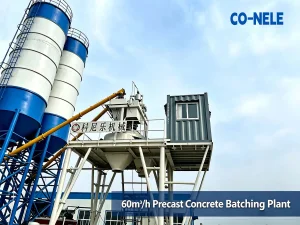
Plants are modularly engineered for flat-pack container shipping. A standard 60 m³/h compact plant can be optimized to fit into 40ft High Cube (HQ) containers by utilizing pin-connected aggregate bins, bolt-together batching frames, and telescopic cement silos. This containerized design reduces international ocean freight costs by up to 40% compared to break-bulk shipping.
Explore our full range of heavy-duty concrete, refractory, dry mortar, and advanced material processing equipment.