
CO-NELEMixing & Granulation
Directly manufactured in Qingdao with state-of-the-art metallurgy, proprietary planetary gearboxes, and customizable mixing blades for global precast, UHPC, and intensive mixing operations.
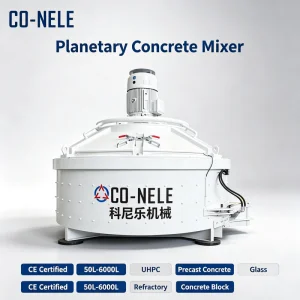
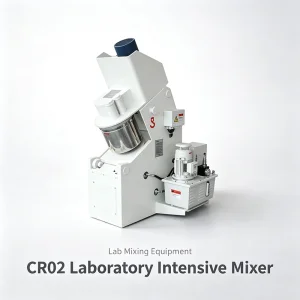
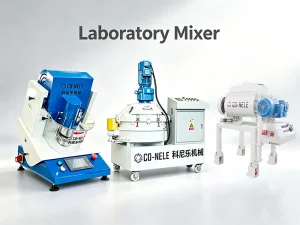
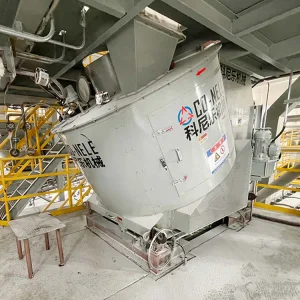
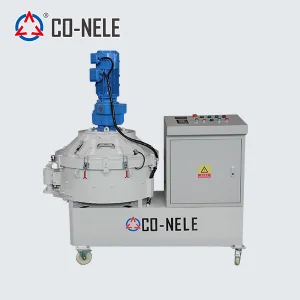
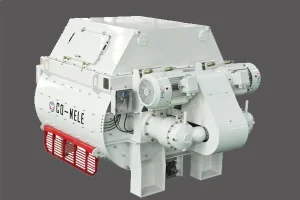
In modern industrial concrete fabrication, achieving structural micro-homogeneity is no longer merely an option—it is a fundamental engineering necessity. Standard horizontal twin-shaft or gravity-based tilting drum mixers often encounter severe performance plateaus when dealing with complex, ultra-low water-cement ratio ($w/c \le 0.18$) formulations, fine silica fume suspensions, steel/synthetic fiber reinforcements, and organic pigment dispersants. This technical whitepaper evaluates how China Planetary Mixer For Concrete Factory & Machine systems overcome these rheological barriers via forced counter-current planetary movement.
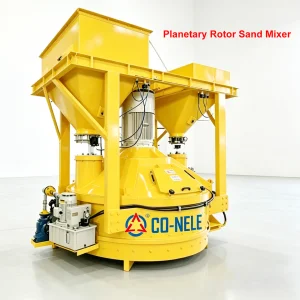
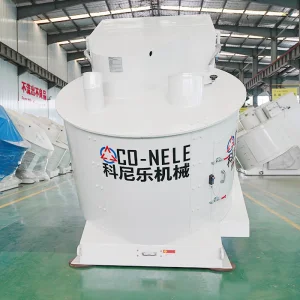
Unlike conventional mixers where material travels in predictable, linear shear paths, a vertical shaft planetary concrete mixer forces the batch into complex, intersecting elliptical tracks. The mixing star rotates on its own axis while simultaneously revolving around the central axis of the mixing pan. This dual-axis kinematic trajectory ensures that every millimeter of the pan floor and wall is swept within seconds, breaking up agglomerated cementitious clusters and distributing micro-silica particles evenly throughout the matrix.
To quantify the mechanical advantage of planetary mixing action, engineers analyze shear velocity profiles, energy dissipation rates, and micro-dispersive efficiency across various mix designs:
| Performance Metric | Vertical Shaft Planetary Mixer | Twin Shaft Compulsory Mixer | Conventional Pan Mixer |
|---|---|---|---|
| Shear Path Kinematics | 3D Elliptical Counter-Current Star Tracks | Dual-Horizontal Overlapping Arcs | Single Axis Concentric Rings |
| Homogeneity (CV) | < 3.5% (Micro-level consistency) | < 7.0% (Macro-level consistency) | > 12.0% (Prone to wall friction segregation) |
| Fibre Orientation & Dispersion | High (Zero balling of steel/polypropylene fibers) | Moderate (Occasional fiber clumping at shaft ends) | Poor (High risk of fiber nesting) |
| Discharge Efficiency | 99.2% (Pneumatic/Hydraulic Bottom Sweep) | 95.0% (Center gate discharge drop) | 88.0% (Manual or partial perimeter gate) |
| Target Applications | UHPC, Precast, Glass, Refractory, Pigmented Blocks | Mass Ready-Mix, Dam Concrete, Foundations | Standard Low-Spec Mortars & Sub-bases |
How next-generation planetary mixing engineering integrates real-time telemetry, rheological feedback loops, and sustainable low-carbon cement processing.
Integration of floor-mounted microwave moisture sensors operating at 2.4 GHz sampling frequencies. Real-time dielectric property analysis enables the PLC to automatically adjust water-dosing trims down to ±0.1 liter accuracy during live batch mixing.
Variable Frequency Drives (VFDs) linked to main planetary gear reducers continuously measure mechanical resistance. As dry powders transition to thixotropic pastes, rotor speed automatically shifts to maximize dispersion energy while preventing kinetic splashing.
Low-carbon calcined clay cements (LC3) and alkali-activated geopolymers require significantly higher shear energy to mobilize particle surfaces. Next-gen mixing stars feature optimized attack angles tailored specifically for zero-clinker binders.
Tailored mixing systems engineered to satisfy demanding international material standards across specialized production sectors.
Configured with heavy-duty drives and specialized anti-wear liners, our UHPC mixers achieve perfect dispersion of steel micro-fibers, preventing balling and ensuring tensile strengths exceeding 150 MPa in precast elements, bridge decks, and marine structures.
For architectural façade panels, concrete blocks, kerbs, and pavers, uniform color distribution is critical. CO-NELE planetary mixing technology delivers rapid pigment integration without streaks or batch-to-batch shade variance.
High-density refractory castables demand aggressive forced mixing to hydrate low-moisture formulations. Our refractory mixers feature reinforced arm geometry designed to resist severe thermal and mechanical stresses.
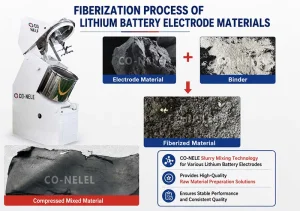
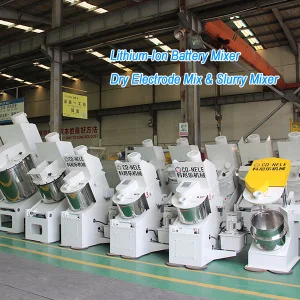
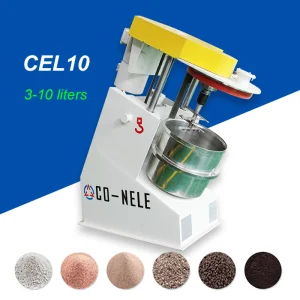
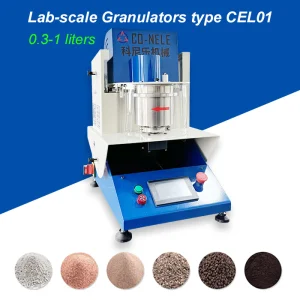
Extending beyond concrete, our intensive mixer granulator systems serve energy storage, ceramic, and powder metallurgy plants, performing wet granulation and dry electrode mixing with exceptional sphericity control.
Our dedicated sand mixer solutions deliver precise bentonite binder distribution across green sand matrices, eliminating gas porosity defect rates in high-precision iron and steel foundry casting lines.
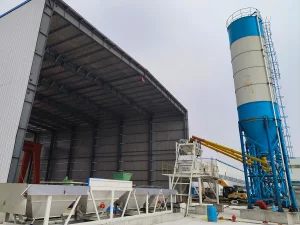
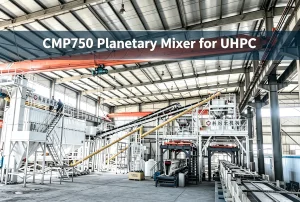
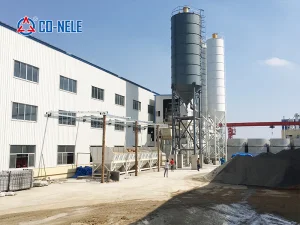
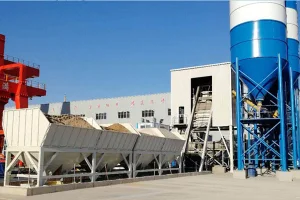
From compact mobile units to major infrastructure hubs, CO-NELE integrates planetary units directly into turnkey concrete batching plants with automated aggregate dosing and Siemens PLC management.
A primary factor driving global engineering firms toward a China Planetary Mixer For Concrete Factory & Machine is the unparalleled combination of advanced metallurgical research, vertically integrated component manufacturing, and massive supply chain efficiency centered in Qingdao, Shandong Province.
Unlike regional machine assemblers who purchase off-the-shelf commercial gearboxes, CO-NELE designs, casts, machines, and tests its planetary gear reducers in-house. Featuring heavy-duty parallel helical-bevel gear arrangements, our gearboxes are specifically calculated to absorb shock loads caused by sudden fiber jams or coarse aggregate impacts without tooth shear.
Mixer downtime is directly tied to liner and blade wear. Our equipment utilizes high-chrome alloy casting components with hardness levels exceeding HRC 62. For specialized abrasive mixes (such as quartz-rich UHPC or corundum refractories), options include tungsten carbide hardfacing welds and bolt-on diamond-patterned ceramic tile linings that extend operational lifespans beyond 150,000 batch cycles.
Every mixer undergoes a rigorous 4-hour dynamic load test on our dedicated Qingdao test bench prior to dispatch. Vibration analysis, thermal imaging of oil sumps, noise level measurements (< 75 dB), and hydraulic discharge door sealing checks are fully documented and archived for international traceability.
How procurement directors and project engineers calculate Total Cost of Ownership (TCO) when selecting industrial mixing equipment.
When evaluating initial capital expenditure against long-term operational expense, the total cost over a 10-year service lifecycle is expressed as:
By leveraging optimized planetary kinematics, CO-NELE equipment reduces batch mixing duration by up to 25% compared to conventional pan units, delivering significant savings in energy consumption ($kWh / m^3$) while doubling wear-part longevity through uniform material pressure distribution.
Seamless deployment across international job sites with full electrical, mechanical, and safety certifications.
Custom control cabinets built to localized power specifications (220V–480V, 50Hz/60Hz, 3-Phase). Complete integration with Schneider electrics, Siemens PLCs, and optional UL/CSA compliance certifications for North American markets.
Fitted with proximity safety interlocks on inspection hatches, mechanical safety keys, high-pressure dust collection ports, and emergency stop circuits compliant with EU Machinery Directive 2006/42/EC.
Supported by our Global Service Network, our technical service team provides remote PLC diagnostics, online live commissioning support, and rapid-dispatch field service engineers to over 80 countries.
Detailed technical solutions and operational guidance provided directly by CO-NELE application specialists.
Explore our full line of specialized mixing, granulating, and dry mortar equipment manufactured for international projects.
Send your material characteristics, target production volume, and plant footprint. Our process engineers will prepare a detailed proposal, CAD layout drawings, and transparent pricing.