CO-NELEMixing & Granulation
Explore our precision-engineered mixing systems deployed in critical precast, infrastructure, and material processing plants globally.
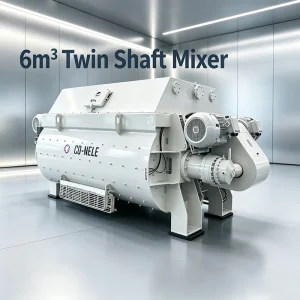
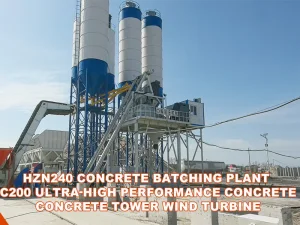
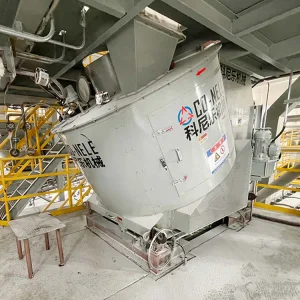
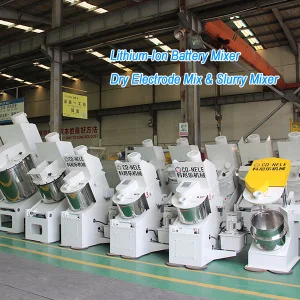
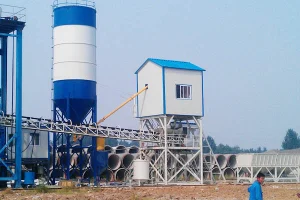
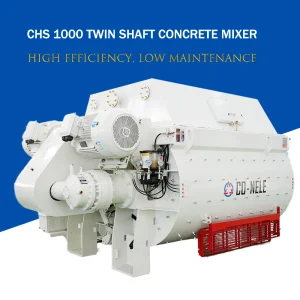
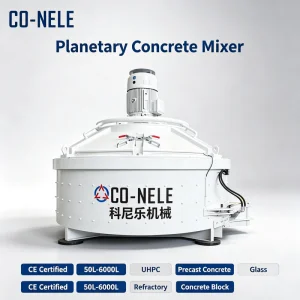
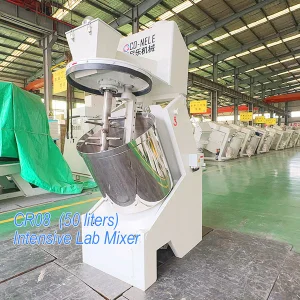
Why Tier-1 precast concrete plants, chemical producers, and refractory manufacturers are migrating from legacy horizontal twin-shaft systems to vertical planetary counter-current architecture.
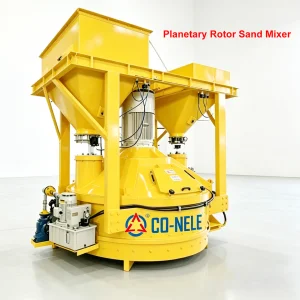
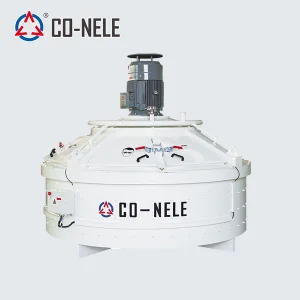
Standard twin-shaft mixers rely on macroscopic shear, creating localized pockets of unmixed silica fume or pigment. The MP500 planetary mixer utilizes synchronized revolution and rotation kinematics, achieving micro-level particle dispersion and reducing batch-to-batch variation below 3% within 45 seconds.
By eliminating dead zones and reducing kinetic drag against the mixing pan, the MP500 delivers maximum energy transfer directly into fluid shear. This results in up to 18% lower kWh consumption per cubic meter compared to legacy drum or horizontal compulsory batch mixers.
Equipped with a bottom-mounted hydraulic discharge gate and specialized sweeping blades, the MP500 evacuates sticky precast mixes, UHPC, or dry-cast concrete completely in 12–15 seconds without aggregate segregation, preventing batch contamination.
A detailed analysis of fluid-structure dynamics, gear transmission efficiency, and wear-resistant metallurgy engineered in our Qingdao manufacturing center.
Unlike traditional vertical shaft pan mixers where blades follow a static circular path, the MP500 features a dual-motion mixing system. The mixing stars revolve around the central shaft while simultaneously rotating on their own axes at precise speed ratios.
This complex trajectory ensures that within a single 360-degree revolution of the main rotor, the mixing blades cover every square millimeter of the pan floor. The resulting high-shear intersecting vectors eliminate aggregate balling, rapidly break down binder clusters, and uniformly disperse micro-additives such as synthetic fibers, color pigments, and silica fume.
The heart of the MP500 is an in-house engineered, single-housing planetary reducer. Unlike commercial off-the-shelf gearboxes, our transmission is designed specifically for extreme shock loads encountered during batch start-ups with low water-cement ratio mixtures (w/c < 0.22).
| Parameter | Metric Specification | Imperial Specification | Engineering Standard / Note |
|---|---|---|---|
| Charging Volume (Dry Input) | 750 Liters | 0.98 cubic yards | Max loose bulk density 1.6 t/m³ |
| Discharging Volume (Compacted) | 500 Liters | 0.65 cubic yards | Standard SCC & Precast mix design |
| Main Drive Motor Power | 18.5 kW | 25 HP | IE3 High-Efficiency / IP55 Rated |
| Mixing Star Blades (Quantity) | 2 Star Assemblies (4 Blades) | 2 Star Assemblies (4 Blades) | Adjustable clearance (0.5 – 3mm) |
| Scraper Blades (Side & Bottom) | 1 Outer / 1 Inner Scraper | 1 Outer / 1 Inner Scraper | High-Chrome Alloy Steel (26% Cr) |
| Discharge Gate Operation | Hydraulic (3.0 kW Pump) | Hydraulic (4.0 HP Pump) | Includes manual emergency hand pump |
| Dry Weight (Standard Config) | 2,800 kg | 6,173 lbs | Excluding optional moisture probes |
Engineered for extreme material demands ranging from ultra-dense structural concrete to high-purity chemical and ceramic slurries.
Achieves flawless surface finishes for architectural panels, prestressed beams, concrete pipes, and utility vaults. The counter-current motion completely eliminates air pocket entrapment and color striping when batching white concrete or iron-oxide pigments.
Designed to handle high shear resistance associated with steel fiber distribution and low water-binder ratios (w/b down to 0.14). The MP500 prevents fiber clump formation ("balling") and maintains precise temperature control during mixing cycles.
Processing aggressive alumina, silicon carbide, and dense refractory mixes requires extreme abrasion resistance. The MP500 is equipped with replaceable Ni-Hard or ceramic liners (HB > 600) to ensure non-contaminating, long-life operation under thermal stress.
Uniform distribution of silica sand, soda ash, limestone, and cullet is critical for furnace melt consistency. The dust-sealed MP500 mixing chamber prevents raw material loss while preventing iron contamination in high-transparency glass production.
Capable of homogeneously blending hazardous industrial waste, nuclear sludge, and contaminated soil with cementitious binders for stabilization and solidification (S/S process) prior to landfilling or recycling.
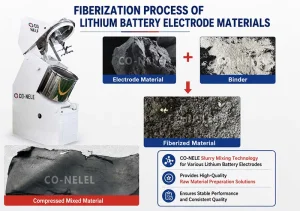
Configured with stainless steel contact parts (316L) and specialized seals for dry electrode mixing, lithium-ion battery precursor homogenizing, and fine chemical powder blending with strict dust containment.
Integrating IoT edge computing, optical moisture sensors, and predictive maintenance algorithms into China's premier industrial mixing machinery.
Floor-mounted optical and microwave moisture sensors scan the mix at 100 Hz, transmitting data directly to the PLC. Water dosing is automatically adjusted mid-cycle to maintain concrete slump within ±5mm consistency.
Embedded tri-axial accelerometer sensors monitor planetary gear mesh frequencies and bearing housing thermal signatures. Potential wear anomalies trigger maintenance alerts days before catastrophic failure occurs.
High-pressure (120 bar) 3D rotating wash heads clean the mixing pan in under 90 seconds, consuming 60% less water than traditional hose-down methods while recycling washwater into the next batching cycle.
Ensuring seamless integration with international plant control architectures, environmental regulations, and regional electrical codes.
Every MP500 planetary concrete mixer dispatched from our Qingdao factory undergoes rigorous pre-shipment testing under simulated full-load conditions. Machines are designed to meet stringent global quality frameworks:
To eliminate operational downtime, our factory maintains an international replacement hub system for all critical wear items and drive assemblies:
Expert insights directly from our senior engineering team regarding MP500 sizing, selection, and long-term operating costs.
Discover our comprehensive range of granulators, laboratory testing units, sand mixers, and mobile batching stations.