CO-NELEMixing & Granulation
In modern industrial civil engineering, the request for micro-homogeneous material blending has shifted planetary concrete mixers from niche precast machines to fundamental production assets. The MP250 planetary concrete mixer (also categorized as CMP250) represents the critical 250-liter output standard designed specifically for ultra-high-performance concrete (UHPC), glass raw material batching, advanced ceramics, refractory lining production, and precast architectural components.
Traditional twin-shaft or gravity drum mixers rely on macro-level folding. The MP250 utilizes complex planetary motion vectors, eliminating particle segregation and ensuring a Coefficient of Variation (CV) under 3% in under 60 seconds of cycle time.
Modern UHPC recipes require dispersing micro-silica powder (0.1–0.5 µm) and synthetic or steel fibers without agglomeration. The MP250 applies intense mechanical energy density without generating excess heat.
With a 375L dry charging capacity yielding 250L of compacted concrete per batch, the MP250 bridges the gap between R&D scale testing and continuous commercial production line integration.
Information Gain Insight: The MP250 planetary mixer's unique value proposition lies in its fluid dynamics profile. While horizontal shaft mixers create flow parallel to the main shaft causing dead zones at outer corners, the vertical-shaft planetary motion generates counter-current flow patterns that force all particles through dynamic shearing zones twice every revolution.
The engineering core of the MP250 Planetary Concrete Mixer is its proprietary heavy-duty planetary gear transmission system. Designed to handle extreme mechanical stress during dry-cast or zero-slump batching, the mixer coordinates revolution and rotation forces to eliminate material segregation.
The mixing star revolves around the central vertical axis while simultaneously rotating rapidly on its own axis in the opposite direction. Simultaneously, outer scraper blades sweep the side walls and floor liner.
Unlike standard vertical pan mixers where blades simply drag material in a circle, the MP250 forces physical collision across multiple flow lines:
Custom-cast ductile iron casing housing gear sets with tooth surface gas carburizing and grinding process. Provides maximum torque transfer under full load restart conditions.
Pan floor and walls lined with replaceable high-chrome alloy plates (hardness ≥ HRC60) or optional Hardox 500 steel liners, offering exceptional resistance against quartz sand and metallic aggregates.
Built-in microwave moisture measurement probes (optional) mounted beneath the floor plate send real-time water/cement ratio data to the automated batching system for dynamic water adjustment.
Comprehensive engineering specifications for plant integration, electrical loading, and structural planning.
| Specification Parameter | Imperial Metric Value | Engineering Notes & Capabilities |
|---|---|---|
| Charging Capacity (Dry Material) | 375 Liters (0.49 yd³) | Maximum volume of loose aggregate and cementitious binders. |
| Discharging Capacity (Compacted Concrete) | 250 Liters (0.33 yd³) | Yield volume for standard C30-C100 structural concrete. |
| Main Drive Motor Power | 11 kW / 15 HP | IE3 High-Efficiency TEFC Motor (Custom Voltage/Hz available). |
| Mixing Star Revolutions (Orbit Speed) | 25 to 28 RPM | Controls overall spatial movement of material within the mixing pan. |
| Mixing Blade Rotations (Self Spin) | 65 to 72 RPM | Generates localized shear zones for binder dispersion. |
| Hydraulic Discharge Motor Power | 1.5 kW / 2.0 HP | Independent hydraulic power unit with emergency manual pump option. |
| Wear Liner Hardness & Thickness | ≥ HRC60 / 12 mm Thickness | Replaceable segmented high-chrome alloy plates (Ni-Hard/Cr-Alloy). |
| Total Unladen Weight | approx. 1,850 kg (4,078 lbs) | Sturdy structural frame prevents high-torque vibration transfer. |
As the international construction equipment market standardizes high quality, Chinese heavy machinery manufacturers have established leading industrial ecosystems. Purchasing an MP250 planetary mixer from an established Chinese manufacturer yields distinct strategic advantages in cost performance, supply chain agility, and customization capabilities.
Proximity to world-class metallurgical foundries in Shandong and Jiangsu allows direct sourcing of custom high-chrome alloys, precision-machined planetary gears, and Siemens/Schneider electric assemblies under one roof.
Chinese factories excel at tailoring the MP250 to specific site constraints: specialized discharge door quantities (up to 3 gates), steam injection nozzles for winter mixing, high-pressure pan washing heads, and hazardous-area explosive-proof motors.
Capital expenditure savings up to 40-50% compared to European legacy brands without compromising structural plate thickness or gear heat-treatment specs, accelerating project payback periods for precast block plants.
The operational flexibility of the 250-liter planetary mixer allows it to serve as the key batching unit across diverse industrial environments globally.
For operations manufacturing wet-cast architectural panels, terrazzo tiles, concrete pipes, kerbstones, and utility vaults:
Inside steelworks and foundry supply plants, mixing unshaped refractory castables demands heavy shear resilience:
Ensures homogenous blending of silica sand, soda ash, limestone, and cullet before melting furnaces, reducing energy draw in glass production.
Blends hazardous industrial waste or contaminated soil with stabilizing cementitious additives and micro-reagents prior to landfill encapsulation.
Specially customized MP250 units equipped with stainless steel contact parts process precursor powders requiring ultra-tight density distributions.
Industrial mixing technology is moving toward smart control integration, reduced energy footprints, and lifecycle wear traceability. International procurement teams should consider the following criteria when selecting an MP250 manufacturer in China.
Modern MP250 installations are rarely standalone manual machines. Top-tier Chinese manufacturers now deliver turnkey mixing stations featuring:
Before issuing a Purchase Order to an overseas factory, verify these crucial technical compliance points:
Direct engineering answers regarding MP250 planetary mixer operation, wear life, and procurement specifications.
China Planetary Countercurrent Concrete Mixer CMPS Manufacturer, Factory
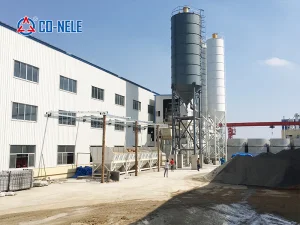
China CO-NELE Delivers High-Efficiency Concrete Pipe Mixing Station to Vietnam Factory, Machine
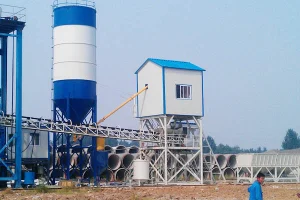
China Cement pipe concrete mixing plant Manufacturer, Machine
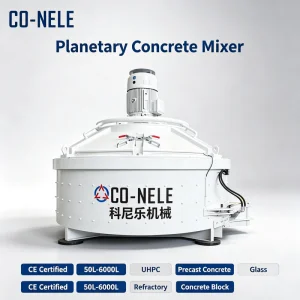
China Ultra-high performance concrete mixer Factory, Machine
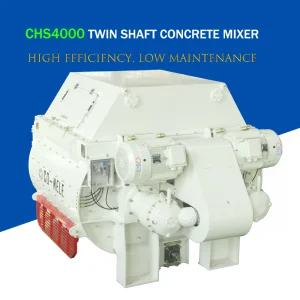
China CHS4000 (4 m³) Twin Shaft Concrete Mixer Manufacturer, Factory