
CO-NELEMixing & Granulation
Explore precision-engineered mixers, laboratory systems, and complete batching plants optimized for demanding raw materials.
Benchmarking Eirich-type kinematics against traditional planetary and twin-shaft mixing mechanics.
Traditional gravity and twin-shaft mixers rely heavily on material-on-material shear within a localized vortex. In contrast, China intensive mixers utilizing Eirich-type rotating pan principles decouple material transport from the dispersion tool. This ensures optimal kinetic energy transfer regardless of batch size or viscosity parameters.
Achieving a Coefficient of Variation (CV) under 3% requires uniform particle acceleration. By pairing high-speed multi-stage rotor tools with counter-rotating or co-rotating pan designs, spatial dead zones are entirely eliminated, preventing binder agglomeration and micro-segregation in reactive powder mixtures.
Modern industrial processing demands multi-phase flexibility. A single intensive mixer can perform dry homogenizing, liquid addition, micro-pelletizing, coating, and thermal cooling within a single sealed vessel, reducing capital expenditure and footprint by up to 45%.
In high-tech industrial manufacturing, material prep processes dictate the end product's mechanical, electrical, and structural integrity. For decades, the global industry looked toward traditional European machinery standards—specifically the benchmark set by Gustav Eirich mixing technology. Today, leading China Mixer Eirich Factory & Machine manufacturers (such as CO-NELE) have bridged the technological divide, producing world-class intensive mixing systems, counter-current planetary mixers, and continuous granulation lines that deliver identical or superior micro-homogeneity metrics at a substantially optimized Total Cost of Ownership (TCO).
Whether processing Ultra-High Performance Concrete (UHPC), refractory castables, battery slurry dry electrodes, advanced technical ceramics, or metallurgical sinter feeds, the choice of mixing equipment dictates operational yield. This whitepaper analyzes the mechanical principles, macroeconomic procurement trends, engineering physics, and regional compliance factors driving international adoption of Chinese-engineered intensive mixers.
Key economic and industrial factors shifting global procurement toward high-gain Chinese mixer manufacturing hubs.
Global infrastructure standards are shifting toward lower carbon footprints and higher material strength. Ultra-High Performance Concrete (UHPC) and Green Cement formulations demand intensive shear to disperse silica fume and nano-additives without crushing steel fibers. Chinese factories now lead in specialized high-torque planetary drives capable of processing zero-slump mixes.
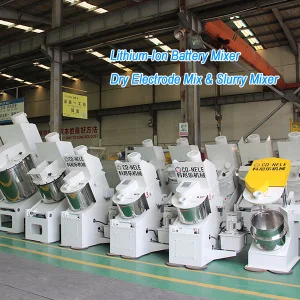
The rapid expansion of gigafactories worldwide requires ultra-precise dispersion of cathode and anode powders (LFP, NMC, synthetic graphite). Intensive mixers engineered to Eirich-level specifications deliver iron-free, cross-contamination-free dry mixing and solvent-reduced slurry preparation essential for next-generation solid-state battery lines.
Global engineering procurement teams face continuous pressure to trim capital expenditure without sacrificing component reliability. Sourcing directly from certified Chinese mixer OEMs guarantees access to heavy-duty cast planetary gearboxes, Siemens/Schneider PLC controls, and Hardox wear plates at 30–50% cost reductions compared to Western legacy suppliers.
An engineering evaluation of velocity profiles, shear rate distributions, and vessel geometry.
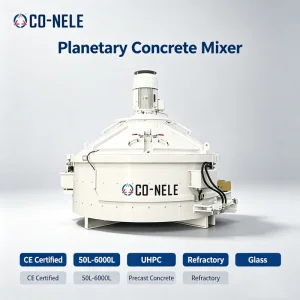
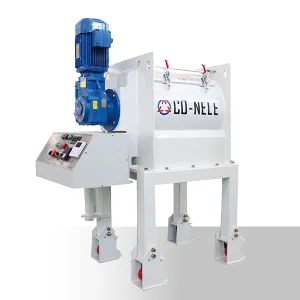
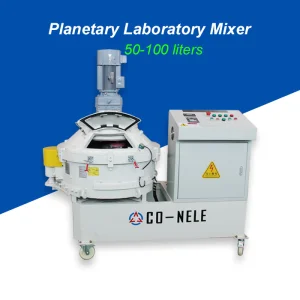
Planetary mixers utilize a vertical central axis connected to one or more off-center rotating star arms equipped with mixing blades. As the main gear housing rotates around the pan, the mixing blades spin rapidly in the opposite direction.
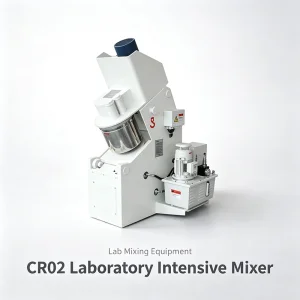
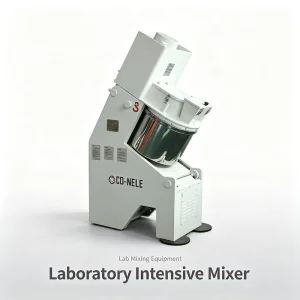
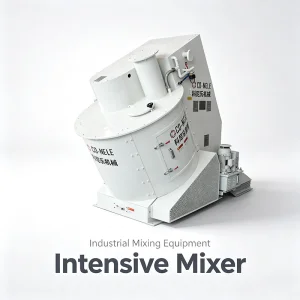
Engineered on classic Eirich principles, the inclined mixer features a rotating vessel set at an angle (typically 20° to 30°) combined with an independently driven high-speed rotor tool positioned eccentric to the pan center.
| Performance Metric | Standard Twin-Shaft Mixer | Planetary Counter-Current (CMPS/CMP) | Inclined Intensive Mixer (CR Series) |
|---|---|---|---|
| Homogeneity (CV %) | CV < 8% (Good) | CV < 4% (Superior) | CV < 1.5% (Ultra-Precision) |
| Froude Number Range (Fr) | 1.0 - 2.5 (Sub-Critical) | 2.5 - 5.0 (Super-Critical) | 5.0 - 25.0 (High-Impact Shear) |
| Discharge Speed | 30 - 45 Seconds | 15 - 25 Seconds | 10 - 20 Seconds (Gravity Assisted) |
| Liquid Dispersion | Moderate (Risk of Clump) | High (Uniform Distribution) | Micro-Droplet Atomization |
| Granulation Capability | Not Capable | Limited Micro-Agglomeration | Controlled Sphericity Granulation |
| Wear Part Longevity | Standard High-Chrome | Silicon Carbide / Hardox 500 | Tungsten Carbide / Ceramic Liners |
Tailored processing configurations engineered to conquer aggressive abrasiveness, chemical corrosion, and strict contamination limits.
Processing alumina-silica powders, graphite flakes, and ultra-fine microsilica requires high energy transfer to break down capillary forces. Intensive mixers ensure rapid binder activation with minimal liquid addition, yielding dense refractory bricks with higher hot modulus of rupture (HMOR).
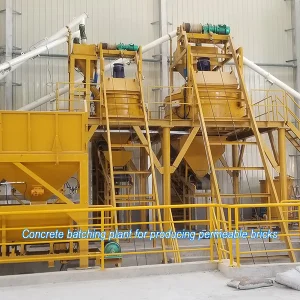
For architectural precast panels, pipe production, permeable pavers, and segmental bridge elements, planetary mixers deliver rapid batch color consistency and total dispersion of synthetic/steel reinforcement fibers, suppressing balling effects completely.
In ceramic tile manufacturing, glass processing, and ferrous/non-ferrous powder preparation, intensive mixers act as high-output granulators. By varying rotor velocity, operators produce spherical granules (0.2–6mm) with uniform bulk density, eliminating the need for energy-expensive spray drying towers.
Streamlined international integration certified for operation in North America, the European Union, the Middle East, and Southeast Asia.
Custom build options conforming to CE Mark, UL 508A (USA), CSA C22.2 (Canada), and ATEX explosion-proof certification for hazardous powder environments.
Equipped with SKF/FAG bearings, Bonfiglioli or self-manufactured hardened planetary gearboxes, Siemens PLC automation, and Schneider low-voltage components.
100% standard interchangeable wearing parts (blades, scrapers, liners). Worldwide DHL/FedEx priority shipping guarantees zero operational downtime.
Remote IoT gateway connection allows live factory diagnostics, predictive maintenance tracking, dynamic torque monitoring, and recipe optimization from anywhere in the world.
How AI integration, real-time inline rheology, and advanced wear materials are redefining mixing technology.
Integrating acoustic emission sensors, moisture optical probes, and motor torque analytics directly into the mixing pan allows the control system to dynamically auto-adjust mixing speed and cycle length, compensating for moisture fluctuations in real time.
To eliminate metallic contamination completely for high-purity semiconductor and battery powders, future intensive mixers feature laser-clad diamond-like carbon (DLC) coatings and monolithic zirconia pan liners engineered for extreme thermal shock.
Implementation of direct-drive permanent magnet synchronous motors (PMSM) eliminates traditional V-belt losses, lowering direct power consumption per cubic meter by up to 28% across high-throughput industrial plants.
Direct technical answers addressing equipment sizing, material rheology, maintenance intervals, and procurement logic.
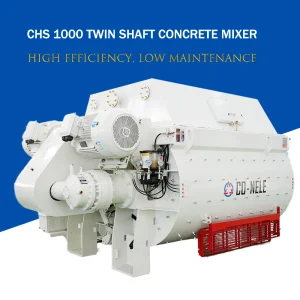
Discover high-duty twin shaft systems, refractory castable mixers, and specialized battery dry electrode units.
Partner with leading Chinese mixing specialists. Send your raw material specifications, capacity targets, and target homogeneity requirements to receive a complete technical CAD proposal and laboratory trial report.