
CO-NELEMixing & Granulation
Featured High-Precision Planetary Mixers, Intensive Mixers, and Custom Batching Systems
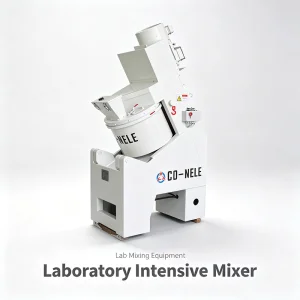
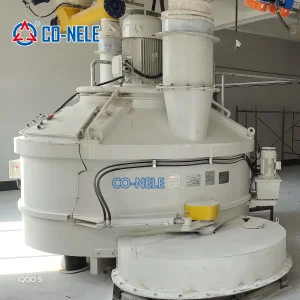
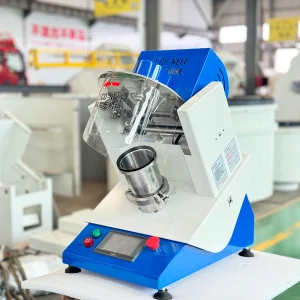
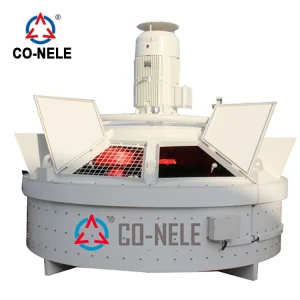
Redefining Mini Batching Technology through Kinematic Innovation and Structural Efficiency
Information Gain Insight: Modern civil engineering projects demand a transition from high-volume, broad-variance ready-mix plants to compact, micro-precise mixing stations. Mini concrete batching plants engineered in China—specifically those utilizing planetary counter-current mixing mechanisms—achieve a coefficient of mixing variation (CV) below 3%, outperforming conventional horizontal twin-shaft systems by 40% when processing dry-cast, ultra-high-performance (UHPC), and heavily pigmented concrete recipes.
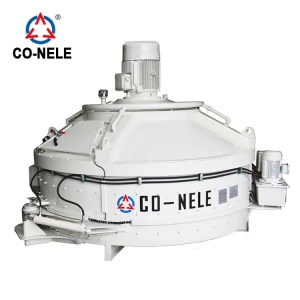
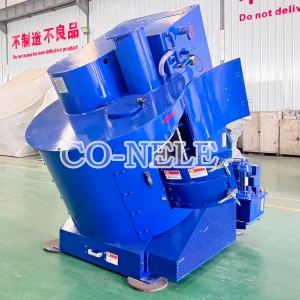
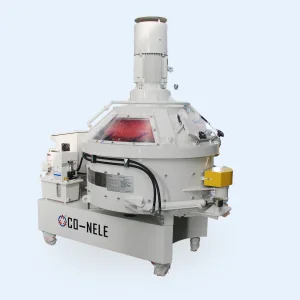
Unlike standard tilt-drum or simple twin-shaft designs, planetary mixing star blades revolve on multiple axes while orbiting the central pan. This dynamic forced-mixing pattern eliminates dead zones and guarantees micro-level dispersion of micro-silica, pigments, and steel fibers within 45 to 60 seconds.
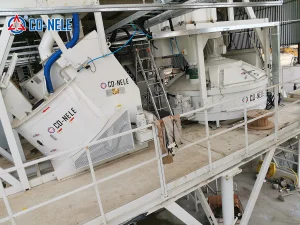
Engineered with integrated steel structure sub-frames, mini batching plants remove the necessity for permanent concrete civil foundations. Units can be deployed on compacted soil or temporary concrete slabs within 48 hours, enabling rapid mobilization across infrastructure segments.
Equipped with high-precision strain-gauge load cells and automated moisture sensor feedback systems, the plant automatically adjusts water-to-cement ratios in real time. Full cloud telemetry allows off-site batch verification and remote diagnosis.
From Mechanical Force to Digital Kinematic Intelligence: The Next Decade of Mini Batching
The engineering trajectory of mini concrete batching plants in China has evolved from basic volumetric aggregates feeding toward closed-loop automated precision batching. Industrial demands for Ultra-High-Performance Concrete (UHPC), engineered stone, precast wind turbine tower segments, and glass/ceramic formulations necessitate batching systems capable of micro-dosing chemical additives and fine mineral powders with sub-gram repeatability.
| Engineering Dimension | Generation 1.0 (Conventional) | Generation 2.0 (Current Standard) | Generation 3.0 (CO-NELE Smart Era) |
|---|---|---|---|
| Mixer Kinematics | Single/Twin Horizontal Shaft | Vertical Shaft Counter-Current Planetary | Adaptive Speed Planetary + High-Shear Rotor |
| Dosing Accuracy | Aggregates ±3%, Cement ±2% | Aggregates ±2%, Cement ±1%, Water ±1% | Aggregates ±0.5%, Cement ±0.2%, Water ±0.2% |
| Moisture Compensation | Manual slump adjustment | Microwave sensor at aggregate gate | Real-time in-mixer microwave probe with active PID dosing |
| Structural Footprint | Fixed concrete foundation required | Modular containerized frames | Hydraulic self-erecting, zero-foundation mobile skid |
| Energy Consumption | 2.2 kWh / m³ batch output | 1.7 kWh / m³ batch output | 1.2 kWh / m³ batch output (Direct-drive Servo) |
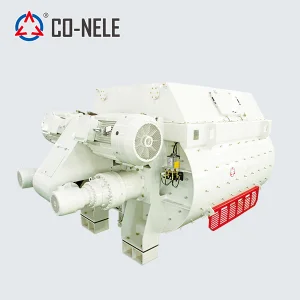
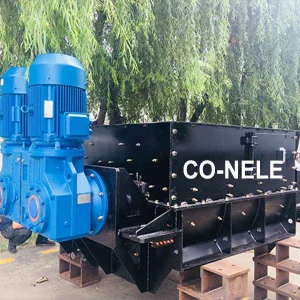
The mechanical heart of any mini planetary concrete batching plant is its gearbox. Chinese advanced manufacturing facilities, such as CO-NELE, utilize proprietary heavy-duty planetary reducers featuring custom tooth profiles hardened via carburizing and quenching processes. Unlike commercial off-the-shelf industrial gearboxes, dedicated mixing reducers are designed to absorb extreme torsional shock loads generated during dry-mix shear and cold-start conditions with high-density fiber reinforcement.
A major operational cost in batching concrete is wear liner degradation. Modern mini batch plants utilize high-chrome alloy cast liners (hardness ≥ 62 HRC) alongside rubber-matrix ceramic composite plates. For highly abrasive applications such as refractory batching or ceramic powder granulating, bolt-on diamond-carbide alloy tiles increase blade lifespans by up to 300% compared to standard Ni-Hard castings.
Deploying Compact Concrete Batching Systems Across Global Demanding Worksheets
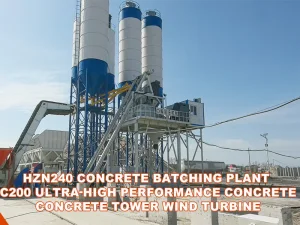
Challenge: Wind tower precast rings require UHPC formulations with compressive strengths exceeding 150 MPa and ultra-dense steel fiber loading (up to 3% by volume).
Mini Plant Solution: Mini batching plants integrated with MP-series planetary mixers provide intense shear force to unpack agglomerated micro-silica and evenly distribute steel fibers without fiber-balling, ensuring structural integrity under cyclic wind loads.
Challenge: Night-time urban road patching and tunnel lining work demand fast-setting, low-slump concrete batching within severely restricted spatial footprints.
Mini Plant Solution: Compact mobile batch plants mounted on standard low-boy trailers can navigate narrow urban lanes, mix 15 to 30 m³/h of rapid-hardening cement on site, and relocate before morning rush hours, eliminating ready-mix delivery delays.
Challenge: Multi-color surface layer (face-mix) block production requires absolute color batch uniformity between successive cycles to prevent shade banding on paved sites.
Mini Plant Solution: Mini batch plants equipped with secondary small-capacity planetary mixers ensure identical pigment dispersion across small batch sizes (0.25 m³ to 0.75 m³), synchronizing directly with automatic block molding machines.
In mountain highway construction, hauling wet concrete from central batch plants over 40 kilometers results in slump loss and premature hydration. Mini batching plants installed directly at the bridge site process local aggregates, delivering fresh structural concrete on demand with precise admixture control.
Beyond traditional civil engineering, specialized mini batching systems featuring intensive mixing granulators are deployed in refractory brick manufacturing and alumina powder processing. High-speed rotors create uniform micro-granules essential for dry-pressing high-density technical ceramic components.
Why Chinese Industrial Clusters Deliver Unmatched Quality-to-Cost Performance
The global industrial preference for Chinese mini concrete batching machinery is rooted in Qingdao and Shandong Province's comprehensive machinery manufacturing ecosystem. From raw steel sourcing and heavy machining to specialized gearbox heat treatment and automated PLC panel assembly, the localized industrial cluster offers distinct engineering and financial advantages:
Leading manufacturers like CO-NELE maintain dedicated casting foundries, gear hobbing facilities, CNC machining centers, and automated spray painting booths under one corporate umbrella. This eliminates subcontractor delays and ensures 100% trace-ability of structural components.
While mechanical structures are forged in-house, electrical and pneumatic sub-systems incorporate top-tier global components (Siemens PLC, Schneider low-voltage electrics, WAM dust collectors, Parker hydraulic valves, SEW reducers option). This hybrid approach provides premium performance alongside instant localized spare parts replacement anywhere globally.
Optimized manufacturing workflows reduce lead times to 15–20 days for standard mini batch plants, compared to 12–16 weeks from Western European suppliers. Capital expenditure (CAPEX) is typical 40% to 60% lower, providing contractors with accelerated payback periods (ROI) within 6 to 9 months.
Market Trends Shaping Equipment Specification in North America, Europe, Asia, and Emerging Economies
In highly regulated regions, equipment selection is driven by strict environmental compliance (EN 206, OSHA dust standards), noise mitigation (< 75 dB at 1 meter), and micro-homogeneity for precast components. Mini batch plants engineered with fully enclosed mixing structures, integrated reverse-pulse jet bag filters, and CE-marked safety interlock systems dominate import requirements.
Infrastructure construction in tropical, arid, or high-altitude environments prioritizes mechanical ruggedness, extreme temperature tolerance (up to 55°C ambient), and simple manual-override controls. Plants shipped to these regions feature heavy-duty anti-corrosion marine painting, tropicalized motor insulation, and wide-voltage tolerance electrical transformers.
Ensuring Uninterrupted Field Operations with Rigorous Quality Standards
All mini batching plants and mixing machinery comply with ISO9001 quality management systems, CE electrical safety directives, and CU-TR certification for Eurasian economic zones. Factory acceptance testing (FAT) is conducted on 100% of finished gearboxes and control consoles prior to shipment.
Every plant control cabinet is equipped with a secure VPN router module. CO-NELE software engineers can perform remote ladder-logic updates, recalibrate load cell channels, and troubleshoot electrical faults anywhere in the world within 2 hours of a service ticket submission.
Critical wear parts (blades, liner plates, scraper arms, discharge door seals) are maintained in high stock volumes at Qingdao logistics centers. Express air dispatch guarantees key component dispatch within 24 hours, minimizing unscheduled operational downtime.
Expert Clarifications on Plant Selection, Operational Parameters, and Maintenance Protocol
Complete Product Lineup for Ready-Mix, Asphalt, Dry Mortar, and Specialized Material Processing
Consult with our process engineers in Qingdao to specify the ideal mini concrete batching plant, mixer model, and dosing configuration for your project site.