
CO-NELEMixing & Granulation
Direct Factory Solutions Engineered by CO-NELE for High-Homogeneity Applications
Analyzing global demand shifts toward localized, low-carbon, and highly flexible concrete mixing assets.
The global construction equipment market is witnessing a fundamental paradigm shift. Historically, mega-scale infrastructure projects relied exclusively on centralized batching plants producing upwards of 180 m³/h. However, modern civil engineering demands—driven by urban infill constraints, remote renewable energy projects, precast component standardization, and stringent environmental regulations—have propelled the global market for China Mini Concrete Batch Plants into unprecedented growth.
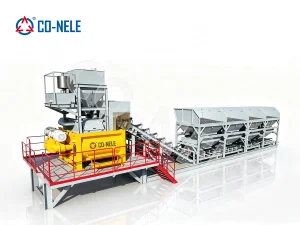
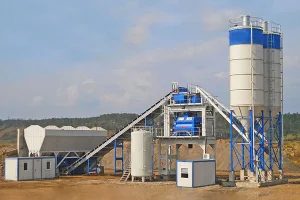
A mini concrete batch plant (typically ranging from 15 m³/h to 60 m³/h output) is no longer viewed merely as a scaled-down alternative to stationary plants; it represents an advanced, highly engineered autonomous unit designed to optimize transport logistics, minimize carbon footprints, and eliminate structural concrete degradation caused by extended transit times in mixer trucks. By bringing compulsory forced mixing directly to the job site, contractors achieve precise control over water-cement ratios ($w/c$), hydration dynamics, and slump retention.
Traditional ready-mix concrete transported over 45 minutes suffers from slump loss, premature flash setting, and aggregate segregation. Localized mini batch plants batch on-demand, maintaining ideal hydration kinetics.
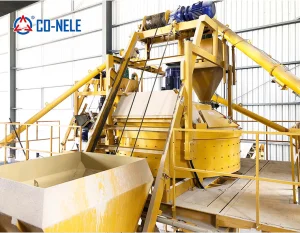
Requiring up to 70% less land area and zero heavy concrete foundations, mini batch plants reduce upfront capital outlay while shortening civil installation timelines from months to less than 48 hours.
Designed with containerized footprints, low noise emissions, and integrated pulse-jet dust collection, these plants seamlessly operate inside dense city centers, subterranean tunnels, and restricted industrial parks.
From an international trade perspective, Chinese manufacturers—led by specialized engineering firms like QINGDAO CO-NELE MACHINERY CO., LTD.—have captured global leadership in this sector. By integrating proprietary counter-current planetary gearboxes, high-chrome wear alloys, and Siemens PLC automation, Chinese mini concrete batching equipment delivers European-tier mixing homogeneity at unmatched cost efficiency.
Deconstructing the mechanics of forced planetary mixing versus conventional twin-shaft systems.
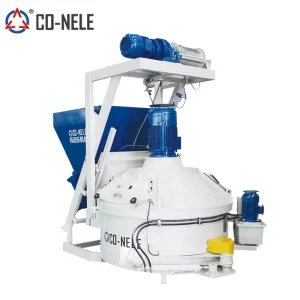
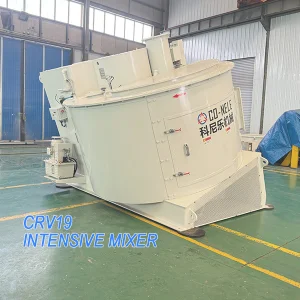
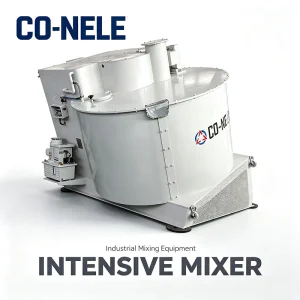
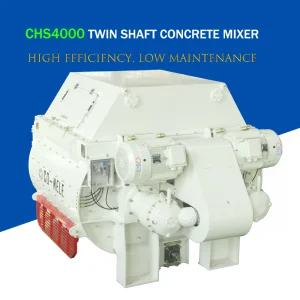
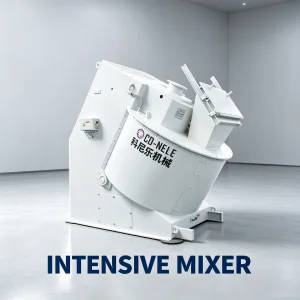
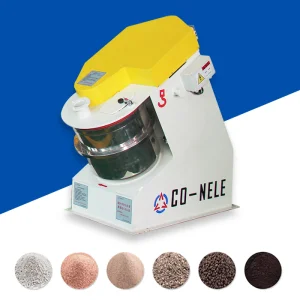
The core heart of a high-performance mini concrete batching plant is its mixer. While conventional batch plants use gravity-fall drum mixers or horizontal twin-shaft mixers, premium Chinese mini batching plants incorporate vertical-shaft planetary counter-current mixers (CMP Series).
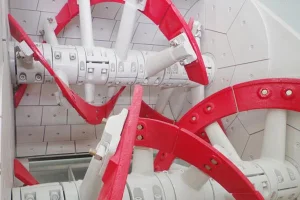
In a planetary mixer, the mixing arms rotate on a central vertical axis while simultaneously orbiting around their own planetary centers. This complex kinematic trajectory ensures that every square millimeter of the mixing pan is swept within seconds. The high shear forces rapidly break down aggregate agglomeration, disperse silica fume evenly, and eliminate unmixed "dead zones."
A batch plant's output strength is directly proportional to its dosing precision. Modern mini concrete plants engineered in China integrate multi-stage pneumatic load cell systems connected to high-speed PLC microprocessors.
| Material Dosing System | Dosing Mechanism | Standard Accuracy Target | Advanced Sensor Technology |
|---|---|---|---|
| Aggregates (Sand & Stone) | Pneumatic Gate / Belt Conveyor | ± 2.0% | Multi-loadcell suspension with automatic trickling compensation |
| Cementitious Materials | Screw Conveyor + Hopper | ± 1.0% | Pneumatic fluidization pads with zero-friction flexible sleeves |
| Water & Moisture Control | Pressurized Flow / Gravimetric Scale | ± 1.0% | High-frequency microwave probes measuring aggregate moisture in real-time |
| Chemical Admixtures | Peristaltic Dosing Pump | ± 1.0% | Corrosion-resistant stainless steel loadcell hopper with water-flush purge |
One of the largest breakthroughs in Chinese mini batch plant design is the integration of real-time microwave moisture sensors fitted into aggregate bin discharge gates and planetary mixing pans. Sand moisture varies drastically depending on weather conditions. The automated control system measures surface moisture 50 times per second, dynamically calculating water adjustments and modifying the batch recipe in real-time before water discharge. This guarantees constant slump and w/c ratio without manual operator intervention.
Comparative Engineering Data for Standard Compact and Mobile Configurations
| Model Series | Theoretical Capacity | Mixer Type Fitted | Total Power (kW) | Aggregate Bins | Footprint (L x W x H) |
|---|---|---|---|---|---|
| HZS25 Mini Compact | 25 m³/h | JS500 Twin Shaft / CMP500 Planetary | 38 kW | 2 Bins x 4 m³ | 12.5m x 3.2m x 13.0m |
| HZS35 Modular Plant | 35 m³/h | JS750 Twin Shaft / CMP750 Planetary | 52 kW | 3 Bins x 6 m³ | 15.0m x 3.8m x 14.5m |
| HZS50 Foundationless | 50 m³/h | JS1000 Twin Shaft / CMP1000 Planetary | 74 kW | 3 Bins x 8 m³ | 18.2m x 4.2m x 16.0m |
| YHZS30 Mobile Towable | 30 m³/h | Integrated Forced Pan / Twin Shaft | 45 kW | 2 Bins x 5 m³ (Built-in) | 14.0m x 2.4m x 4.2m (Transport) |
| UHPC Mini Special Plant | 15 - 25 m³/h | CMP High-Shear Planetary Unit | 55 kW | 4 Micro-Dosing Bins | 10.5m x 3.0m x 8.5m |
Where China mini concrete batch plants solve critical engineering challenges globally.
In precast operations producing architectural concrete blocks, interlocking pavers, drainage culverts, and prestressed beams, color consistency and surface finish dictate market value. Mini batch plants fitted with planetary mixers ensure iron-oxide pigments are fully dispersed without streaks, and dry-hard concrete ($w/c$ ratios down to 0.28) is mixed uniformly without balling.
UHPC applications—such as bridge joint connections, offshore wind turbine foundation grouting, and thin-shell architectural facades—require intense mechanical shear to hydrate high volumes of silica fume and micro-fly ash. Mini plants engineered with specialized drives and high-speed rotor choppers yield batch-to-batch compressive strengths exceeding 150 MPa.
For remote mountain roads, hydroelectric dams, and desert solar farms, transporting commercial ready-mix concrete from distant cities is impossible due to transit times and setting risk. Containerized, foundationless mini batching plants can be towed on standard flatbed trailers, powered by diesel generators, and commissioned on a simple leveled gravel bed within two days.
A municipal contractor operating in metropolitan infrastructure requires rapid-setting concrete poured between 01:00 AM and 05:00 AM so roads can reopen by morning rush hour. Conventional batch plants do not operate overnight for small quantities. Installing a CO-NELE HZS25 Foundationless Mini Plant directly inside the municipal maintenance yard allowed batching 10 m³ of rapid-hardening sulfoaluminate concrete per hour on-demand, saving over $180,000 annually in ready-mix surge charges.
Why Qingdao's industrial mixing cluster provides unparalleled price-performance ratio and part availability.
The global dominance of Chinese mini concrete batching machinery is rooted in industrial structural advantages. Qingdao, Shandong Province, stands as the global hub for industrial mixing equipment engineering. The geographic concentration of specialized steel foundries, gear hobbing facilities, and automated machining centers allows factory-direct manufacturers to maintain strict quality control while optimizing manufacturing costs.
The total cost of ownership ($TCO$) of a concrete batch plant is heavily governed by liner blade replacement intervals. Abrasive aggregates continuously scrub mixing pan surfaces under heavy pressure. CO-NELE integrates high-chrome alloy steel castings ($Cr26Ni4$) featuring surface hardness ratings exceeding HB600 (Rockwell C 58-62). Liner plates are precision-machined with counter-sunk bolt channels to prevent uneven wear profiles and extend service lifespans up to 150,000 batches under normal aggregate conditions.
Unlike third-party equipment brokers who source components from disparate vendors, established Chinese factories execute complete vertical integration:
Seamless international integration and IoT-enabled predictive maintenance.
Export units are fully configured to local grid specifications, including 220V/380V/415V/440V/480V at 50 Hz or 60 Hz. All electrical systems comply with CE low-voltage directives, CSA standards, or North American NEC specifications, featuring IP65 dust-tight control cabinets.
To bypass expensive local engineering permits and site excavation costs, mini batch plants utilize heavy-duty steel skid mounts. Integrated outriggers allow the plant to rest on leveled compacted soil or precast concrete slabs without permanent anchor bolts.
Next-generation batching systems feature integrated 4G/5G IoT gateways. Engineers at CO-NELE's Qingdao headquarters can perform remote firmware updates, diagnose sensor calibration anomalies, and provide real-time recipe optimization for overseas operators.
As the construction industry transitions toward net-zero targets, mini batching plants are evolving rapidly. China's machinery sector is pioneering dedicated dosing loops for mineralized $CO_2$ injection into the mixing pan, carbonating the fresh mix to permanently trap carbon dioxide while boosting early-age compressive strength. Furthermore, advanced water recycling integration allows 100% re-use of slurry washwater without clogging dosing valves.
Direct technical answers from CO-NELE process engineering specialists.
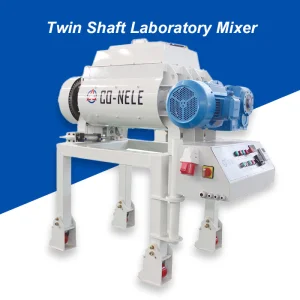
A planetary counter-current mixer provides superior micro-homogeneity, dispersing cementitious powders and admixtures evenly within 45 seconds (Coefficient of Variation CV < 5%). It is ideal for dry-hard concrete, precast pavers, block machines, and UHPC recipes. Twin-shaft mixers excel in high-throughput wet ready-mix concrete applications above 60 m³/h, but planetary mixers offer higher shear efficiency and zero aggregate settlement in compact configurations.
CO-NELE foundationless mini concrete batching plants require minimal site engineering. They are designed with steel structural skid frames that can be positioned directly on a leveled 200mm reinforced concrete slab or compacted crushed gravel base with a load bearing capacity of ≥ 250 kPa. This eliminates deep excavation pits and shortens installation times to 2-3 days.
All wear parts—including pan liners, planetary mixing blades, and scraper arms—are cast using standardized high-chrome alloy steel (HB600). Spare parts ship directly from CO-NELE's central logistics hub in Qingdao via air freight (3-5 days delivery) or container shipping. Furthermore, components produced since 2004 maintain 100% backwards interchangeable geometric specs.
Yes. For cold-climate operations (down to -30°C), plants are fitted with insulated sandwich-panel enclosures, aggregate bin steam-heating grids, and boiler water batching interfaces. For high-temperature desert regions (up to +55°C), plants include chilled water dosing loops, ice-batching screw conveyors, and air-conditioned PLC control cabins.
Engineering modularity ensures that standard mini plants (such as HZS25 or HZS35) fit inside standard 40ft High Cube (40HQ) containers. The mixer pan, belt conveyors, aggregate bins, and electrical panels are modularly disassembled with bolt-on connections, avoiding high-cost Open Top (OT) or Flat Rack shipping units.
Explore Complete Industrial Granulation, Twin-Shaft, and Foundationless Solutions
Partner directly with QINGDAO CO-NELE MACHINERY CO., LTD. Receive tailor-made technical proposals, CAD plant layouts, material test trials, and factory-direct pricing within 24 hours.
Request Technical Proposal & Factory Quote