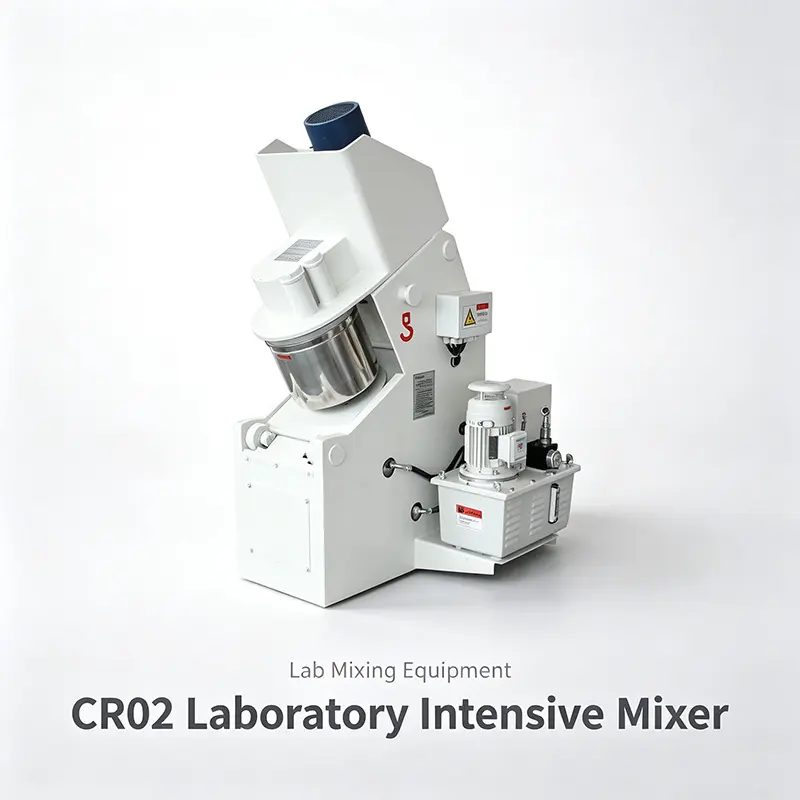
China Laboratory High Speed Mixer Manufacturer & Factory
Engineered for R&D scale-up: laboratory intensive mixers, high-shear granulators and twin-shaft lab mixers that reproduce production-scale homogeneity from 5 to 75 litres. 80+ patents, 3 Qingdao production bases, 10,000+ installations in 80+ countries.
High-Speed Mixers and Granulators from China's Advanced Manufacturing Hub
Engineered in Qingdao, these eight production-proven systems represent the front line of laboratory-scale and industrial mixing — available with full factory acceptance testing and material trial reports.
Laboratory High-Speed Mixers: The Quiet Engine of Material Innovation
Why the world's most demanding manufacturers now specify Chinese-built laboratory mixing systems — and how CO-NELE's Factory 4.0 model delivers repeatable scale-up.
1. The Strategic Role of Laboratory High-Speed Mixers
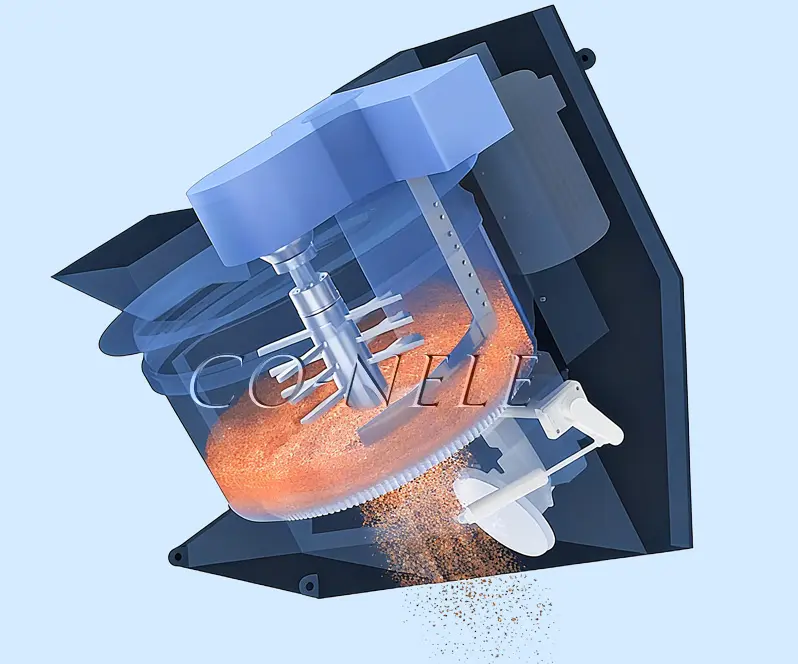
In the development of advanced materials—from solid-state battery cathodes and technical ceramics to ultra-high-performance concrete (UHPC) and pharmaceutical granules—the laboratory high-speed mixer is not a peripheral tool. It is the first point where formulation science becomes manufacturing reality. A high-shear mixing head capable of 3,000–6,000 rpm, combined with an inclined rotating pan or a counter-current planetary motion, determines whether a 5-litre trial batch will predict the behaviour of a 3,000-litre production run.
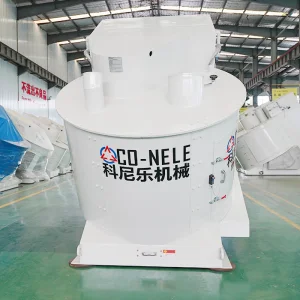
CO-NELE has engineered laboratory mixers since 2004, and our current CQM and CEL series are used by R&D teams in 80+ countries. The design principle is simple: reproduce production-scale kinematics at bench scale. That means matching rotor tip speed, shear gap, pan-to-rotor clearance and discharge geometry—not simply shrinking a production machine. When a customer sends 10–20 kg of powder to our Qingdao laboratory, we return a test report covering granule sphericity, bulk density, mixing time, binder consumption and a scale-up factor to the recommended production model.
2. Global Trends Reshaping Laboratory Mixer Demand
Three macro-trends are driving procurement decisions in 2025–2026. First, the energy transition: battery material producers need laboratory high-shear mixers to test silicon-carbon anodes, solid electrolytes and cathode slurries before committing to gigafactory-scale equipment. Second, the hydrogen economy: ceramic support structures and catalyst carriers require uniform granulation at precise pore-size distributions. Third, the circular economy: recycled powders from construction demolition, fly ash and slag demand robust mixing that can handle broad particle-size distributions without segregation.
According to industry data, the global market for laboratory mixers and granulators is growing at 6–8% annually, with Asia-Pacific accounting for the largest share of new installations. China's laboratory high-speed mixer manufacturers have moved from cost competitors to technology partners: they now supply CE-compliant equipment, provide full material test reports and support remote commissioning—services that were once the exclusive domain of European suppliers.
3. What Global Buyers Look For When Sourcing From China
Procurement teams evaluating a China laboratory high speed mixer factory now apply the same criteria they use for production equipment: documented material trials, traceable wear parts, electrical compliance (CE, UL, CSA on request), and a credible scale-up path. The days of buying on price alone are gone. Total cost of ownership (TCO) analysis reveals that a laboratory mixer with precise temperature control, interchangeable mixing tools and a validated cleaning protocol saves 20–30% in labour and downtime over a five-year period.
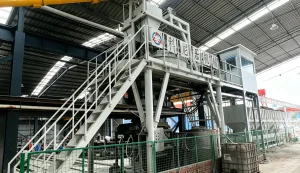
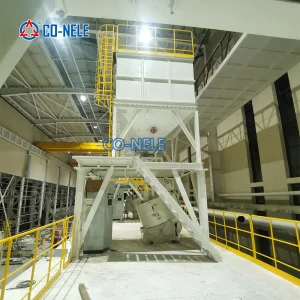
CO-NELE's Factory 4.0 model directly addresses these requirements. Our three production bases in Qingdao cover 30,000 m², with in-house machining, welding, assembly and gearbox load testing. Every laboratory mixer is assembled on a digital torque-controlled line, and the test data—including rotor speed, power draw, mixing time and temperature rise—is stored against the machine serial number. That data package is delivered to the buyer, providing an audit trail for regulated industries such as pharmaceuticals and food.
4. China Factory 4.0: Supply Chain Resilience and Efficiency
The COVID-19 pandemic and subsequent logistics disruptions exposed the fragility of global supply chains. China's manufacturing ecosystem responded by accelerating automation and vertical integration. At CO-NELE, 80+ granted patents cover our own planetary reducers, counter-current mixing arms and wear-resistant liners. By producing the gearbox in-house, we eliminate dependence on third-party suppliers and can guarantee spare-part availability for machines built since 2004. This vertical integration is a direct response to buyer demand for supply-chain resilience.
Moreover, our Qingdao location—one of the world's busiest ports—enables consolidated shipments, spare-parts warehousing and fast response to urgent orders. For a laboratory mixer, which is often part of a time-sensitive R&D project, lead times matter. Standard laboratory models ship in 30–45 days, and our engineering team can pre-validate the customer's recipe before the machine leaves the factory.
5. Localized Application Scenarios: Where Laboratory High-Speed Mixers Create Value
Battery Materials
High-shear mixing of cathode slurries, anode powders and solid electrolytes. Lab-scale granulation for silicon-carbon composites.
Technical Ceramics
Alumina, zirconia and silicon carbide granulation. Sphericity above 90% for pressing and sintering.
Fibre-reinforced concrete, GFRC and dry-cast paving. Colour consistency and surface finish.
Pharmaceutical & Food
Wet granulation, binder distribution and heat-sensitive mixing with CIP/SIP options.
Powder Metallurgy
Iron, copper and alloy powder coating. Flowability and press-feed consistency.
6. From Laboratory to Production: CO-NELE's Scale-Up Method
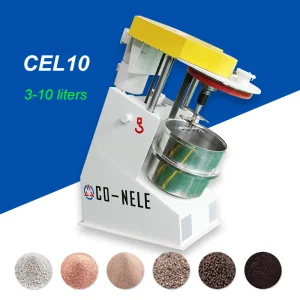
Our process engineers follow a four-step scale-up protocol. First, material characterization: bulk density, particle-size distribution, moisture content and abrasiveness. Second, bench-scale testing in a CQM10 or CEL10 laboratory mixer/granulator. Third, dimensionless scale-up using constant tip speed and constant mixing time per unit volume. Fourth, validation on a pilot-scale machine before full production. This method has been validated on more than 10,000 installations, from a 5-litre ceramic granulation trial to a 4,000-litre UHPC production mixer.
For buyers who need to compare configurations, we offer side-by-side testing of counter-current planetary, intensive shear and twin-shaft laboratory mixers. The test report includes mixing uniformity (CV%), granule size distribution (D10, D50, D90), bulk density and energy consumption per kilogram. This data-driven approach reduces the risk of specifying the wrong machine and shortens the R&D cycle.
7. Quality Assurance and Material Testing: The CO-NELE Laboratory Protocol
Every laboratory mixer inquiry begins with a material sample. Our Qingdao laboratory operates lab-scale intensive mixers and granulators from 5 to 75 litres. Customers send 10–20 kg of powder or aggregate along with target particle size, moisture window and required capacity. Our process engineers return a comprehensive test report covering granule sphericity, bulk density, mixing time, binder consumption and a recommended production model with scale-up factors. This protocol eliminates guesswork and provides documented evidence for internal investment committees.
For regulated industries, we offer optional IQ/OQ documentation packages, material certificates (EN 10204 3.1), and surface finish reports. Our quality management system is ISO 9001 certified, and every machine undergoes a 4-hour continuous running test before shipment. Vibration analysis, temperature rise and power draw are recorded and archived.
8. Total Cost of Ownership: Why Chinese Laboratory Mixers Compete on Value, Not Price
A laboratory high-speed mixer is a long-term asset. When evaluating TCO, buyers should consider energy consumption, wear-part life, cleaning time, changeover speed and spare-part logistics. CO-NELE's laboratory mixers are designed with tool-free access to the mixing chamber, interchangeable mixing tools and a control system that stores up to 50 recipes. These features reduce downtime between trials and allow R&D teams to test more formulations per week.
Our high-chrome wear parts typically last 40,000–60,000 batches on abrasive mixes, and all wear parts are bolt-on and replaceable in the field. Spare parts ship from stock in Qingdao within 48 hours. For a laboratory that runs 20 trials per week, this translates to a 15–20% increase in annual testing throughput. That is the kind of information gain that matters to procurement committees.
9. Navigating Export Compliance: CE, UL, and Local Electrical Standards
Chinese laboratory mixer manufacturers have invested heavily in compliance. CO-NELE supplies machines built to the buyer's local supply—220V, 380V, 415V or 440V, 50 or 60 Hz—with CE-compliant electrical design available on request. Deliveries include foundation and wiring drawings, an English operation and maintenance manual, a recommended spare-part list and a 12-month warranty on the drive unit. For North American buyers, we can provide UL-listed components and cUL certification for critical control panels.
Installation is supported by video commissioning or by resident engineers. Our global service team maintains a 24/48-hour technical reply window and can dispatch engineers to more than 80 countries. Spare parts are shipped from stock in Qingdao, and we keep interchangeable spares for every model produced since 2004.
10. Future Outlook: AI-Assisted Recipe Development and Digital Twins
The next frontier in laboratory mixing is digitalisation. CO-NELE is investing in AI-assisted recipe development, where historical test data is used to predict mixing time and granule size for new formulations. Our laboratory mixers are equipped with data-logging capabilities (optional OPC UA interface) that allow R&D teams to capture torque, temperature and power draw in real time. This data can be used to build a digital twin of the production mixer, enabling virtual scale-up before committing to a pilot run.
We are also developing augmented reality (AR) remote assistance, allowing our engineers in Qingdao to see exactly what a technician sees in the field. This reduces commissioning time by up to 30% and improves first-time-right installation. For global buyers, this means faster time-to-market and lower travel costs.
CO-NELE Mixer Series
Industrial Mixing & Granulation Machines Built for Difficult Recipes
Since 2004, CO-NELE has engineered forced-action mixers. Every machine below is produced in our Qingdao workshops—from the planetary gearbox to the wear liner—so homogeneity, discharge speed and spare-part availability are controlled by one manufacturer.
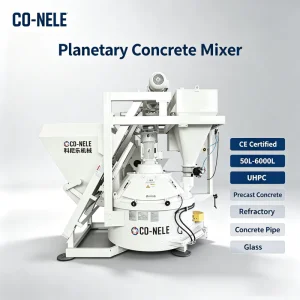
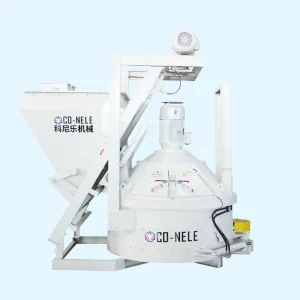
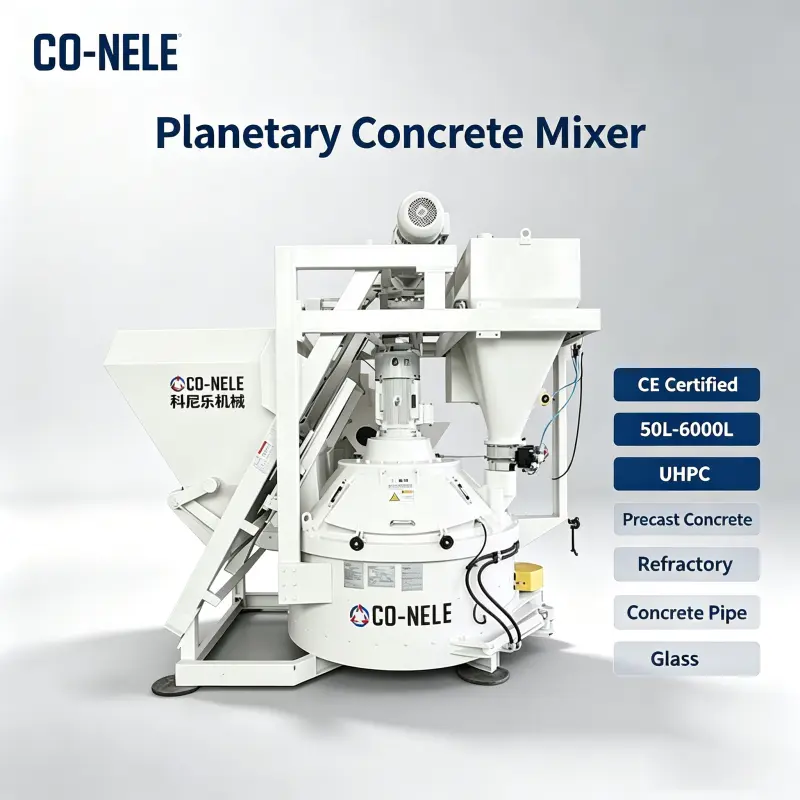
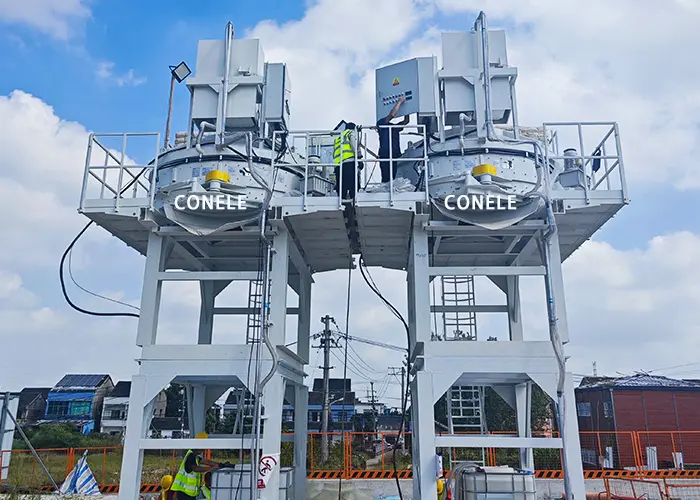
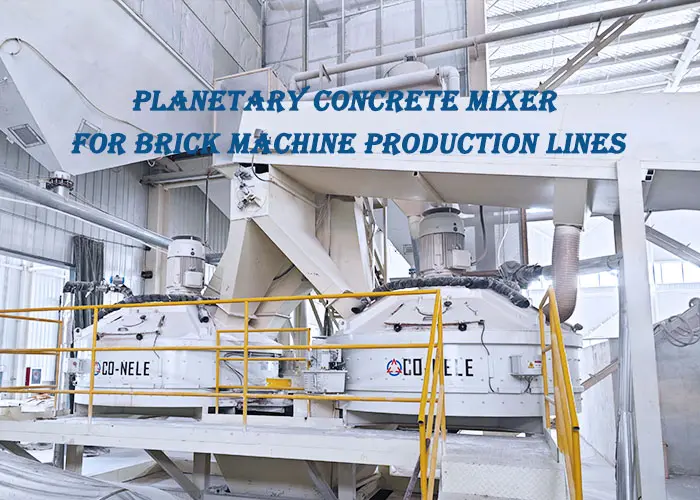
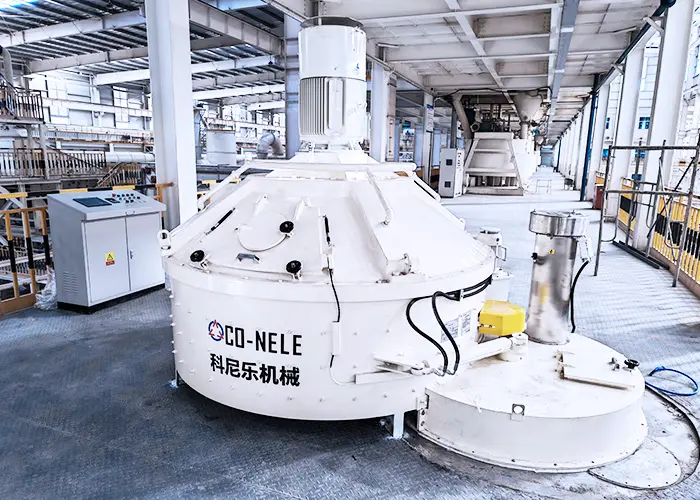
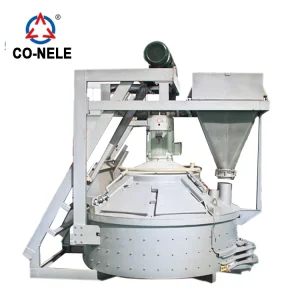
Planetary Counter-Current Concrete Mixer CMPS
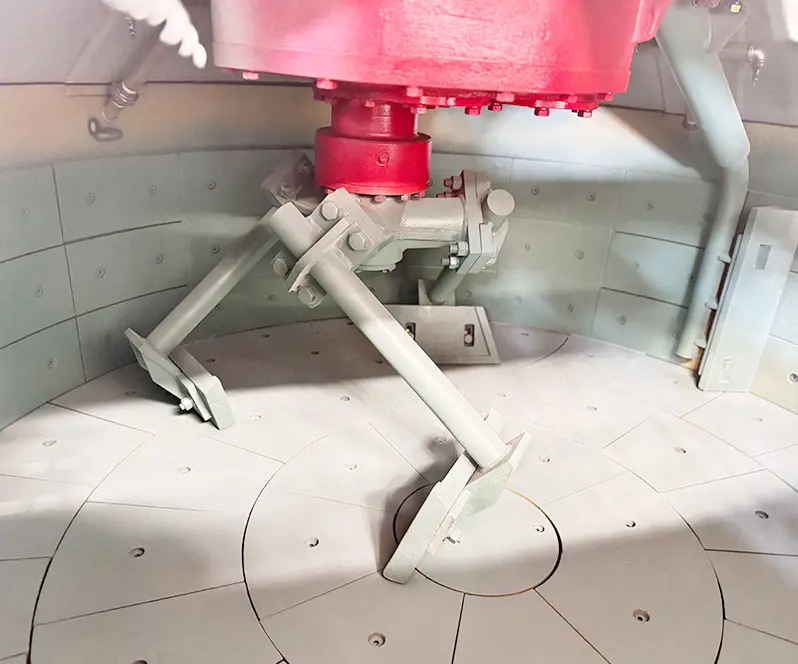
Vertical-shaft counter-current pan mixer producing micro-homogeneous batches for C60+ concrete, UHPC, GFRC and coloured dry-cast products. Star-arm kinematics eliminate dead zones at the pan wall.
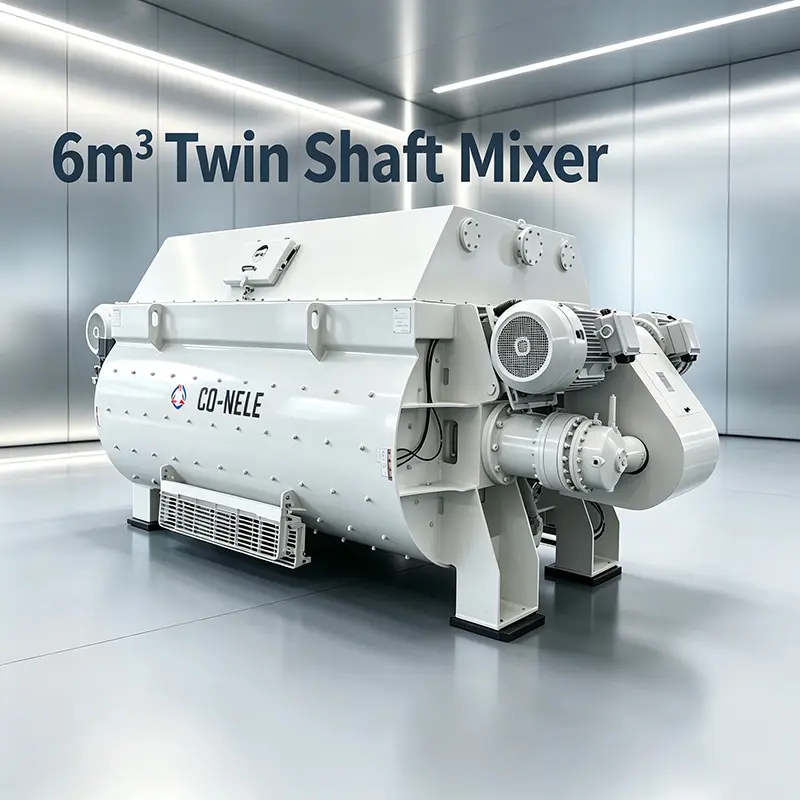
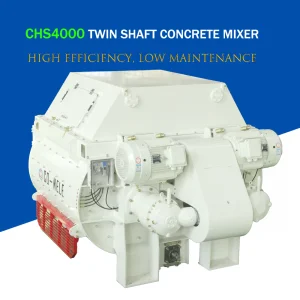
High-throughput compulsory mixers from 1 m³ up to 6 m³ output with dual hydraulic discharge gates, sealed shaft-end system and bolt-on high-chrome liners for ready-mix and infrastructure plants.
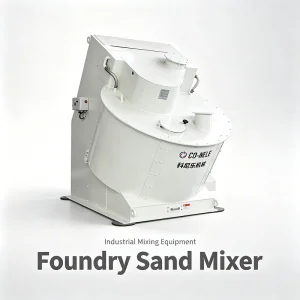
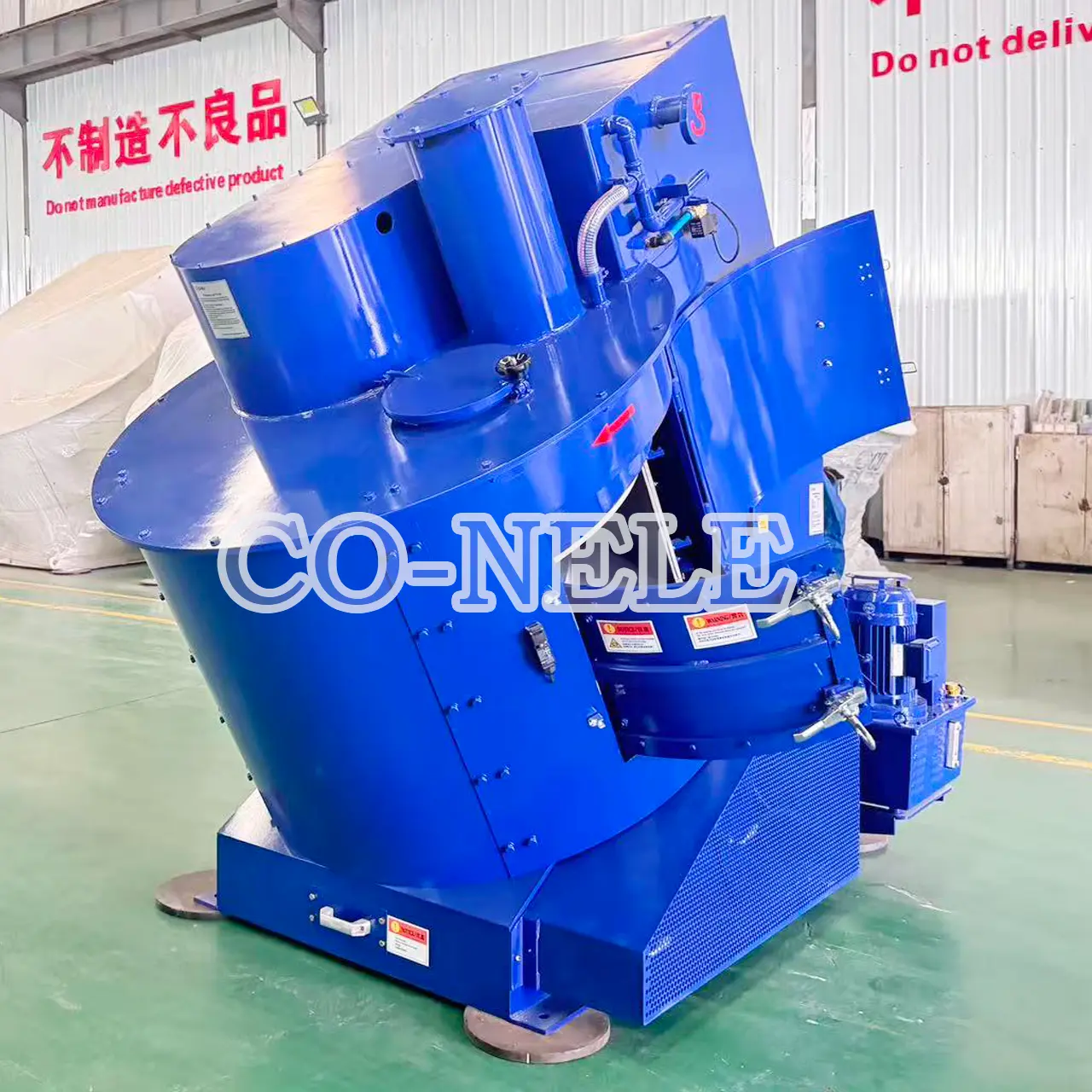
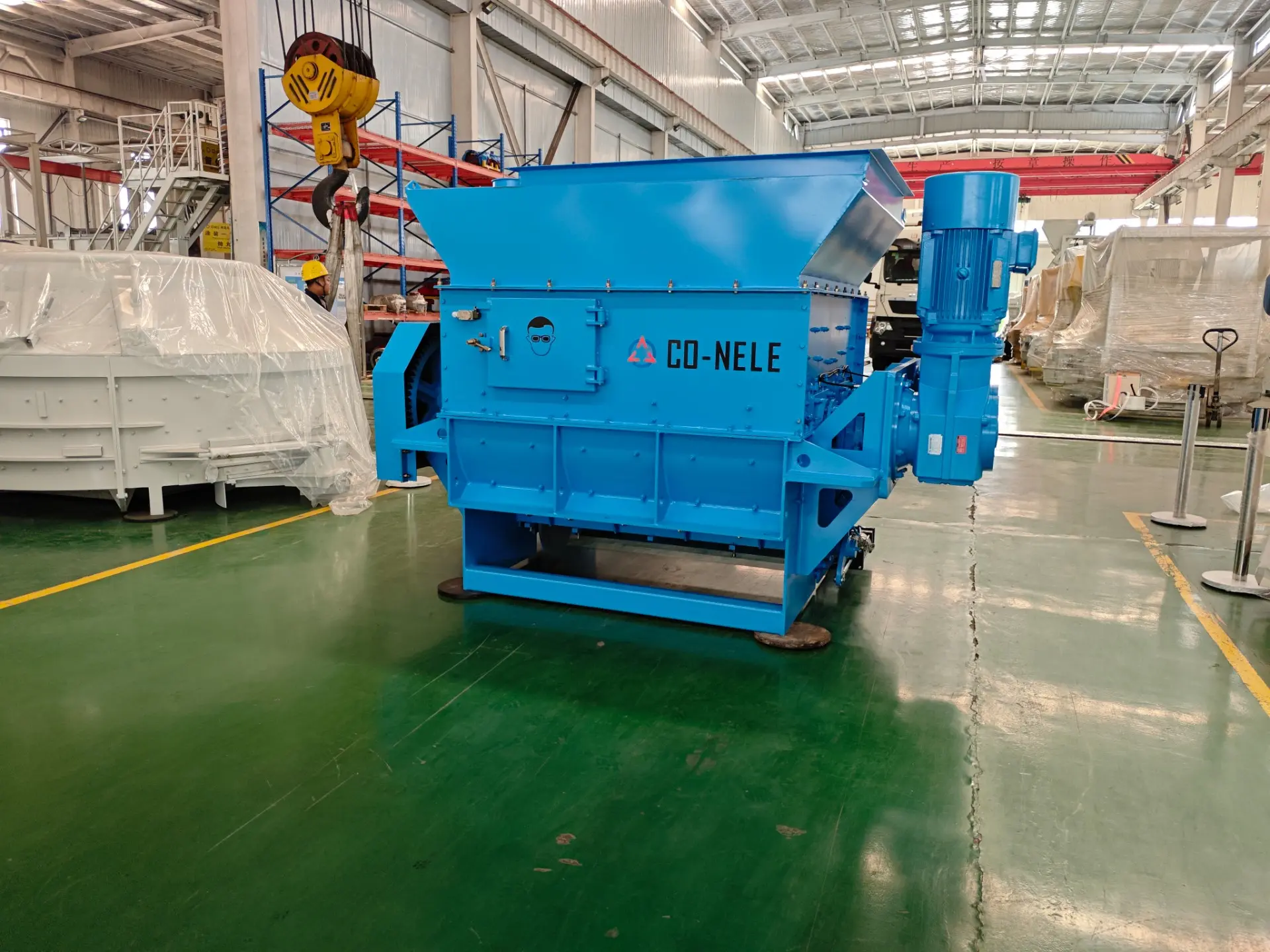
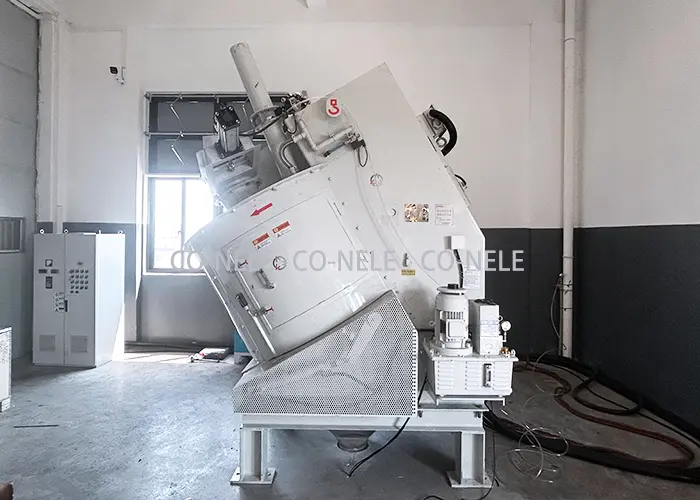
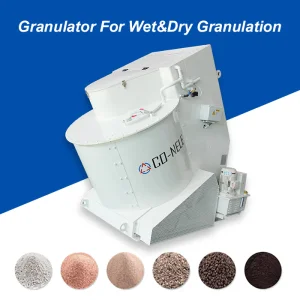
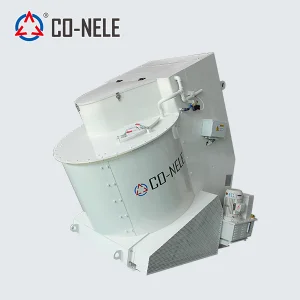
Inclined rotating pan with high-speed rotor: mixes, wets and granulates in a single vessel. Applied to metal powder, ceramics, refractories, battery materials and fertiliser pelletising.
Dust-free wet granulation of alumina, zirconia and ceramic powders — 90%+ sphericity, uniform bulk density and improved flowability for pressing, without the energy load of spray drying.
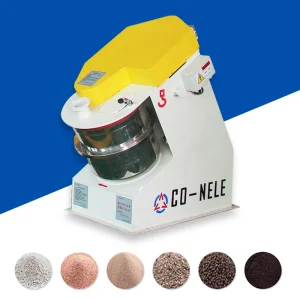
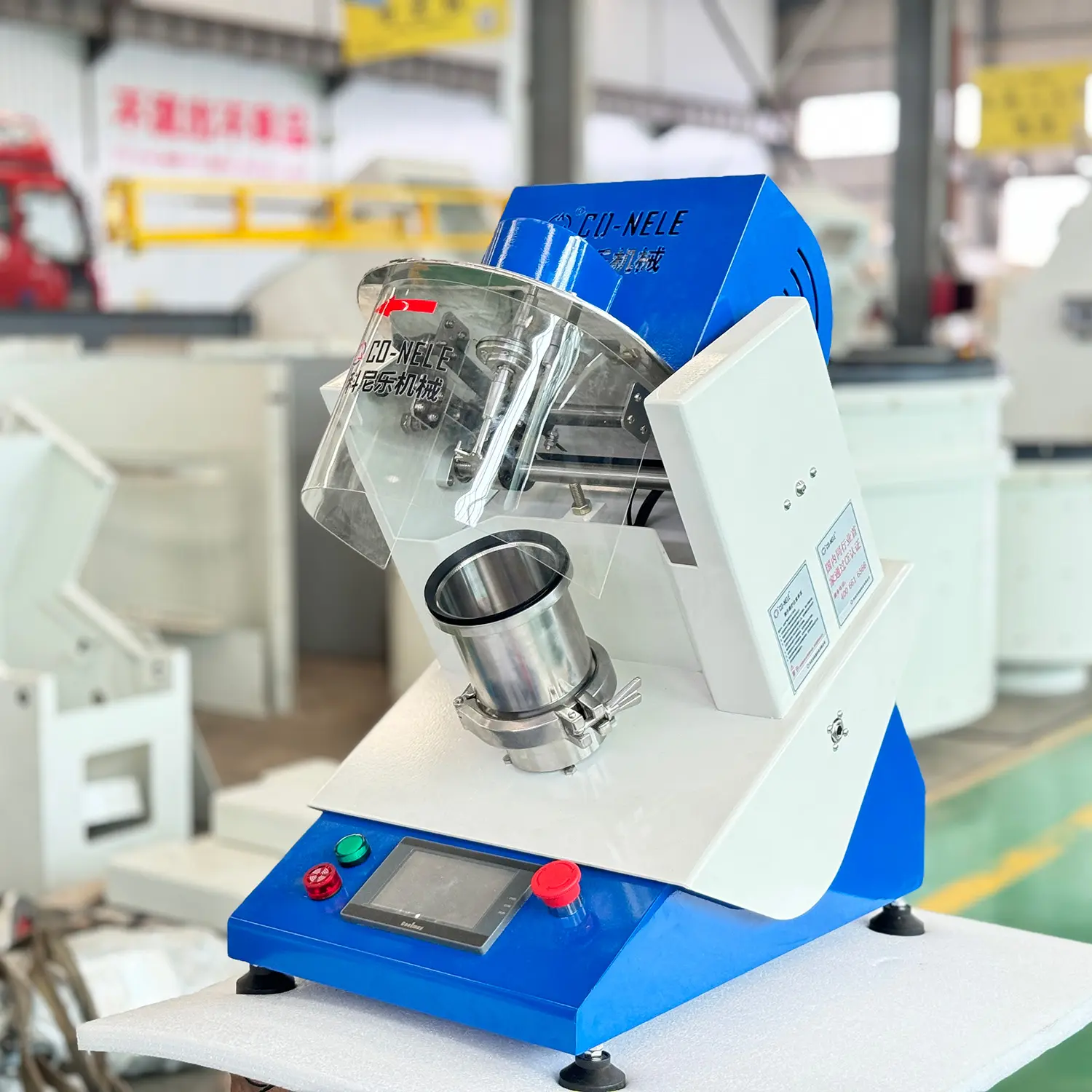
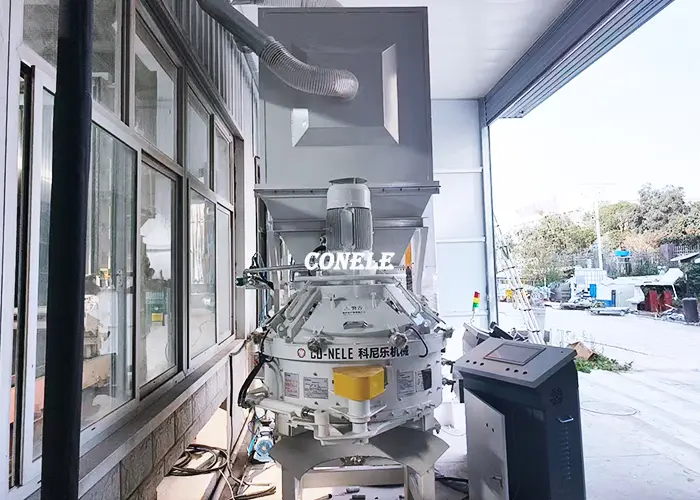
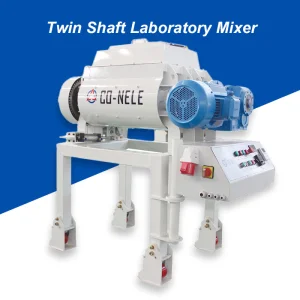
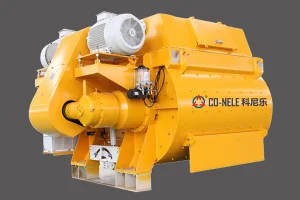
5–75 L lab units that reproduce production-scale kinematics, used for diamond/CBN powder, refractory and UHPC formula development. Scale-up data transfers directly to the industrial model.
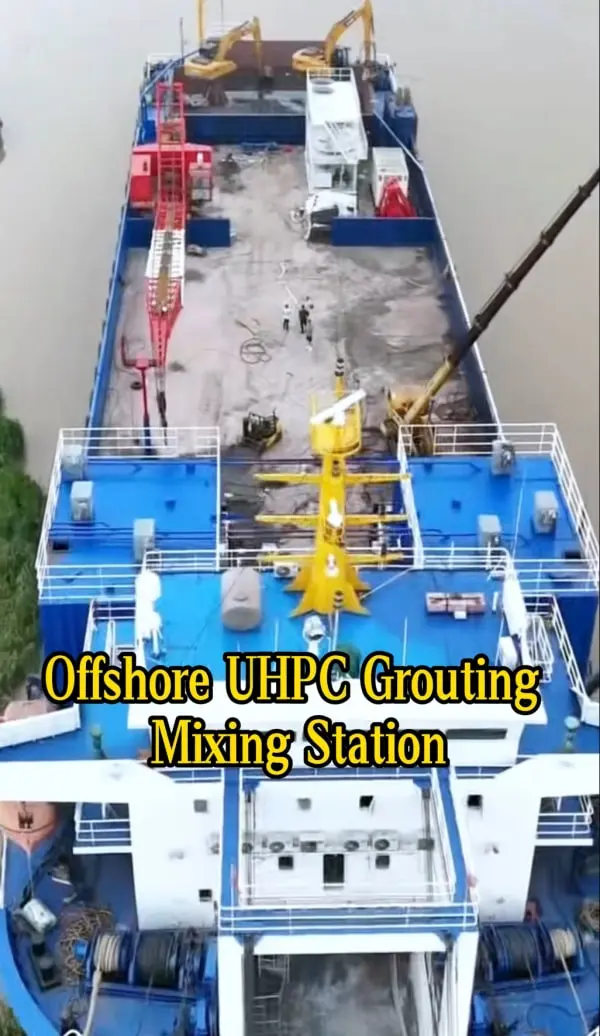
Reinforced drive, hardened pan and controlled shear profile for fibre-reinforced ultra-high-performance concrete used in bridge joints, façades and offshore anti-scour grouting.
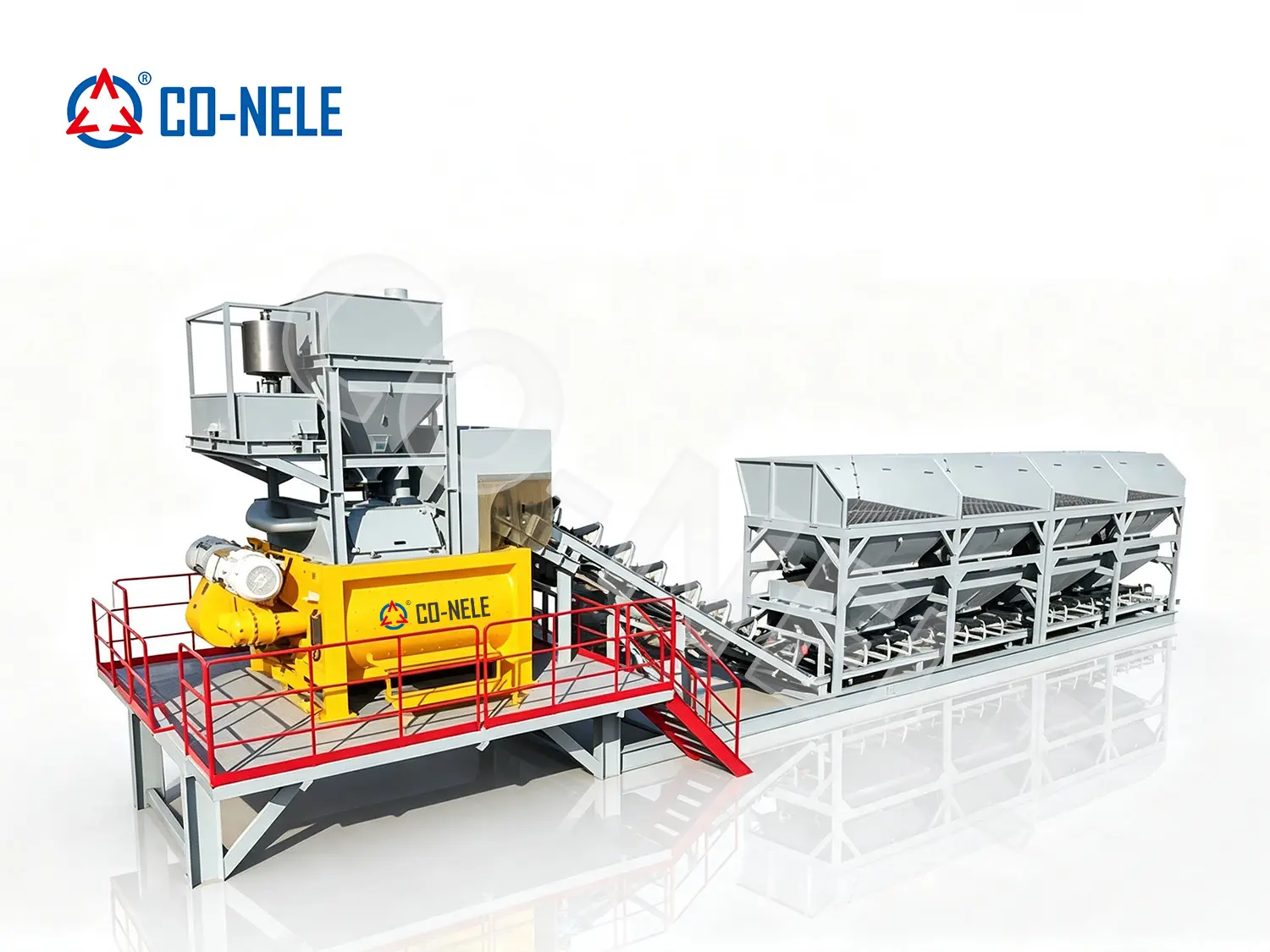
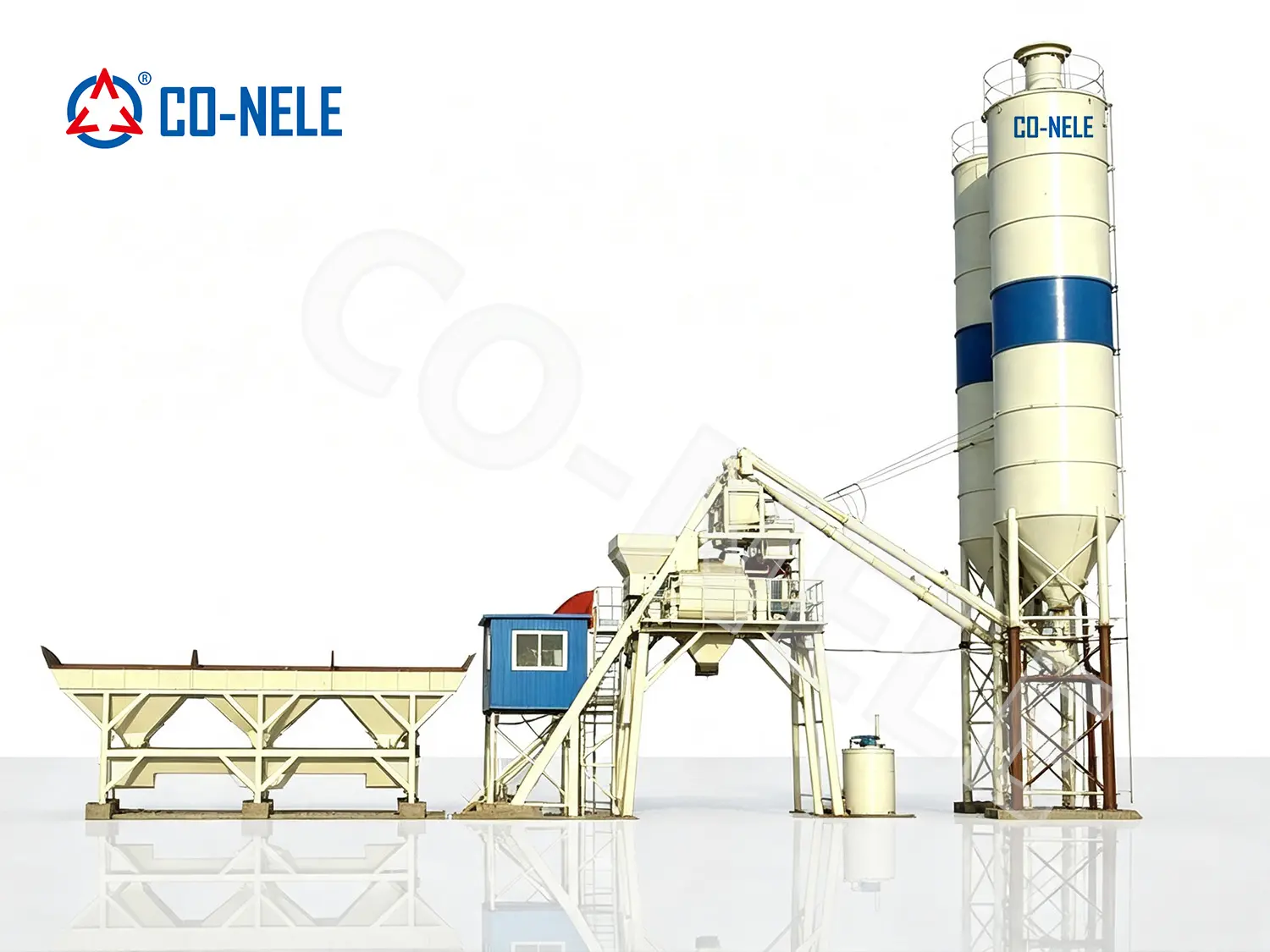
Turnkey Concrete Batching Plants — 5,000+ Units In Operation
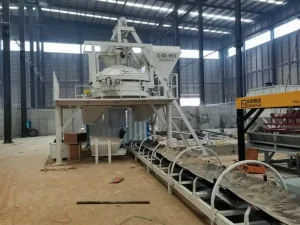
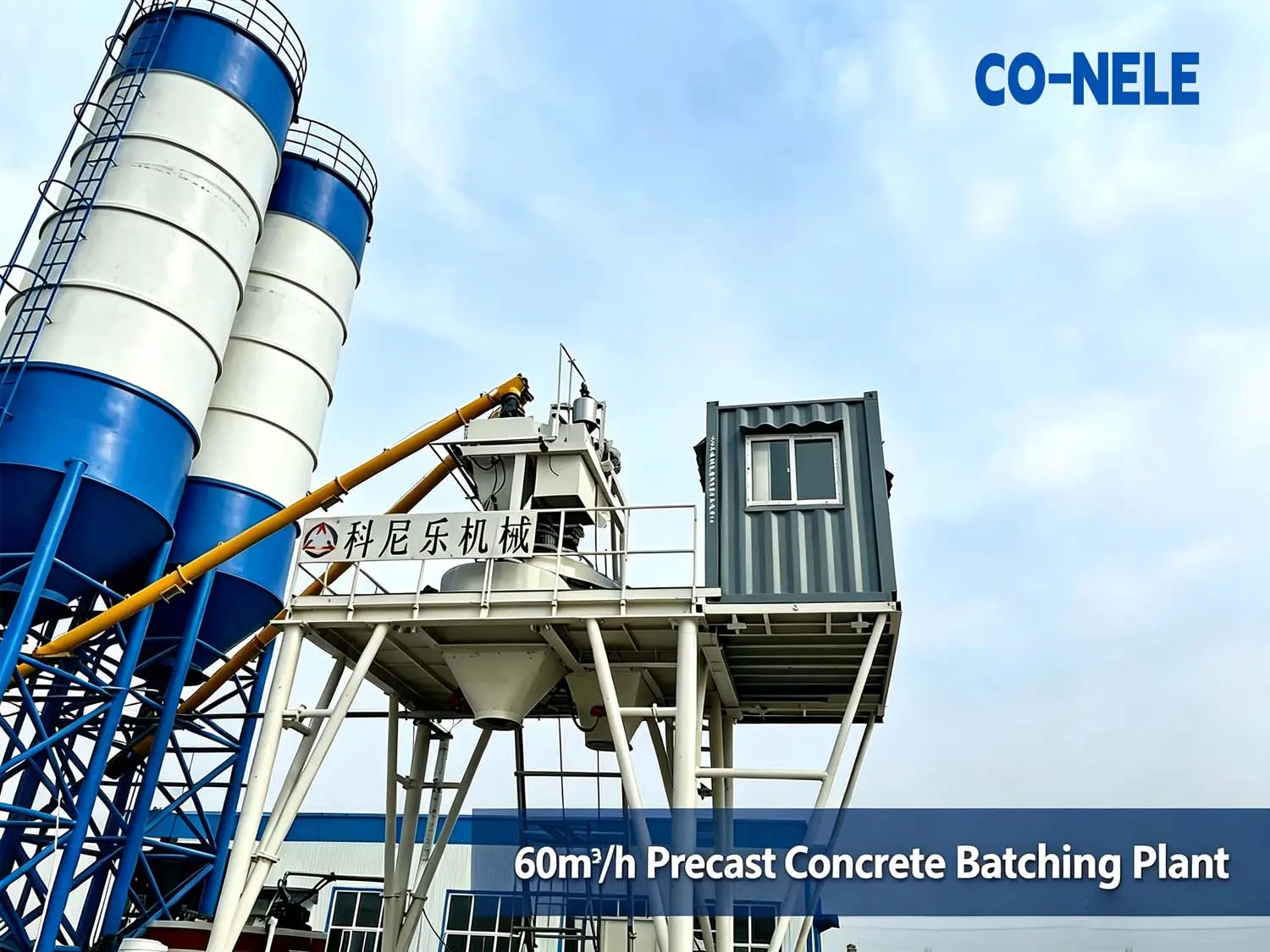
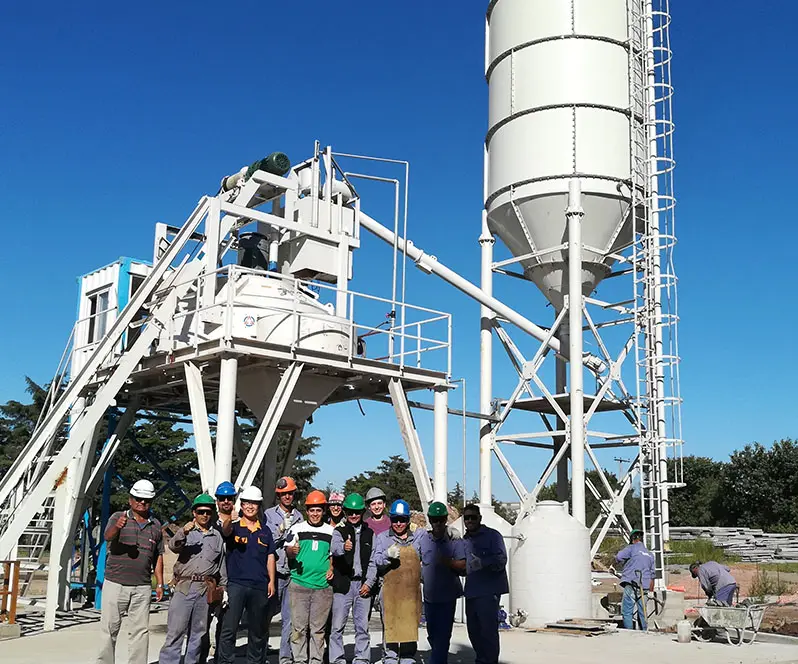
Stationary, compact, foundationless and mobile configurations from 25 to 180 m³/h. Aggregate batching accuracy ±2%, cement and water ±1%, admixture ±1%, controlled by Siemens-based PLC with recipe management and printable batch records.
Foundationless Concrete Batch Plant
No concrete foundation, no pit: installed on a levelled slab in days. Ideal for leased land, rural projects and contractors who must relocate between contracts.
Modular 50 m³/h layout with a small footprint, shipped in standard containers and bolt-assembled on site — the shortest route from container to first batch.
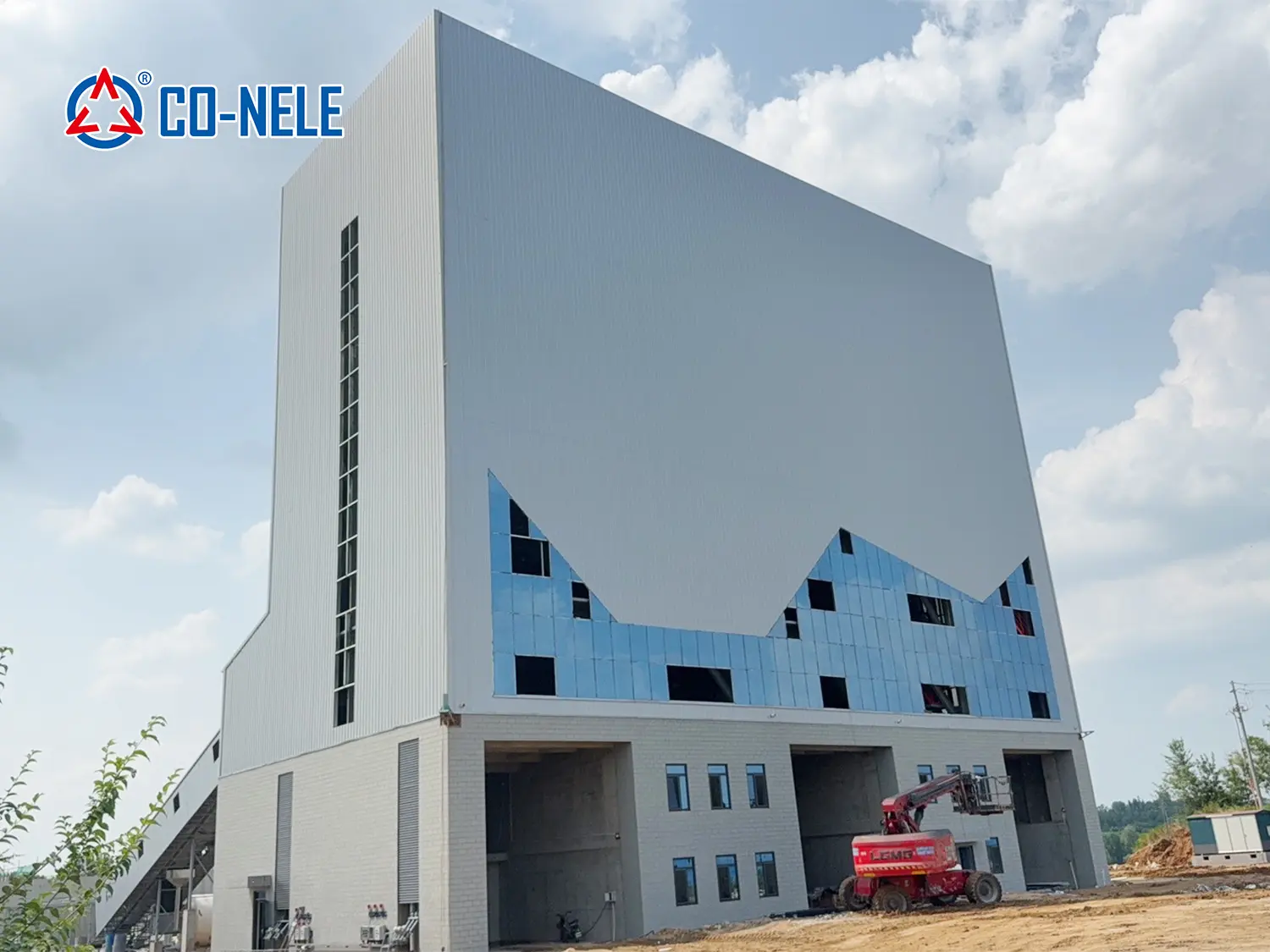
High-capacity stationary plant for commercial concrete supply and major infrastructure, with enclosed aggregate bins, dust filtration and truck-loading logistics design.
Built around a CMP1000 vertical-shaft planetary mixer for pavers, kerbs, poles, pipes and wet-cast elements where colour consistency and surface finish decide the sale price.
Trailer-mounted batching unit that tows to the next section of road, tunnel or bridge repair and restarts production the same day — a proven answer to long haul distances.
Twin-spiral dry powder mortar mixers and batch asphalt mixers, integrated with silo, screw conveying, weighing and bagging for tile adhesive, plaster and hot-mix asphalt output.
Qingdao CO-NELE Machinery Co., Ltd — established 2004
CO-NELE researches, manufactures and services mixing, granulating and coating equipment. Since 2004 our engineers have commissioned machines with more than 10,000 customers: intensive mixers, mixing granulators, vertical-shaft planetary mixers, twin shaft mixers, dry mortar mixers, asphalt mixers and complete production lines.
We hold the leading market share of planetary concrete mixers in Shandong Province, participated in drafting a national industry standard, and are regularly specified by refractory, precast, abrasive, ceramic and powder-metallurgy producers who need repeatable batch quality rather than the cheapest machine.
In-house planetary reducer design & load testing
Machining, welding, assembly under one roof
Process engineers, not resellers, answer your enquiry
Interchangeable spares for machines built since 2004
Machine selection is only the first step. Our engineering team validates the recipe, designs the plant layout, supplies the drawings your civil contractor needs and stays involved through commissioning and wear-part planning.
Process-Led Machine Design
Rotor speed, arm geometry, wear material and discharge method are matched to your material's bulk density, abrasiveness and moisture window — verified in our lab before the drawing is released for production.
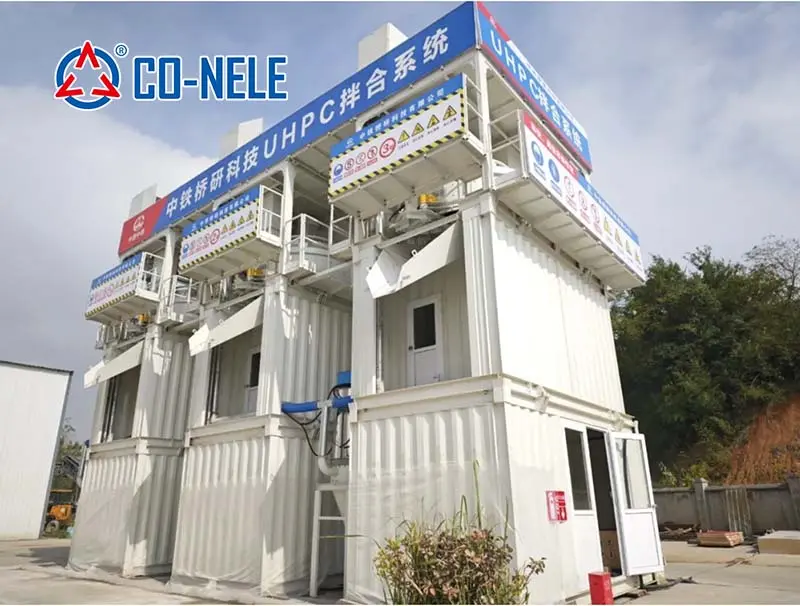
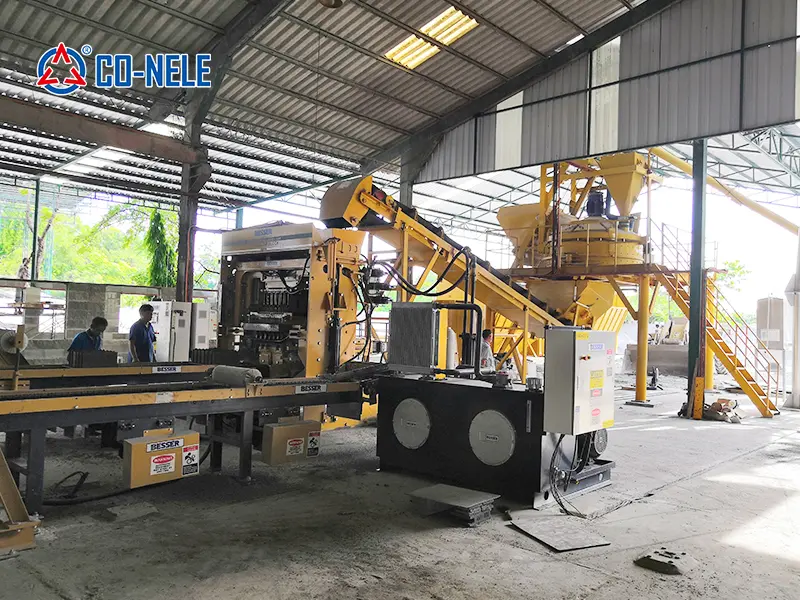
UHPC façade lines in Saudi Arabia, paving-block plants in Thailand, refractory brick plants in Luoyang, ceramic granulation in India, brick production in Kenya — installations we can describe batch-by-batch.
Recorded mixing and granulation trials show real charge volumes, cycle times and discharge behaviour — so a buying committee overseas can evaluate performance without flying to China.
From offshore wind anti-scour grouting to ceramic powder granulation, these are the working environments where CO-NELE equipment is measured every shift.
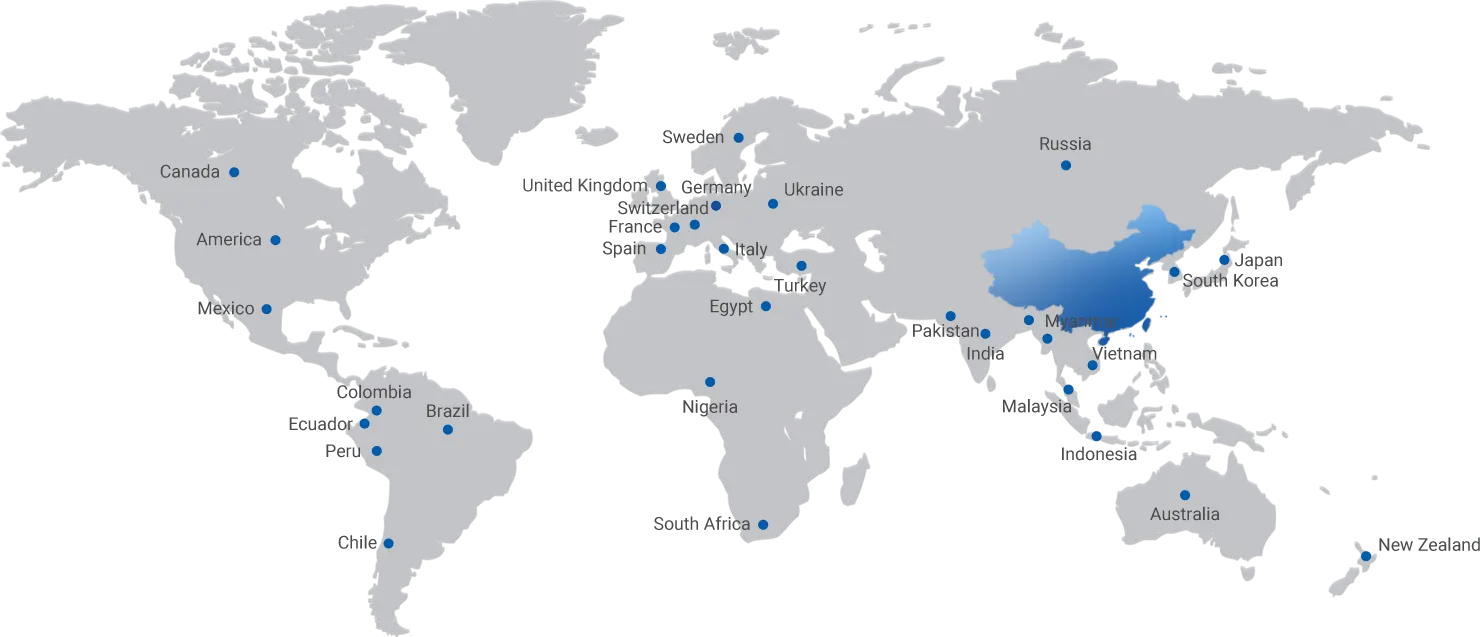
CO-NELE is headquartered in Qingdao, Shandong Province, with three manufacturing bases covering 30,000 m². Equipment and spare parts ship regularly to Germany, the United States, Brazil, South Africa, Saudi Arabia, South Korea, Thailand, India and Kenya, supported by remote commissioning and resident-engineer service.
30,000 m²Manufacturing area
3 BasesQingdao, China
80+Countries served
24 / 48 hTechnical reply window
Buyer FAQ
Questions Our Export Engineers Answer Every Week
Straight technical answers written by the CO-NELE process team — the same guidance we give before quoting a machine.
When should I choose a planetary counter-current mixer instead of a twin shaft mixer?
Choose a vertical-shaft planetary counter-current mixer when the mix is dry, fibre-reinforced, pigmented or ultra-high performance: UHPC, GFRC, refractory castables, dry-cast paving blocks and precast elements that require homogeneity below a 5% coefficient of variation. A twin shaft mixer is the more economical choice for high-throughput ready-mix and wet concrete above 2 m³ per batch, where a 30–45 second cycle matters more than micro-homogeneity.
How long do the mixing pan liner and blades last?
With standard high-chrome wear parts, liners and mixing arms typically run 90,000–150,000 batches on normal concrete and 40,000–60,000 batches on abrasive mixes such as refractory castables or quartz-rich UHPC. Every wear part is bolt-on and replaceable in the field, and CO-NELE keeps interchangeable spares for all models produced since 2004, so a ten-year-old machine is still serviceable.
Can you run a trial with my own raw material before I place an order?
Yes. Our Qingdao laboratory operates lab-scale intensive mixers and granulators from 5 to 75 litres. Send 10–20 kg of your powder or aggregate together with the target particle size, moisture window and required capacity; our process engineers return a test report covering granule sphericity, bulk density, mixing time, binder consumption and the recommended production model with scale-up factors.
What voltage, documentation and after-sales support do export buyers receive?
Machines are built to your local supply (220V / 380V / 415V / 440V, 50 or 60 Hz) and can be supplied with CE-compliant electrical design. Deliveries include foundation and wiring drawings, an English operation and maintenance manual, a recommended spare-part list and a 12-month warranty on the drive unit. Installation is supported by video commissioning or by resident engineers, with spare parts shipped from stock in Qingdao.
How do I size a concrete batching plant correctly for my project?
Work backwards from truck logistics, not from the brochure figure. Rated output assumes continuous mixing; real output is usually 55–70% of theoretical once loading, discharge and haulage are counted. For a 30 m³/h actual demand, an HZS60 with a 1 m³ planetary or twin shaft mixer is normally the right balance. Also confirm aggregate bin volume covers at least two hours of production and that cement silo capacity matches your delivery interval.
What is the difference between a laboratory high-speed mixer and a production intensive mixer?
A laboratory high-speed mixer is designed for small batch sizes (5–75 litres) and precise parameter control, while a production intensive mixer handles 500–3,000 litres and emphasises throughput and wear resistance. The key difference is in the scale-up protocol: the lab mixer must replicate the production machine's shear profile, tip speed and mixing time per unit volume. CO-NELE's lab units are engineered to match our production models, ensuring that test results transfer directly to the factory floor.
How do I scale up from a 5-litre lab mixer to a 3,000-litre production mixer?
We use a four-step method: material characterization, bench-scale testing, dimensionless scale-up (constant tip speed and mixing time per unit volume), and pilot validation. The scale-up factor is calculated based on the specific energy input and the dimensionless mixing number. Our test reports include a recommended production model and expected cycle time, so you can plan capacity and energy consumption with confidence.
What safety and compliance standards apply to laboratory mixers exported from China?
CO-NELE laboratory mixers can be supplied with CE-compliant electrical design (EN 60204-1), guarding to ISO 12100, and optional UL/cUL components for North American buyers. We provide a declaration of conformity, risk assessment documentation, and a full electrical schematic. For pharmaceutical applications, we offer 316L stainless steel contact parts and CIP/SIP options with validation documentation.
Technical Insight
Latest Mixing & Granulation Articles
Process notes, comparison studies and test reports published by our engineering team.
The models, capacities and applications international buyers are comparing right now.
More Laboratory & Industrial Mixing Equipment
Explore the Full CO-NELE Product Range
From ceramic material mixers to twin-shaft concrete mixers, every machine is backed by our Qingdao factory, material testing laboratory and global spare-parts network.
Send your material, target specification and capacity. You will receive a model recommendation, layout concept and full technical catalog — reviewed by the engineers who build the machine.