CO-NELEMixing & Granulation
Explore our flagship mixing plants, intensive granulators, and specialized laboratory mixing machinery built for extreme structural performance.
Bridging R&D Formulations and Full-Scale Production Through High-Efficiency Micro-Homogeneity and Shear-Rate Optimization
In modern civil engineering, materials science, and concrete formulation labs, the laboratory cement mortar mixer serves as the fundamental gateway between molecular ingredient design and megastructure reality. As recipes transition from standard Portland cement matrices toward complex Ultra-High-Performance Concrete (UHPC), Glass Fiber Reinforced Concrete (GFRC), alkali-activated geopolymers, and nano-silica modified binders, conventional mixing mechanisms encounter physical limitations.
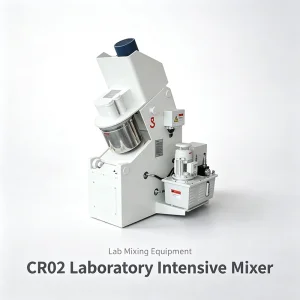
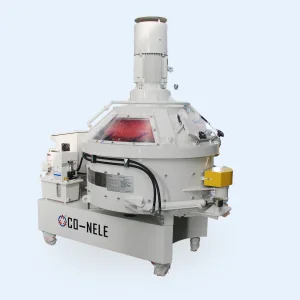
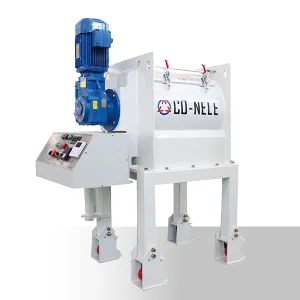
A premier China lab cement mortar mixer manufacturer must address not merely simple rotational mechanics, but complex rheological dynamics. When dry powders (silica fume, fly ash, slag, quartz powder) interact with fluid phases containing superplasticizers, air-entraining agents, and micro-fibers, agglomeration naturally occurs. Industrial-grade laboratory mixers designed by CO-NELE implement a counter-current, vertical-shaft planetary or intensive rotor design that completely eliminates dead zones, ensuring that batch testing results in the laboratory accurately predict full-scale industrial batching plant output.
To establish technical supremacy in laboratory testing, engineers must choose between counter-current planetary kinematics and inclined high-shear intensive rotor dynamics depending on the target recipe:
| Parameters & Kinematics | Standard Gravity / Ribbon Mixer | Counter-Current Planetary (Lab Scale) | Inclined High-Shear Intensive Mixer |
|---|---|---|---|
| Shear Energy Input | Low (0.2 – 0.5 kW/m³) | Medium-High (1.5 – 3.5 kW/m³) | Extreme (5.0 – 12.0 kW/m³) |
| Mixing CV (Coefficient of Variation) | > 8% to 12% | < 3% to 5% | < 1.5% (Micro-Homogeneous) |
| Fibre Dispersion Capability | Poor (Fibre Balling Occurs) | Good (Steel & Synthetic Fibres) | Superior (Instant Micro-Fibre Distribution) |
| Primary Application Domain | Basic Masonry Mortar | UHPC, Precast Blocks, Concrete Testing | Refractories, Ceramics, Battery Materials |
| Scale-Up Predictability | Low Correlation | Direct 1:1 Scale to CMPS Planetary | Direct 1:1 Scale to Industrial Intensive |
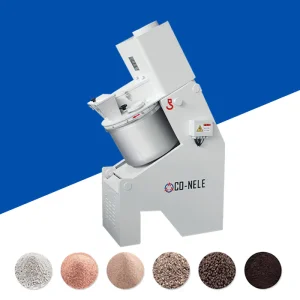
In standard laboratory mortars compliant with EN 196-1, DIN 1164, and ASTM C305, the interaction between the mixing paddle and the mixing bowl is critical. Planetary mixing technology utilizes a dual-rotation vector: the mixing blade rotates on its own axis while simultaneously orbiting around the central axis of the pan. The synchronized gear ratios ensure that within a 30-second window, 100% of the pan floor area is swept by high-chrome wear blades, forcing particles into continuous cross-shear collisions.
When incorporating ultrafine particles such as colloidal silica or carbon nanotubes into high-performance cement mortars, planetary mixing is augmented by high-speed intensive rotors. The high-velocity differential between the slow-rotating pan and the fast-spinning rotor creates intense hydrodynamic shear forces. These shear forces exceed the capillary attraction and van der Waals forces holding powder agglomerates together, yielding complete wetting of individual cement grains and maximizing hydration efficiency.
Deploying precision laboratory mixing platforms across diverse sectors requiring strict structural compliance and tailored chemical properties.
Enables formula development for bridge joints, wind turbine foundations, and architectural cladding. Handles dense particulate packing models with W/B ratios as low as 0.14 without micro-cracking.
Ideal for testing high-alumina castables, silicon carbide mortars, and ceramic matrix composites. Resists abrasive wear through tungsten carbide arm coatings and hardened alloy liners.
Validates tile adhesives, self-leveling underlayments, repair mortars, and EIFS renders. Ensures uniform air-entrainment and exact polymer modification across batch replicates.
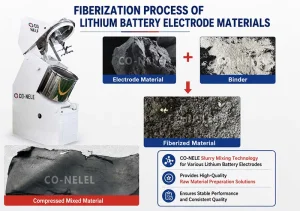
Specially customized lab mixers for dry electrode mixing, PTFE fibrosis, graphite anode wet mixing, and diamond powder granulation with dust-tight vacuum sealing options.
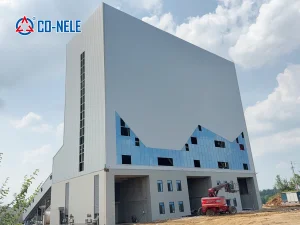
Inside CO-NELE’s 30,000 m² Qingdao Production Bases — Where Machine Manufacturing Meets Rigorous Quality Engineering.
Unlike standard machinery assemblers who outsource critical drive components, CO-NELE designs, machines, and tests its planetary gearboxes in-house. A laboratory cement mortar mixer must withstand sudden peak torque loads when mixing stiff, low-water mixes. Our proprietary planetary reducers feature heavy-duty forged alloy gears, heat-treated to HRC 58-62, mounted in rigid cast-iron housings. Every gearbox undergoes a 24-hour full-load noise and temperature-rise bench test prior to final assembly.
Our Qingdao manufacturing facilities incorporate modern Industry 4.0 infrastructure to maintain tight mechanical tolerances:
Recognizing that international R&D labs operate under varied electrical and safety standards, our factory offers extensive customization options:
Evaluating Total Cost of Ownership, Machine Reliability, and Scalability for Institutional Buyers and Industrial Material Producers.
When selecting a China Lab Cement Mortar Mixer Factory, institutional procurement teams must look beyond initial equipment purchase price and calculate Total Cost of Ownership (TCO) over a 10-to-15-year operational lifecycle. Key evaluation metrics include:
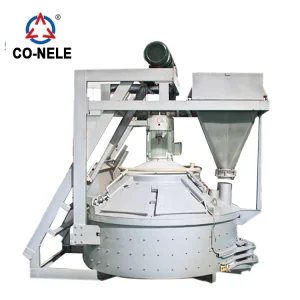
The primary hidden cost in material R&D is scale-up failure—when a laboratory formulation performs exceptionally in a small mixer but fails in a commercial ready-mix plant or batching plant due to shear mismatch. CO-NELE lab mixers (5L, 10L, 50L, 75L) utilize identical kinematic geometry, Froude numbers, and blade tip speeds as our commercial CMP Planetary Mixers (150L to 4000L). This ensures 98%+ recipe scalability, saving thousands of hours in failed trial batches.
Cementitious slurries and refractories are severely abrasive. Lower-tier mixers using standard mild steel pans require liner replacements every 5,000 to 10,000 batches. CO-NELE lab mixers feature bolt-on, ultra-high-chrome alloy liners (HB > 600) or ceramic tiles, yielding a service life exceeding 100,000 laboratory test cycles under high-abrasion regimes.
All export machinery manufactured at our Qingdao facility complies with strict international regulatory directives:
Seamless Delivery, Field Commissioning, and In-House Sample Testing Services in 80+ Countries Worldwide.
Send 10–20 kg of your raw powder to our Qingdao laboratory. Our process engineers perform trial mixing/granulation, measure density, and return a comprehensive rheology and scale-up report before contract signing.
Equipment is packaged in ISPM-15 compliant fumigated wooden cases or custom steel frames, equipped with moisture barrier foil and shock sensors for secure ocean and air freight.
We maintain inventory for every mixing arm, blade, liner, and seal ever produced since 2004, guaranteeing dispatch within 24–48 hours via DHL/FedEx express delivery.
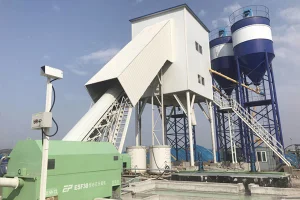
Discover our comprehensive lineup of commercial concrete mixers, laboratory units, and precast batching plants.
Expert Guidance from CO-NELE Senior Process Engineers on Laboratory Mixer Selection, Operation, and Scale-Up.