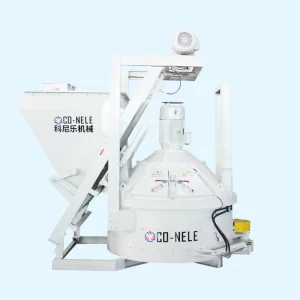
CO-NELEMixing & Granulation
Explore our core engineering portfolio of twin shaft mixers, planetary counter-current systems, and intensive mixing granulators manufactured for global infrastructure projects.
In contemporary civil engineering, infrastructure mega-projects, and high-volume commercial ready-mix concrete (RMC) production, the search for maximum homogenizing velocity combined with mechanical durability has positioned the JS Series Twin Shaft Concrete Mixer as the international industry gold standard. Manufactured natively in China’s advanced engineering hubs—most notably by industry pioneers such as Qingdao CO-NELE Machinery Co., Ltd.—these heavy-duty compulsory mixers represent a synthesis of hydraulic efficiency, structural tribology, and mechanical reliability.
Global procurement metrics over the past decade highlight a decisive transition: EPC contractors, precast concrete plant operators, and dam construction consortiums across Europe, Southeast Asia, the Middle East, and the Americas are increasingly replacing traditional gravity-tilt drum mixers and single-shaft units with heavy-duty twin-shaft systems. The rationale is anchored in total cost of ownership (TCO) optimization and strict adherence to international standard concrete strength compliance (EN 206, ASTM C94, and GB/T 9142).
Compulsory twin-shaft counter-rotation cuts mixing cycles to 30 to 45 seconds per batch, accelerating batching plant throughput by up to 40% compared to planetary or tilt-drum alternatives for standard ready-mix formulations.
Three-dimensional spiral mixing fluid dynamics eliminate dead zones. Aggregates, cementitious binders, hydration water, and chemical admixtures achieve a microscopic Coefficient of Variation (CV) below 5% in minimal time.
Patented multi-layer floating seal assemblies backed by automated continuous grease injection systems prevent abrasive cement mortar slurry from penetrating main drive bearing housings.
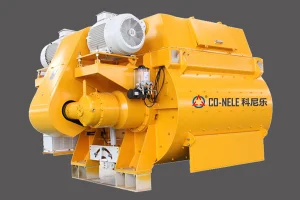
The core distinction of a JS Twin Shaft Concrete Mixer lies in its forced mixing action. Unlike self-falling drum mixers that rely on gravity to cascade aggregates, JS twin shaft mixers utilize dual horizontal shafts fitted with multi-angled mixing arms and helical pitch blades. These shafts rotate synchronously in opposite directions at designated angular velocities.
When raw materials are introduced into the trough, the counter-rotating mixing arms propel the mix both radially around the circumference of the vessel and axially along the length of the shafts. The overlapping sweep paths of the left and right arms create a intense turbulent zone in the central longitudinal intersection of the mixer pan.
Mixing blades set at precise attack angles (typically 45° to 60°) push aggregate particles outward against the wear-resistant liners, generating high shear forces that break down cement agglomerates and ensure uniform hydration coating.
Helical blade positioning drives material continuously from the end walls toward the center and back again, establishing a macro-recirculating loop that eliminates batch segregation even when mixing heavy aggregates up to 80mm.
Over 85% of input electrical energy is converted directly into mechanical kinetic mixing energy, minimizing power dissipation through heat and reducing per-cubic-meter energy consumption to record industry lows.
The lifespan of a twin shaft mixer operating in abrasive environments (such as granite aggregate or quartziferous gravel batching) is governed by its metallurgical protection. Chinese standard-setting manufacturers like CO-NELE implement advanced cast iron alloys:
The following engineering specification matrix details the operational boundaries, capacities, power metrics, and aggregate limitations of standard JS series mixers produced by leading Chinese OEMs.
| Model Designation | Discharge Vol. (L) | Charging Vol. (L) | Capacity (m³/h) | Max Aggregate Size (Scree/Crushed) | Mixing Motor Power (kW) | Discharge Gate Hydraulic Power |
|---|---|---|---|---|---|---|
| JS500 | 500 | 800 | ≥ 25 | 40 / 30 mm | 2 x 11 kW | 0.75 kW Hydraulic Pump |
| JS750 | 750 | 1200 | ≥ 35 | 50 / 40 mm | 2 x 15 kW | 1.5 kW Hydraulic System |
| JS1000 | 1000 | 1600 | ≥ 50 | 60 / 50 mm | 2 x 18.5 kW | 2.2 kW Hydraulic System |
| JS1500 | 1500 | 2400 | ≥ 75 | 80 / 60 mm | 2 x 30 kW | 2.2 kW Hydraulic System |
| JS2000 | 2000 | 3200 | ≥ 100 | 80 / 60 mm | 2 x 37 kW | 3.0 kW Hydraulic System |
| JS3000 / CTS2000 | 3000 | 4800 | ≥ 150 | 80 / 60 mm | 2 x 55 kW | 4.0 kW Hydraulic System |
| JS4000 | 4000 | 6400 | ≥ 200 | 100 / 80 mm | 2 x 75 kW | 5.5 kW Hydraulic System |
* Note: Custom capacities up to JS6000 (6m³ discharge per batch) are available upon specialized request for mega dam construction and nuclear power concrete plants.
The versatility of JS Twin Shaft Mixers spans across multiple sectors of industrial civil engineering and concrete manufacturing. Below are key field solutions engineered by CO-NELE and leading Chinese factories:
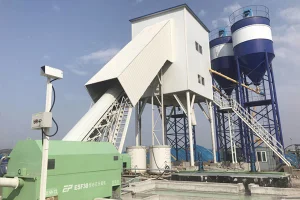
Integrated as the central core mixing block in stationary batching plants (HZS50 to HZS240). Configured with dual pneumatic/hydraulic discharge gates for rapid truck mixer loading. Delivers continuous, high-volume C15 to C60 standard pumpable concrete formulations.
Utilized in precast segment manufacturing for high-speed railway sleepers, bridge girders, concrete pipes, box culverts, and tunnel linings. Precise moisture control interfaces ensure batch-to-batch repeatability and slump stability critical for early strip strength.
For high-density, low-slump RCC projects requiring zero-slump coarse aggregate blending. Heavy-duty JS3000 and JS4000 units are equipped with reinforced gearboxes to process zero-slump mass concrete without thermal overload or drive stall.
As smart construction sites and Industry 4.0 paradigms reshape material processing, Chinese manufacturers are pushing the boundaries of twin-shaft engineering. The technical roadmap highlights four primary vector developments:
Embedding high-frequency microwave moisture and rheology probes directly through bottom liner plates to continuously monitor mix plastic viscosity and adjust water dosing dynamically mid-cycle.
Replacing fixed-speed induction motors with VFD-controlled synchronized drives, enabling variable shear rates tailored to self-consolidating concrete (SCC) or fiber-reinforced mixes.
IoT-enabled pressure and optical sensors integrated into floating end seals to alert maintenance teams before slurry micro-leakage reaches drive bearings.
Integrated 100-bar internal omnidirectional spray nozzle rings that execute 90-second automated cleaning cycles between batch shifts, reducing manual labor risks.
Exporting industrial mixing equipment globally requires comprehensive alignment with local electrical, safety, and environmental standards. Premier manufacturers ensure that every JS twin shaft mixer shipped overseas meets strict regional requirements:
Full support for international voltage and frequency specifications (380V, 415V, 440V, 480V at 50Hz or 60Hz). Electrical cabinets incorporate Schneider, Siemens, or ABB switchgear with NEMA 4X or IP65 ingress protection ratings.
Manufactured in compliance with EU Machinery Directive 2006/42/EC and ISO 9001:2015 Quality Management Systems. Interlocked safety access doors ensure motor isolation whenever inspection hatches are opened.
Standardized wear part dimensions ensure rapid field replacement. Main drive belts, mechanical seals, high-chrome liner panels, and hydraulic solenoids are routinely stocked in regional distribution centers worldwide.
Direct technical guidance provided by CO-NELE mixing process engineers:
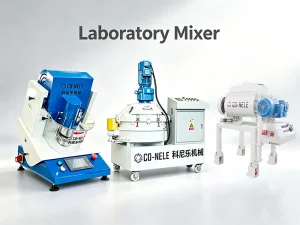
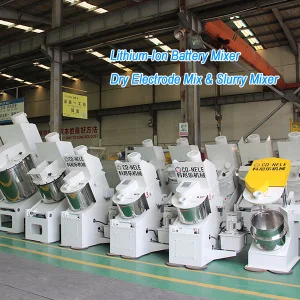
Explore additional specialized planetary mixers, laboratory test rigs, battery slurry units, and complete batching plant series engineered for global export.
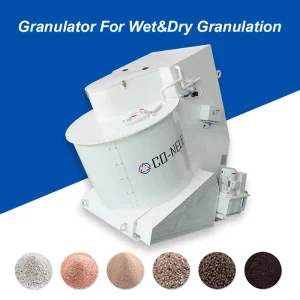
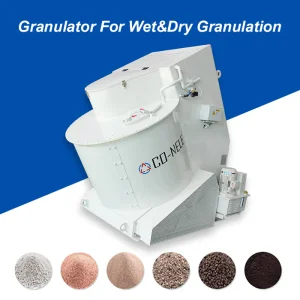
Whether you require a standalone JS Twin Shaft Concrete Mixer, a specialized intensive granulator, or a turnkey concrete batching plant layout proposal, CO-NELE’s engineering team in Qingdao, China provides full formula testing, CAD foundation design, and direct factory pricing.