CO-NELEMixing & Granulation
Engineered for high homogeneity, aggressive cycle efficiency, and maximum uptime across infrastructure, precast, and commercial ready-mix sites.
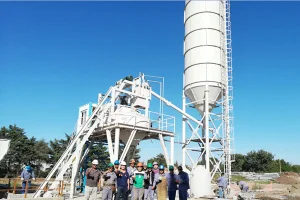
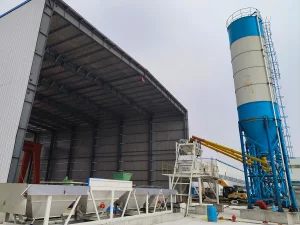
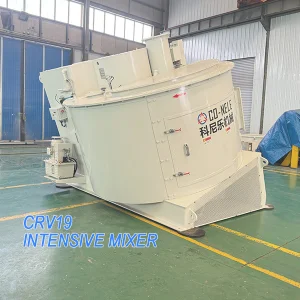
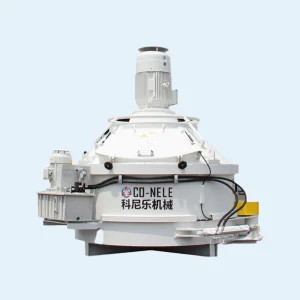
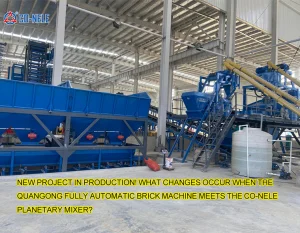
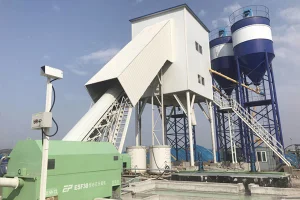
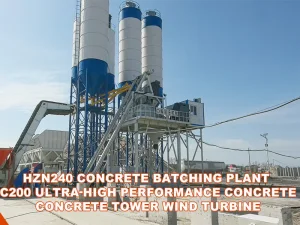
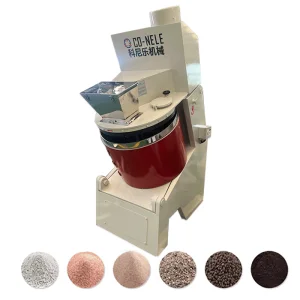
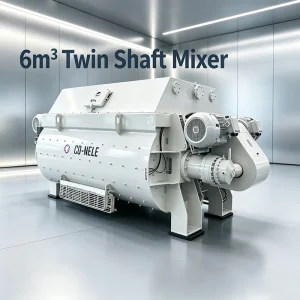
In global civil engineering, precast concrete manufacturing, and commercial ready-mix production, the JS Series Twin-Shaft Compulsory Concrete Mixer represents the benchmark for intensive fluid shearing and batch homogenisation. Originating as a standardized design paradigm for high-yield industrial mixing, the modern JS concrete mixer (ranging from compact JS500 units up to massive JS4000 high-capacity variants) operates via counter-rotating horizontal shafts fitted with multi-directional mixing blades.
Unlike gravity-fed drum mixers or single-shaft ribbon blenders, compulsory twin-shaft mixing does not rely merely on material cascading under Earth's gravitational pull. Instead, it imparts direct mechanical shear, forced axial circulation, and intense radial turbulence throughout the entire volume of the mixing trough. This mechanical action breaks up cement agglomerates within milliseconds, coating coarse aggregate surfaces with an evenly distributed paste matrix.
Driven by dual electric motors coupled through planetary gearboxes or heavy-duty synchronized timing gears, the twin horizontal shafts spin in opposite directions. The blades overlap in a synchronized 60-degree helical pattern, generating three-dimensional cross-directional material streams without mechanical collision.
The primary point of mechanical wear in twin-shaft mixers occurs where the rotating shaft penetrates the static mixing trough. Leading Chinese manufacturers incorporate multi-stage floating seal technology combining rubber ring seals, labyrinth mechanical grease injection, and steel floating seals to prevent abrasive cement slurry ingress into main bearings.
Mixing paddles and trough protection liners are cast from Ni-Hard and high-chromium alloy steels (Cr15Mo3 or Cr26). With a Brinell hardness rating exceeding HB600, these wear components withstand over 50,000 to 120,000 batch cycles under severe abrasion from crushed granite and basalt aggregates.
The international demand for high-capacity batching infrastructure has undergone a fundamental shift toward shorter cycle times, stricter environmental emissions controls, and higher compressive strength targets (such as C60/70/80 standard mixes and Ultra-High-Performance Concrete). Across Europe, North America, Southeast Asia, the Middle East, and Latin America, the JS twin-shaft compulsory mixer has captured over 70% of the market share for central batching plants.
Selecting the appropriate mixing technology requires balancing mechanical shear capabilities, throughput requirements, capital expenditures, and ongoing operational wear costs. Below is a structured engineering comparison matrix:
| Mixer Type | Primary Kinematics | Mixing Cycle Time | Ideal Mix Design Range | Wear Part Maintenance |
|---|---|---|---|---|
| JS Twin-Shaft (Compulsory) | Counter-rotating horizontal shafts, overlapping shear streams | 30 – 45 seconds | Ready-mix, civil infrastructure, mass concrete, aggregates up to 80-120mm | Medium; replaceable bolt-on liners & blades |
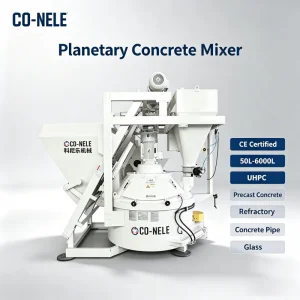
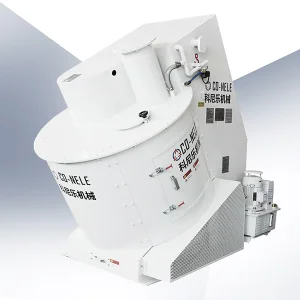
| Planetary Counter-Current | Vertical central axis with orbiting star blades & scrapers | 45 – 90 seconds | Precast, architectural concrete, GFRC, color-pigmented tiles, dry-cast blocks | Low-Medium; highly predictable wear patterns |
| Single Shaft Compulsory | Single horizontal shaft with continuous ribbon or paddles | 60 – 90 seconds | Small-scale construction, mortar mixing, simple concrete formulations | High shaft torque stress; localized liner abrasion |
| Reversing Drum Mixer | Gravity drum rotation (forward mix, reverse discharge) | 120 – 180 seconds | Low-strength field concrete, mobile site work, small utility projects | Low mechanical wear; low shear capability |
China's rise as the global manufacturing hub for JS series concrete mixing machinery is powered by dense industrial clusters in regions like Shandong (Qingdao, Weifang) and Henan. These manufacturing ecosystems integrate heavy metallurgy, precision gearbox machining, hydraulic system integration, and automated robotic fabrication within localized radiuses, delivering substantial strategic advantages to global buyers.
Through vertically integrated steel casting, standardized component forging, and high-volume batch production, leading Chinese OEMs deliver JS twin-shaft mixers with heavy-duty structural frames at a fraction of North American or European capital costs, without sacrificing component specifications.
Modern Chinese mixing machinery factories utilize multi-axis CNC boring centers and robotic seam welding gantries to ensure structural tolerances within sub-millimeter limits. Trough alignment and shaft concentricity are rigorously verified to eliminate premature seal degradation and drive fatigue.
Chinese JS mixer designs strictly adhere to international standardized ISO frame sizing. Gearboxes, electric motors (Siemens/WEG compliant), hydraulic discharge pumps, and shaft seal replacement kits are maintained in constant inventory, enabling rapid international dispatch within 24–48 hours.
JS Series twin-shaft compulsory concrete mixers are field-proven across diverse job sites worldwide. Their mechanical design adapts effectively to challenging aggregate conditions and high-performance recipe specifications.
Mix Specs: C50 to C80 high-strength formulations, microsilica additives, low water-cement ratios (0.26–0.32).
Engineering Challenge: Preventing silica fume agglomeration and ensuring even chemical admixture dispersal throughout heavy batches.
JS Performance Solution: JS1500 to JS3000 twin-shaft units equipped with high-shear paddle geometries rapidly shear stiff mixes, keeping batch variances below 3%.
Mix Specs: Large aggregate sizes (up to 80mm–120mm crushed stone), low cement paste volume, high slump resistance.
Engineering Challenge: Severe impact forces on internal mixing arms and accelerated liner plate cracking.
JS Performance Solution: Reinforced JS3000 / JS4000 mixers featuring thick-walled Cr26 alloy armor plates and heavy-duty spring-loaded mixing arms absorb large aggregate impacts while maintaining high throughput.
Mix Specs: Zero-slump, zero-moisture dry-cast concrete recipes requiring rapid discharge rates.
Engineering Challenge: Material buildup in mixing trough corners and gate sticking during rapid discharging.
JS Performance Solution: Hydraulic multi-stage discharge gates combined with continuous blade clearance adjustments ensure rapid, clean discharging in under 8 seconds per batch.
Driven by global carbon reduction mandates, smart manufacturing initiatives, and rising raw material costs, Chinese concrete machinery research institutes are incorporating advanced technological innovations into the classic JS twin-shaft architecture.
Integration of high-frequency microwave moisture sensors directly into the mixing trough liner floor allows real-time sampling (up to 25 times per second). Embedded AI algorithms analyze shaft drive motor torque fluctuations to dynamically adjust water-dosing trims mid-cycle, reaching exact target slump values automatically.
Modern JS mixers feature rounded, aerodynamically contoured discharge gates backed by automated high-pressure water ring jets. This design reduces residual concrete buildup inside the mixing chamber to less than 0.2% per batch, significantly lowering washdown water consumption and daily manual maintenance effort.
To support green construction goals, upgraded JS mixing vessels are engineered with pressurized carbon dioxide injection ports. Micro-gassing carbon dioxide into the mineral matrix during initial slurry formation speeds up cement hydration, locks away CO2 permanently, and improves 28-day compressive strength by up to 10–15%.
When evaluating a Chinese JS concrete mixer manufacturer for international supply, EPC buyers and concrete producers should inspect several core engineering criteria to ensure long-term reliability and component compliance:
| Audit Sub-System | Critical Inspection Standard | Risk of Non-Compliance |
|---|---|---|
| Gearbox Reducer Rating | Service Factor ≥ 2.0; Heavy-duty planetary or hardened helical gears | Gear tooth shearing under sudden full-load restarts |
| Shaft End Lubrication | Automatic electric multi-point grease pump with pressure feedback monitoring | Slurry ingress into main bearing housing within 300 operating hours |
| Wear Liner Metallurgy | High-Chromium alloy cast iron (≥ 26% Cr content), hardness ≥ HB600 | Premature liner perforation when processing abrasive crushed quartz/granite |
| Motor Insulation Grade | IP55 or IP65 enclosure protection, Class H insulation rating | Motor burnouts from ambient dust, high temperature, and humidity exposure |
| Safety Interlocks | Key-trapped dual-channel safety switches on maintenance access hatches | Severe operational safety hazards during internal inspection or cleaning |
In the Chinese national industrial standard, "J" stands for Jiaoban (Mixing), and "S" denotes Shuanshuangzhou (Double Horizontal Shafts). The numeric suffix following JS (e.g., JS500, JS1000, JS2000) indicates the total compacted concrete discharge capacity in liters per batch (e.g., JS1000 discharges 1.0 cubic meter of finished concrete per cycle).
While vertical planetary mixers are frequently specified for small-volume UHPC, modern heavy-duty JS twin-shaft mixers upgraded with high-torque gearboxes and high-shear steel-fiber paddle geometries handle structural UHPC efficiently. They prevent fiber clumping (hedgehog effect) and maintain continuous batch supply for major bridge and wind tower precast plants.
Under standard operating conditions with clean limestone or river stone aggregates, high-chromium (Cr15Mo3/Cr26) wear liners typically achieve a service life of 60,000 to 100,000 batches. Multi-layer floating shaft seals protected by automatic grease pressure injection usually last 50,000+ batches before ring replacements are required during scheduled maintenance overhauls.
Standard export configurations support global voltage specs including 380V, 400V, 415V, 440V, and 480V at 50Hz or 60Hz. Leading exporters provide full CE compliance documentation under the Machinery Directive 2006/42/EC, ISO9001 quality system verification, and EAC certification for Eurasian Customs Union shipments.
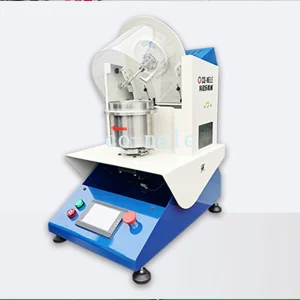
Extending high-efficiency mixing principles into planetary countercurrent systems, dry mortar lines, refractory mixers, and laboratory research units.