
CO-NELEMixing & Granulation
Precision-engineered intensive mixers, planetary mixers, and batching equipment manufactured in Qingdao, China for high-rigor global applications.
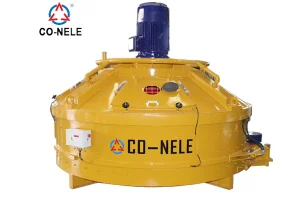
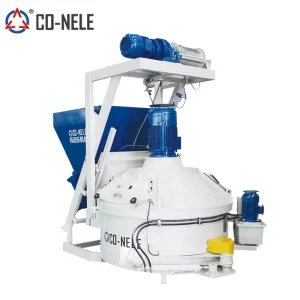
Understanding the Mechanics of Micro-Homogeneity, High Specific Power Input, and Granulation Mechanics in Modern Material Processing.
In high-value material processing—spanning advanced refractory ceramics, synthetic proppants, battery cathode/anode slurries, and glass batches—conventional horizontal twin-shaft or standard gravity pan mixers frequently hit physical boundaries. When target formulations require a coefficient of variation (CV) below 2% or demand controlled micro-granulation with zero dead-zone segregation, the industrial mixing architecture must transition to dynamic forced-action kinematics.
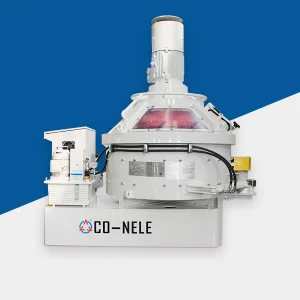
The Type R Intensive Mixer architecture (pioneered globally by Eirich and perfected by top-tier Chinese OEM manufacturers like CO-NELE) represents the pinnacle of counter-current mechanical mixing science. By decoupling the movement of the material vessel from the high-shear mixing rotor tool, this technology enables process engineers to independently control energy input, material velocity gradients, and residence time.
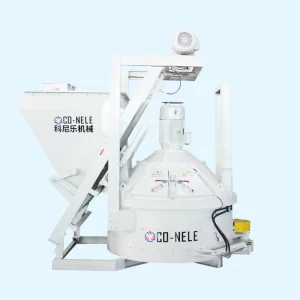
As a premier China intensive mixer manufacturer, our design philosophy directly solves the mechanical wear and thermal instability problems associated with processing ultra-abrasive powders. Below is the structural engineering breakdown of our Type R equivalent systems:
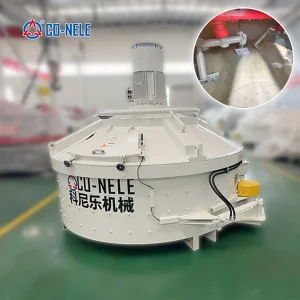
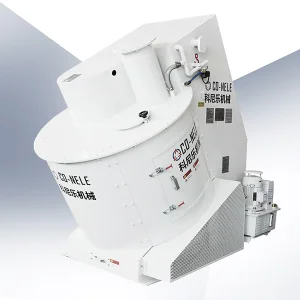
The mixing container is positioned at an angle and rotates to transport material upwards against gravity. When material reaches the top point of the pan arc, gravity forces it to cascade downwards directly into the path of the high-speed rotating tool. This eliminates dead zones completely at the pan floor and side walls.
Located eccentrically within the mixing pan, the rotor tool can run co-currently or counter-currently to the direction of the vessel rotation. Rotor tip speeds can be adjusted dynamically from 2 m/s up to 40 m/s, providing tailored shear forces to de-agglomerate micro-powders or build spherical granules.
A stationary, dual-purpose wall and bottom scraper continuously cleans the inner surfaces of the vessel. It diverts material streams straight toward the rotor while facilitating rapid, residual-free bottom discharge via a central hydraulic discharge gate upon cycle completion.
| Model Series (Type R Equiv.) | Usable Capacity (Liters) | Batch Weight (Kg, Refractory) | Main Rotor Power (kW) | Pan Drive Power (kW) | Discharge Method |
|---|---|---|---|---|---|
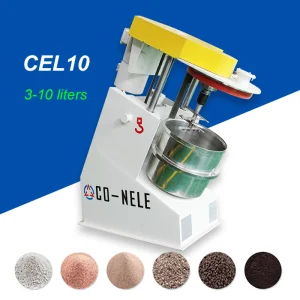
| CEL-05 / R02 | 5 - 10 L | 8 - 15 kg | 2.2 - 4.0 kW | 0.75 kW | Manual / Tilt Pan |
| CQ-50 / R08 | 50 - 75 L | 80 - 120 kg | 7.5 - 11 kW | 2.2 kW | Bottom Central Gate |
| CQ-250 / R12 | 250 L | 400 - 500 kg | 22 - 30 kW | 5.5 kW | Hydraulic Central Gate |
| CQ-1000 / R16 | 1,000 L | 1,500 - 1,800 kg | 75 - 90 kW | 15 kW | Fast Hydraulic Gate |
| CQ-3000 / R24 | 3,000 L | 4,500 - 5,200 kg | 200 - 250 kW | 37 kW | Dual Hydraulic Discharge |
How Chinese Engineering Innovation is Reducing Total Cost of Ownership (TCO) Across Critical Global Processing Sectors.
Historically, European manufacturers dominated the market for inclined intensive mixing technology. However, elevated capital costs, prolonged lead times for wear parts, and rigid custom engineering options forced international buyers to seek reliable Chinese partners. As a leading China Eirich Intensive Mixer Type R Manufacturer & Factory, our factory bridge this gap by offering precision-engineered machinery backed by European-tier component supply chains (HARDOX wear plates, Siemens PLCs, SEW gearboxes) at substantial cost efficiencies.
Unshaped refractory castables, carbon-bonded alumina bricks, and magnesium-carbon mixtures require homogenous liquid binder dispersion (phenolic resins or silicate solutions). Type R technology eliminates micro-agglomerates without breaking fragile aggregate structures.
Spray drying alternative: Combining mixing and granulating in one vessel yields spherical granules with tight size distribution (0.2 mm to 2.5 mm) for pressing oxide ceramics, ferrite cores, and metallic friction materials.
Continuous and batch homogenization of anode/cathode dry precursor blends requires zero metallic contamination. We supply specialized nickel-alloy or ceramic-coated interior liners tailored for gigafactories worldwide.
Emerging Trends shaping China's Industrial Machinery Sector: AI Torque Sensing, Closed-Loop Vacuum Granulation & Zero-Carbon Metallurgy.
Modern intensive mixers are evolving into smart processing units. By continuously measuring motor torque profiles and electrical conductivity inside the mixing bed, the control system calculates moisture evolution and plasticizes binders dynamically without stopping the batch.
Processing thermally sensitive chemical masses or solvent-based pastes demands low-temperature drying during mixing. Integrated vacuum jackets allow rapid boiling of carrier liquids while the high-speed rotor forms densified granules in a single sealed step.
Replacing standard asynchronous motors with high-torque direct-drive permanent magnet motors cuts mechanical transmission losses by 12–18%. This delivers instant speed changes and reduces mechanical wear on belt gearboxes.
Direct technical answers provided by our engineering director to assist EPC contractors, plant managers, and procurement officers.
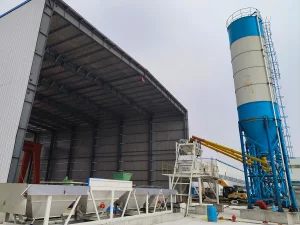
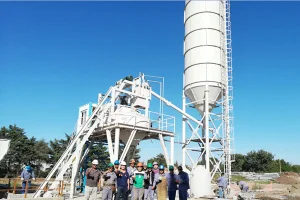
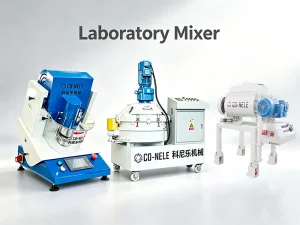
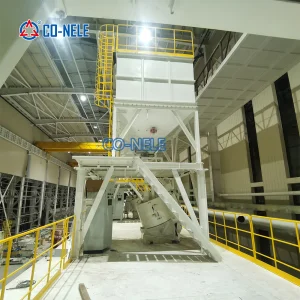
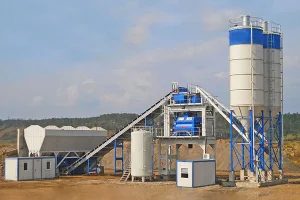
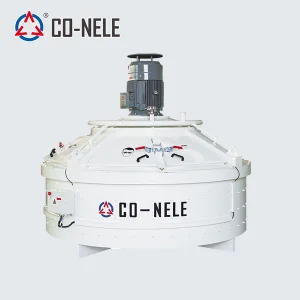
Explore our expanded machinery portfolio covering specialized lab scale units, refractory planetary mixers, and high-volume stationary concrete batching plants.
Send us your raw material specifications (bulk density, particle size distribution, moisture target). Our Qingdao R&D center will perform a lab trial, generate a complete shear-rate report, and tailor an OEM intensive mixing plant design for your factory.