CO-NELEMixing & Granulation
High-precision forced-action mixers, mobile dry plants, and intensive granulators customized for global OEM/ODM infrastructure deployment.
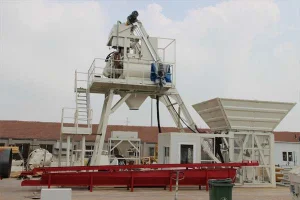
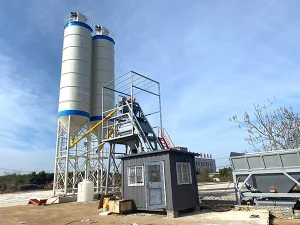
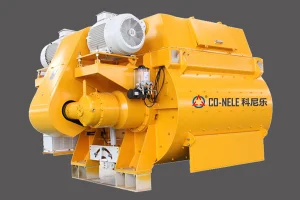
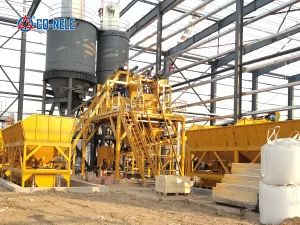
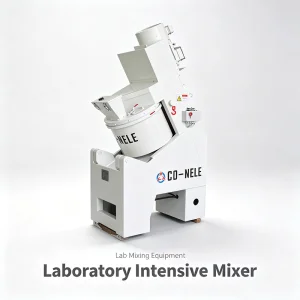
The global construction industry is undergoing a systemic transition from traditional on-site wet mixing to centralized, pre-blended dry mix mortars, special concrete, and technical powders. Modern Dry Mix Batching Plants represent the nexus of civil engineering and industrial chemical processing.
With stringent global carbon regulations (such as the EU ETS and CBAM), dry batching plants are re-engineered to process supplementary cementitious materials (SCMs)—including calcined clay, ground granulated blast-furnace slag (GGBS), fly ash, and bio-silica. Achieving micro-homogeneity with alternative low-carbon binders requires advanced forced-shear mixing kinematics.
Modern formulated mortars (tile adhesives, self-leveling compounds, repair mortars) rely on complex chemical recipes featuring Redispersible Polymer Powders (RDP), Cellulose Ethers (HEMC/HPMC), defoamers, and accelerators. Modern dry batching plants incorporate gravimetric loss-in-weight feeders capable of precision dosing within ±0.1% accuracy.
Global contractors demand fast assembly and relocation flexibility. Next-generation Chinese manufacturing prioritizes containerized, tower-type, or foundationless horizontal batching plants. Pre-wired plug-and-play modules reduce field installation times from months to under 14 days, minimizing civil foundation capital expenses.
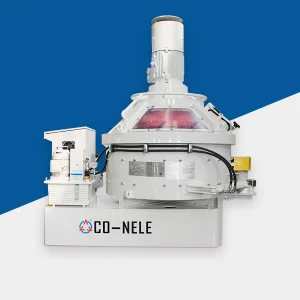
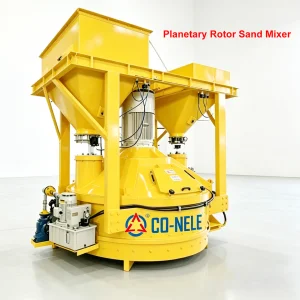
Technical Insight: Traditional gravity mixing is mathematically insufficient for modern modified dry mortars. High-intensity fluidization bed mixers—combining plowshare or planetary shear mechanisms—are required to achieve a Coefficient of Variation (CV) under 3% within 60 to 90 seconds of batch cycle time.
When international EPC contractors, building material conglomerates, and commercial mortar suppliers audit a China Dry Mix Batching Plant Manufacturer, procurement evaluation has shifted from initial CAPEX savings to holistic Total Cost of Ownership (TCO) and process reliability.
Raw chemical additives (e.g., cellulose ethers, hydrophobic agents) account for up to 60% of batch manufacturing costs. Sourcing decision-makers prioritize plants equipped with multi-stage pneumatic dosing valves, vibration-isolated load cell frameworks, and predictive cut-off algorithms to prevent over-dosing expensive ingredients.
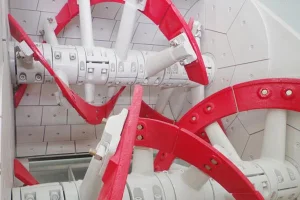
Dry mix batching involved highly abrasive silica quartz sands (up to 7-8 Mohs hardness). Premium Chinese OEMs equip mixing chambers with replaceable Ni-Hard or Chromium alloy tiles (HRC ≥ 62) and Hardox cladding. Bolt-on liner systems allow single-shift replacement, ensuring plant operational uptime of over 95%.
Fine organic powders present dust explosion hazards (ST-1/ST-2 classes). International buyers require plants equipped with explosive venting panels, pulse-jet reverse-air dust collectors (<10mg/Nm³ emission), nitrogen inerting options, and ATEX-certified electrical components for global regulatory compliance.
Why leading global contractors partner directly with top-tier Chinese dry mix batching plant factories in Qingdao and key industrial hubs: vertical integration, advanced manufacturing technologies, and localized global service ecosystems.
Unlike assemblers who buy off-the-shelf commercial gearboxes, leading Chinese mixing manufacturers engineer proprietary planetary reducers. Precision gear grinding, thermal hardening, and dynamic load bench testing guarantee high torque density under harsh dry-start conditions.
Utilizing multi-axis robotic welding cells, large-scale CNC gantry milling machines, and automated fiber laser cutting, key structural components—batching hoppers, mixing pans, aggregate silos—achieve sub-millimeter tolerances and long-term fatigue resistance under continuous dynamic stress.
Proximity to world-class port logistics, steel production clusters, and specialized pneumatic component suppliers enables short manufacturing lead times (typically 30–45 days) and immediate spare parts dispatch via global air express networks.
Every batching plant leaving the factory undergoes full dry-run automation validation on Siemens PLC / industrial computer control platforms. Real-time sensor telemetry, cloud-based diagnostic gateways, and simulated batching cycles ensure zero commissioning defects upon arrival at your site overseas.
Dry mix batching equipment configuration varies drastically depending on local infrastructure standards, climate conditions, and raw material availability across global markets.
| Target Region | Dominant Product Demand | Critical Plant Engineering Feature | Recommended Plant Architecture |
|---|---|---|---|
| Middle East & North Africa (MENA) | High-grade C60+ concrete, thermal insulation renders, tile mortars. | Aggregate cooling systems, heavy-duty dust containment, anti-high ambient temperature electrical enclosures. | Tower Type Dry Mortar Plant (High Output, 60–100 t/h) |
| Southeast Asia & South Asia | Road paving tiles, masonry mortar, self-leveling floor compounds. | Sand drying & screening integration, humidity-compensated batching sensors, anti-corrosion paint coatings. | Stepped Dry Mix Plant with Integrated Rotary Dryer |
| North America & Europe | Ultra-High Performance Concrete (UHPC), repair mortars, eco-binders. | Micro-dosing micro-silica feeders, explosion-proof ATEX valves, continuous cloud data logging for auditing. | Horizontal Modular Containerized Plant |
| Latin America & Sub-Saharan Africa | Standard masonry mortar, plastering mortar, dry-cast paving blocks. | Low foundation cost design, simplified PLC operation interface, dual diesel-electric generator setup options. | Foundationless Compact / Mobile Dry Batching Unit |
Demands total dispersion of polymer fibers and powdered resins without generating localized heat that leads to premature polymer activation. High-shear intensive mixers prevent agglomeration of fine additives.
Ultra-High Performance Concrete requires intense mechanical shear forces to disperse silica fume and nano-particles around quartz sand matrices. Vertical-shaft counter-current mixers eliminate unmixed "dead zones."
Handling heavy densities and extreme abrasiveness (corundum, bauxite, silicon carbide). Requires special ceramic or tungsten carbide blade coatings and high-torque start capability under heavy load.
Direct answers from our senior plant design team regarding machine selection, batching tolerances, and installation logistics.
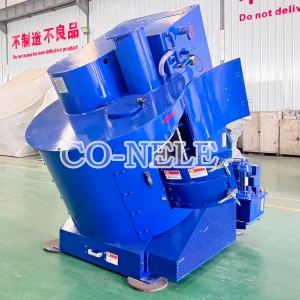
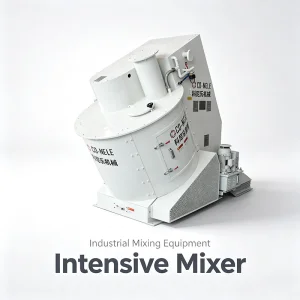
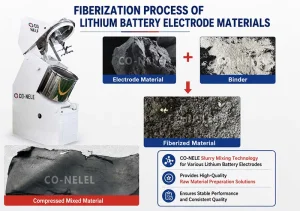
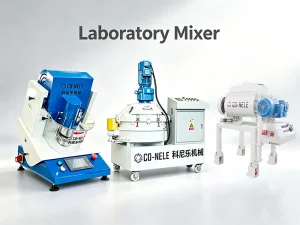
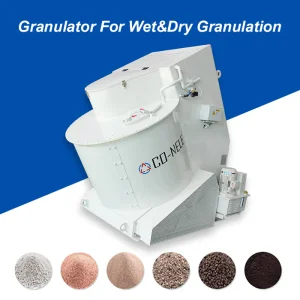
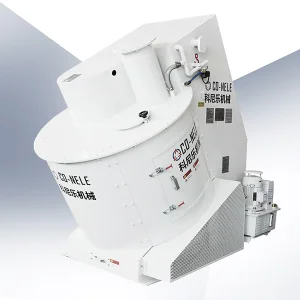
Complementary industrial mixers and laboratory granulators designed for refractory, asphalt, ceramic, and advanced battery material dry processing.