
CO-NELEMixing & Granulation
Explore standard and customized mixing systems engineered for ultra-high homogeneity, rapid discharge cycles, and minimal wear.
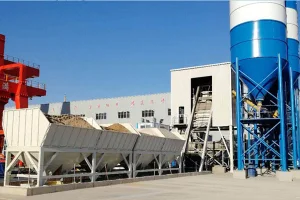
In modern structural engineering and material science, the quality of concrete, refractory castables, and advanced powder ceramics is fundamentally dictated by one variable: Micro-Homogeneity.
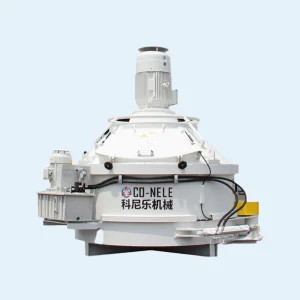
Traditional gravity tilting mixers and conventional horizontal twin-shaft mixers encounter physical limits when handling ultra-low water-cement ratios (w/c < 0.18), micro-silica fume agglomeration, and high-concentration synthetic fiber reinforcement. A China Concrete Intensive Mixer resolves these mechanical boundaries through forced counter-current planetary kinematics and inclined high-shear rotor interaction.
By decoupling material transport from high-speed dispersion, intensive mixers impart targeted mechanical energy directly into the mix volume. This eliminates "dead zones" inside the vessel, reducing the mixing cycle by up to 60% while achieving a variation coefficient (CV) of less than 3% across complex formulations.
Comparative metrics demonstrating how intensive counter-current mixing outperforms traditional mixing methods:
| Mixing Technology | Kinematic Principle | Optimal Material Viscosity | Energy Transfer Efficiency | Target Industries |
|---|---|---|---|---|
| Intensive Counter-Current Mixer | Rotating pan + High-speed off-center shear rotor | Ultra-High (Dry powder, paste, slurries) | 90% - 95% | UHPC, Refractories, Granulation, PTFE, Ceramics |
| Planetary Counter-Current Mixer | Vertical axis star-arms + Outer scraper blades | High to Medium (Dry cast, precast) | 80% - 85% | Concrete Blocks, Precast Beams, Pavers, GFRC |
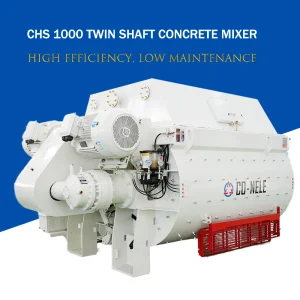
| Compulsory Twin Shaft Mixer | Dual counter-rotating horizontal paddles | Medium to Low (Slump concrete > 80mm) | 65% - 75% | Commercial Ready-Mix, Mass Foundation Concrete |
Why leading global EPCs, precast manufacturers, and process industries are shifting sourcing strategies toward Chinese specialized machinery manufacturers.
Global carbon reduction mandates require reducing Portland cement clinker content by up to 50%, substituting it with supplementary cementitious materials (SCMs) like slag, fly ash, and calcined clays. SCMs demand extreme shear mixing to activate pozzolanic reactivity, which standard mixers cannot provide.
Procurement teams evaluate Total Cost of Ownership (TCO). Chinese intensive mixers now utilize proprietary chromium-carbide hardfacing, tungsten-carbide blade tips, and chilled cast iron liners, extending component lifespan beyond 150,000 operational batches under heavy abrasive load.
Modern plants demand real-time telemetry. China's top intensive mixer manufacturers embed industrial IoT edge controllers, microwave moisture sensor feedback loops, dynamic hydraulic discharge adjustments, and predictive gearbox oil temperature algorithms.
The global leadership of Chinese concrete intensive mixer manufacturers stems from deep supply chain integration, localized metallurgical innovation, and advanced robotic manufacturing ecosystems in industrial hubs like Qingdao, Shandong.
Rather than serving merely as assembly facilities, leading Chinese intensive mixer manufacturers control the complete manufacturing vertical. From original design and casting of planetary reduction gearboxes to robotic laser-welding of mixer pans, every phase is optimized under ISO9001 and CE standards.
100% of mixer drive units undergo 48-hour continuous load testing on in-house test benches to verify vibration metrics, temperature stability, and seal integrity before export packaging.
China's comprehensive logistics infrastructure guarantees rapid dispatch of critical wear blades, mixing arms, discharge seals, and electrical relays within 24 to 48 hours to any continent.
Tailored mixing vessel geometries, custom motor voltages (220V–690V, 50/60Hz), explosive-proof ATEX ratings for chemical granulations, and steam-injection ports for heated mixing.
Discover how Chinese concrete intensive mixers and granulating machines adapt to high-precision industrial processes worldwide.
Ensures zero agglomeration of steel and synthetic micro-fibers, distributing micro-silica evenly to produce defect-free bridge decks, architectural panels, and anti-scour wind turbine foundations.
Delivers high kinetic shear to wet ultra-fine refractory matrix dry powders quickly. Essential for high-alumina, magnesia, and silicon-carbide bricks in steel plants and glass kilns.
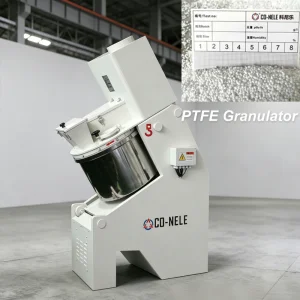
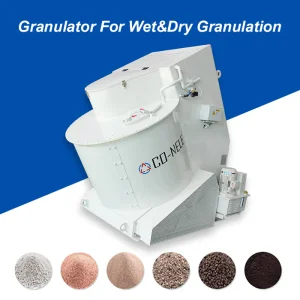
Combines mixing and granulating in one vessel. Applied to ceramic powders, PTFE granulates, battery cathode slurries, zinc sulfate, iron powder, and chemical fertilizers with > 90% sphericity.
Fast batching cycles with uniform pigment distribution. Produces high-density earth-moist concrete for interlocking pavers, retaining walls, and railway sleepers with zero color variations.
Understanding the fluid dynamic vector interaction inside an intensive mixer vessel.
While the mixing pan rotates at a steady speed to transport material toward the mixing zone, one or multiple eccentrically arranged rotor tools rotate in the opposite direction at significantly higher velocities (up to 30 m/s tip speed). This creates extreme velocity gradients that break up agglomerates at the particle level.
Bottom and wall scrapers direct material back into the rotor path continuously. Gravity works together with centrifugal force, forcing 100% of the charge volume through the high-shear region multiple times every revolution, eliminating stratification.
By adjusting the rotor speed via variable frequency drives (VFD), operators can switch seamlessly between low-shear homogenization (suitable for fragile aggregates or light additives) and high-shear dispersion or granulating inside the same operational batch cycle.
Essential structural and mechanical criteria global buyers should verify when inspecting a China intensive mixer factory:
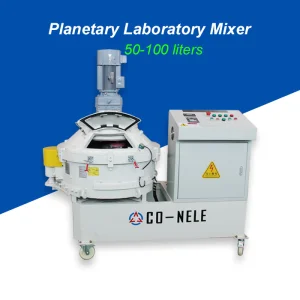
Discover laboratory R&D units, twin-shaft concrete mixers, block plants, and high-intensity granulators.
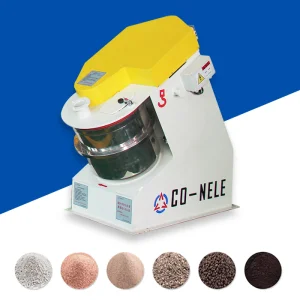
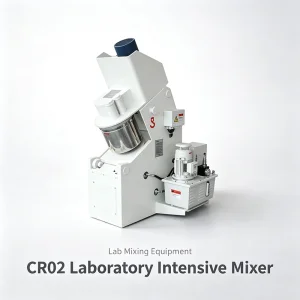
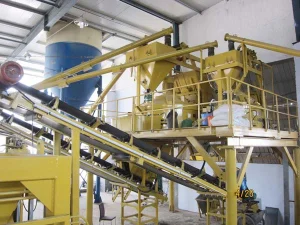
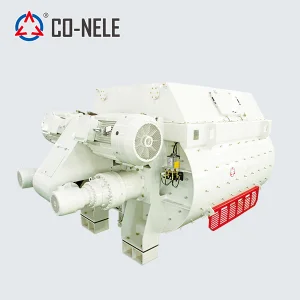
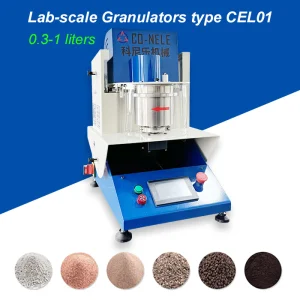
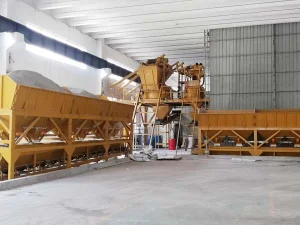
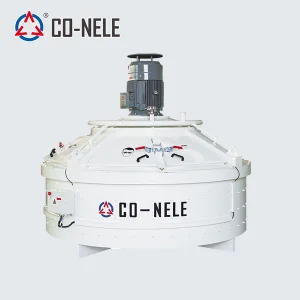
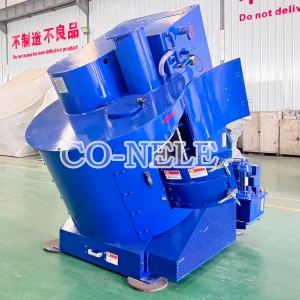
Expert technical insights directly addressing industrial buyer inquiries regarding machine selection, maintenance, and formula scaling.
Send us your raw material specifications, target capacity, or formula challenges. Our process engineers in Qingdao will conduct lab trial evaluations and provide full technical plant layouts.