CO-NELEMixing & Granulation
Engineering-grade compulsory planetary, twin-shaft, and granulating equipment exported worldwide.
The global demand for high-performance refractory materials and ultra-high-performance concrete (UHPC) has entered a phase of rapid transformation. Driven by stringent decarbonization targets in heavy industry, steelmaking modernization, blast furnace upgrades, and next-generation civil infrastructure, the industrial mixing equipment sector faces unprecedented technical challenges. Modern refractory castables—ranging from Low-Cement Castables (LCC) and Ultra-Low Cement Castables (ULCC) to self-flowing alumino-silicate formulations—no longer tolerate traditional gravity or simple drum mixing. They demand violent, multi-directional compulsory shear forces capable of breaking nano-scale powder agglomerations without destroying fragile synthetic fibers or changing thixotropic properties.
As heavy industries across Europe, North America, the Middle East, and Southeast Asia replace conventional brick linings with monolithic refractories, the reliance on high-precision China Castable Mixer Factories has surged. China has evolved from a low-cost equipment supplier into the world's primary innovation hub for complex mixing dynamics, high-torque planetary reducers, and custom wear-resistant alloy metallurgy. Industrial end-users no longer seek basic machinery; they demand proven process reliability, minimal maintenance downtime, precise moisture dispersion control, and strict compliance with global engineering standards (ISO9001, CE, ATEX).
Mixing refractory castables is fundamentally distinct from processing conventional ready-mix concrete. Refractory batches consist of dense alumino-silicate aggregates, ultra-fine micro-silica powders (often sub-micron in scale), water-reducing thixotropic admixtures, and metallic/organic reinforcement fibers. Standard ribbon blenders or free-fall tilted drum mixers fail completely in this environment: they leave dry unmixed material against the vessel walls, generate heat spikes that accelerate premature setting, and cause severe aggregate segregation.
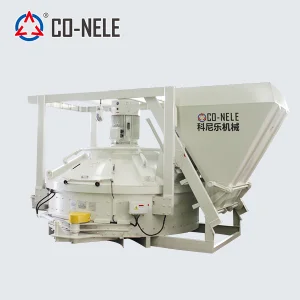
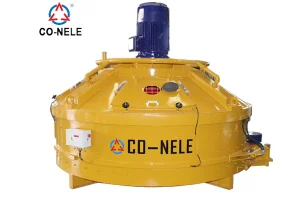
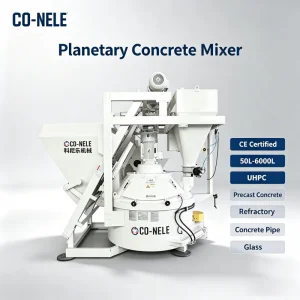
Planetary mixing arms rotate around a central axis while simultaneously spinning on their own gear center. This complex mathematical trajectory guarantees 100% swept coverage of the pan floor every 4 revolutions, eliminating unmixed dead corners.
Incorporating stainless steel fibers into refractory castables or UHPC often leads to severe fiber balling. Planetary counter-current systems generate differential velocity gradients that shear fiber clumps apart safely without breaking individual filament integrity.
Ultra-low cement castables rely on minute water percentages (often <4.5% by weight). Compulsory planetary shear forces rapidly coat micro-particles with moisture, reaching uniform thixotropic fluidity in under 90 seconds.
| Mixer Kinematic Type | Homogeneity Coefficient (CV) | Fiber Balling Risk | Power-to-Volume Ratio | Primary Industrial Application |
|---|---|---|---|---|
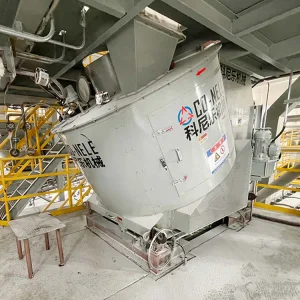
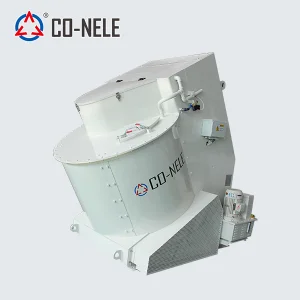
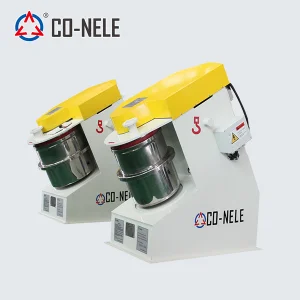
| Planetary Counter-Current (CMP/CMPS) | < 3% (Ultra-High) | Negligible / Zero | High Efficiency (kW/m³) | Refractory Castables, UHPC, Precast Tiles, Glass Batching |
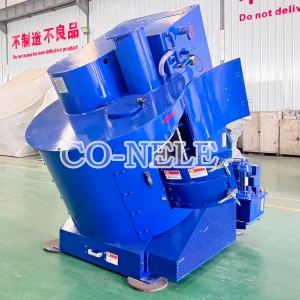
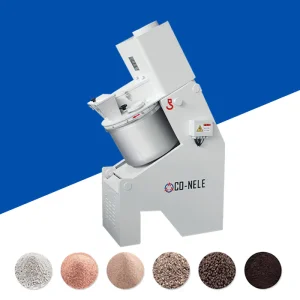
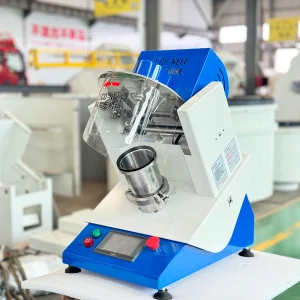
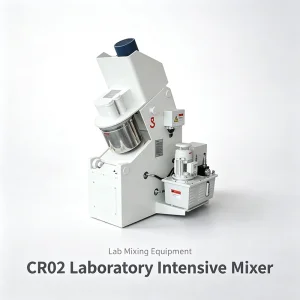
| Intensive Inclined Rotor (CR Series) | < 1.5% (Extreme Precision) | Zero | Very High (Shear Focused) | Powder Metallurgy, Technical Ceramics, Battery Materials |
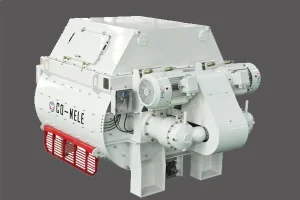
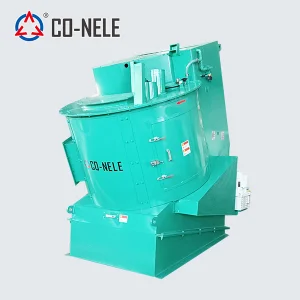
| Twin-Shaft Horizontal (CHS Series) | 5% - 8% (Standard) | Moderate to High | Medium | Commercial Ready-Mix, Mass Foundation Concrete, Dam Construction |
| Free-Fall Drum / Pan Mixer | > 15% (Poor for Castables) | Severe | Low | Basic Construction Mortars, Unreinforced Aggregate Fill |
Procurement directors and plant operational managers evaluating global equipment sourcing encounter a stark reality: European and North American machinery manufacturers carry heavy legacy overheads, extended lead times, and prohibitive spare-part markups. Modern Chinese manufacturing—exemplified by industrial leaders like CO-NELE in Qingdao, Shandong—combines complete vertically integrated manufacturing with world-class mechanical engineering.
Unlike third-party packagers who buy off-the-shelf transmissions, elite Chinese factories design and machine their own commercial planetary gearboxes in-house. Precision gear hobbing, heat treatment, and load-testing benches ensure drive units withstand violent shock loads caused by dense dry castable start-ups.
Refractory aggregates (such as corundum, fused silica, and silicon carbide) are fiercely abrasive. Chinese factories offer direct integration of high-chromium alloys (Cr26+), tungsten carbide surfacing, and bolt-on replaceable ceramic liner tiles engineered for up to 150,000 continuous mixing cycles.
With standardized component modularity and digital CNC production lines, a custom-engineered castable mixing plant can transition from final CAD sign-off to container loading in under 30 days—a timeline unmatched by Western OEMs.
Every shaft, seal, arm, and liner is designed around standardized international mechanical fasteners and bearings (SKF/NSK) alongside Siemens PLC components, guaranteeing localized spare part availability worldwide.
Deploying specialized CMP planetary castable mixers on-site at integrated steel mills for rapid repair of blast furnace runners, tundish linings, and ladle covers. Fast batching cycles minimize thermal downtime during emergency hot-repairs.
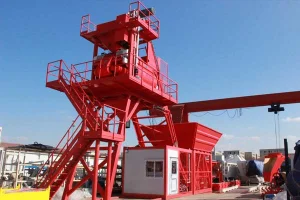
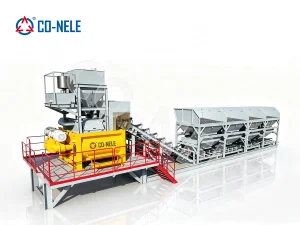
Engineered mobile mixing plants preparing Ultra-High Performance Concrete for mega-span bridge deck joints and offshore wind turbine foundation anti-scour grouting. High shear rates disperse steel fibers evenly without segregation.
Utilizing high-speed inclined intensive mixers (CR Series) to transform fine ceramic powders into dense, highly spherical granules (0.5–8mm) ideal for dry pressing and iso-static molding operations.
Batching dense alkali-resistant refractory castables used inside cement kiln preheater towers, rotary kilns, and glass tank furnace regenerator crowns, ensuring prolonged chemical resistance.
Eliminating batch-to-batch color variation in dry-cast block batching plants. Counter-current movement disperses inorganic iron-oxide pigments rapidly across all aggregate surfaces.
Sealed dust-free intensive mixers handling metallic powders, synthetic graphite, and battery material precursors under inert gas flushing to prevent oxidation during intensive compounding.
When international EPC contractors, plant owners, and procurement committees evaluate Chinese machinery suppliers, technical due diligence must extend beyond basic machine dimensions. The following engineering evaluation framework guarantees long-term operational success:
Castable mixers often operate with liquid admixtures and micro-powders. Ensure the mixer utilizes multi-stage mechanical seals combined with automated grease purging systems to prevent abrasive slurry from entering shaft bearings.
Hydraulic discharge doors must feature double-eccentric sealing rings to prevent fine dry powder leakage during charging and eliminate liquid slurry dripping during thixotropic wet mixing.
Check if wear plates are divided into standardized, lightweight rhombic segments. Segmented liners allow single maintenance personnel to swap out high-wear zones (such as outer wall paths) without replacing the entire floor liner set.
Modern batching plants require Siemens PLC automation supporting SCADA integration, real-time moisture probe feedback (microwave sensors), automatic wash-down systems, and printable batch record verification.
The industrial mixing sector is undergoing a digital revolution. Future-proof factories are shifting from fixed-timer mixing to dynamic sensor-driven mixing processes. Key innovations shaping the next decade include:
Real-time optical and microwave sensors mounted inside the pan floor measure aggregate surface moisture instantly, allowing the automated control system to adjust liquid dosing dynamically during the dry mixing phase.
IoT vibration and temperature sensors fitted on planetary drive units transmit live telemetry to maintenance teams, detecting micro-cracks or oil viscosity drop-offs long before mechanical failure occurs.
Variable Frequency Drives (VFDs) adjust rotational speed depending on the mixing phase—high speed during initial dry powder dispersion, reduced speed during fiber dosing—cutting overall energy consumption by up to 25% per batch.
Traditional pan mixers use fixed blades mounted on a central rotating cross that sweeps material in simple concentric circles. This leaves significant unmixed dead zones near the pan center and outer walls, making them unsuitable for low-cement refractories. A planetary counter-current mixer features mixing blades that spin on their own axis while revolving around the central tank axis (star motion). This creates a violent multi-directional shear pattern that covers 100% of the pan floor every few seconds, achieving micro-homogeneity with a Coefficient of Variation (CV) below 3%.
Wear part lifespan depends on aggregate hardness (e.g., bauxite vs. fused corundum vs. silicon carbide). When equipped with standard high-chromium alloy liners (Cr26+), a CO-NELE planetary castable mixer typically achieves 40,000 to 60,000 batches on highly abrasive refractory formulations, and over 120,000 batches on standard concrete. Optional tungsten carbide surfacing or modular technical ceramic lining tiles can extend liner lifespan even further.
Yes. Planetary counter-current mixers excel at dispersing steel fibers, polypropylene (PP) fibers, and micro-silica powders. The dual-rotation star movement generates high velocity differential gradients across the batch volume, shearing apart fiber bundles rapidly and distributing them uniformly throughout the matrix without bending or destroying individual fibers.
Leading Chinese exporters like CO-NELE supply machinery configured to the buyer's local electrical standards (e.g., 220V/380V/415V/440V/480V at 50Hz or 60Hz). Electrical cabinets feature premium international components (Siemens, Schneider, ABB) and comply fully with European CE guidelines, UL wiring standards, and optional ATEX explosion-proof configurations for hazardous chemical environment installations.
Reputable factories operate specialized testing laboratories equipped with scale models (5-75 liter capacity). Buyers can ship 10-20 kg samples of their proprietary raw powders or aggregates directly to the factory in Qingdao. Engineering teams run mixing, granulation, and fluidity trials, providing comprehensive test reports containing bulk density, particle sphericity, cycle time optimization, and video documentation prior to contract finalization.
Specialized planetary, intensive, and pelletizing machinery engineered for global industry leaders.