
CO-NELEMixing & Granulation
Engineered for perfect scalability from laboratory trial batches (5L–100L) to high-throughput commercial batching plants across Qatar.
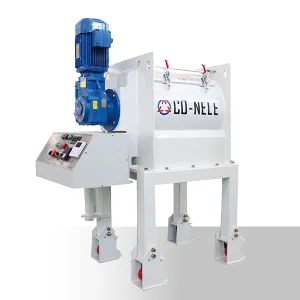
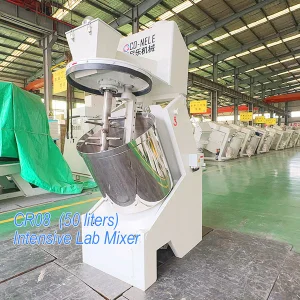
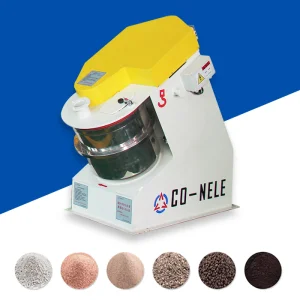
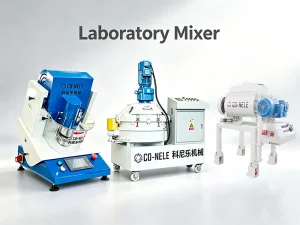
Doha, as the vibrant economic and industrial epicenter of Qatar, is currently undergoing an unprecedented urban and industrial transformation driven by the ambitious objectives of Qatar National Vision 2030 (QNV 2030). With monumental investments poured into mega-infrastructure, smart city expansion in Lusail, port developments in Ras Laffan, and industrial processing zones in Mesaieed, the demand for high-grade, resilient construction materials, specialized mortars, refractories, and chemical formulations has reached a critical juncture. The unique hyper-arid ambient conditions of the Arabian Gulf—characterized by extreme summer temperature spikes exceeding 45°C, intense solar radiation, high atmospheric salinity, and aggressive groundwater sulfate concentrations—present rigorous challenges to materials science.
In this demanding landscape, civil engineering labs, university research centers (such as Qatar University’s Center for Advanced Materials), and quality control units at major batching plants in Doha can no longer rely on conventional mixing methods. Modern infrastructure projects governed by Ashghal (Qatar Public Works Authority) demand concrete formulations with exceptionally low water-binder ratios, high volumes of supplementary cementitious materials (SCMs like silica fume, GGBS, and fly ash), micro-fibers, and precise chemical admixtures. Achieving micro-homogeneity at the lab testing stage is paramount before scaling up to continuous industrial batching.
A specialized Laboratory Mixer Manufacturer serving the Doha market must engineer machinery capable of executing intense shear force, precise rotational speed modulation, temperature-controlled environment simulation, and multi-phase dispersion (powder-liquid-fiber). Whether testing Ultra-High-Performance Concrete (UHPC) for bridge girders, developing thermal-insulating dry mortars, or formulating refractory linings for metallurgical smelters, precise laboratory mixing serves as the foundational pillar for quality assurance and material innovation in Qatar.
Providing definitive Information Gain through advanced mechanical physics and fluid dynamics.
Unlike standard horizontal or planetary gravity mixers, counter-current laboratory mixers drive materials in opposing rotational paths, completely eliminating dead spots and aggregate segregation.
High-shear rotors deagglomerate steel, glass, and synthetic micro-fibers within 30 to 60 seconds, distributing them uniformly without balling or clumping in dense UHPC mixes.
Kinematic energy dissipation rates in our R&D lab mixers match commercial industrial planetary mixers, allowing Doha engineers to translate lab recipes to full-scale batching without trial-and-error loss.
In classical concrete rheology, mixing is often governed by simple gravity turnover. However, modern binder formulations containing nanoparticles (nano-silica, titanium dioxide) and ultra-fine polymers require mechanical energy input high enough to break inter-particle van der Waals forces. Our laboratory mixing systems utilize dynamic rotor speeds ranging from 100 RPM up to 1500 RPM, producing a controlled velocity gradient throughout the vessel.
Furthermore, in Doha's arid climate, moisture evaporation during the mixing cycle can prematurely alter the water-cement ratio ($w/c$). Our laboratory mixers feature sealed vacuum-tight or jacketed thermal-control options, enabling researchers to maintain strict temperature regulation during extended trial mixing periods.
Tailored mixing machinery engineered to tackle Qatar's regional aggregate characteristics and infrastructure specs.
Formulating high-density, low-permeability concrete designed for Qatar's coastline, incorporating high replacement percentages of GGBS and silica fume to resist chloride ion attack.
R&D for tile adhesives, self-leveling compounds, and thermal insulation renders manufactured locally in Doha industrial zones, ensuring instant hydration of cellulose ethers.
High-intensity mixing of abrasive corundum, silicon carbide, and ultra-fine refractory binders for lining furnace walls in Mesaieed steel and aluminum processing facilities.
Comprehensive technical specifications designed for Qatar research engineers, project managers, and procurement specialists.
| Model Series | Usable Capacity (L) | Rotor Drive Power (kW) | Mixing Kinematics | Doha Application Suitability |
|---|---|---|---|---|
| CDW Series | 10 – 100 L | 1.5 – 5.5 kW | Single/Double Shaft Ribbon | Dry-mortar, tile adhesives, wall plasters |
| CR Series | 5 – 50 L | 3.0 – 11.0 kW | Inclined Counter-Current Intensive | UHPC, fine ceramics, battery slurries, high-shear R&D |
| CQM Series | 10 – 75 L | 2.2 – 7.5 kW | High-Speed Rotor & Rotating Pan | Refractory castables, granulating, diamond powders |
| CMP Lab Series | 50 – 150 L | 4.0 – 15.0 kW | Vertical Planetary Counter-Current | Concrete batch plant R&D, precast elements, Ashghal specs |
Pioneering advancements in digitalized rheology, AI-driven batching, and sustainable material mixing.
Integration of optical microwave moisture sensors and high-frequency torque-displacement transducers directly into the mixing pan, providing real-time rheology curves during trial runs in Doha labs.
Algorithms mapping laboratory mixing energy dissipation to full-scale batching plants, automatically adjusting mixing times, rotor speeds, and admixture dosing sequences.
Sealed laboratory mixers equipped with direct $CO_2$ injection systems for carbon-cured concrete R&D, directly supporting Qatar’s national sustainability and carbon reduction mandates.
Addressing key engineering considerations for selecting and operating laboratory mixers in Qatar.
Traditional horizontal twin-shaft or gravity drum mixers struggle to achieve uniform dispersion when dealing with dry mixes, micro-silica, and high-performance admixtures common in Ashghal-spec concretes. Planetary counter-current mixers feature star-arm kinematics where the mixing blades rotate on their own axis while revolving around the center point. This ensures 100% pan coverage, prevents material build-up, and achieves a coefficient of variation (CV) under 1.5% in significantly shorter mixing cycles.
Our laboratory mixing units engineered for Doha can be customized with double-walled cooling/heating jackets, allowing water or thermal fluid circulation to control mix temperature. Additionally, drive systems and electrical cabinets are fitted with IP65 weather-proof enclosures and high-ambient cooling fans to withstand harsh environmental conditions.
Yes. Our laboratory planetary and intensive mixers are geometrically and kinematically scaled to match our commercial CMP planetary and CHS twin-shaft batching mixers. By maintaining constant Froude numbers and linear tip speeds, the mixing dynamics inside the lab vessel reflect the exact shear rates experienced in large-scale production plants.
Standard quartz sand in Qatar can be highly abrasive. Our laboratory mixer mixing pans are fitted with easily replaceable, high-chrome alloy liners (hardness >60 HRC) or optional tungsten carbide coated blades, ensuring long operational lifespans even under aggressive continuous testing regimens.
All machinery exported to Qatar is built to local electrical supply specifications (415V, 50Hz, 3-phase). Units come complete with CE certification, full English operation manuals, electrical schematics, standard spare parts lists, and factory acceptance test (FAT) documentation required by Qatar customs and quality assurance authorities.
From laboratory research units to full-scale concrete batching plants deployed across global and Qatar job sites.
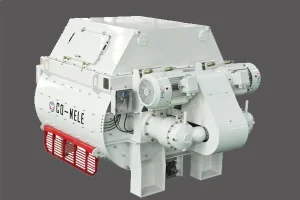
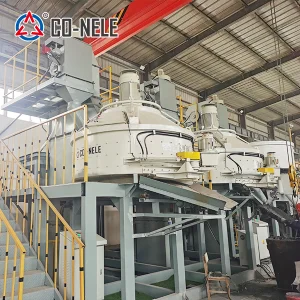
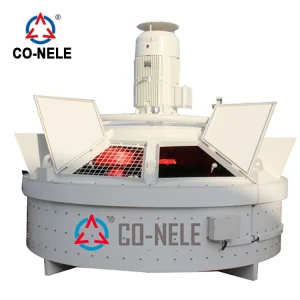
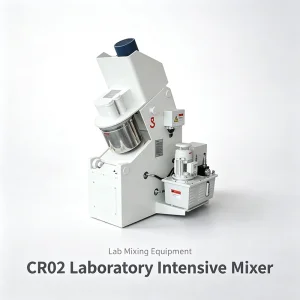
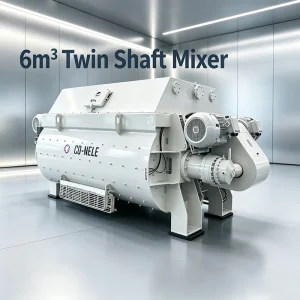
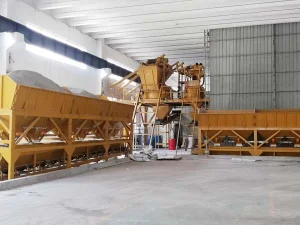
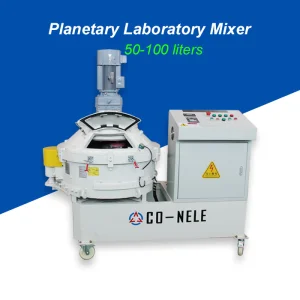
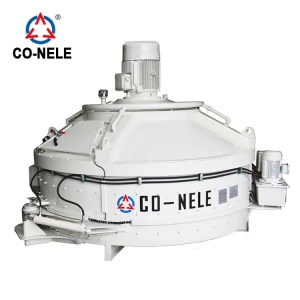
Whether you require a single R&D laboratory mixer for trial mix optimization or a complete turnkey concrete batching plant solution for major Doha infrastructure projects, our engineering team is ready to deliver precision-crafted machinery.