
CO-NELEMixing & Granulation
Explore our core planetary mixers, laboratory testing units, and high-intensity production machinery designed for maximum micro-homogeneity.
Why modern infrastructure demands a transition from traditional twin-shaft and drum mixers to vertical shaft planetary counter-current mixing systems.
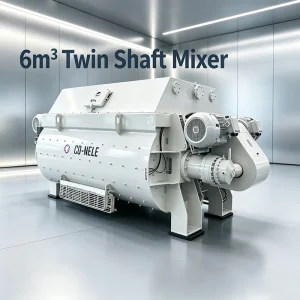
The global construction, precast concrete, and high-performance material manufacturing sectors are undergoing a structural shift. Historically, standard ready-mix concrete production relied heavily on horizontal twin-shaft or single-shaft mixers. While twin-shaft mixers excel at bulk volume output for standard structural grades (C20–C40), they demonstrate clear mechanical limits when tasked with advanced formulations such as Ultra-High-Performance Concrete (UHPC), Glass Fiber Reinforced Concrete (GFRC), dry-cast refractories, and micro-pigmented architectural blocks.
The global commercial landscape now places rigorous engineering constraints on concrete mixing: strict carbon reduction mandates (requiring higher supplementary cementitious materials such as silica fume and fly ash), lower water-to-binder ($w/b$) ratios down to 0.16–0.22, and the homogenous dispersion of steel or synthetic micro-fibers. Under these conditions, conventional mixers develop structural "dead zones," leading to particle agglomeration, non-uniform hydration, and elevated scrap rates.
As international EPC contractors, precast manufacturers, and industrial material processors scale up operations in North America, Europe, the Middle East, and Southeast Asia, the global demand for high-reliability Vertical Shaft Planetary Concrete Mixers has grown at a CAGR of 7.4%. Decision-makers no longer view mixers as simple mechanical agitators; they are evaluated as high-precision chemical reactors where kinetic energy dissipation dictates final structural performance.
A rigorous examination of forced planetary motion, hydro-mechanical shear rates, and structural load transfer within planetary mixers.
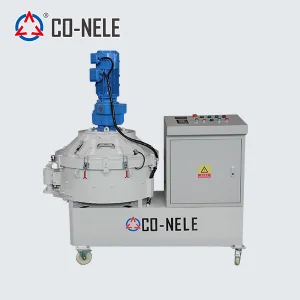
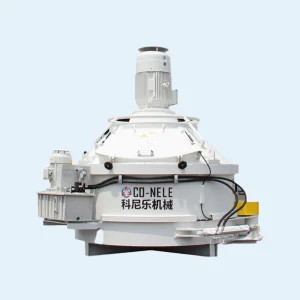
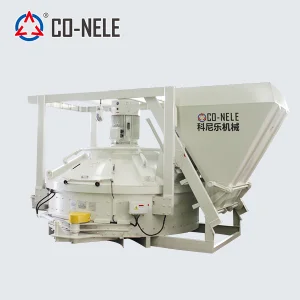
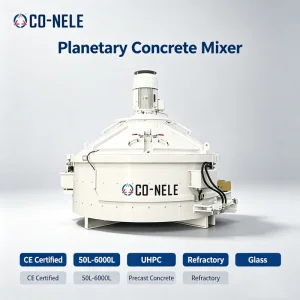
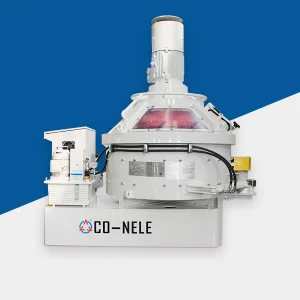
Unlike fixed-axis mixers, vertical shaft planetary mixers utilize a dual-rotation mechanical layout. The mixing star arms rotate rapidly around their own axes while simultaneously revolving around the central axis of the mixing pan. This creates a high-density, overlapping geometric trajectory that guarantees zero dead zones across 100% of the mixing floor.
When dry powders (cement, silica fume, ultrafine slag) meet micro-water droplets, high shear forces are required to break agglomerates. Planetary arms generate intensive shearing and squeeze actions without crushing sensitive aggregates. Integrated high-speed fly-cutters (optional) provide additional localized shear to rapidly disperse bundled steel or polymer fibers.
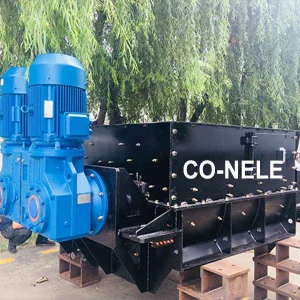
The core lifetime of any planetary mixer rests on its gearbox. Leading Chinese original equipment manufacturers (OEMs) like CO-NELE engineer purpose-built planetary gearboxes featuring surface-hardened alloy gear pairs, multi-stage sealing systems against abrasive slurry ingress, and high torque reserve factors ($SF > 2.2$) to withstand emergency restarts under full load.
Analyzing the cost-to-performance ratio, industrial cluster synergies, and precision manufacturing capabilities of top-tier Chinese mixer manufacturers.
Global procurement teams evaluating vertical shaft planetary mixers frequently compare European equipment suppliers with premier Chinese manufacturers. Over the past two decades, China's industrial equipment sector—specifically anchored in advanced engineering machinery hubs like Qingdao, Shandong—has transformed from low-cost assembly to high-precision engineering leadership.
From raw metallurgical casting of high-chrome wear plates (up to 65 HRC) to precision CNC gear hobbing and automated welding robotics, 95% of component fabrication occurs within localized industrial clusters. This cuts lead times for custom machines by 40% compared to Western suppliers.
Chinese manufacturers offer comparable—and in key fatigue-resistance parameters, superior—build quality at a CAPEX saving of 35% to 50%. Reduced upfront capital expenditure combined with standardized, highly affordable spare parts dramatically improves plant ROI timelines.
Chinese OEM engineering teams maintain high agility, offering tailored discharge door configurations, steam injection ports for cold-weather concrete, dual-door layouts for twin-line batching plants, and custom explosion-proof electrical controls for chemical applications without standard lead-time penalties.
Leading Chinese factories operate under strict ISO9001 quality management systems, CE certification, and international welding standards (EN 1090 / ISO 3834). Dynamic test benches evaluate gear noise, vibration spectrums, and oil temperature stability under simulated 120% load prior to factory release, assuring global buyers of immediate field reliability.
How planetary counter-current mixing solves process bottlenecks across diverse material processing industries.
UHPC requires dispersing micro-silica and steel fibers into dense matrix mixtures with ultra-low water content. Planetary counter-current arms rapidly shear fiber bundles, eliminating structural clumping ("balling effect") and securing compressive strengths exceeding 150–200 MPa.
For dry-cast concrete blocks, kerbstones, prestressed railway sleepers, and architectural facade panels, surface color consistency and dimensional tolerance are paramount. Planetary mixers ensure uniform moisture distribution across zero-slump mixes, ensuring sharp product edges and uniform compaction.
Industrial furnaces and steel ladles depend on unshaped refractory castables containing corundum, silicon carbide, and dense binder powders. Planetary counter-current mixers deliver intensive mixing energy without overheating the batch, optimizing setting times and thermal resistance.
Glass manufacturing requires exact homogenization of silica sand, soda ash, limestone, and metallic oxide colorants. Planetary mixers prevent micro-segregation during discharge, extending glass furnace tank life and reducing optical inclusions in finished glass containers or solar glass sheets.
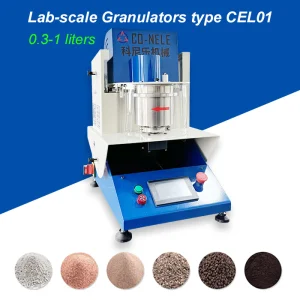
Modified intensive planetary mixers with anti-contamination liners (stainless steel, polyurethane, or ceramic tile) are deployed in lithium-ion battery precursor processing, magnetic materials, and specialized ceramic powder wet-granulation lines.
In hazardous waste treatment and mine tailing remediation, planetary mixers effectively incorporate chemical reagents and cementitious binders into high-viscosity sludge matrices, solidifying heavy metals prior to landfilling or eco-brick formation.
Key parameters for industrial procurement managers, plant engineers, and project developers when selecting planetary mixer specifications.
Procuring industrial mixing plant equipment requires evaluating more than nominal batch capacity. Engineers must perform detailed sizing based on material bulk density, target cycle time, and component wear rates. The matrix below outlines critical operational factors:
Enterprise buyers should insist on verifying gearbox service factors (minimum 2.0 under ISO/AGMA standards), dynamic seal construction (double lip seal with grease purge barrier), and availability of bolt-on, interchangeable wear parts to avoid proprietary vendor lock-in.
How Industry 4.0 digitizing, moisture sensing, and low-carbon cement chemistry are driving the next generation of mixer design.
Modern planetary mixing pans are equipped with floor-mounted microwave moisture probes and optical turbidity sensors. Operating at high sampling rates, these sensors continuously feed water-adjustment signals to the batching controller, holding moisture tolerances within ±0.1% per batch.
Smart VFD-driven motor control changes rotation speeds dynamically throughout the batching phase: high-speed shear during dry blending, controlled speed during liquid addition, and low-speed polish during discharge. This reduces overall energy consumption per batch by up to 18%.
Automated 3D rotary high-pressure water nozzles integrated into the pan cover perform a full wash-down cycle in under 3 minutes, slashing manual cleanup labor, protecting maintenance personnel from confined space hazards, and minimizing water usage.
Direct answers from senior mixing engineers to support technical evaluation, field maintenance, and equipment selection.
A twin-shaft concrete mixer utilizes two horizontal counter-rotating shafts equipped with mixing paddles. It relies primarily on impact and flow turbulence in the center intersection zone. In contrast, a vertical shaft planetary mixer forces mixing arms to revolve around a central axis while simultaneously spinning on their own planetary axes (counter-current motion). This dual-rotation movement ensures that every millimeter of the mixing pan is swept continuously, eliminating dead zones and providing higher mechanical shear required for zero-slump, fiber-reinforced, or ultra-fine binder mixes.
UHPC formulations exhibit extremely low water-binder ratios (< 0.20) and high silica fume concentrations, creating immense viscous drag during the initial wetting phase. Planetary mixers handle UHPC effectively because the counter-current star arms generate high local shear stress, breaking up silica fume agglomerates and fully dispersing superplasticizers. Optional high-speed fly-cutters can be integrated to instantly de-clump steel fibers, preventing "fiber balling" and ensuring isotropic tensile strength across cast elements.
Wear life depends directly on aggregate abrasive index (Mohs hardness) and cementitious fines. Standard high-chromium alloy liner plates and blades (hardness ≥ 60-65 HRC) supplied by quality Chinese OEMs typically last between 70,000 to 120,000 batches on standard concrete mixes. For highly abrasive applications such as refractory castables or quartz aggregate processing, optional wear solutions including sintered ceramic tiles, tungsten carbide coated blades, or polyurethane plates are deployed to preserve operational service life.
Unlike horizontal mixers where shaft loads are supported by external bearing housings at both ends, a vertical planetary mixer suspends all mixing arms directly from a central overhead or under-slung planetary gearbox. The gearbox must simultaneously absorb massive torsional loads, eccentric radial forces, and heavy vertical shock loads during aggregate charging. Leading manufacturers build dedicated gearboxes with hardened sun and planet gears, heavy-duty spherical roller bearings, and isolated triple-lip seal systems to prevent cement slurry ingress into the oil reservoir.
Export units undergo stringent quality verification, including European CE certification (Machinery Directive 2006/42/EC and Low Voltage Directive 2014/35/EU) and ISO9001 quality audit compliance. Standard export packages include full structural welding certificates (EN 1090/ISO 3834), electrical schematics supporting dual-voltage/frequency requirements (e.g., 380V/50Hz, 460V/60Hz, 415V/50Hz), complete English maintenance manuals, recommended 2-year spare parts lists, and factory test run certificates with dynamic load balance verification.
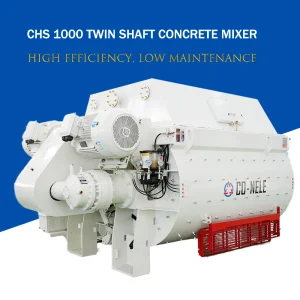
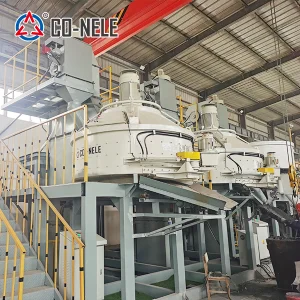
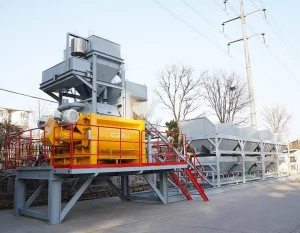
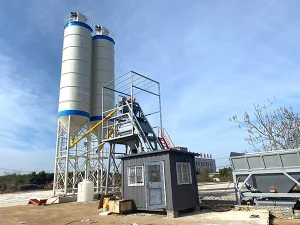
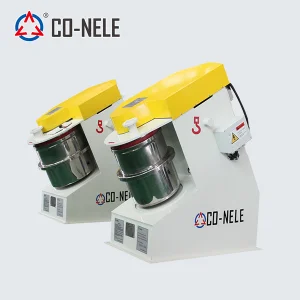
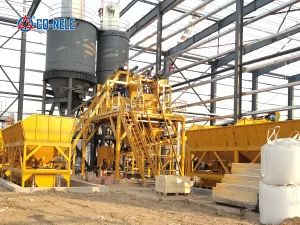
Explore heavy-duty compulsory mixers, mobile mixing plants, refractory units, and dry powder mortar systems for industrial-scale deployment.
Aligning process performance, structural longevity, and procurement efficiency for global project success.
As modern material science advances, the margin for error in concrete production, refractory manufacturing, and powder processing continues to shrink. The choice of mixing machinery is no longer a secondary capital expenditure decision; it directly dictates compressive strength, surface quality, chemical durability, and ongoing operational overhead.
Sourcing a Vertical Shaft Planetary Concrete Mixer from established Chinese manufacturers combines state-of-the-art counter-current mixing kinematics with structural robustness, high supply chain responsiveness, and substantial capital savings. By partnering with experienced engineering factories, industrial users secure custom-designed mixing plants optimized for their exact raw material characteristics and long-term production objectives.