CO-NELEMixing & Granulation
Explore our specialized industrial mixing systems engineered for demanding rheological applications, dry mortar production, and continuous material processing.
Addressing the critical physical and structural demands of high-temperature refractory linings in modern metallurgical, glass, and cement processing infrastructure.
Modern high-performance refractory materials—including monolithic castables, low-cement castables (LCC), ultra-low cement castables (ULCC), and dense ceramic matrix composites—present extreme physical processing challenges. Unlike standard ready-mix concrete, refractory mixtures exhibit non-Newtonian, thixotropic behavior characterized by high viscosity, low liquid-to-solid ratios (often below 4.5% waterContent), and exceptionally high abrasive mineral hardness (corundum, silicon carbide, fused silica, and magnesia aggregates).
Achieving uniform dispersion of nano-scale micro-silica powders, stainless steel fibers, and organic anti-bursting fibers without inducing agglomeration or fiber balling is paramount. Inadequate dispersion leads to localized void formation, thermal expansion differentials, and premature refractory spalling during thermal cycling in blast furnaces, steel ladles, and rotary cement kilns.
Achieves a coefficient of variation (CV) < 3% across complex multi-phase dry and wet castable batches within 60 to 90 seconds of high-shear rotation.
Specially inclined counter-current mixing arms slice and distribute metallic and synthetic reinforcement fibers uniformly throughout high-density matrices.
Equipped with replaceable high-chrome (Cr26+) alloy liners and tungsten carbide hardfacing blades designed for high-abrasion fused alumina compounds.
Understanding the mathematical and mechanical principles that differentiate industrial refractory concrete mixing technology from standard gravity drum and twin-shaft systems.
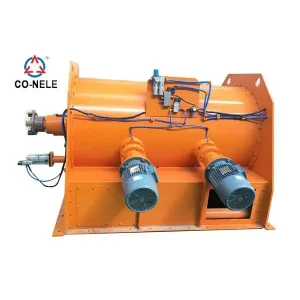
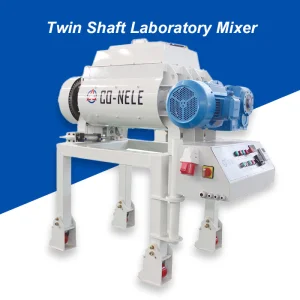
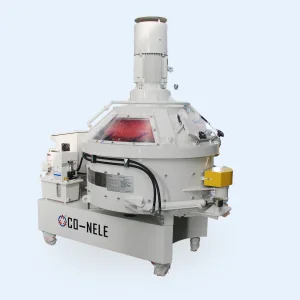
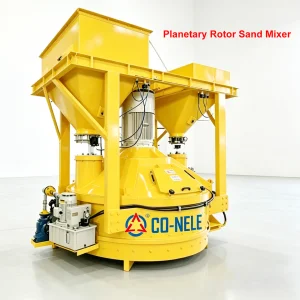
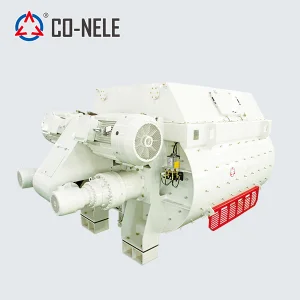
The core advantage of CO-NELE refractory concrete mixers lies in our proprietary Counter-Current Planetary Gearbox Architecture. Traditional twin-shaft compulsory mixers rely on overlapping horizontal axes, which create dead zones near pan edges and struggle under the high resistance of dry-cast refractory materials. In contrast, our vertical-shaft planetary design ensures that the mixing star revolvess around a central vertical axis while simultaneously rotating on its own axis at accelerated angular velocities.
| Performance Parameter | CO-NELE Planetary Refractory Mixer | High-Speed Intensive Mixer | Conventional Twin-Shaft Mixer |
|---|---|---|---|
| Mixing Kinematics | Vertical Counter-Current Planetary Motion | Inclined Rotating Pan + High-Speed Rotor | Horizontal Dual-Axis Parallel Mixing |
| Dead-Zone Elimination | 100% Pan Surface Swept Every 3.5 Revolutions | 100% Dynamic Re-orientation | 15-20% Dead Zone near End Seals |
| Dispersion Energy | Medium-High Shear / Controlled Temperature Impact | Ultra-High Shear / Micro-Granulation Capability | Low-Medium Shear / High Friction Heat |
| Refractory Wear Life | 100,000+ Batches (Replaceable Wear Plates) | 60,000 - 80,000 Batches (High Chrome) | 25,000 - 40,000 Batches (Rapid Seal Degradation) |
| Target Material State | Low Cement Castables, Steel Fiber Concrete, UHPC | Refractory Powders, Granules, Battery Slurries | Standard Ready-Mix, Mass Wet Concrete |
Strategic demand drivers shaping refractory mixer engineering across global steelmaking, cement production, petrochem refining, and non-ferrous metallurgy.
As global steelmakers shift from traditional Blast Furnaces (BF-BOF) to Electric Arc Furnaces (EAF) and Direct Reduced Iron (DRI) plants, thermal shock requirements on refractory linings have intensified. This mandates denser, higher-purity refractory castables with micro-silica binders mixed under strict torque control.
Alternative fuels used in cement calciners produce harsh chemical atmospheres (alkali, sulfur, and chloride attacks). Refractory linings require precise additions of silicon carbide and zircon compounds mixed seamlessly in CO-NELE intensive mixers to prevent structural degradation.
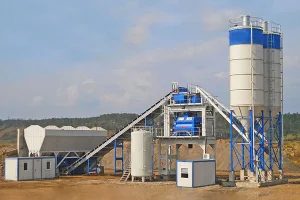
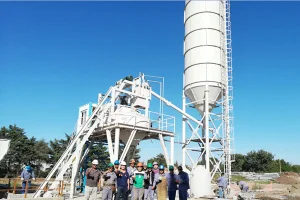
Industrial end-users are moving away from pre-fired refractory bricks toward un-shaped monolithic castables due to faster installation times and jointless integrity. This trend drives factory and on-site demand for heavy-duty, mobile, and stationary refractory batching plants.
Detailed insight into industrial jobsites where CO-NELE Refractory Concrete Mixers maintain continuous 24/7 reliability.
Ensuring complete peace of mind for global EPC contractors, plant operators, and refractory manufacturers.
Custom electrical cabinets compliant with CE directives (2006/42/EC), UL certification for North American installations, and CSA standards. Dual-frequency (50Hz / 60Hz) motors adapted to regional grid voltages (220V to 690V).
All mixing arms, scrapers, liners, and discharge gate seals utilize standardized bolt-on geometry. Emergency spare parts ship directly from our Qingdao hub or localized distribution partners within 24 to 48 hours.
Integrated Siemens PLC controls feature remote IoT diagnostics, allowing CO-NELE process engineers in Qingdao to audit mixing torque curve, assist with batch troubleshooting, and optimize mixing cycles remotely.
Directing R&D toward intelligent real-time viscosity sensing, energy recovery drive systems, and zero-emission concrete plants.
As the international refractories industry shifts toward hyper-automation and zero-carbon processing, CO-NELE is pioneering three critical technological advancements across our mixer and batching plant lines:
Comprehensive technical guidance compiled by CO-NELE chief machinery engineers and refractory process specialists.
Twin-shaft mixers excel in continuous high-volume wet concrete (ready-mix) where cycle speed is primary. However, refractory castables feature low moisture and extreme density. Planetary mixers utilize counter-current mixing stars that sweep every millimeter of the pan floor without leaving unmixed material in shaft-end seals, preventing localized dry spots and ensuring uniform dispersion of silica fume and micro-additives.
Fiber clumping occurs when mixing motion lacks sufficient multidirectional shear. CO-NELE planetary arms operate with high angular rotational velocities that create a continuous intersecting trajectory. This high-energy mechanical motion breaks apart fiber clusters before cement hydration starts, yielding 100% homogeneous fiber orientation.
We offer multiple liner grades depending on material abrasiveness: Standard High-Chrome Alloy Castings (Cr26+), Wear-resistant Hardox® steel plates, and customized Tungsten Carbide overlay tiles for extreme applications handling corundum, silicon carbide, or fused silica.
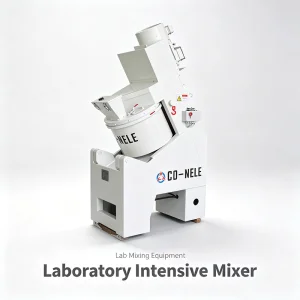
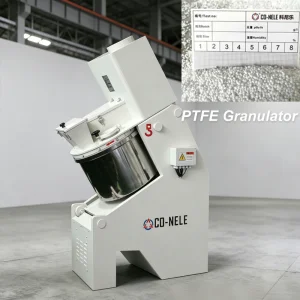
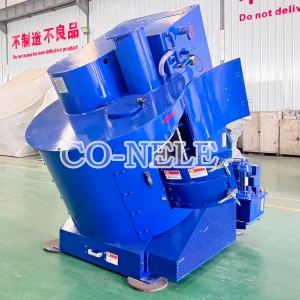
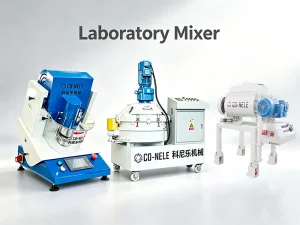
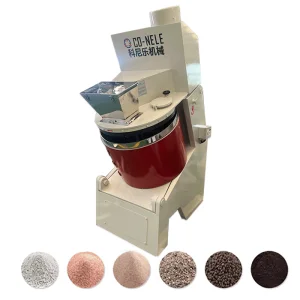
Yes. Our CQM series intensive mixers feature inclined rotating pans and high-speed rotor systems. By modulating the speed of the pan and rotor via VFD, operators can dry-mix fine powders, inject liquid binders for moist homogenization, and adjust shear rates to form spherical granules—all within one uninterrupted processing cycle.
Every machine includes comprehensive CAD foundation layouts, electrical schematics, and bilingual operation manuals. We dispatch resident field engineers for physical installation and commissioning, or conduct remote digital commissioning via real-time telemetry and augmented reality support.
Explore our specialized industrial concrete batching plants, planetary mixers, lithium battery slurry equipment, and heavy-duty precast batching systems.
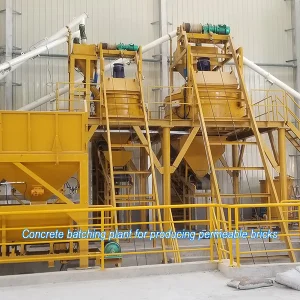
China CBP150 Concrete Batching Plant for Permeable Bricks Manufacturer, Factory
Explore Specification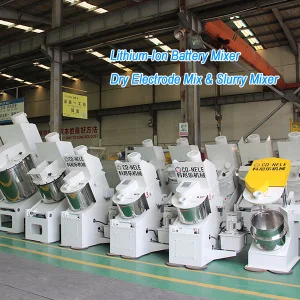
China Lithium-Ion Battery Mixer | Dry Electrode Mix & Slurry Mixer Factory, Machine
Explore Specification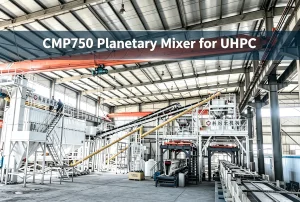
China CMP750 Planetary Mixer | UHPC Precast Concrete Batching Plant Factory, Machine
Explore Specification