CO-NELEMixing & Granulation
Explore our core engineering portfolio of high-efficiency intensive mixers, planetary batching equipment, and industrial granulators.
Evaluating global commercial demands, infrastructural transformations, and engineering advancements driving China's batching machine manufacturing ecosystem.
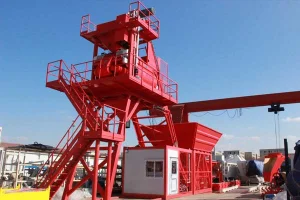
The global readymix concrete market has undergone a fundamental transition from simple volumetric batching to hyper-precise, rheologically controlled material engineering. Industrial contractors no longer evaluate a China Ready Mixed Concrete Plant Manufacturer & Machine solely by raw volumetric yield per hour (m³/h). Today's commercial infrastructure projects—ranging from high-speed rail viaducts and mega-deep foundation piers to offshore wind-turbine platforms—demand strict adherence to micro-structural homogeneity, minimized water-cement ratios, and zero-defect batch reproducibility.
China has established itself as the epicenter of industrial mixing engineering, combining advanced metallurgical supply chains with sophisticated control automation. As global construction sectors adapt to rising material costs and environmental regulations, selecting the right concrete batching plant machinery involves optimizing Total Cost of Ownership (TCO), operational longevity under abrasive loads, and instant adaptability to green concrete formulations involving Supplementary Cementitious Materials (SCMs) like slag, silica fume, and pulverized fly ash.
The operational requirements for ready-mixed batching machinery vary significantly across global market zones:
A granular mechanical comparison between compulsory twin-shaft mixing and planetary counter-current kinematics.
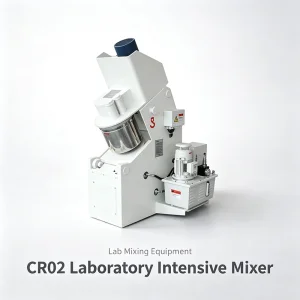
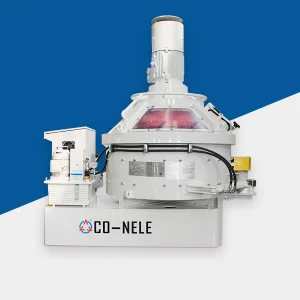
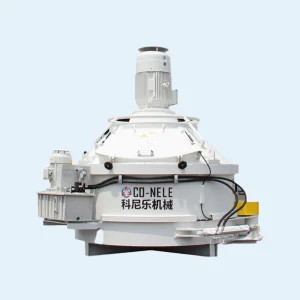
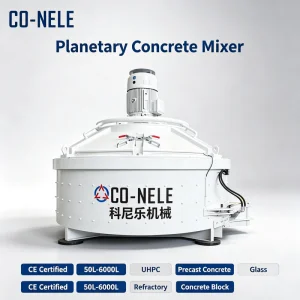
Utilizes dual mixing star arms rotating on planetary axes while simultaneously orbiting the central vessel axis. This complex trajectory eliminates dead zones, ensuring 100% material interaction within every revolution. Ideal for dry-cast concrete, UHPC, precast wall panels, and high-pigment decorative masonry.
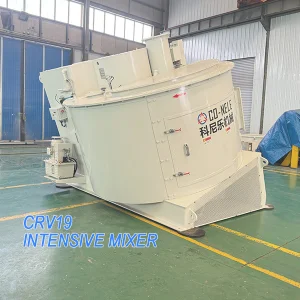
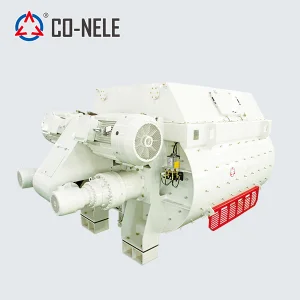
Employs dual counter-rotating horizontal shafts fitted with overlapping high-chrome paddles. Generates intensive three-dimensional turbulent movement within the central mixing zone. Optimized for large-volume ready-mix operations (above 2 m³ per batch) requiring ultra-fast cycle times (30–45s).
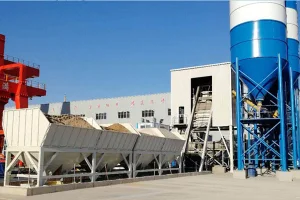
Integrated load-cell weighing hoppers for aggregates, cementitious powders, water, and chemical admixtures. Controlled via Siemens PLC architectures featuring automatic drop-compensation algorithms, real-time moisture microwave sensing, and digital batch logging.
Choosing the correct machine configuration directly influences operational efficiency and product quality. Below is an engineering comparison matrix designed to assist plant managers in equipment selection:
Tailored mixing machinery configurations engineered for specific industrial materials and jobsite realities.
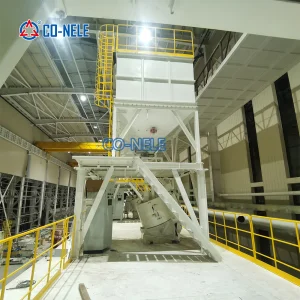
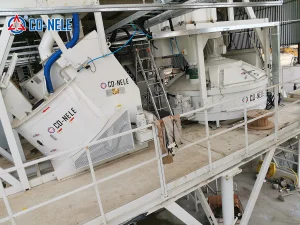
Precast element production requires strict color consistency, smooth surface finishes, and high early-strength development to enable fast mold turnaround times. Utilizing specialized planetary batching plants integrated with overhead shuttle bucket delivery systems guarantees slump consistency within ±5mm, eliminating structural voids and surface honeycombing.
Mixing UHPC involves low water-binder ratios (<0.20) and heavy dosages of silica fume and micro-steel fibers. Standard gravity pan mixers fail under the high viscosity and shear resistance. Specialized UHPC compulsory mixers utilize reinforced planetary gearboxes, high-torque motors, and heat-treated wear plates to completely homogenize micro-powders without balling or fiber entanglement.
Block-making machines (BLB series) demand zero-slump semi-dry concrete with exact moisture distribution. Planetary mixers allow rapid water dispersion throughout fine aggregates, ensuring uniform compaction density across every brick mold, maximizing compressive strength while minimizing cement consumption per block.
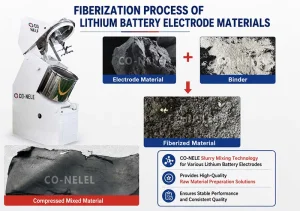
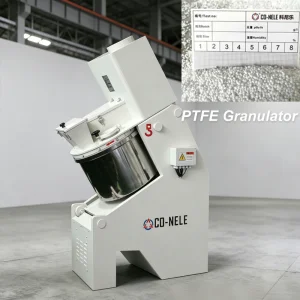
Extending beyond traditional concrete, intensive mixing technology is critical for advanced industrial applications such as Dry Electrode PTFE Fibrosis, foundry sand conditioning, and refractory ceramic matrix processing, requiring controlled thermal exchange and high-shear mechanical action.
How next-generation machine design converges with artificial intelligence, carbon-capture materials, and predictive maintenance.
Future batching plants integrate optical sensors, electric motor torque feedback loops, and inline microwave probes. Neural network models automatically adjust admix dosing mid-cycle to compensate for aggregate moisture fluctuations, guaranteeing target slump upon discharge.
Direct injection of captured carbon dioxide ($CO_2$) into the mixing chamber during the initial wetting phase. $CO_2$ chemically reacts with calcium ions in wet cement to form nano-calcium carbonate crystals, increasing early compressive strength by up to 15% while permanently sequestering carbon.
Vibration analysis sensors embedded within planetary reduction gearboxes and mixing shaft bearings detect micro-fatigue prior to mechanical failure. Cloud telemetry alerts maintenance teams in real-time, preventing unexpected downtime during critical continuous pours.
Demonstrating decades of manufacturing authority, rigorous international certifications, and localized field engineering support.
Investing in a China Ready Mixed Concrete Plant Manufacturer & Machine requires complete trust in electrical compliance, structural safety, and long-term spare parts availability. QINGDAO CO-NELE MACHINERY CO., LTD. (established in 2004) operates three specialized manufacturing facilities covering over 30,000 square meters, ensuring total quality control over casting, machining, welding, gear assembly, and testing.
Fully compliant with European CE machinery directives, low-voltage electrical standards, and ISO quality management protocols for international export.
Engineered to match local industrial power grids (220V, 380V, 415V, 440V, 480V at 50Hz or 60Hz) with Schneider, ABB, or Siemens switchgear options.
Complete inventory of standardized high-chrome wear liner plates, mixing arms, discharge gates, and seals ready for dispatch via global express hubs.
Unlike regional machine assemblers who outsource planetary gearboxes to third-party vendors, CO-NELE engineers and manufactures its proprietary gear reduction systems in-house. Designed specifically to handle thermal expansion, extreme shock loads, and abrasive powder intrusion, every gearbox undergoes dynamic bench load testing prior to factory sign-off, ensuring over 100,000 operational cycles without structural oil seal failure.
Direct technical answers from our senior plant design engineers covering machinery selection, maintenance, and operation.
Explore our complete machine range including mobile mixing stations, block batching plants, and high-performance concrete systems.