
CO-NELEMixing & Granulation
Precision-engineered planetary pan mixers, intensive granulators, and batching plants exported worldwide from our Qingdao manufacturing bases.
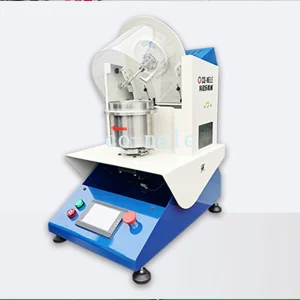
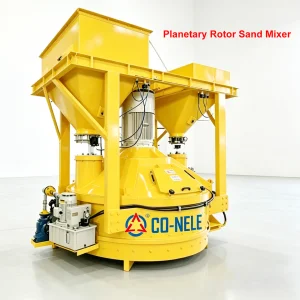
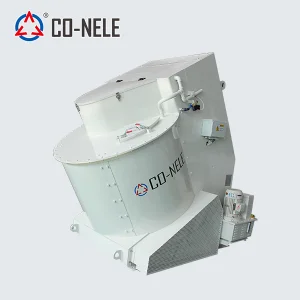
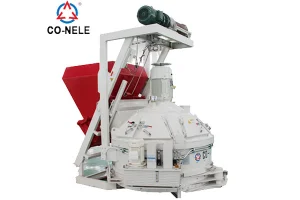
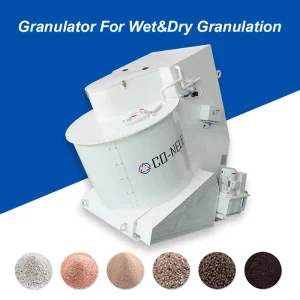
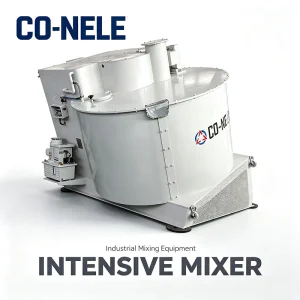
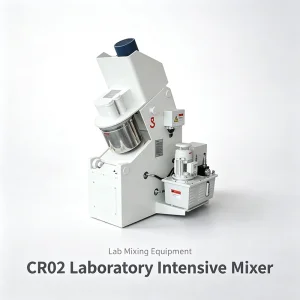
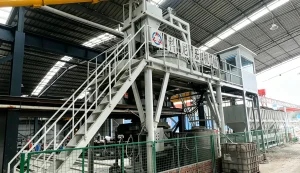
Why vertical-shaft planetary counter-current mixing represents a decisive technological leap over traditional single/twin shaft horizontal mixers for high-spec concrete matrices.
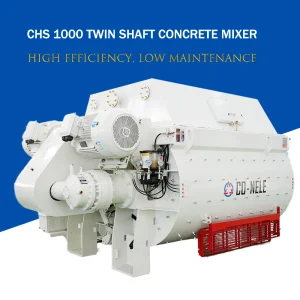
In modern industrial concrete preparation, achieving complete micro-homogeneity is non-negotiable—especially when producing Ultra-High Performance Concrete (UHPC), Glass-Fiber Reinforced Concrete (GFRC), and complex precast elements. Traditional horizontal twin-shaft mixers rely primarily on shearing along parallel axes, which works efficiently for standard wet ready-mix concrete above 2 m³ per batch. However, when handling dry-cast mixes, fine pigment distributions, or silica fume-heavy recipes, twin-shaft units encounter localized material clumping and unmixed pockets.
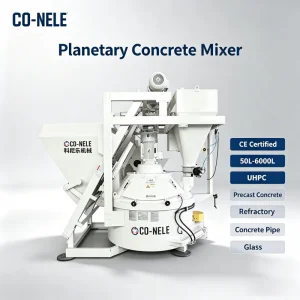
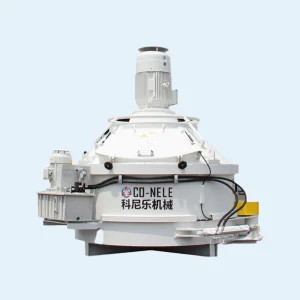
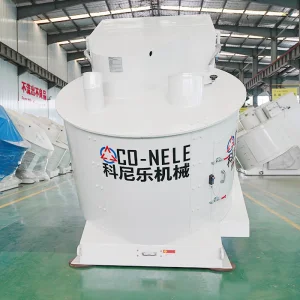
Planetary concrete mixers solve this fundamental tribological challenge through counter-current star-arm kinematics. The mixing star arms rotate around a central vertical axis while simultaneously revolving at high speed around their own individual axes. This dual-rotation movement creates dynamic velocity vectors across every square millimeter of the mixing pan bottom and sidewalls, forcing aggregates, cementitious binders, liquid admixtures, and micro-fibers into intense spatial turbulence without dead zones.
From a rheological standpoint, the counter-current trajectory prevents segregation of heavy coarse aggregates while rapidly breaking down the surface tension of silica fume and nano-silica powders. The shearing force generated by the counter-rotating blades breaks agglomerates down to the micro-particle level within 30 to 60 seconds of fluid addition.
Furthermore, because the vertical drive mechanism separates the mechanical transmission from direct contact with wet abrasive slurries, main shaft seal failures—a frequent headache in horizontal twin-shaft systems—are structurally eliminated. This intrinsic engineering advantage yields substantial reductions in unexpected line downtime and maintenance labor costs.
| Mixing Parameter / Feature | Planetary Counter-Current Mixer | Horizontal Twin-Shaft Mixer | Traditional Open Pan Mixer |
|---|---|---|---|
| Mixing Homogeneity (CV value) | Ultra-High (< 3%) | Standard High (5% - 8%) | Moderate to Low (> 10%) |
| Dead Zone Occurrence | 0% (Complete Sweeping Path) | 5% - 8% around shaft ends | 12% - 18% along outer perimeter |
| UHPC & Dry Mortar Adaptability | Exceptional (Optimal Shear) | Moderate (Risk of overloading) | Poor (High friction lockup) |
| Shaft Seal Wear Risk | Zero (Vertical Shaft Above Slurry) | High (Submerged end seals) | Low to Moderate |
| Pigment & Micro-Fiber Dispersion | 100% Uniform within 45s | Requires extended cycle time | Inconsistent fiber clumping |
How leading EPC contractors, concrete precast plants, and refractory manufacturers evaluate Chinese supply partners for total cost of ownership (TCO) optimization.
Modern precast concrete production (such as prestressed concrete poles, railway sleepers, hollow-core slabs, and segment linings for underground tunnels) demands absolute batch-to-batch repeatability. Water-cement ratios must be strictly controlled down to ±0.01 tolerance to ensure early stripping strength.
Chinese planetary mixer manufacturers, led by CO-NELE, integrate highly accurate moisture probe systems directly into the pan liner floor. Real-time microwave sensors measure matrix humidity 20 times per second, adjusting automated water dosing valves on the fly to guarantee targeted slump and compressive strength.
UHPC formulations typically omit coarse aggregates, utilizing fine silica sand, ground quartz, silica fume, steel micro-fibers, and high-dose superplasticizers. Mixing these dense, low-water-binder matrices requires extremely high torque ratings and robust drive gearboxes.
CO-NELE’s specialized CMP series planetary UHPC mixers feature custom-designed, hardened planetary gearboxes capable of withstanding extreme mechanical shear resistance without thermal overload. The internal mixing blades utilize high-chrome alloy steels (HRC ≥ 62) to resist intense tribological abrasion from fine quartz dust.
The refractory sector presents some of the harshest mixing environments due to heavy bulk densities, corrosive binder additions, and dry abrasive synthetic minerals. Planetary mixers utilized in refractory plants feature fully enclosed, dust-tight pan covers equipped with pneumatic seal rings and explosion-proof (ATEX-rated) drive motors.
The fast-discharge hydraulic gate mechanism enables rapid emptying of thick monolithic batches without residual buildup, preserving continuous production rates for steel mill linings and glass furnace bricks.
Inside Qingdao CO-NELE Machinery Co., Ltd: 20+ years of dedicated R&D, 80+ patents, and full control over planetary gearbox manufacturing.
The beating heart of any planetary concrete mixer is its gear transmission system. Unlike assembling factories that purchase generic commercial gearboxes, CO-NELE designs and manufactures its vertical-shaft planetary reducers entirely in-house. Featuring heavy-duty forged alloy gears, carburized and precision-ground to ISO Class 6 tolerances, these transmissions provide smooth torque output under 200% peak shock loading conditions.
Every gearbox undergoes a continuous 8-hour full-load bench test prior to machine assembly, monitoring oil temperature, vibration spectral signatures, and decibel levels to guarantee a 15+ year operational lifespan.
Material abrasion on internal pan liners represents the single largest maintenance cost item for mixing operations. To maximize wear life, CO-NELE equipment utilizes modular, rhomboid-shaped wear tiles cast from specialized high-chromium alloy irons (Cr26 / Ni-Hard). The rhomboid design allows operators to rotate individual tiles as wear patterns develop, extending overall liner life by up to 40% before replacement is needed.
For extreme non-ferrous, ceramic, or diamond powder applications, polyurethane, rubber, or stainless steel (SUS304 / SUS316L) pan linings are deployed to prevent iron contamination.
How CO-NELE protects international buyer investments across North America, Europe, the Middle East, and Southeast Asia.
Export equipment is custom-engineered to match local grid parameters (220V, 380V, 415V, 440V, 480V at 50Hz or 60Hz). Electrical control cabinets feature premier global components (Siemens PLCs, Schneider contactors, ABB VFD drives) and comply strictly with CE directives, UL/CSA standards, and IP65 washdown protection ratings.
A frequent risk when procuring machinery overseas is long-term spare parts obsolescence. CO-NELE enforces strict standardized component dimensions across all machine generations from 2004 to present. Wear blades, mixing arms, hydraulic seals, and discharge door rollers ship from centralized warehouse stocks in Qingdao via DHL/FedEx within 48 hours of request.
International buyers can send 10 to 50 kg of raw material samples directly to the Qingdao R&D Testing Center. Process engineers conduct comprehensive trial runs, measuring granule sphericity, density, dispersion uniformity, and power consumption profiles—delivering complete video recordings and laboratory test reports before contract signing.
Architecting intelligent, energy-efficient mixing platforms for Industry 4.0 concrete batching facilities.
Next-generation CO-NELE mixers come pre-integrated with smart edge-computing gateways. Onboard vibration sensors track bearing frequencies, gearbox oil viscosity, and thermal trends in real time. Predictive telemetry alerts maintenance teams on mobile devices before mechanical fatigue leads to downtime.
By leveraging closed-loop motor torque feedback, the control system continuously recalculates slurry viscosity during the wet mixing phase. Variable frequency drives automatically adjust star-arm RPM to optimize shear energy input, reducing total cycle energy consumption by 15% to 22% per batch.
Future mixing systems feature sealed negative-pressure dust extraction manifolds, dynamic water-jet auto-cleaning rings (reducing washdown water consumption by 60%), and full compatibility with low-carbon alkali-activated geopolymers and carbon-capture concrete mixes.
Authoritative answers to critical technical questions asked by plant managers, civil engineers, and sourcing directors.
You should select a vertical-shaft planetary counter-current mixer when your recipe involves dry-cast formulations, fine color pigments, micro-fibers, or ultra-high performance matrices (such as UHPC, GFRC, and refractory castables) requiring a coefficient of variation (CV) below 3-5%. Twin-shaft mixers excel in high-volume, standard wet ready-mix concrete production where throughput capacity above 2 m³ per batch and 30-second cycles take priority over micro-homogeneity.
Equipped with standard high-chromium alloy wear components (HRC ≥ 62), CO-NELE pan floor liners and outer mixing blades typically achieve 90,000 to 150,000 batch cycles under normal aggregate concrete conditions. Under severe abrasive mixes—such as quartz-rich UHPC or acidic refractory monolithics—service life ranges between 40,000 and 60,000 batches. All wear parts utilize standardized bolt-on designs for rapid field replacement.
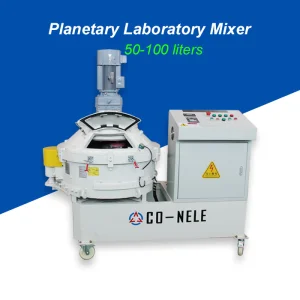
CO-NELE operates specialized lab mixers (CEL01, CMP50, CMP100) that share identical geometric ratios, tip speeds, and star-arm kinematic profiles with full-scale production units (up to CMP4000). Material rheology and mixing times determined during 10-liter to 50-liter laboratory trials scale directly to industrial models with zero formula distortion.
Every export machine ships with full English technical manuals, CE certificate of conformity, electrical schematics matching local grid voltage, foundation anchoring drawings, and a recommended 2-year spare parts list. After-sales support includes 24/7 remote video guidance, PLC online telemetry debugging, and optional resident engineer dispatch for field commissioning.
Explore our complete machinery line including counter-current mixers, granulators, asphalt plant units, and modular batching plants.
Request a customized engineering proposal, full CAD plant layouts, or schedule a raw material trial at our Qingdao laboratory base.