CO-NELEMixing & Granulation
Engineered for intense homogeneity, fast discharge cycles, and high-abrasion resistance across refractory, precast, and laboratory environments.
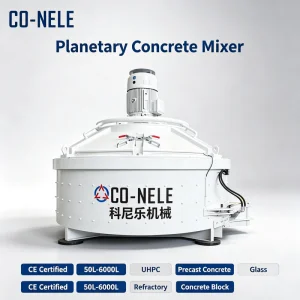
The global construction and advanced materials manufacturing industries are undergoing a fundamental transformation. Driven by stringent infrastructure longevity standards, carbon-reduction mandates, and the widespread adoption of Ultra-High-Performance Concrete (UHPC), traditional horizontal twin-shaft and gravity-based tilt mixers are facing operational limitations. Modern material formulations demand micro-level dispersion, precise moisture control, and zero-segregation batching—benchmarks that can only be reliably met by vertical-shaft planetary counter-current mixers.
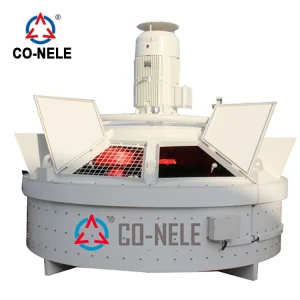
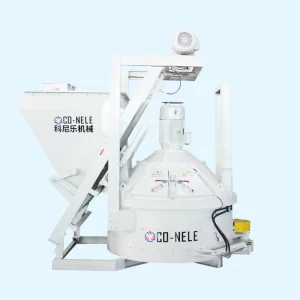
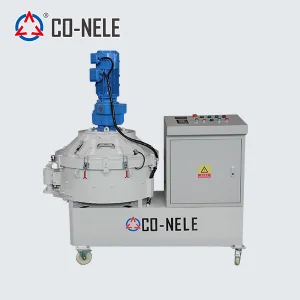
Planetary cement mixers operate on a double-rotation principle: the mixing arms rotate around a central vertical axis while simultaneously revolving around their own dedicated axis (the "star" movement). This counter-current trajectory guarantees that every cubic millimeter of the batch is swept within seconds, eliminating dead zones, aggregate balling, and binder clustering. Consequently, global demand for Chinese-manufactured planetary mixers has surged, positioning China as the epicenter of heavy mixing machinery export.
Understanding why planetary vertical shaft architecture outperforms traditional batch mixing in high-spec industrial applications.
The heart of the mixer lies in its co-axial, multi-stage planetary gear drive. Custom-designed to withstand extreme torsional shocks during dry-mix startup, this heavy-duty transmission ensures smooth torque delivery across dual mixing stars with a safety factor (SF) greater than 2.0.
As the main rotor turns clockwise, the secondary star arms rotate counter-clockwise. This compound shearing motion creates maximum velocity differentials within the mix chamber, forcing fine particles into aggregate voids and accelerating chemical hydration.
Equipped with inner and outer scraping arms fitted with tungsten-carbide or high-polyurethane blades. The scrapers direct wall accumulation back into the mixing stream while simultaneously operating the fast-discharge bottom door.
From architectural concrete components in North America to specialized refractories in East Asia, planetary mixers fulfill rigid processing specifications.
Precast concrete manufacturers require exact color uniformity, pore-free surface finishes, and strict compressive strength consistency (e.g., C60/75 to C120/150). Planetary cement mixers eliminate micro-lumps of pigment and silica fume. When working with steel or synthetic fibers in Ultra-High-Performance Concrete (UHPC), counter-current action prevents fiber clumping ("bird-nesting"), ensuring complete dispersion throughout the matrix.
Refractory material production demands mixing of dense, ultra-abrasive aggregates (corundum, silicon carbide, bauxite) with liquid binders under extreme friction conditions. Standard mixers fail rapidly under this abrasive strain. Chinese planetary mixers utilize thick Ni-Hard or Chromium Carbide Overlay (CCO) pan liners coupled with low-speed, high-torque planetary mechanics to deliver longevity and batch purity.
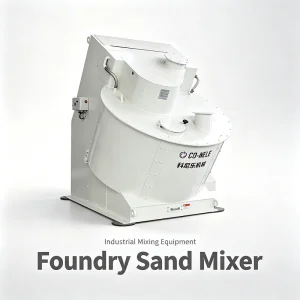
In metal casting foundries, uniform binder distribution over silica sand grains is vital for mold strength and gas permeability. Planetary mixers quickly coat sand grains with minimal resin or clay additions. Similarly, in hazardous waste stabilization, planetary mixers thoroughly blend chemical reagents with contaminated soils, ensuring complete encapsulation.
Advanced manufacturing sectors, including solar glass batch preparation and lithium battery cathode material processing, require zero iron contamination. Specialized planetary mixers fitted with non-metallic ceramic liners (e.g., Alumina or Zirconia) provide high-shear intensive homogenisation while preventing metallic cross-contamination.
How Chinese OEMs combine global component standards with unmatched industrial supply chain integration to deliver superior value.
Over the past two decades, China has evolved from an assembly hub into the world's most sophisticated manufacturing cluster for industrial machinery. Centered in heavy engineering hubs like Qingdao, Chinese planetary mixer manufacturers leverage complete supply chain integration—from local high-grade steel foundries to specialized gear grinding facilities.
Compared to European OEMs, Chinese factories offer significantly lower Total Cost of Ownership (TCO) without sacrificing component reliability. Modern Chinese planetary mixers routinely integrate premier international power units (such as SEW-Eurodrive or Nord gearmotors), Siemens PLC control automation, and Schneider electrical components, guaranteeing global operational compliance and plug-and-play maintenance.
| Evaluation Metric | European OEMs | China Tier-1 Factory |
|---|---|---|
| Initial Capital Expenditure (CAPEX) | Baseline (100%) | 40% - 60% Savings |
| Spare Parts Lead Time | 4 - 8 Weeks | 3 - 7 Days (Air Freight) |
| Wear Liner Material Grade | Standard Hardox 400 | High-Chrome CCO (HB600+) |
| Custom Engineering Agility | High Fee / Rigid Options | Included / Highly Modular |
| PLC & Automation Ecosystem | Proprietary Closed System | Open-Architecture Siemens/AB |
Engineering reference data for plant managers, EPC contractors, and procurement engineers sizing mixer capacities.
| Model Series | Dry Charging Capacity (L) | Compacted Concrete Output (L) | Main Drive Power (kW) | Mixing Star Count | Discharge Gates |
|---|---|---|---|---|---|
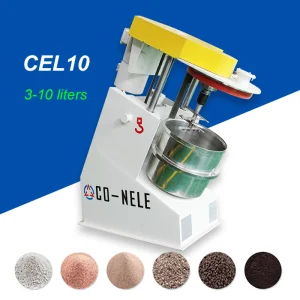
| CMP50 / CEL1 | 75 L | 50 L | 3.0 - 5.5 kW | 1 Star | 1 Hydraulic / Manual |
| MP250 / CMP250 | 375 L | 250 L | 7.5 - 11 kW | 1 Star | Up to 2 Gates |
| CMP500 / MP500 | 750 L | 500 L | 18.5 kW | 2 Stars | Up to 3 Gates |
| CMP1000 / MP1000 | 1500 L | 1000 L | 37 kW | 2 Stars | Up to 3 Gates |
| CMP1500 / MP1500 | 2250 L | 1500 L | 55 kW | 3 Stars | Up to 3 Gates |
| MP3000 / CMP3000 | 4500 L | 3000 L | 110 kW | 4 Stars | Up to 4 Gates |
Modern batching plants demand real-time moisture adjustment. Procurement specs increasingly require planetary mixers pre-fitted with optical or microwave moisture sensors mounted through the pan liner. These sensors feed moisture data directly into the PLC, adjusting water dosing dynamically during the dry mixing phase.
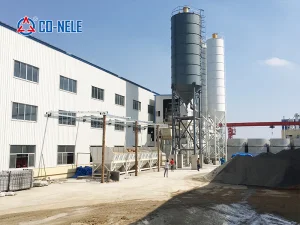
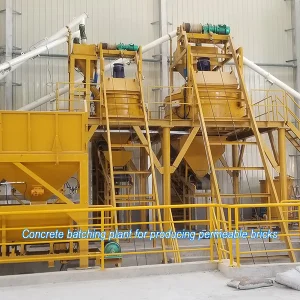
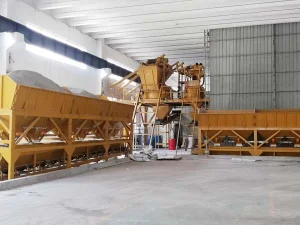
Contractors operating in remote infrastructure projects (bridges, dams, wind turbine foundations) prefer compact, containerized batching systems powered by vertical planetary mixers. Rapid mobilization, zero foundation requirements, and fast setup times are now decisive factors in global machinery tenders.
Electric motor efficiency standards (IE3 / IE4 / NEMA Premium) have become mandatory across European and North American buyers. Chinese manufacturers are adapting by pairing variable frequency drives (VFDs) with ultra-efficient gearboxes, reducing idle power draw and peak starting current.
Technical clarifications addressing operational parameters, wear maintenance, and customization options.
While twin shaft mixers utilize two horizontal counter-rotating shafts best suited for high-volume standard ready-mix concrete (over 2 m³ per batch), planetary cement mixers utilize vertical counter-current star arms. Planetary mixers provide significantly higher shearing forces and zero-dead-zone mixing. This makes planetary mixers ideal for dry mixes, colored pavers, refractory castables, and Ultra-High-Performance Concrete (UHPC), where mixing homogeneity below 5% coefficient of variation is mandatory.
Under standard aggregate concrete production, high-chrome alloy liners (HB600 rating) typically achieve 100,000 to 150,000 batch lifespans. For highly abrasive applications such as refractory castables or quartz glass batching, wear life ranges between 40,000 and 70,000 batches. All liners and mixing blades are sectional and bolt-on, allowing quick, low-cost replacement without cutting or structural welding.
Yes. All electrical systems, motors, and PLC controls can be engineered to meet regional requirements, including 220V/380V/415V/440V/480V operating voltages at 50Hz or 60Hz. Controls carry optional CE certification, CSA approval, or UL compliance according to destination market regulations.
Every planetary mixer undergoes a multi-point factory acceptance test (FAT) prior to shipment. This includes a 4-hour continuous no-load run to monitor gearbox temperature, vibration, and noise levels; hydraulic pressure testing on the discharge door; and dynamic balancing of all counter-current star arms.
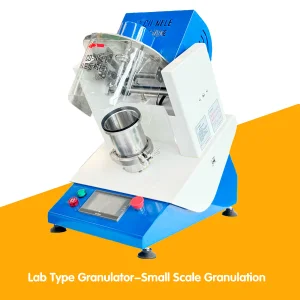
High-capacity planetary mixers, intensive granulators, and complete batching line configurations.