CO-NELEMixing & Granulation
Engineered to ISO 9001 and CE standards, offering unmatched homogenizing efficiency, high-durability wear protection, and turnkey deployment capabilities.
How mobile concrete production platforms are revolutionizing modern mega-infrastructure, remote construction, and tight urban redevelopment projects worldwide.
The global demand for mobile batching plants has experienced an unprecedented surge, projecting a Compound Annual Growth Rate (CAGR) exceeding 6.8% through 2030. Escalating investments in linear infrastructure—such as high-speed railways, transcontinental highways, cross-country pipelines, and remote renewable energy farms—have shifted contractor preferences away from traditional stationary ready-mix concrete plants toward fully mobile, rapid-deployment batching platforms.
Modern supply chain vulnerabilities and strict slump-retention timelines have exposed the flaws of long-distance concrete transit mixers. A mobile concrete batching plant deployed directly at the construction site eliminates transit delay risks, prevents initial setting during haulage, cuts diesel fuel expenditures by up to 35%, and guarantees immediate batch verification for high-specification engineering mixes like UHPC (Ultra-High-Performance Concrete).
China has established itself as the epicenter for industrial mixing innovation, leveraging complete domestic steel supply chains, precision planetary drive engineering, and advanced manufacturing automation. Factories in industrial hubs like Qingdao lead global exports by combining rugged structural metallurgy with European-tier electrical components (Siemens, Schneider, ABB), delivering cost-to-performance advantages that European manufacturers struggle to match.
Inside the mechanical engineering, mixing kinematics, and control systems defining state-of-the-art Chinese mobile batching plants.
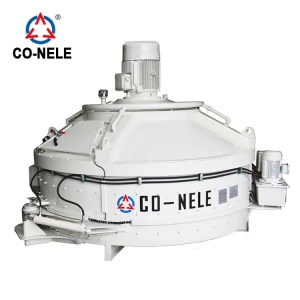
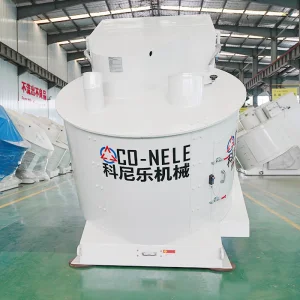
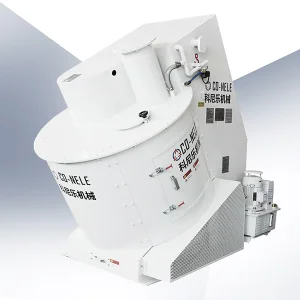
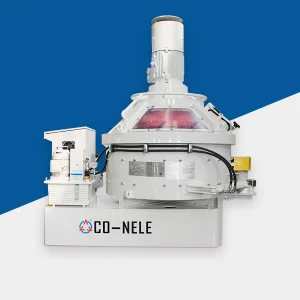
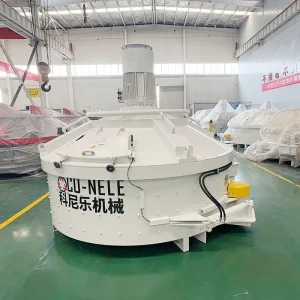
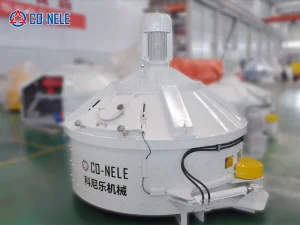
Traditional horizontal twin-shaft mixers often leave material dead zones near shaft ends when handling complex dry mixes or high-viscosity recipes. Chinese mobile plants now heavily feature vertical-shaft planetary counter-current mixers. The mixing star arms rotate on combined orbital trajectories, ensuring 100% pan coverage within seconds without material segregation. This is crucial for precast blocks, UHPC, and glass fiber reinforced concrete (GFRC).
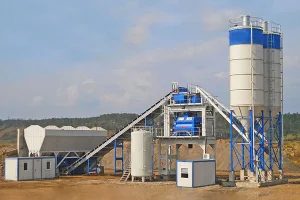
The core structural breakthrough in modern mobile plants is the zero-foundation, single-trailer chassis design. Main mixer platforms, aggregate batching bins, water/additive weighing hoppers, and kingpin towing hook systems are pre-assembled on a heavy-duty structural steel frame. Using hydraulic jacks and fold-out support legs, the entire plant can transition from transport mode to fully operational status without pouring permanent concrete foundations.
Water-cement ratio consistency dictates final concrete compressive strength. Advanced mobile batching plants integrate real-time microwave moisture sensors inside aggregate bins and mixer pans. The Siemens PLC control system dynamically recalculates batch weight setpoints 50 times per second, dynamically adjusting water dosing to compensate for sand moisture variations and guaranteeing slump accuracy within ±5mm.
| Performance Metrics | Mobile Planetary Batching Plant | Mobile Twin-Shaft Batching Plant | Standard Stationary Batching Plant |
|---|---|---|---|
| Target Applications | UHPC, Precast Blocks, Mortar, High-Spec Engineering | Mass Ready-Mix, Highway Paving, Dams, Foundations | Commercial Ready-Mix Supply Hubs |
| Civil Foundation Requirement | Zero (Level compacted ground / Steel pads) | Minimal (Flat concrete slab) | Heavy Reinforced Concrete Foundation |
| Setup Time (Arrival to Production) | 12 to 24 Hours | 24 to 48 Hours | 2 to 4 Weeks |
| Mixing Homogeneity (CV%) | < 3% (Micro-Homogeneous) | < 5% (Standard High-Grade) | < 5% (Standard High-Grade) |
| Relocation Flexibility | Extreme (Standard Towing / Containerized) | High (Trailer Mounted Chassis) | Low (Permanent Fixed Infrastructure) |
From remote high-altitude highway construction to offshore wind power foundations, mobile batching plants deliver uncompromised concrete performance anywhere on Earth.
Linear construction projects stretching hundreds of kilometers require batching plants that move alongside project progression. Mobile batch plants eliminate haul distances exceeding 30km, dramatically reducing the fleet size of concrete transit mixers, ensuring continuous slipform paving operations, and maintaining strict thermal control over fresh concrete in extreme climates.
Coastal and island infrastructure requires specialized high-density, salt-resistant, and underwater anti-washout concrete mixes. Mobile mixing stations equipped with planetary compulsory mixers are loaded directly onto barges or installed at temporary port sites, producing rapid-setting grout and ultra-high-strength slurry for monopile foundations.
Inner-city bridge deck repairs, airport runway overlays, and subway station maintenance strictly limit construction work to overnight road-closure windows (e.g., 00:00 to 05:00). Compact mobile batch plants park adjacent to the repair zone, producing fast-curing rapid-hardening concrete on demand, allowing traffic resume by morning peak hours.
In deep underground mining, subterranean cavities must be backfilled with cemented paste tailings (CPT) to preserve structural integrity. Mobile batching plants positioned at mine pitheads homogenize tailings, fly ash, binder, and water, pumping high-density paste directly into subterranean stopes to prevent surface subsidence.
Why leading global EPC contractors choose Chinese mobile batching plants to maximize capital expenditure efficiency and operational profitability.
Stationary batching plants require heavy concrete footings, deep aggregate receiving pits, and extensive civil engineering work, adding $40,000–$100,000 in unrecoverable setup costs. Mobile batching plants utilize wide steel ground-spreading pads and telescopic hydraulic legs, reducing civil site preparation expenses by up to 90%.
When a contract section finishes, stationary plants are often written off or incur immense dismantling expenses. A Chinese mobile batching plant folds into standard semi-trailer dimensions in under 24 hours. Contractors can haul the unit directly to the next site, preserving capital asset value across decades of project lifecycles.
Over-ordering ready-mix from commercial suppliers leads to concrete rejection due to slump loss, traffic delays, or sudden weather disruptions. Mobile batching plants allow precise batch-by-batch control—mix exactly what is needed, when it is needed, cutting aggregate and cement wastage to near-zero levels.
Authoritative engineering insights to assist procurement managers and site supervisors in selecting the right mobile concrete equipment.
For standard compact mobile batching plants (such as 30m³/h to 60m³/h trailer-mounted series), mechanical setup takes between 8 to 16 hours. Complete electrical connection, calibration of load cells, and water line testing are finished within 24 to 48 hours. Because all internal wiring, pneumatic piping, and scale linkages are pre-installed at the factory, no field welding or complex wiring is required.
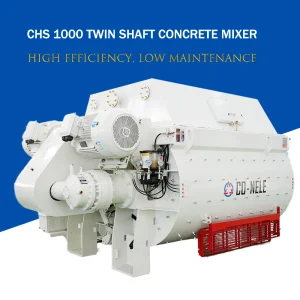
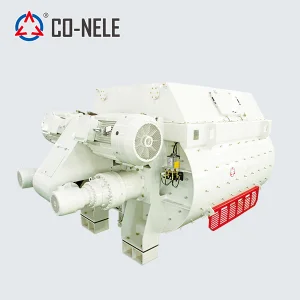
Select a Planetary Counter-Current Mixer if your project demands high uniformity, dry-cast concrete, UHPC, precast block production, colored concrete, or complex mortar formulations (Coefficient of Variation < 3%). Select a Twin-Shaft Compulsory Mixer if your primary objective is high-volume wet concrete production above 90m³/h for highway slabs, dam foundations, or commercial ready-mix supply where rapid 30-second mixing cycles are prioritized.
Mobile plants feature low-profile aggregate batching hoppers accessible directly via standard wheel loaders without constructing tall earth ramps. For cement, mobile plants pair with horizontal wheel-mounted mobile cement silos (30T–100T capacity) or vertical bolted silos equipped with quick-connect screw conveyors, preserving total mobility across the entire batching setup.
China mobile batching plants engineered by premium factories feature replaceable interior liners made of High-Chromium Cast Iron Alloy (hardness ≥ HRC60) or Ni-Hard Cast Plates, offering wear lifespans exceeding 100,000 batch cycles. Mixing arms and blades are equipped with bolt-on adjustable wear shoes, allowing quick gap adjustments to maintain optimal shear performance.
Yes. Control panels are housed within climate-controlled, dust-proof IP65-rated enclosures equipped with heavy-duty air conditioning and industrial surge suppressors. The Siemens PLC systems support multi-voltage inputs (220V/380V/415V/440V at 50Hz/60Hz) and can run seamlessly off local diesel generator sets in off-grid environments.
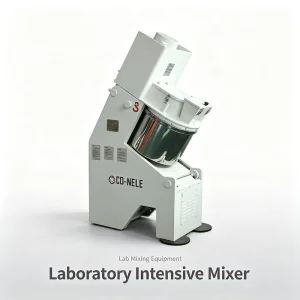
Advanced process equipment designed for refractories, energy storage materials, UHPC precast, and laboratory formula development.
Contact our senior application engineers to receive custom plant layout drawings, mix recipe testing, and factory-direct quotation packages tailored to your project location.